School of Psychology

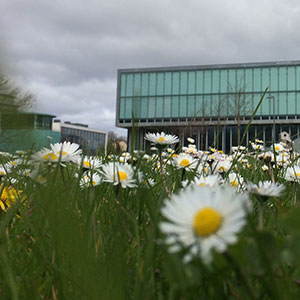
Welcome. The School of Psychology is housed in a purpose-built facility in the centre of campus. We are dynamic, innovative and recognised for our teaching, research, and community contribution. We have a suite of professionally accredited undergraduate and postgraduate (Higher Diploma, Masters and PhD) programmes. We also have two active and successful research streams: Brain & Behaviour, and Health & Wellbeing. Researchers from both have participated in acquiring major national and international funding awards and we continue to develop a strong profile in quantity and quality of research output.


Studying BSc Psychology at University of Galway

Get a feel for exactly what it's like studying a BSc in Psychology and University of Galway

Latest University News

29 December 2025

Researchers reshaping sex and gender inclusion in medical research

An international research team has created a roadmap for the integration of sex and gender in medical research. The PAINDIFF network, led by University of Galway Centre for Pain researchers, brings together 32 international experts from 22 institutions across eight countries to address one of the most persistent gaps in biomedical science with barriers and inconsistencies in how sex and gender are accounted for in study design, data analysis and reporting. The results of the project have been published in Nature Neuroscience https://www.nature.com/articles/s41593-025-02164-1 Senior author and consortium coordinator Dr Michelle Roche said: “For too long, medical research often assumed that biological mechanisms and treatment responses are the same for males and females. Historically, males were more commonly used in preclinical research and while clinical research included more balanced participation, data was not routinely analysed or separately by sex.” The research team noted that increasing evidence now shows meaningful differences between males and females in disease prevalence, biological pathways and responses to treatment. Dr Roche added: “As medical research moves toward personalised medicine, it is increasingly clear that understanding sex and gender differences and similarities is essential for improving health outcomes. The PAINDIFF network has developed guidelines and recommendations for studies in this field. Widespread adoption and implementation of these recommendations will reduce variability, improve reproducibility, and enhance the translatability of research findings, within and beyond the field of pain.” Professor David Finn, joint first author on the paper, said: “Chronic pain is a clear example of a condition where there are important sex and gender differences.  It affects one in five people worldwide, with women accounting for 70% of those affected.  Our new paper aims to reset the basic requirements for medical research, offering 13 actionable recommendations to guide researchers, reviewers, funders and policymakers, creating a clear and comprehensive roadmap for integrating sex and gender.” The recommendations include five universal principles applicable across all types of research — such as including both males and females as standard practice, and analysing and reporting data by sex. They also address how gender, distinct from biological sex, should be meaningfully incorporated into research frameworks.   Professor Brian McGuire, joint first author, said: “Historically, there have been deficits, barriers and inconsistencies surrounding the inclusion and study of sex and gender in research. Our paper provides a framework and roadmap for researchers and other stakeholders on how best to include and study sex and gender in research on pain and other biopsychosocial fields going forward.” The research was carried out under the ERA-NET NEURON initiative, funded by the European Union and the Health Research Board, and led by Dr Michelle Roche, Professor David Finn and Professor Brian McGuire at the University of Galway’s Centre for Pain Research. The 13 PAINDIFF recommendations published under three themes are:  Universal Recommendations Include males and females as standard practice unless there is a valid reason not to do so. Account for sex in randomization/counterbalancing/testing order Use adequately powered study design to detect sex differences when it is the primary experimental variable or when data suggest sex-specific effects  Include detailed reporting of experimental design including sex of the experimenter when possible Conduct sex-disaggregated analysis and reporting Preclinical Researchers should be aware of, and report on, the sex of the established cell lines, primary cells and tissues used in their research It is not always necessary to test for oestrous cycle stage Researchers should include detailed reporting on housing, environmental conditions and experimental design Clinical Ask for participants’ sex assigned at birth and self-identified gender Include a “prefer/choose not to say” response option when asking about sex and gender Include an open textbox response option to capture gender identity followed by a series of tick boxes to aid categorisation Report the number of people who hold diverse gender identities and, where possible and permitted, make the raw data accessible for further study (while ensuring anonymity).  When possible, collect and report on sex-specific variables to allow disaggregated analysis by sex or gender to be better informed by hormonal status, rather than solely by age. Ends

Read more

28 December 2025

Improved blood vessels make better ‘mini-brains’ in the lab

Scientists have discovered a new approach to growing mini-brains in the lab which gives them long enough lifespan to explore function and disease in cells.    The research team led by Dr Mihai Lomora, a scientist with CÚRAM - the Research Ireland Centre for Medical Devices based at University of Galway, grew the small blobs of brain cells in a soft, biologically compatible material called a hydrogel and introduced cells that can form blood vessels.    The result was that the cerebral organoids grew larger with fewer cells dying in the centre, and they mimicked features of the protective blood-brain barrier, potentially making them more relevant lab models to study diseases such as stroke, Alzheimer’s, and Parkinson’s Disease.   The findings have been published in the prestigious journal Advanced Science.   Dr Lomora, a lecturer in Biomaterial Chemistry, lead of the CerebroMachines Lab and member of the Institute for Health Discovery & Innovation, University of Galway, said: “Growing ‘mini-brains’ in the lab might sound like science fiction. But it’s not so far-fetched. Scientists around the world today grow small ‘cerebral organoids’ made of brain cells.   “When we started the project, we could see in the scientific literature that cerebral organoids growing in the lab tended to have a vasculature or blood vessels that were superficial only. That meant that the blood vessels didn’t penetrate in to reach the deeper cells in the organoid, then these cells became starved of oxygen and nutrients over time and they died off.”   The research project involved a multi-disciplinary team based in CÚRAM, University of Galway, RCSI University of Medicine and Health Sciences, Trinity College Dublin and the University of Edinburgh.   The team took an approach to help overcome the issue of viability of an organoid – tiny clumps of tissue, only a few millimetres across and just about visible to the naked eye. One of the main problems with these collections of brain cells is that as they get bigger, a lack of blood supply means the inner core dies off.   In order to get enough oxygen and nutrients to all of the cells, researchers adapted an existing protocol, or recipe, for growing the cerebral organoids, experimenting with different environments and timings to optimise the ability of blood vessels to reach these deeper cells.    The more blood-vessel-friendly approach resulted in three times less cell death in the organoids, and the researchers saw evidence that the organoids contained characteristics of an important protective feature naturally found in the brain called the blood-brain barrier.   Dr Lomora added: “We were fascinated to see that the vasculature really was able to protrude towards the interior of the organoids, which actually was quite a big advancement. And we also saw that cells involved in forming some of those blood vessels came from the organoid itself.  It's at the edge of the state of the art for now.  “Obviously this is not the same as growing a brain in the lab, but it is a mini-model of how parts of the brain work, and we want it to be as physiologically relevant as possible. We believe that by increasing the vasculature we have taken steps to making the organoids more physiologically relevant.”   The organoids are now being used by researchers in the CÚRAM network to explore brain function and disease, including stroke.   The research paper is available at Advanced Science.   Ends     

Read more

17 December 2025

Irish academic appointed Chief Scientist of Food and Agriculture Organization of the UN

A University of Galway academic has been appointed Chief Scientist of the Food and Agriculture Organization (FAO) of the United Nations.  Charles Spillane is Established Professor of Plant Science in the School of Biological and Chemical Sciences and Ryan Institute and leads the AgriBiosciences, Food Security and Climate Change research lab in the University.  Professor Spillane joins the Core Leadership team of the Food and Agriculture Organization - the inter-governmental specialised agency within the United Nations system which leads international efforts to defeat hunger and achieve food security for all.  It is the first time an Irish person has been appointed to such a high leadership position in the FAO since its foundation in 1945.  The mission of the FAO is focused on three goals: the eradication of hunger, food insecurity and malnutrition; the elimination of poverty and the driving forward of economic and social progress for all; and the sustainable management and utilisation of natural resources, including land, water, air, climate and genetic resources for the benefit of present and future generations.  Minister for Agriculture, Food, Fisheries and the Marine, Martin Heydon T.D., said: “The appointment of Professor Charles Spillane as Chief Scientist of the Food and Agriculture Organization of the United Nations is a significant achievement for Ireland, the University of Galway and for Professor Spillane personally. He brings deep expertise in agricultural bioscience, climate-resilient food systems and sustainability, built through decades of leading interdisciplinary research at the University of Galway. His appointment will further strengthen the FAO’s capacity to advance evidence-based innovation and partnerships for resilient, inclusive and sustainable agrifood systems worldwide.”  Professor David Burn, President of University of Galway, said: “We are delighted that Professor Spillane has been appointed to this position of exceptional public service with the United Nations Food and Agriculture Organization. Professor Spillane’s appointment to this globally leading role is a testament to University of Galway’s rapidly growing reputation in agricultural research and education for food security and international development, that has been achieved over the past decade.”  Professor Charles Spillane, University of Galway, said: “I am deeply honoured to be appointed as Chief Scientist within the Food and Agriculture Organization of the United Nations. I am taking on this role with profound respect for the Organization’s remarkable history and enduring mandate to achieve food security for all, and to ensure that people everywhere have regular access to sufficient, nutritious food. The Food and Agriculture Organization is a key enabler of the world’s shared commitment to a simple but powerful idea, namely that that no person should go hungry, and that the pursuit of food security is inseparable from the pursuit of peace, prosperity, and dignity.”  The Food and Agriculture Organization is the United Nation’s lead agency for SDG2 (Sustainable Development Goal 2) - Zero Hunger and is the custodian agency responsible for 21 of the United Nation’s Sustainable Development Goal indicators.  It was founded in 1945 in response to the multiple global food crises that followed World War II. It is governed by its 195 members, namely 194 Member States and the European Union, operating on a consensus-based one country, one vote system. Ireland is one of the Member States, where the Department of Agriculture, Food and the Marine leads the state’s engagement.  The FAO has an annual budget of over US$2billion, with more than 16,000 staff working across the headquarters in Rome, five regional offices and 130 country offices.  Read more information about the Food and Agriculture Organization of the United Nations here: www.fao.org.Ends

Read more

Undergraduate

Undergraduate

Undergraduate programmes in our School

Undergraduate Programmes

Apply

Postgraduate

Postgraduate

Postgraduate programmes in our School

Postgraduate Programmes

Apply

Research

Research

Research in our School

Psychology Research

Learn more

International Students

In the School of Psychology approximately 100 visiting students from around the world take our modules each semester. We offer about 20 different modules over the course of the academic year to our visiting students. These range from foundational introductory courses to specialised final year electives. Therefore there is the opportunity for our visiting students to experience the full breadth and richness of psychological science during their time with us.

Learn More

Tweets from @nuigPsychology