-
Cúrsaí

Cúrsaí
Tá roghnú cúrsa léinn ar cheann de na cinntí is tábhachtaí dá ndéanfaidh tú choíche! Féach na cúrsaí atá againn anseo agus an méid a deir mic léinn agus léachtóirí faoi na cúrsaí sin a bhfuil spéis agatsa iontu.
-
Saol na hOllscoile

Saol na hOllscoile
Chuile bhliain roghnaíonn os cionn 4,000 duine Ollscoil na Gaillimhe mar chéad rogha. Faigh amach faoin saol in Ollscoil na Gaillimhe anseo.
-
Eolas Fúinn
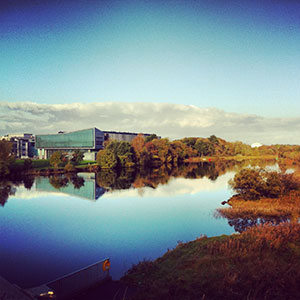
Eolas faoi Ollscoil na Gaillimhe
Bí ar an eolas faoin Ollscoil seo agus na fáthanna a bhfuil sí chomh speisialta sin – an stair thar a bheith spéisiúil a bhaineann leis an Ollscoil agus an nuacht is déanaí agus na hócáidí atá ar na bacáin.
-
Coláistí & Scoileanna
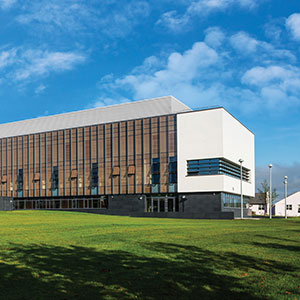
Coláistí & Scoileanna
Tá aitheantas idirnáisiúnta bainte amach ag Ollscoil na Gaillimhe mar ollscoil atá á treorú ag an taighde agus rún daingean aici teagasc den chéad scoth a chur ar fáil i réimsí éagsúla saineolais.
-
Taighde
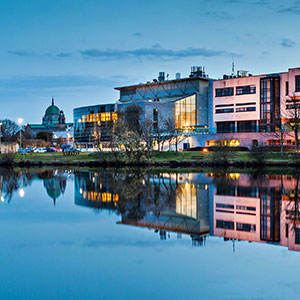
Nithe Fónta á gCruthú as Smaointe Úra
Tugann ár dtaighdeoirí aghaidh ar chuid de na dúshláin is práinní san 21ú Céad.
-
Gnó & Tionscal
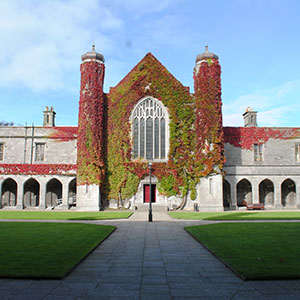
Tacaíocht do Thaighde Úrnua in Ollscoil na Gaillimhe
Déanaimid deiseanna tráchtála a chuardach agus a chothú don phobal taighde in Ollscoil na Gaillimhe, mar aon le comhpháirtíocht tionsclaíochta a chothú.
-
Alumni, Cairde & Lucht Tacaíochta
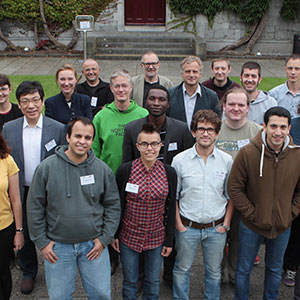
Alumni, Cairde & Lucht Tacaíochta
Tá os cionn 90,000 céimí de chuid Ollscoil na Gaillimhe ann ar fud an domhain. Déan nasc linn agus beidh teacht agat ar an gcomhphobal sin ar líne.
-
Rannpháirtíocht Pobail
Rannpháirtíocht sa Phobal
In Ollscoil na Gaillimhe, creidimid go n-éireoidh níos fearr leat más féidir leat an méid a fhoghlaimíonn tú a chur i bhfeidhm i do shaol féin. Is mar gheall air sin go bhfuil béim mhór ar shocrúcháin oibre nó ar thionscadail phobail i gcuid mhór dár gcúrsaí.
Nuacht
Friday,
9
October
2026
Atlantic Summit Galway 2026 concludes with release of Statement to support a sustainable and prosperous ocean future
International ocean community unites behind Atlantic Summit Galway 2026 Outcome Statement, setting priorities for ocean knowledge, cooperation, and future leadership Atlantic Summit Galway 2026 concluded today with the release of the Atlantic Summit Galway 2026 Outcome Statement - a shared commitment to strengthen ocean knowledge, deepen Atlantic cooperation and invest in the next generation of ocean leaders. Representing the collective voice of the European Union and the Atlantic Ocean research community, the Statement positions the Atlantic as a strategic asset for Europe's future resilience, sustainability, security, and competitiveness. Jointly organised by the Marine Institute, University of Galway and Atlantic Technological University, Atlantic Summit Galway was an Associated Event of Ireland's Presidency of the Council of the European Union. More than 350 policymakers, researchers, scientists, industry leaders, innovators, educators, international organisations, coastal stakeholders and early-career ocean professionals from across Europe and the wider Atlantic region attended the event. Over two days, participants explored how research, innovation, skills, and international cooperation can support a sustainable, resilient, and competitive Atlantic future. Discussions culminated in the Atlantic Summit Galway 2026 Outcome Statement outlining three priorities for Europe's ocean future: making ocean knowledge a strategic investment priority, strengthening Atlantic partnerships and cooperation, and investing in skills and leadership. A shared statement for Europe’s ocean future The Atlantic Summit Galway 2026 Outcome Statement recognises that the Atlantic Ocean remains central to Europe's environmental, economic, and strategic interests while facing growing pressures from climate change, biodiversity loss, geopolitical instability, and increasing demands on ocean resources. The Statement calls for strengthened action across three priority areas: Make Ocean Knowledge a Strategic Investment Priority for Europe Delegates called for ocean knowledge to be recognised as a strategic capability and a cornerstone of Europe's future competitiveness, resilience, and maritime security. The Statement highlights the importance of sustained investment in ocean knowledge systems under the next EU Multiannual Financial Framework and Horizon Europe programme. Ocean knowledge systems comprise ocean observations, data systems, data products and services, research and innovation, expertise, infrastructures, networks, partnerships, and programmes. Strengthen Atlantic Partnerships and Cooperation The Summit reaffirmed the value of the All-Atlantic Ocean Research and Innovation Alliance and called for deeper cooperation across the Atlantic basin to address shared environmental, economic, and geopolitical challenges. Stronger international partnerships were recognised as essential to accelerating innovation, strengthening ocean governance, and maximising the benefits of research and investment. Invest in Skills and Leadership for Europe's Ocean Future Recognising that Europe's ocean ambitions will depend on people as much as infrastructure, delegates highlighted the need for continued investment in education, training, mentoring, and capacity-building. Particular emphasis was placed on empowering Early Career Ocean Professionals and creating stronger pathways into ocean research, innovation, policy, and governance. Taken together, these priorities reflect a shared recognition that Europe's future prosperity, sustainability and resilience will depend on its ability to generate, share and apply ocean knowledge through stronger partnerships, strategic investment, and skills development. Speaking at the release of Atlantic Summit 2026 Outcome Statement Dr Fiona Grant, Marine Institute and Chair of the European Marine Board, said: "From Galway, on Europe's Atlantic edge, a clear message has emerged: the ocean is not separate from Europe's future. It is central to it. Europe's prosperity, resilience, security, and competitiveness will depend on our ability to understand, protect, and sustainably manage our ocean. That is why the Atlantic Summit Galway 2026 Outcome Statement calls for action in three areas: making ocean knowledge a strategic investment priority, strengthening Atlantic cooperation and investing in the next generation of ocean leaders. What has been achieved in Galway is more than a statement of intent. It is a commitment to collective action. The Atlantic has always connected our nations. Today, it connects us through a shared responsibility to shape its future and ensure it remains a source of opportunity, sustainability and prosperity for generations to come." Professor Frances Fahy, Director of the Ryan Institute at University of Galway, said: "We are sending a powerful message: investment in ocean knowledge is an investment in Europe's future. At a time of growing environmental, economic, and geopolitical uncertainty, the ability to understand our ocean and act on that knowledge has never been more important. Meeting the challenges facing the Atlantic will require world-class research, international collaboration, and a shared commitment to turning evidence into action. University of Galway is proud to be part of a community helping to shape that the ocean future. Galway has become an internationally recognised centre of ocean research and innovation, and the Atlantic Summit has reinforced our region as a place where knowledge and ambition comes together to make a global impact.” Dr Deirdre Brophy, Strategic Lead, Marine and Freshwater Research Centre, Atlantic Technological University, said: "Europe's ocean ambitions will only be realised if we invest in people. The Atlantic Summit Galway 2026 Outcome Statement rightly recognises that skills, leadership, and talent are among our most important ocean resources. Delivering a sustainable and competitive blue economy will require graduates who can work collaboratively across disciplinary boundaries to address complex challenges. To drive change, they will need to develop skills in research, innovation and entrepreneurship, and be strongly connected to policy and to communities. We must empower the next generation to secure a sustainable future for our ocean by providing clearly defined and attractive career pathways and by investing in world-class marine education and training programmes. The Atlantic Summit has established an important international partnership. Through our continued co-operation we will create opportunity and deliver impact across the Atlantic region." From Galway to Europe and the Atlantic The message from Galway is clear: the ocean is not separate from Europe's future. It is central to it. By investing in ocean knowledge, strengthening Atlantic partnerships, and empowering future leaders, Europe can build a sustainable, secure, and competitive ocean future. The Atlantic has always connected us. Through the Atlantic Summit Galway 2026 Outcome Statement, participants have committed to helping shape its future together. ENDS
Monday,
5
October
2026
Venomous snakes evolved striking colours to stand out
Wednesday,
30
September
2026
University of Galway recognised with RTPI Accredited Planning School status
Tuesday,
29
September
2026
Galway to host Atlantic Summit on the ocean knowledge shaping Europe’s future
Friday, 16 December 2022
All eligible University of Galway full time and part time hourly payscales have been updated in line with the provisions of Building Momentum - A New Public Service Agreement 2021-22. Specifically the following increases have been implemented: - With effect from 02nd February 2022, payscales received a 3% increase - With effect from 01st October 2022- payscales received a further 1% increase or €500, whichever is greater We are still awaiting sanction for the implementation of FEMPI restoration wef 1st July 2022 (save for a limited number of pay scales). Therefore there are no changes to those grades\pensions for now. See paragraph 1.3 in the above link for more details. Further advice will be issued for these grades in due course.
Monday, 24 April 2023
We have been asked to bring to your attention the fact that Secondment Expression of Interest Notices has been issued for the Public Service Transformation Division of the Department of Public Expenditure, NDP Delivery and Reform. Expressions of interest are invited from across all sectors of the Public Service, including higher education, and across a number of grades. Notices are available directly at the following link, and DPENDR and DFHERIS would very much appreciate your support in circulating to your staff. The closing date for applications is 2nd May, and we understand the notices issued on Friday 14th April.