-
Courses

Courses
Choosing a course is one of the most important decisions you'll ever make! View our courses and see what our students and lecturers have to say about the courses you are interested in at the links below.
-
University Life

University Life
Each year more than 4,000 choose University of Galway as their University of choice. Find out what life at University of Galway is all about here.
-
About University of Galway

About University of Galway
Since 1845, University of Galway has been sharing the highest quality teaching and research with Ireland and the world. Find out what makes our University so special – from our distinguished history to the latest news and campus developments.
-
Colleges & Schools
Colleges & Schools
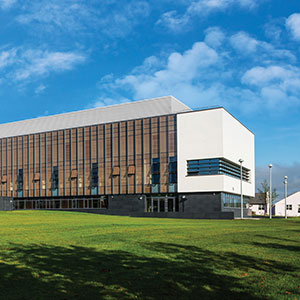
University of Galway has earned international recognition as a research-led university with a commitment to top quality teaching across a range of key areas of expertise.
-
Research & Innovation

Research & Innovation
University of Galway’s vibrant research community take on some of the most pressing challenges of our times.
-
Business & Industry
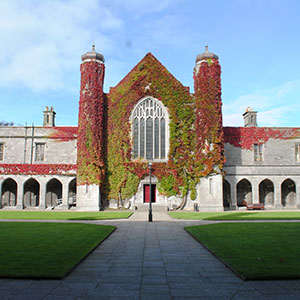
Guiding Breakthrough Research at University of Galway
We explore and facilitate commercial opportunities for the research community at University of Galway, as well as facilitating industry partnership.
-
Alumni & Friends

Alumni & Friends
There are 128,000 University of Galway alumni worldwide. Stay connected to your alumni community! Join our social networks and update your details online.
-
Community Engagement
Community Engagement
At University of Galway, we believe that the best learning takes place when you apply what you learn in a real world context. That's why many of our courses include work placements or community projects.
 Accessibility & Language
June Inflammation in the Huntington’s disease brain may identify new therapeutics
Inflammation in the Huntington’s disease brain may identify new therapeutics
Professor Andrea Kwakowsky, Associate Professor of Pharmacology, School of Pharmacy and Medical Sciences, University of Galway. Photo: Martina Regan
Jun
04
2026
Posted: 14:08 IST
Researchers have gained a greater understanding of the role inflammation plays in Huntington’s disease progression, to help identify potential therapeutic targets for treatment.
The study was led by University of Galway and investigated whether the degree of inflammation in the midcingulate cortex - a part of the brain that plays a role in emotion processing, decision-making and cognitive control - correlates with the degree of cell death and type and severity of symptoms, particularly mood-related symptoms in Huntington’s disease.
Huntington’s disease is an inherited disease that causes the progressive death of nerve cells in the brain. It has a broad impact on a person's functional abilities and usually results in movement, cognitive and psychiatric problems. Behavioural and psychiatric symptoms are often named the most burdensome for patients and their families, changing family roles, dynamics and relationships.
The study was published in the journal Communications Medicine and can be read here.
Professor Andrea Kwakowsky, Associate Professor of Pharmacology, School of Pharmacy and Medical Sciences, University of Galway, and lead author, said: “With our society facing an ageing population, Huntington’s disease could become more common, with some patients showing low-grade, late-onset forms of the disease.
“Overall, the results present a complex picture of potential inflammation priming - where cells or tissues exposed to an initial inflammatory signal become more persistent - in the Huntington’s disease midcingulate cortex, rather than a highly active inflammatory response within the central nervous system.
“This research shows that neuroinflammation-related genes are activated in all Huntington’s disease cases, and are particularly strong in cases with dominant motor symptoms compared to those with mood or mixed symptoms.
“The results point to a unique involvement of the midcingulate cortex in motor-specific neuroinflammatory pathology, suggesting it may serve as an early marker of disease progression and merits further study.”
The researchers performed critical experiments to determine the degree of inflammation in the midcingulate cortex and its link to Huntington’s disease symptoms, particularly the behavioural and psychiatric symptoms. They also identified novel genes which are involved in neuroinflammatory processes.
Prolonged inflammation in the brain can be destructive. The physiological symptoms of Huntington’s disease have been linked to neuroinflammation due to the presence of inflammatory mediators - chemical substances released by immune cells, and reactive glial cells - the brain’s fundamental response to damage. Many cell communication pathways likely interact to propagate neuroinflammation in the brain.
Professor Kwakowsky said: “Neuroinflammation is thought to cause cell loss, and cell loss in the cingulate cortex – a brain region that links emotion, cognition, memory and motor function – linked to Huntington’s disease mood symptoms. However, the presence of neuroinflammation in Huntington’s disease of the midcingulate cortex, which manages emotion regulation, has not yet been investigated.”
The study was funded by the University of Galway, Aotearoa Foundation, Centre for Brain Research, the University of Auckland, the Health Research Council of New Zealand, Alzheimer’s New Zealand, Freemasons New Zealand, Neurological Foundation of New Zealand, Maurice and Phyllis Paykel Trust, and the Whau Foundation.
Ends
Related News
19 October 2026
Four generations of women share a University of Galway connection
19 October 2026
Tús le comhpháirtíocht straitéiseach don chultúr agus don oideachas idir an Ollscoil agus an Músaem
19 October 2026
University and Museum unveil strategic partnership for culture and education
15 October 2026
Ollscoil na Gaillimhe ag ceiliúradh agus beagnach 2,800 duine ag fáil a gcéime ag na searmanais bhronnta
15 October 2026
University of Galway celebrates almost 2,800 graduates at conferring ceremonies
Featured Stories
Monday,
19
October
2026
Four generations of women share a University of Galway connection
Monday,
19
October
2026
Tús le comhpháirtíocht straitéiseach don chultúr agus don oideachas idir an Ollscoil agus an Músaem
Monday,
19
October
2026