-
Courses
Courses
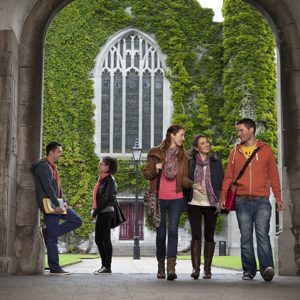
Choosing a course is one of the most important decisions you'll ever make! View our courses and see what our students and lecturers have to say about the courses you are interested in at the links below.
-
University Life
University Life
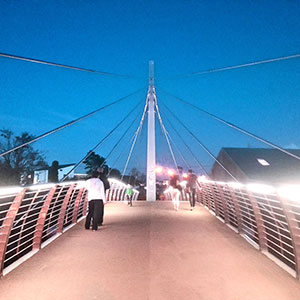
Each year more than 4,000 choose University of Galway as their University of choice. Find out what life at University of Galway is all about here.
-
About University of Galway
About University of Galway
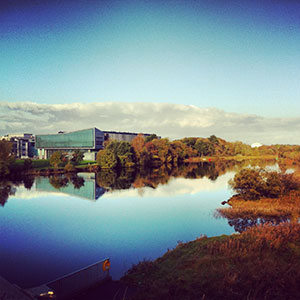
Since 1845, University of Galway has been sharing the highest quality teaching and research with Ireland and the world. Find out what makes our University so special – from our distinguished history to the latest news and campus developments.
-
Colleges & Schools
Colleges & Schools
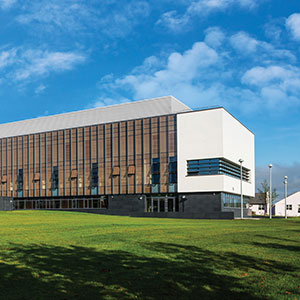
University of Galway has earned international recognition as a research-led university with a commitment to top quality teaching across a range of key areas of expertise.
-
Research & Innovation
Research & Innovation
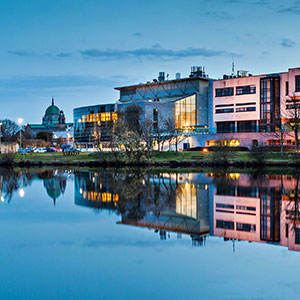
University of Galway’s vibrant research community take on some of the most pressing challenges of our times.
-
Business & Industry
Guiding Breakthrough Research at University of Galway
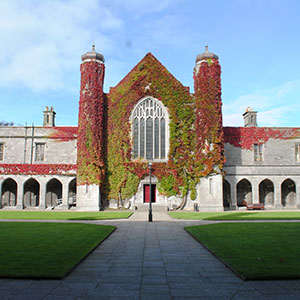
We explore and facilitate commercial opportunities for the research community at University of Galway, as well as facilitating industry partnership.
-
Alumni & Friends
Alumni & Friends
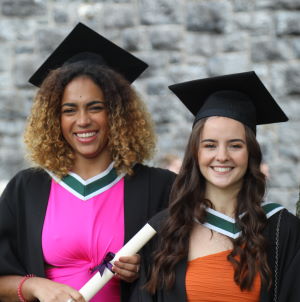
There are 128,000 University of Galway alumni worldwide. Stay connected to your alumni community! Join our social networks and update your details online.
-
Community Engagement
Community Engagement
At University of Galway, we believe that the best learning takes place when you apply what you learn in a real world context. That's why many of our courses include work placements or community projects.
 Accessibility & Language
March
Thursday, 19 March 2026
University of Galway economist calls for a stronger focus on homegrown entrepreneurs, innovation and talent for high living standards Ireland’s economic model is in need of urgent reform to sustain high standards of living for future generations, research from University of Galway has warned. The study raises the spectre of global investment patterns shifting due to geopolitical developments, leaving Ireland increasingly depend on home-grown technological progress to drive income growth. The research - commissioned by Stripe founders John and Patrick Collison - shows that the Irish economy has one of the highest productivity rates in the world, with decades of growth driving rising incomes and high living standards. It notes that over the past 50 years, real income per person has tripled, rising from about €17,500 in 1970 to over €53,000 in 2023, with economic growth largely driven by foreign direct investment (FDI) from the United States. Author of the report, Professor of Economics at University of Galway, Alan Ahearne, echoed warnings that Ireland is heavily reliant on a relatively small number of foreign-owned multinational companies. The study states that Ireland urgently needs to build a world-class entrepreneurial ecosystem to improve its track record at forging indigenous high-growth firms with the potential to develop innovative products and services based on advanced technology. Professor Alan Ahearne, J.E. Cairnes School of Business and Economics, University of Galway, said: “The most important ingredient for a successful entrepreneurial ecosystem is human capital and talent. Ireland, which in the past has used tax policy to attract physical capital from abroad (FDI), should now consider how to use tax policy to attract human capital from abroad to augment our existing talent base.” In a statement to coincide with the publication of the research, Stripe founders John and Patrick Collison, said: “We welcome this research and its empirical contribution to the discussion around Ireland’s economic future. In an increasingly competitive and volatile world, putting in place the systems and conditions to accelerate scientific and technological progress will be critical for future living standards in Ireland.” The research pointed to the crucial role of talent and human capital in creating and fostering self-reinforcing clusters of innovation. Among the policy levers available to Irish policymakers, the research paper noted the potential use of tax policies to attract skilled professionals from abroad, similar to approaches recently introduced in other countries, and that they will likely prove the most impactful. The report is available here. Ends
Wednesday, 18 March 2026
University of Galway is inviting prospective students, parents and teachers to explore its campus and undergraduate programmes during its Spring Undergraduate Open Day. The event takes place on Saturday March 21st from 9am to 3pm and will feature five exhibition areas across the city-centre campus, more than 90 course and subject talks and opportunities for visitors to experience life at the university and the campus first-hand. The Open Day provides an opportunity for prospective students to explore degree options, facilities and the student experience as they prepare for CAO 2026. Visitors can attend talks, take guided tours, and meet faculty, staff and current students across a variety of disciplines. Academics and support staff from the University’s College of Arts, Social Sciences and Celtic Studies will also be hand to reassure prospective students, parents and guardians and teachers that there are no changes are planned to current Arts programmes. The University offers more than 60 internationally recognised undergraduate programmes, including Medicine, Nursing, Health Sciences, Arts, Science, Engineering, Business, Law, and Hotel Management, with over 90% of programmes offering work placements or study abroad opportunities. Highlights of the Open Day include: Accommodation Talk – Learn about campus living, accommodation options, and how to settle into university life at the Purple Zone at 10am. Nursing and Midwifery Tours - Tours of the state-of-the-art facilities depart from Áras Moyola, Green Zone at 12.45pm and 1.30pm. Law and Moot Court Experience - Step inside the School of Law's Moot Court to experience a real courtroom. Five tours available throughout the day with registration taking place at Stand 45 in the Orange Zone. Science and Engineering Tours - Explore the Engineering Building with tours starting from the Green Zone foyer. Chemistry Lab Tours – Register at Stand 18 in the Purple Zone for hands-on lab tours. Drama Masterclass and Theatre Tours - Drama enthusiasts can attend a Masterclass at 1pm or tour the O'Donoghue Drama and Theatre Performance Centre. Meet point is in the Blue Zone foyer at 11.30am. Sports and Scholarships – Meet coaches and athletes and learn about sports scholarships and cutting-edge facilities in The Cube, Orange Zone. Zoology Museum Tours – Discover the fascinating world of animals at the Zoology Museum, with guided tours highlighting unique collections and interactive exhibits. Registration is available at stand 13 in the Purple Zone. Students can also explore campus accommodation, and parents can attend a talk at 11:30am offering guidance on supporting students during the transition to university life. Sarah Geraghty, Director of Student Recruitment and Outreach at University of Galway, said: “Our Open Day is the perfect chance for students to step inside their future and see what's possible. From world-class facilities to Moot Court to hands-on tours, students can truly experience university life. “Our College of Arts, Social Sciences and Celtic Studies team will be on hand to chat to students and parents about all our Arts degrees and to reassure students that we have no plans to change any of our arts programmes. We can’t wait to meet future students and help them discover the study paths and career opportunities that inspire them most.” Advance registration is required. Full programme details and registration are available at www.universityofgalway.ie/opendays, or email opendays@universityofgalway.ie. Ends
Tuesday, 17 March 2026
Dan Carey, Professor of English at University of Galway, has been elected as the 59th President of the Royal Irish Academy (RIA). Professor Carey succeeds Professor Pat Guiry at the conclusion of his Presidential term at the helm of Ireland’s independent learned society and leading body of experts in the sciences, humanities and social sciences. Elected to membership of the Academy in 2014, Professor Carey has been an active contributor to its work, serving as Vice-President in 2017–18 and 2020–21; Secretary for Humanities and Social Sciences from 2021–24; and Secretary from 2024–26. He also served as Chair of the Irish Research Council from 2022 to 2024. Commenting on his election, Professor Carey said: "It is a great honour to be elected President of the Royal Irish Academy. I look forward to building on the Academy’s strengths by contributing our expertise, engaging the public, developing research programmes, and supporting governance and staff. We will deepen key relationships with the Higher Education Authority, the Department of Further and Higher Education, Research, Innovation and Science, and Research Ireland, while growing the international profile of our work. Alongside this, we will strengthen fundraising to support core activities, advance equality, diversity and inclusion, and expand the Academy as a space of interaction and engagement, enhancing our convening power through the work of our programmes. I look forward to working with Members and staff to reinforce the Academy’s commitment to public life, north and south." The Academy also paid tribute to outgoing President Professor Pat Guiry, thanking him for his dedicated leadership and his profound commitment to the Academy’s Members, partners and staff, and to the wider research, academic and policy communities. Lynn Scarff, Executive Director, RIA said: "The role of President carries responsibility for stewarding the Academy and sustaining its influence as a trusted voice in public discourse and policy formulation. I look forward to working with Professor Carey as President, continuing to strengthen the impact of the Royal Irish Academy, expand collaborative opportunities, and enhance its service to scholarship and the public good." Recent past presidents include Dr Mary Canning (2020–2023), Professor Peter Kennedy (2017–2020) and Professor Mary E. Daly (2014–2017). Ends
Monday, 16 March 2026
Analysis shows living reef ecosystem host previously unknown biomolecules with potential for future medicine and biotechnology An international consortium of scientists has uncovered new insights into coral ecosystems, revealing that different coral species host their own distinct communities of microbes. The research, which involved a team at University of Galway, shows that coral reefs harbour diverse microbes and produce chemicals with promising potential for future application in medicine and biotechnology. The full study is published in Nature and can be read here. Coral reefs are often called the rainforests of the sea, supporting a third of all marine macroscopic organisms and operating as marine biodiversity hotspots with a wide range of ecosystem services such as ecotourism and nutrient cycling. The scientific research has revealed that their true diversity lies in their microbiome - invisible to the naked eye. With support from the Tara Pacific consortium, the international research team analysed microbiome samples collected from 99 different coral reefs across 32 islands throughout the Pacific Ocean. They reconstructed the genomes of 645 microbial species - more than 99% of which had never previously been genomically characterised. These microbes are highly specialised partners of their coral hosts, functioning as prolific producers of bioactive compounds. The study revealed that these coral-associated bacteria contain a greater variety of biosynthetic gene clusters - the blueprints for natural products - than has so far been documented in the world’s ocean. Dr Maggie Reddy, Ryan Institute, University of Galway, said: “When we compared our findings with microbes found on other reef species, it became clear how little we still know. Of more than 4,000 microbial species identified, only 10% have any genetic information available, and fewer than 1% of the species found only in the Tara Pacific samples have been studied at all. This shows a major gap in our understanding and underlines the need for much more biodiversity surveys, especially in under-studied regions.” The research highlights a critical, often overlooked dimension of conservation: when coral reefs die, we don't just lose the corals, sponges, seaweeds and fish; we lose a vast "molecular library" linked to the microbial life. And it noted that biochemical characterisation of previously unknown enzymes and compounds suggests an immense, untapped potential for biotechnology and medicine. Professor Olivier Thomas, Ryan Institute, University of Galway, said: “The biosynthetic potential of reef-building coral microbiomes rivalled or surpassed that of traditional natural product sources like sponges. Among the biosynthetically rich bacteria in the reef microbiome, we identified previously unknown microorganisms (e.g. Acidobacteriota) living with corals that produce new enzymes with exciting potential biotechnology uses. “The research is a clear call to action to protect our coral reefs – not just because of their value as a unique ecosystem – but to preserve the unique chemical diversity poised to enable future scientific breakthroughs.” The study involved researchers from the Marine Biodiversity Lab at the Ryan Institute at University of Galway, led by Dr Maggie Reddy and Professor Olivier Thomas, who are part of the Tara Pacific consortium, an international consortium of marine scientists addressing the challenges our oceans face due to climate change. They worked alongside scientists in ETH Zurich. Dr Reddy and Professor Thomas will join an international team of scientists on the upcoming Tara Coral expedition this June in Papua New Guinea, funded by the Tara Foundation and associated public and private partners. During the voyage, they will collect additional marine samples from the region and investigate the factors that enable certain reef-building corals to be more resilient in the face of climate change. The coral microbiome is a complex community of bacteria, archaea, fungi, viruses, and algae that live on and within coral tissues, acting as a crucial, functional unit known as the holobiont. The microbiome samples studied in this research, published in Nature, were collected during the Tara Pacific expedition in 2016-2018. This work has mapped the microbial landscape of reef-building corals at an unprecedented scale in an ocean which is home to 40% of the world’s coral reefs. For more information about the Tara Foundation and the Tara Coral expedition to the Coral Triangle in 2026-2027 visit: https://fondationtaraocean.org/en/expedition/tara-coral/ Ends
Thursday, 12 March 2026
University of Galway’s Shannon College of Hotel Management has celebrated the achievements of its 2026 graduating class – marking 75 years of world-class hospitality education. Since its founding in 1951, almost 3,000 students have graduated from Shannon College, progressing into leadership roles across global hospitality and business sectors. A special celebration is planned for later this year to mark the 75th anniversary of Shannon College of Hotel Management. Graduates were recognised during the conferring ceremony with a range of scholarships, prizes and industry-sponsored awards, reflecting academic excellence and talent. A total of 27 prizes and scholarships to the value of over €30,000 were presented, including the distinguished Banfi Scholarship, the Guinness Storehouse Scholarship and the Shannon College of Hotel Management Alumni Prize. A unique part of the Shannon College experience is the Class Patron Programme, which pairs each class with a senior hospitality leader for mentorship and career guidance. The 2026 Class Patron is Shannon College graduate John Burke, owner and Chief Executive Officer of Armada in Spanish Point and co-owner of Fiddle + Bow collection, in Doolin. Named Clare Person of the Year in 2018, he is recognised for his leadership in sustainable business and advocacy for regional development and youth mental health. He became the first Clare man to summit Mount Everest in 2017, raising funds for youth wellness charity Elevate. Delivering the keynote address at the Graduation Ball in Dromoland Castle, following the on-campus ceremony, Mr Burke said: “You are stepping into a journey full of opportunity. Every experience along the way – the learning, the effort and even the challenges – shapes you to grow, thrive and create a career full of meaning and success.” Shannon College’s graduate employment record is supported by strong industry partnerships and an international network of work placement opportunities. This year’s class completed final placements in leading hotels and hospitality organisations in Los Angeles, London, Ireland, Australia, France, Canada, United Arab Emirates, and the Seychelles. Professor David Burn, President of University of Galway said: “Shannon College of Hotel Management continues to stand as a springboard for leadership and talent within Ireland’s hospitality sector and far beyond. Today, we proudly celebrate the hard work, professionalism and ambition of the Class of 2026, supported throughout their journey by our dedicated faculty and industry partners. Our graduates step out today ready to make their mark, and I wish each of them every success as they begin the next chapter of their careers.” Adrian Sylver, Head of Shannon College of Hotel Management, said: “The John Burke Class that graduated today reflects the ambition, professionalism and global outlook that define Shannon College of Hotel Management. The graduates have demonstrated not only academic excellence but a deep commitment to leadership and service within our industry. As they join the worldwide network of Shannon alumni, they step into a community that opens doors across continents and cultures – a powerful reminder that their careers will extend far beyond any single destination. We are immensely proud of their achievements and confident that they will shape the future of hospitality on a truly global stage.” Professor Alma McCarthy, Executive Dean of the College of Business, Public Policy and Law, said: “The Class of 2026 has shown exceptional commitment during their time at Shannon College of Hotel Management. Their ability to learn, adapt and support one another has prepared this group to contribute meaningfully to the hospitality sector both nationally and internationally. I am confident they will carry forward the values of openness, excellence and belonging, and I look forward to seeing all that they will achieve.” Ends
Wednesday, 11 March 2026
Beidh Ollscoil na Gaillimhe ag tabhairt faoi thionscnamh náisiúnta a spreagfaidh daoine le spéis a chur in ábhair Eolaíochta, Teicneolaíochta, Innealtóireachta agus Matamaitice (ETIM), ar a dtugtar STEM go hidirnáisiúnta, trí Ghaeilge, agus a chothóidh deiseanna nua do phobail, scoileanna agus daoine gairmiúla. Bhronn Taighde Éireann – Research Ireland €268,000 tríd an gClár Discover ar an tionscadal STEM as Gaeilge a mhairfidh ar feadh dhá bhliain. Tá an maoiniú á chur ar fáil le clár náisiúnta cumarsáide eolaíochta, imeachtaí poiblí agus tionscnamh oideachais a eagrú trí Ghaeilge, a chuirfidh le feiceálacht STEM agus a neartóidh conairí oideachais agus gairmeacha STEM do lucht labhartha na Gaeilge ar fud na tíre. Beidh na tionscnaimh á n-eagrú thar thréimhse dhá bhliain, agus beidh pobail na Gaeilge, daoine gairmiúla i réimse STEM, agus foghlaimeoirí ar fud na tíre páirteach iontu. Seo a leanas cuid de na príomhthionscadail: Clár faisnéise a thabharfaidh léargas ar thaighde agus nuálaíocht STEM ar fud na hÉireann, léirithe i gcomhar le togra Science on Screen de chuid CÚRAM agus Ardán. Ceardlanna rannpháirtíochta digití agus litearthachta sonraí chun muinín a chothú i ndaoine le topaicí STEM a phlé agus a mhíniú i nGaeilge Leathnú ar scéim na dTimirí STEM as Gaeilge, ag nascadh taighdeoirí agus daoine gairmiúla le scoileanna agus pobail Imeachtaí STEM ar leith i gceantair Ghaeltachta Oícheanta Ólaíochta a eagrú in áiteanna nua ar fud na tíre Oiliúint speisialaithe a chuirfeadh leis an acmhainn go fadtéarmach i measc daoine gairmiúla atá ag obair i réimse STEM as Gaeilge Comórtas náisiúnta STEM do dhaltaí scoile Tá sé mar aidhm ag na tionscnaimh seo ar fad le chéile an Ghaeilge a normalú i ndioscúrsa na heolaíochta agus cur le líon na ndaoine a bhíonn páirteach i STEM i bpobail ar fud na tíre. Bhí an méid seo le rá ag an Ollamh Becky Whay, Uachtarán Ionaid agus Meabhránaí Ollscoil na Gaillimhe: “Tá Ollscoil na Gaillimhe bródúil as an stádas dátheangach atá aici, agus táimid ar bís faoin tionscadal seo. Cuirimid romhainn tacú leis an nGaeilge i ngach disciplín. Tá deis ar leith ag an Ollscoil seo, a bhfuil Acadamh na hOllscolaíochta Gaeilge agus campais Ghaeltachta ina gcuid di, le naisc a chothú leis na comhlachtaí bithleighis, fuinnimh in-athnuaite, srl. sa Ghaeltacht. Trí chumhacht a thabhairt do mhic léinn, do chomhaltaí foirne agus do phobail dul i ngleic leis an eolaíocht trí mheán na Gaeilge, táimid ag cuidiú le conairí foghlama, nuálaíochta agus rannpháirtíochta an phobail a neartú ar fud na tíre.” Bhí an méid seo a leanas le rá ag Ceannaire an Tionscadail, an Dr Fintan Hegarty ó Scoil na nEolaíochtaí Matamaitice agus Staitistice san Ollscoil: “Is teanga bheo í an Ghaeilge, agus tá sé tábhachtach go n-úsáidfimid í chun plé a dhéanamh ní hamháin ar ár n-oidhreacht, ach ar na ceisteanna a mbeidh tionchar acu ar a bhfuil i ndán dúinn amach anseo chomh maith. Baineann STEM linn ar fad – ní gá ach smaoineamh ar an dul chun cinn i ngnóthaí leighis le linn na paindéime agus ar a bhfuil á fhorbairt maidir leis an intleacht shaorga, mar shampla. Is é an aidhm atá againn spásanna a chruthú inar féidir linn díospóireacht shuimiúil, bunaithe ar eolas, a bheith againn faoi STEM, agus dearmad a dhéanamh gur trí Ghaeilge atáimid á phlé.” Críoch
Wednesday, 11 March 2026
University of Galway will lead a national initiative to bring STEM to life through the Irish language, creating new opportunities for communities, schools, and professionals. The two-year STEM as Gaeilge project has been awarded €268,000 by Taighde Éireann – Research Ireland through the Discover Programme. The funding will support a national programme of science communication, public events and educational initiatives delivered through Irish, increasing the visibility of STEM and strengthening pathways to STEM education and careers for Irish speakers nationwide. Activities will roll out over two years, engaging with Irish-speaking communities, STEM professionals, and learners nationwide. Key initiatives of the project include: A documentary showcasing STEM research and innovation across Ireland, which will be produced through the Science on Screen initiative run by CÚRAM and Ardán Delivery of workshops in digital engagement and data literacy to build confidence in discussing and interpreting STEM topics through Irish Expansion of the STEM Ambassadors through Irish scheme, connecting researchers and professionals with schools and communities Dedicated STEM events in Gaeltacht regions Expansion of Oícheanta Ólaíochta (Pint of Science in Irish) to new locations nationwide Specialist training to build long-term capacity among professionals working in STEM through Irish A national STEM competition for school students Together, these initiatives aim to normalise Irish in scientific discussion and increase participation in STEM across communities nationwide. Professor Becky Whay, University of Galway Deputy President and Registrar, said: “University of Galway is proud of its bilingual status, and we are very excited about this project. Supporting the Irish language is important to use across all disciplines. The University is uniquely positioned, with Acadamh na hOllscolaíochta Gaeilge and our Gaeltacht campuses, to foster connections with the many biomedical and renewable energy companies in the Gaeltacht. By empowering students, staff and communities to engage with science through Irish, we are helping to strengthen pathways for learning, innovation and public participation across the country." Project Lead Dr Fintan Hegarty from the University’s School of Mathematical and Statistical Sciences, said: “Irish is a living language, and it is important that we use it to discuss not only our heritage, but also the issues that shape our future. STEM affects us all - from medical advances during the pandemic to developments in artificial intelligence. Our aim is to create spaces where we can have informed and engaging conversations about STEM, and simply forget that we happen to be having them in Irish.” Ends
Monday, 9 March 2026
Tá “Slí Abhann” nua 5km seolta ag Ollscoil na Gaillimhe chun folláine choirp agus mheabhrach na mac léinn, na foirne agus an phobail i gcoitinne a fheabhsú. Sheol Méara Chathair na Gaillimhe, an Comhairleoir Mike Cubbard, agus Uachtarán Ollscoil na Gaillimhe, an tOllamh David Burn, an tionscnamh mar chuid d’infheistíocht leanúnach na hOllscoile in áiseanna faoin aer, le tacaíocht mhaoinithe ó na cláir Cathracha Gníomhacha agus Gaillimh Shláintiúil Chomhairle Cathrach na Gaillimhe. Tosaíonn an tSlí Cois Abhann atá marcáilte as an nua ar an gcampas ag Club Rámhaíochta Choláiste Iognáid agus ritheann sé feadh bhruach Abhainn na Gaillimhe, ag críochnú ag an bpáirc rugbaí ar Champas Spóirt an Daingin. Baineann an tslí álainn cois abhann seo úsáid as an gcosán tarraingthe agus tá pointí ciliméadar marcáilte go soiléir ann chomh maith le léarscáileanna treorach chun tacú le coisithe, jagálaithe agus reathaithe de gach cumas. Is cosán í an tSlí Cois Abhann a bhfuil tóir uirthi cheana féin ag grúpaí reatha agus pobail áitiúla agus spreagfaidh sé daoine ag gach leibhéal, ó choisithe go lúthchleasaithe agus iad siúd atá ag traenáil. Dúirt Méara Chathair na Gaillimhe, an Comhairleoir Mike Cubbard: "Tá áthas ar Chomhairle Cathrach na Gaillimhe tacú le forbairt Shlí Cois Abhann, trínár gcláir Cathracha Gníomhacha agus Gaillimh Shláintiúil. Trí na cláir seo, tá súil againn gur cathair inar féidir le gach duine, beag beann ar aois nó ar chumas, taitneamh a bhaint as sláinte agus folláine choirp agus mheabhrach go hiomlán a bheas dá mbarr. Is sampla den scoth é seoladh Shlí Cois Abhann d’áis aclaíochta saor in aisce ar feadh na bliana i gcroílár Chathair na Gaillimhe. Comhghairdeas le hOllscoil na Gaillimhe as seoladh na saoráide seo a mbainfidh an pobal an-leas as gan dabht.” Dúirt an tOllamh David Burn, Uachtarán Ollscoil na Gaillimhe: “Le seoladh Shlí Cois Abhann, táimid ag neartú ár dtiomantais tacú le folláine choirp agus mheabhrach ár mac léinn, ár bhfoirne agus an phobail i gcoitinne. Is cuid shainiúil dár gcampas Abhainn na Gaillimhe agus is beag ollscoil a bhfuil slí 5km cois abhann mar seo acu. Agus tú ar an tSlí, timpeallaithe ag uisce agus ag crainn, cheapfá gur faoin tuath atá tú, cé nach bhfuil tú ach cúpla nóiméad ó chroílár chathair na Gaillimhe. Is gné neamhchoitianta agus uathúil de shaol an champais í agus táimid ar bís í a roinnt le gach duine.” Bhí an méid seo a leanas le rá ag Des Ryan, Stiúrthóir Spóirt agus Folláine Coirp Ollscoil na Gaillimhe: “Cuirfidh sé go mór leis an gcampas do mhic léinn, don fhoireann agus don phobal i gcoitinne. Cuideoidh sé leis an té atá aclaí cheana féin agus gríosfaidh sé an té atá ag smaoineamh ar a bheith níos aclaí. Spreagfaidh sé daoine le siúl, sodar nó rith, agus cabhróidh siad seo go léir lenár bhfolláine choirp agus mheabhrach agus tabharfaidh sé fuinneamh breise dúinn don obair, don saol agus só a bhaint as rudaí. "I measc na mbuntáistí a bhaineann le gníomhaíocht choirp tá laghdú ar an mbaol a bhaineann le galair ainsealacha, feabhas a chur ar ghiúmar agus ar chaighdeán codlata, agus matáin agus cnámha a láidriú. Cuidíonn sé le meáchan a bhainistiú, leibhéil fuinnimh a mhéadú, feidhm chognaíoch a fheabhsú i measc daoine scothaosta, agus cuidíonn sé le galair cosúil le hairtríteas agus dúlagar a bhainistiú. Tá sé mar aidhm ag an gcosán Slí Cois Abhann gníomhaíocht choirp a bheith níos inrochtana, níos infheicthe agus go mbeadh sé níos éasca ar gach duine tabhairt fúithi.” Comhthionscadal a bhí anseo idir Oifig na bhFoirgneamh agus na nEastát san Ollscoil agus an tAonad Spóirt, le tacaíocht mhaoinithe ó Chathracha Gníomhacha na Gaillimhe trí Chiste Cuntas Díomhaoin Spórt Éireann agus ó Chathair Shláintiúil na Gaillimhe tríd an gCiste Éire Shláintiúil a fuair tacaíocht ón Roinn Sláinte. Cuirfidh an cosán nua Slí Cois Abhann leis na háiseanna folláine faoin aer agus le bonneagar na hOllscoile, atá leathnaithe le blianta beaga anuas agus a thacaíonn le breis is 40 club spóirt, grúpaí mac léinn, tionscnaimh foirne agus eagraíochtaí pobail. I measc na n-áiseanna tá: Cúirt cispheile lánmhéide faoin aer Cúirt cispheile 3v3 Áiseanna leadóige boird Dhá stáisiún aclaíochta faoin aer An tIonad Spóirt agus Campas Spóirt an Daingin Tá físeán gearr a léiríonn Slí Siúlóide/Sodair/Reatha nua Cois Abhann ar fáil ag https://www.youtube.com/watch?v=kPtiPieIwME Críoch
Monday, 9 March 2026
University of Galway has unveiled a new 5km River Route to enhance physical and mental wellbeing for students, staff and the wider community. The initiative was launched by Mayor of the City of Galway, Councillor Mike Cubbard, and University of Galway President, Professor David Burn, as part of the University’s ongoing investment in outdoor facilities, with funding support from Galway City Council’s Active Cities and Healthy Galway programmes The newly marked River Route begins on campus at the Jes Rowing Club and runs along the banks of the River Corrib, finishing at the rugby pitch within the University’s Dangan Sports Campus. The scenic riverside route makes use of the tow path and features clearly marked kilometre points and navigation maps to support walkers, joggers and runners of all abilities. The River Route formalises and enhances a pathway already popular with local running and community groups and is designed to encourage participation by people at every level, from casual walkers to more competitive athletes and those in training. Mayor of the City of Galway, Councillor Mike Cubbard said: ”Galway City Council is delighted to support the development of this fantastic River Route, through our Active Cities and Healthy Galway programmes. These programmes envision a Galway City where everyone, regardless of age or ability, can enjoy physical and mental health and wellbeing to their full potential. The launch of the River Route is an excellent example of a free year-round exercise facility in the heart of Galway City. Congratulations to University of Galway on the launch of what will no doubt be a very well-used facility for the community.” Professor David Burn, University of Galway President, said: “With the launch of this new River Route, we are strengthening our commitment to supporting the physical and mental wellbeing of our students, staff and the wider community. The River Corrib is a defining feature of our campus and very few universities can offer a 5km riverside experience like this. When you are on the route, surrounded by water and trees, it feels like being in the countryside, even though you are just minutes from the heart of Galway city. It’s a rare and unique part of campus life that we’re excited to share with everyone.” Des Ryan, Director of Sport and Physical Wellbeing at University of Galway, said: “This is an excellent addition to our campus for students, staff and the wider community. It will act as a support for people who are active and an inspiration for people who are thinking of being more active. It will influence people to walk, jog or run, all of which will help improve our physical and mental wellbeing and give us extra energy for work, life and the things we enjoy. “The benefits of physical activity include reducing the risk of chronic diseases, improving mood, enhancing sleep quality, and strengthening muscles and bones. It helps manage weight, boosts energy levels, improves cognitive function in older adults, and aids in managing conditions like arthritis and depression. The new River Route aims to make physical activity more accessible, visible and achievable for everyone.” The project was a collaborative project between the University’s Buildings and Estates Office and the Sports Unit, with funding support from Active Cities Galway through Sport Irelands Dormant Account Fund and Healthy Galway City through the Healthy Ireland Fund supported by the Department of Health. The new River Route builds on the University’s outdoor wellbeing facilities and infrastructure, which has expanded in recent years and supports more than 40 sports clubs, student groups, staff initiatives and community organisations. The facilities include: A full-size outdoor basketball court A 3v3 basketball court Table tennis facilities Two outdoor exercise stations The Sports Centre and Dangan Sports Campus A short video overview of the new River Walk/Jog/Run Route is available at https://youtu.be/kPtiPieIwME. Ends
Monday, 2 March 2026
New research led by University of Galway has found that burning "low smoke" manufactured fuels release tiny ultrafine particles that are potentially more harmful to human health. Scientists at the University’s Ryan Institute carried out a series of controlled burn experiments using peat, wood, “low‑smoke” manufactured products, including “low‑smoke” coal - where smoky coal has been prohibited since 2022 - in domestic stoves to understand exactly what different home‑heating fuels release into the air. The researchers measured the smoke using advanced instruments that track how many particles are produced, how big they are, and what they are made of. The team also collected real‑world air measurements in Dublin and Birr, Co Offaly over several years, allowing them to compare laboratory results with what people actually breathe during winter pollution episodes. By combining these measurements with statistical fingerprinting techniques and established lung‑deposition models, the researchers identified which fuels contribute most to harmful pollution and how deeply those particles can penetrate into the respiratory system. The results - observed in a “low smoke” zone in Ireland but relevant across Europe and highly consequential for rapidly transitioning regions such as China and India - show that EU, international and national regulatory frameworks need to respond faster to the growing body of scientific evidence. The research has been published in Nature Geosciences here. The study was led by the Centre for Climate and Air Pollution Studies, Ryan Institute, University of Galway, in collaboration with partners from Ireland, China, Australia and the USA. Professor Jurgita Ovadnevaite, Director of the Centre for Climate and Air Pollution Studies, Ryan Institute, University of Galway, said: "Our study shows that in trying to cut particulate mass, emissions of the tiniest particles have unintentionally been driven up, which may be even more harmful to human health. These ultrafine particles from 'low smoke' fuels penetrate deepest into the lungs, from there to the cardiovascular system, and they can even reach the brain. “Based on this data, we underscore the need to move away from residential solid fuel burning as part of the wider societal aim to decarbonise the economy by 2050." The findings also highlight the urgent need to revise EU and International air quality standards to include ultrafine particles, ensuring air quality management strategies reduce mass concentration while not increasing ultrafine particle numbers. The study demonstrates that replacing smoky fuels with “low-smoke” counterparts results in a two to three-fold increase in ultrafine particle emissions. Considering that the smaller ultrafine particles can penetrate deeper into the lungs and deposit there, this newly documented trend may offset some of the benefits of reducing smoke emissions. Instead of reducing the human exposure to ultrafine particles by reducing the total particulate matter (PM) mass, it results in an increase in the number of ultrafine particles and, potentially, health effects. Study shows that the particle number concentrations are significantly (ten times) underestimated in current air quality models Air pollution is responsible for several million premature deaths worldwide each year. A major driver behind this alarming statistic is exposure to airborne fine particulate matter (PM2.5; less than 2.5 µm in diameter). Even in Ireland – often perceived as having clean air – PM2.5 pollution is linked to more than 1,700 premature deaths annually. Compared to PM2.5, ultrafine particles (less than 100 nm in diameter) induce more severe pulmonary inflammation and exhibit prolonged lung retention due to their ability to penetrate deep into the respiratory tract, even crossing the bloodbrain barrier. Their toxicity increases with decreasing size, larger specific surface area, surface-bound constituents, and inherent physical properties. Despite the health burden of ultrafine particles being increasingly recognised in European policy with the recently revised Ambient Air Quality Directive (EU 2024/2881), which for the first time introduces mandatory monitoring of ultrafine particles across Member States. This study adds to the body of evidence that the directive needs to go even further and define binding regulatory limit values for ultrafine particles. The Centre for Climate and Air Pollution Studies at University of Galway provides evidence to national and EU policymakers, supporting the development of air‑quality standards, emission‑reduction strategies, and climate‑action planning. Its work underpins Ireland’s capacity to meet emerging regulatory requirements, including the new EU obligations for ultrafine particle monitoring. The research was funded by the Environmental Protection Agency, Department of Climate, Energy and the Environment and Taighde Éireann – Research Ireland. Ends