-
Courses
Courses
Choosing a course is one of the most important decisions you'll ever make! View our courses and see what our students and lecturers have to say about the courses you are interested in at the links below.
-
University Life
University Life
Each year more than 4,000 choose University of Galway as their University of choice. Find out what life at University of Galway is all about here.
-
About University of Galway
About University of Galway
Since 1845, University of Galway has been sharing the highest quality teaching and research with Ireland and the world. Find out what makes our University so special – from our distinguished history to the latest news and campus developments.
-
Colleges & Schools
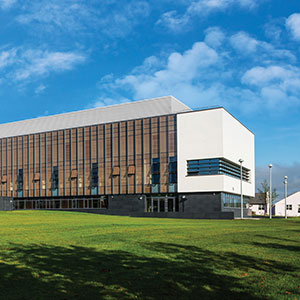
Colleges & Schools
University of Galway has earned international recognition as a research-led university with a commitment to top quality teaching across a range of key areas of expertise.
-
Research & Innovation
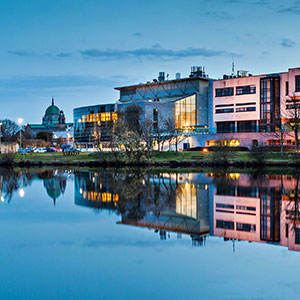
Research & Innovation
University of Galway’s vibrant research community take on some of the most pressing challenges of our times.
-
Business & Industry
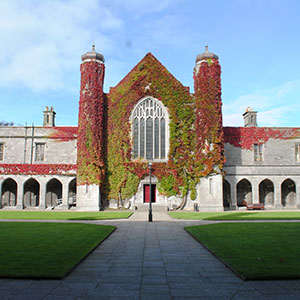
Guiding Breakthrough Research at University of Galway
We explore and facilitate commercial opportunities for the research community at University of Galway, as well as facilitating industry partnership.
-
Alumni & Friends

Alumni & Friends
There are 128,000 University of Galway alumni worldwide. Stay connected to your alumni community! Join our social networks and update your details online.
-
Community Engagement
Community Engagement
At University of Galway, we believe that the best learning takes place when you apply what you learn in a real world context. That's why many of our courses include work placements or community projects.
 Accessibility & Language
September University of Galway part of international mission to restore deep-sea coral reefs
University of Galway part of international mission to restore deep-sea coral reefs
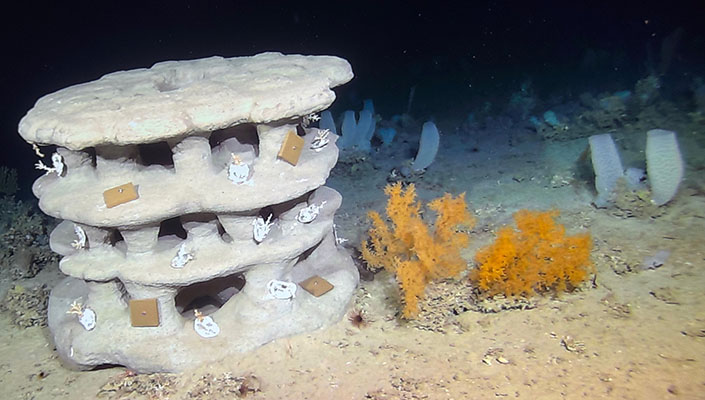
Installed Artificial Reef in 950m of water off the Porcupine Bank. Credit – Ifremer/REDECOR 2026
Sep
20
2026
Posted: 10:34 IST
Researchers from University of Galway are part of an international team testing the feasibility of restoring deep-sea coral habitats damaged by bottom trawling by installing 3D-printed artificial reefs.
Twenty-three artificial reefs have been placed on the deep seabed off the south-west Porcupine Bank, off the west coast of Ireland and in the Bay of Biscay, France, as a contribution to the Horizon Europe project ‘REDRESS’ (Restoration of deep-sea habitats to rebuild European Seas).
The current campaign is part of, a three-year mission known as the REDECOR (REstauration DEs CORaux d'eau froide), involving collaboration between researchers from University of Galway, Ifremer and the Sorbonne University in France.
The expedition to deploy the artificial reefs took place on board L’Atalante, a vessel of the French Oceanographic Fleet, during August. Reefs were placed at depths between 900 and 1100m off the Porcupine Bank, and in the Guilvinec Canyon, Bay of Biscay, where other reefs installed during the 2025 expedition were also monitored. Monitoring of both Irish and French restoration sites is planned next year on board an Irish research vessel.
Dr Anthony Grehan, a deep-sea ecologist at University of Galway and co-leader of the mission to the Porcupine Bank, said: “These deep-sea coral reefs provide vital habitat for a diversity of marine life, but many have been damaged over many years. Because these corals grow by only a few millimetres each year, natural recovery of lost reefs can take decades to centuries. With this project, we are testing whether we can actively accelerate that recovery by creating new starter structures for corals to grow on which also mimic reef structure to help re-establish functioning reef habitats. The early results are very encouraging, and if we can show that these approaches work, it could open up new possibilities to scale up the restoration of damaged coral reefs elsewhere in the Atlantic and beyond.”
While cold-water coral reefs are regarded as being less well-known than their tropical cousins, they provide important habitats for marine life and support biodiversity in the deep-sea including fish. The corals however are quite fragile and easily damaged by deep-sea trawling. While recent fisheries and conservation regulations prohibit trawling in many areas where corals are found, the issue now is how to return damaged areas to full health.
Marie-Claire Fabri, a research engineer in deep-sea benthic ecology at Ifremer and co-leader of the Bay of Biscay region expedition, said: “Preserving these areas alone is not enough; the active restoration of cold-water corals is urgently needed. The ban on bottom trawling has helped stop the direct pressure on these habitats, but to go further - given the slow growth of these corals in the Atlantic - just a few millimeters per year—we cannot simply wait for them to recover on their own.”
The artificial reefs are eco-designed cylinders made from low-carbon concrete incorporating volcanic material. Each 3D-printed structure is approximately 80cm high and 100cm in diameter, weighing around 600kg. They provide structurally complex physical microhabitats including tunnels, ledges and overhangs, that offer shelter and provide surfaces for corals and other marine life to colonise. The reefs are placed individually on the seabed, rather than together to form a single connected structure covering an area of about half a hectare.
Researchers will monitor the sites over the coming years through photography, video and 3D mapping to assess how the coral and other marine life develop on and around the reefs.
Different approaches are being tested as part of the research. Some reefs were equipped with oyster shells, ceramic plates and tiles to encourage coral larvae to settle naturally, while others were fitted with fragments (‘nubbins’) of living coral.
The living coral fragments were collected from the ocean in depths of around 950 metres. Once brought to the surface, they were kept in seawater tanks under conditions designed to replicate their natural environment. Small branches were then taken from the colonies and attached to oyster shells before being anchored on the artificial reefs.
The team is focusing its research on the two principal reef-forming species of cold-water coral, Lophelia pertusa and Madrepora oculata.
The aim is to see whether the coral can survive and establish new colonies or enhance the attractiveness of the artificial reefs for colonisation by coral larvae.
Encouragingly, researchers found that the coral fragments, known as nubbins, which were placed on the artificial reefs during the REDECOR 2025 mission are still alive. The reefs have also been colonised by a range of marine species, including sea urchins, fish, crabs and crinoids.
The research will also monitor seawater conditions, sediment and chemical contaminants. This will help improve understanding of the conditions needed for healthy coral growth and assess the potential impact of climate change and ocean acidification on restoration efforts.
Both restoration sites are now protected from further damage by bottom trawling. The SW Porcupine Bank restoration site is protected under the European Common Fisheries Policy, where trawling is prohibited at depths greater than 800 metres. The Guilvinec Canyon in the Bay of Biscay is a Natura 2000 site where trawling is also prohibited.
REDECOR forms part of the European REDRESS (Restoration of deep-sea habitats to rebuild European Seas) project, which is bringing together 27 partners from 15 countries to investigate the restoration of damaged deep-sea habitats across Europe. The research is funded by the European Union through the REDRESS project, the French Oceanographic Fleet, Ifremer and the Sorbonne University.
REDRESS partners from the UK, Iceland and Italy have also installed the same artificial reef modules in their restoration sites in the Atlantic and the Mediterranean which will provide a pan-European perspective on the feasibility of using these reefs to actively promote restoration of areas where coral habitat has been damaged.
The researchers expect that results from REDECOR and REDRESS will help inform implementation of the new European Nature Restoration Law which provides targets to restore damaged areas of sponge, coral, and coralligenous algae.
Ends
Related News
9 October 2026
Atlantic Summit Galway 2026 concludes with release of Statement to support a sustainable and prosperous ocean future
5 October 2026
Venomous snakes evolved striking colours to stand out
30 September 2026
University of Galway recognised with RTPI Accredited Planning School status
29 September 2026
Galway to host Atlantic Summit on the ocean knowledge shaping Europe’s future
28 September 2026
Visitor levy in Ireland could raise more than €200m - research shows
Featured Stories
Friday,
9
October
2026
Atlantic Summit Galway 2026 concludes with release of Statement to support a sustainable and prosperous ocean future
Monday,
5
October
2026
Venomous snakes evolved striking colours to stand out
Wednesday,
30
September
2026