-
Courses

Courses
Choosing a course is one of the most important decisions you'll ever make! View our courses and see what our students and lecturers have to say about the courses you are interested in at the links below.
-
University Life
University Life
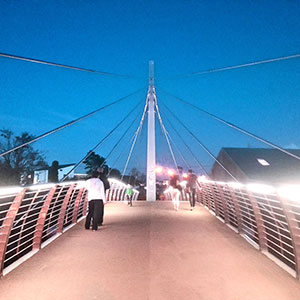
Each year more than 4,000 choose University of Galway as their University of choice. Find out what life at University of Galway is all about here.
-
About University of Galway
About University of Galway
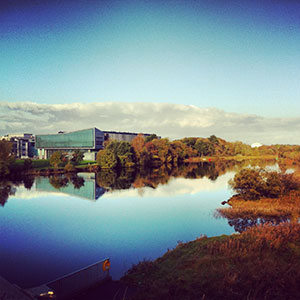
Since 1845, University of Galway has been sharing the highest quality teaching and research with Ireland and the world. Find out what makes our University so special – from our distinguished history to the latest news and campus developments.
-
Colleges & Schools
Colleges & Schools
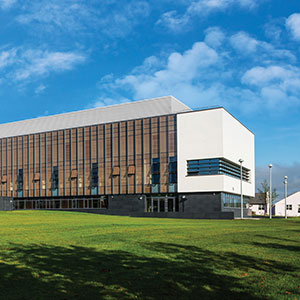
University of Galway has earned international recognition as a research-led university with a commitment to top quality teaching across a range of key areas of expertise.
-
Research & Innovation

Research & Innovation
University of Galway’s vibrant research community take on some of the most pressing challenges of our times.
-
Business & Industry
Guiding Breakthrough Research at University of Galway
We explore and facilitate commercial opportunities for the research community at University of Galway, as well as facilitating industry partnership.
-
Alumni & Friends

Alumni & Friends
There are 128,000 University of Galway alumni worldwide. Stay connected to your alumni community! Join our social networks and update your details online.
-
Community Engagement
Community Engagement
At University of Galway, we believe that the best learning takes place when you apply what you learn in a real world context. That's why many of our courses include work placements or community projects.
 Accessibility & Language
About ACET
ACET is a collaboration between industry and third-level research which is strongly needed in order to develop innovation in the water sector that can be rapidly adapted by the public and private sectors. The scientific impact of this work will be significant on an international stage. In itself, the control strategies proposed in ACET are unique in taking a holistic WWTP-wide view of control-based efficiencies and in particular in implementing machine learning, statistical modelling, and life cycle tools.
Our research is built on cutting-edge science and technical expertise. Driven by innovation, we aim to transform the wastewater sector through bold and scalable solutions. With large-scale demonstrations at the core of our work, we aim to drive meaningful change and innovation in the sector. By striving to pioneer cutting-edge, data-driven solutions and scalable technologies that address critical challenges in the wastewater sector, such as emissions, pollutant removal, and energy-efficient treatment processes, this research amplifies the visibility and impact of research at the University of Galway. Through this project, we aim to strengthen our collaborative frameworks with leading industry partners and regulatory bodies, thereby driving innovation and establishing partnerships that will shape the future of the sector.
| The research: |
|---|
Given the rising costs of energy production, emissions, and the impacts of climate change, global concerns regarding energy consumption have become a growing concern within the WWTP sector. On average, 60% of a WWTP’s operational expenses go toward the use of energy for aeration, with aeration in WWTPs accounting for an estimated 2% of total global electricity consumption, making the water sector one of the top industrial energy consumers. UN estimates that implementing energy efficiency measures would be responsible for more than 65% of the reductions in emissions related to energy by 2030. The optimisation of energy consumption in WWTPs is therefore crucial for enhancing both environmental sustainability and operational cost-efficiency, making it a priority for plant operators to develop innovative, energy-efficient solutions. The ACET framework proposes to transform the traditional approach to wastewater treatment optimisation into a cohesive methodology that supports data-driven decision making and sustainable operational practices across utilities through:
Assessment of current processes performance
Through an on-site baseline assessment, the energy usage and efficiency to pinpoint operational demands, maintenance issues, and outdated equipment will be assessed. Data on energy consumption will be collected to determine usage trends and assess potential energy-saving measures.
Innovative control strategies following the ACET approach will optimise based on 3 key pillars in WWTPs
For the first time in the wastewater industry, this project will focus on combining/merging all three pillars of (1) equipment, (2) process and (3) monitoring into a novel, universal control framework called ACET (Adaptive Control for Energy Efficient Treatment). ACET considers the pillars to be inextricably linked and therefore should be operated holistically in order to achieve the maximum energy efficiency of the wastewater infrastructure. The project team will assist WWTP operators in assessing the facilities' state, their operation, and the equipment's remaining usable life. Older technology is less effective, might be expensive to fix, and often uses more energy. The aeration phase will serve as the starting point for efficiencies because it is this operation that uses the most energy in a wastewater treatment plant.
Ensuring effective implementation and transferability to broader applications
Meeting energy goals and identifying new potential for efficiency requires training WWTP operators on the connection between energy efficiency and facility operations. By involving the operators in the process and soliciting their input, efficiency measures can be implemented. Since the operators are involved in the every day procedures across all stages of the facility, their knowledge is important