-
Courses
Courses
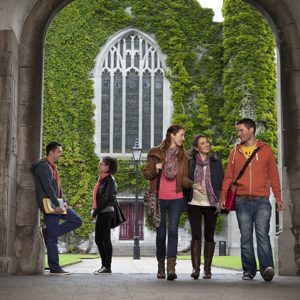
Choosing a course is one of the most important decisions you'll ever make! View our courses and see what our students and lecturers have to say about the courses you are interested in at the links below.
-
University Life

University Life
Each year more than 4,000 choose University of Galway as their University of choice. Find out what life at University of Galway is all about here.
-
About University of Galway
About University of Galway
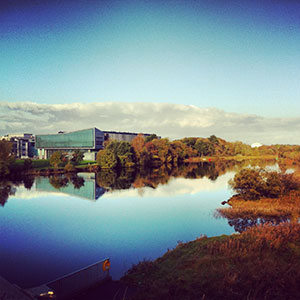
Since 1845, University of Galway has been sharing the highest quality teaching and research with Ireland and the world. Find out what makes our University so special – from our distinguished history to the latest news and campus developments.
-
Colleges & Schools
Colleges & Schools
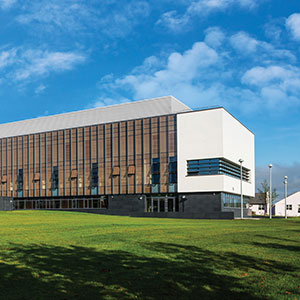
University of Galway has earned international recognition as a research-led university with a commitment to top quality teaching across a range of key areas of expertise.
-
Research & Innovation
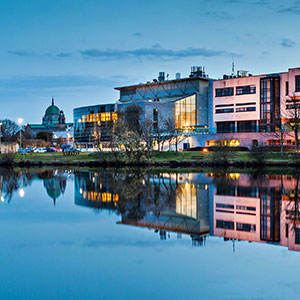
Research & Innovation
University of Galway’s vibrant research community take on some of the most pressing challenges of our times.
-
Business & Industry
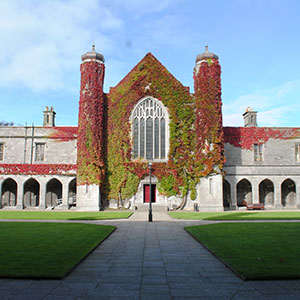
Guiding Breakthrough Research at University of Galway
We explore and facilitate commercial opportunities for the research community at University of Galway, as well as facilitating industry partnership.
-
Alumni & Friends

Alumni & Friends
There are 128,000 University of Galway alumni worldwide. Stay connected to your alumni community! Join our social networks and update your details online.
-
Community Engagement
Community Engagement
At University of Galway, we believe that the best learning takes place when you apply what you learn in a real world context. That's why many of our courses include work placements or community projects.
 Accessibility & Language
Strategic Priorities
A School of Business and Economics for the Public Good
Strategic Pillars
Pillar 1 - Distinctive Research and Thought Leadership
Key Strategies:
- Reputation-building: scale School-led thought-leadership (e.g., virtual debates and “Thinking Beyond” series) in distinctive areas; ensure presence at premier conferences for all research-active staff (1+ major conference per annum).
- Capacity-building: quarterly School seminar with leading scholars/editors; bimonthly researcher workshops across the full research lifecycle; cross‑disciplinary methods exchanges; annual writers’ retreat; pedagogy research for scholarly academics event.
- Incentives: enhance Research Incentivisation Scheme (journal quality & international collaboration); pilot microgrants for interdisciplinary research pilots.
- Funding & environment: structured grant capture support (training across the grant cycle); target Marie Curie networks and strategic EU/RI calls; support ECRs with mentoring.
- Impact pipeline: School-wide impact training (2026); impact accelerator seed grants; annual “Pathways to Impact” poster forum; staged selection and support of potential high-impact cases.
Pillar 2 - Education for the Future
Key Strategies:
- Inclusive, future‑focused pedagogy: scale UDL (double UDL badges to ≥32% of teaching staff by Q1‑2029); embed responsible AI in L&T development; embed academic integrity practices.
- Curriculum & skills: integrate Responsible Business, Sustainability Leadership, Digital/AI, Creativity & Innovation, Empathy & Citizenship, Global Outlook; expand experiential learning and industry projects.
- Recruitment & Marketing: Focus on new markets to diversify student body.
- Executive Education: Appoint a Director of Executive Education; develop market tested portfolio focused on regional strengths and School distinctiveness; leverage faculty expertise and alumni/industry networks.
- Digital & physical infrastructure: learning technologies for AI‑enabled teaching.
- Accreditation pathway: maintain momentum on AACSB/AMBA/EQUIS; map standards to pillar KPIs; annual quality health‑check by Accreditation team.
Pillar 3 - Inclusive, International Student Experience
Key Strategies:
- Student success: fully implement Early Alert System (EAS) with Business Student Advisor and consistent attendance analytics; retain student success coaching; pulse surveys if StudentSurvey.ie remains paused.
- Inclusive Environment: implement all student experience actions in our Athena Swan action plan; adopt recommendations from the College Inclusive Learning Project; ensure all staff and faculty understand Principles of Inclusive Teaching.
- Internationalising the student experience: Principles of Global Citizenship embedded in student experience: international learning opportunities; intercultural engagement including ‘Internationalisation at Home’; immersive experiences within diverse cultural contexts.
- Facility support: Finance & Big Data Analytics Lab in operation.
- Employability: tight partnership with Careers Development Centre, Advisory Board, and key employers; promote University Skills Passport in all programmes; targeted support for segments with weaker outcomes. Ensure PhD students get adequate teaching experience.
- Class times and sizes: Review and simplify final year BComm streams to improve availability of elective modules, streamline timetabling, avoid clashes and minimise out of hours teaching; ≤200 students in a classroom at UG, ≤100 at PG
Enablers
Enabler A - People, Culture & Sustainability
Key Strategies
- Culture & EDI: execute Athena Swan actions; Active Bystander; inclusive leadership; international staff onboarding; celebrate diversity and belonging.
Progression & development: annual “Preparing for Promotion” event; manager training for PSS progression/resizing; mentoring for ECRs and new leaders. - Workload & qualifications: implement monitoring of fair & equitable application of University Workload Allocation Model; align faculty categories with a clear pathway for SA/PA/SP/IP qualifications and maintenance; rotate key roles; support PDs.
- Conduct a targeted review to ensure the Professional Support Staff (PSS) structure is fully aligned with and capable of delivering the new School strategy. The goal is to identify areas where roles, skills, or capacity may need to be adapted or strengthened.
- Sustainability leadership: embed SDGs in curricula and operations; continue School SDG audit and contribute to University impact and carbon goals.
- Streamlined School committee architecture aligned to three pillars; clear accountability to School Executive Board; alignment with College/University committees to reduce duplication.
Enabler B - Internationalisation
Key Strategies
- Partnerships: targeted MoUs with peer schools/Universities; co-badged modules, double degrees, shared studios/labs in distinctive areas.
Energise International Deans Advisory Panel and Internationalisation Advisory Panel to guide strategy, curriculum relevance and innovation, recruitment focus, and philanthropy. - Alumni activation: International city leaders, mentorship, live projects, internships; annual flagship events tied to School research themes.
- Respect and Belonging: global citizenship principles and inter-cultural awareness education (students, staff and faculty); celebrate national festivals of main student/staff international cohorts; international culture represented in digital and physical presence
- External comms: proactive reputation plan (faculty profiles, policy briefs, open educations, podcasts); submit data to relevant rankings.
- Careers support: Explore options for annual international career fairs jointly hosted with other Irish institutions (cost-saving and network sharing).
- Support structure: Coherent support structure for global engagement and centralised travel tracking system to maximise efficiency in international travel activity.
Enabler C - External Engagement
Key Strategies
- Partnerships: co-creation of new research and new courses including exec ed with employers.
- Advisory Board panels: energise Board to guide strategy, curriculum relevance, placements, and philanthropy; add sector boards.
- Alumni activation: city leaders, mentorship, live projects, internships; annual flagship events tied to School research themes.
- Recognition of faculty who actively involve students in educational external engagement activity.
- External comms: amplify signature events; submit data to relevant rankings.
- Philanthropy and sponsorship for key events, growth initiatives.
.png)