-
Courses
Courses
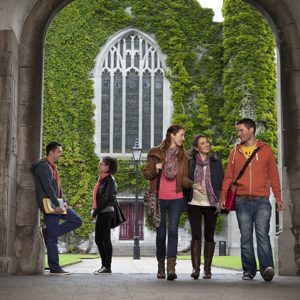
Choosing a course is one of the most important decisions you'll ever make! View our courses and see what our students and lecturers have to say about the courses you are interested in at the links below.
-
University Life

University Life
Each year more than 4,000 choose University of Galway as their University of choice. Find out what life at University of Galway is all about here.
-
About University of Galway

About University of Galway
Since 1845, University of Galway has been sharing the highest quality teaching and research with Ireland and the world. Find out what makes our University so special – from our distinguished history to the latest news and campus developments.
-
Colleges & Schools
Colleges & Schools
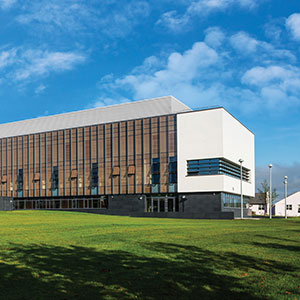
University of Galway has earned international recognition as a research-led university with a commitment to top quality teaching across a range of key areas of expertise.
-
Research & Innovation
Research & Innovation
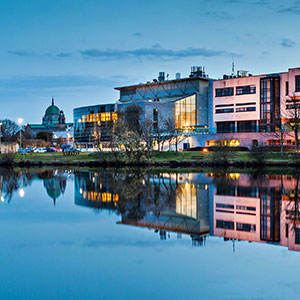
University of Galway’s vibrant research community take on some of the most pressing challenges of our times.
-
Business & Industry
Guiding Breakthrough Research at University of Galway
We explore and facilitate commercial opportunities for the research community at University of Galway, as well as facilitating industry partnership.
-
Alumni & Friends
Alumni & Friends
There are 128,000 University of Galway alumni worldwide. Stay connected to your alumni community! Join our social networks and update your details online.
-
Community Engagement
Community Engagement
At University of Galway, we believe that the best learning takes place when you apply what you learn in a real world context. That's why many of our courses include work placements or community projects.
 Accessibility & Language
April Leading researcher joins University of Galway on Wellcome Trust Award
Leading researcher joins University of Galway on Wellcome Trust Award
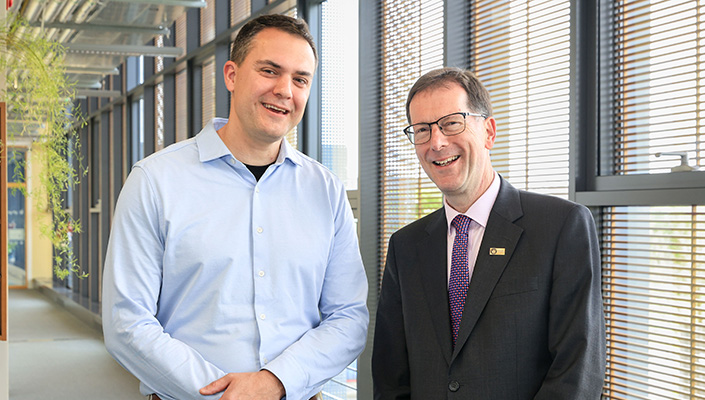
Pictured L-R: Dr Mihailo Mirkovic, Centre for Chromosome Biology, University of Galway and Professor David Burn, President of University of Galway. Photo: Martina Regan
Apr
27
2026
Posted: 09:01 IST
A leading researcher has joined University of Galway on a prestigious Wellcome Trust award to lead a research programme on chromosome segregation and fungal genomics, to better understand how microbes evolve resistance to antifungal drugs.
Dr Mihailo Mirkovic will lead a research programme that will use fungal genomics and genetic screens, techniques which examine different parts of the fungal genome, to discover genes that are important in fungal cell division in the presence of antimicrobial drugs. These genes could be important in the development of Antimicrobial Resistance in fungi, which is a pressing public health issue.
The majority of Wellcome Trust Awards for scientific research in Ireland are held by academics based at University of Galway.
Dr Mirkovic will establish a research group within the University’s Centre for Chromosome Biology, which is led by Professor Noel Lowndes and is embedded within the University’s Institute for Health Discovery and Innovation, led by Institute Director Professor Ted Vaughan.
President of University of Galway, Professor David Burn, said: “We are proud to welcome Dr Mirkovic to the University of Galway. Attracting leading researchers of his calibre strengthens our mission to be a university for the world, defined by excellence, ambition and impact. The Wellcome Trust Career Development Award is among the most prestigious research awards internationally, and it is a testament both to Dr Mirkovic’s achievements and to the vibrant research ecosystem we have built here at Galway.”
Professor Walter Gear, Dean of the College of Science and Engineering, University of Galway, said: “It is fantastic to see another major Wellcome Trust award coming to Galway. There are relatively few such awards in Ireland, and the fact that the majority are based here at the University of Galway speaks volumes about the strength of our scientific community and our growing reputation as a hub for world-class research. Dr Mirkovic’s arrival further elevates that momentum.”
Dr Mirkovic’s research will explore how cellular stress and disruptions to RNA processing -the body’s worker molecule that carries out the instructions stored in DNA - drive chromosome instability and adaptive evolution in fungi, work that has broad implications for understanding genome maintenance, evolution and antifungal resistance.
Dr Mihailo Mirkovic, Centre for Chromosome Biology, University of Galway, said: “I am honoured to receive the Wellcome Trust Career Development Award and excited to establish my group at the University of Galway. This award would not be possible without the support of my future colleagues from The Centre for Chromosome Biology, my collaborators and my two mentors, Raquel Oliveira and Yves Barral. The Centre for Chromosome Biology provides an outstanding environment for fundamental research, and I look forward to contributing to its scientific community and Irish science in general.”
Professor Noel Lowndes, Director of the Centre for Chromosome Biology, University of Galway, said: “We are thrilled to welcome Dr Mirkovic to the Centre for Chromosome Biology. His innovative research vision and track record of excellence make him an exceptional addition to our community of worldclass chromosome and genome researchers. We are immensely grateful to the Wellcome Trust for their ongoing support for our work.”
Professor Ted Vaughan, Director of the Institute for Health Discovery and Innovation, University of Galway, said: “Dr Mirkovic’s work aligns strongly with our mission to transform biological understanding into impact. We look forward to supporting the growth and success of his research programme at Galway.”
Dr Mirkovic’s research programme is supported by a Wellcome Trust Career Development Award, which focuses on mid-career researchers from any discipline who have the potential to be international research leaders. The funding enables them to develop their research capabilities, drive innovative programmes of work and deliver significant shifts in understanding related to human life, health and wellbeing.
Originally from Montenegro, Dr Mirkovic has an international research career spanning Serbia, Portugal and Switzerland. He completed his undergraduate and master’s studies in molecular biology and physiology at the University of Belgrade, before undertaking a PhD at the Instituto Gulbenkian de Ciência in Portugal under the supervision of Dr Raquel Oliveira. He has conducted his postdoctoral work in the laboratory of Yves Baral, at ETH Zurich, Switzerland.
Ends