-
Courses
Courses
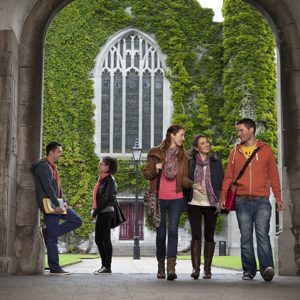
Choosing a course is one of the most important decisions you'll ever make! View our courses and see what our students and lecturers have to say about the courses you are interested in at the links below.
-
University Life

University Life
Each year more than 4,000 choose University of Galway as their University of choice. Find out what life at University of Galway is all about here.
-
About University of Galway

About University of Galway
Since 1845, University of Galway has been sharing the highest quality teaching and research with Ireland and the world. Find out what makes our University so special – from our distinguished history to the latest news and campus developments.
-
Colleges & Schools
Colleges & Schools
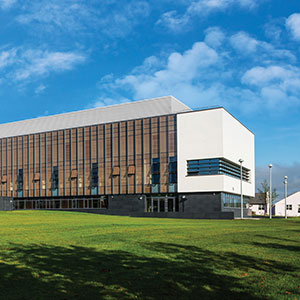
University of Galway has earned international recognition as a research-led university with a commitment to top quality teaching across a range of key areas of expertise.
-
Research & Innovation

Research & Innovation
University of Galway’s vibrant research community take on some of the most pressing challenges of our times.
-
Business & Industry
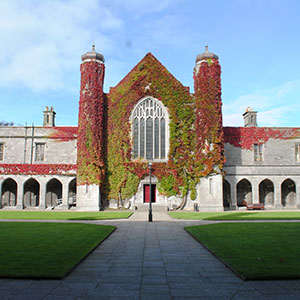
Guiding Breakthrough Research at University of Galway
We explore and facilitate commercial opportunities for the research community at University of Galway, as well as facilitating industry partnership.
-
Alumni & Friends
Alumni & Friends
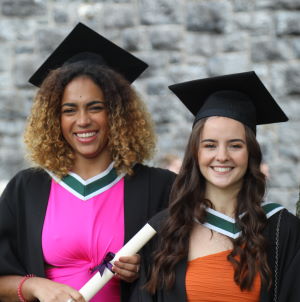
There are 128,000 University of Galway alumni worldwide. Stay connected to your alumni community! Join our social networks and update your details online.
-
Community Engagement
Community Engagement
At University of Galway, we believe that the best learning takes place when you apply what you learn in a real world context. That's why many of our courses include work placements or community projects.
 Accessibility & Language
April
Wednesday, 29 April 2026
University of Galway has held its third annual Siobhán McKenna scholarship and lecture series. This event honours the legacy of Siobhán McKenna, the Belfast-born actress who became a world-renowned actress of stage and screen, starring in Dr Zhivago, King of Kings and Of Human Bondage. This year's lecture series took the form of an interdisciplinary lecture-performance showcasing the wide-ranging artistry of writer, director and vocalist Esosa Ighodaro, whose work champions Black Irish creativity and explores identity, ritual and intergenerational storytelling. Esosa Ighodaro began her artistic life as a touring singer, later moving into acting - a path that sparked her evolution into writing and directing for both stage and screen. Her award‑winning films Round Boxes, A Little Chilli and Dance Like Someone’s Watching have screened at festivals across Ireland, the US and Africa. Presented as part of University of Galway’s Arts in Action programme, Esosa Ighodaro’s lecture-performance blended song, film excerpts and key moments from her artistic practice to date. Reflecting on her journey from vocalist to actor, writer and director, Esosa Ighodaro explored how identity, intergenerational legacy, and expanding the landscape of Black Irish creativity drive and unify her body of work to date. Esosa Ighodaro, said: “I work across art forms because different stories ask for different ways of being told. It was a pleasure to be invited to share that practice as part of the Siobhán McKenna Lecture, and an honour to place my work in conversation with such a significant legacy.” Donnacha O’Dea, Siobhán McKenna’s son who initiated the lecture series and scholarship award, said: “As we enter the third year of this lecture series and scholarship, the power of this initiative to carry forward my mother’s legacy is clearer than ever to me - in ways I know she would have found both exciting and deeply inspiring.” Siobhán McKenna’s archive is held by University of Galway, which has long been committed to the preservation and extension of her legacy. As part of the event, the Siobhán McKenna Scholarship winner from the MA in Drama and Theatre Studies at University of Galway was announced as Dutch theatremaker, Drieske Steijl. The scholarship is awarded based on previous practical experience and academic achievement that demonstrates; potential for a rewarding career in the arts or politically-engaged arts; and use of native languages. Dr Charlotte McIvor, head of Postgraduate Programmes in Drama and Theatre Studies, College of Arts, Social Sciences and Celtic Studies, University of Galway, said: “Esosa Ighodaro’s virtuosic individual artistry and drive to energise and reform the Irish creative sector recalls Siobhán McKenna’s own visionary drive across so many areas of theatre, film and activism. We feel that her body of work and ability to move between so many different roles embodies McKenna’s legacy in the 21st century.” Professor Rebecca Braun, Executive Dean of the College of Arts, Social Sciences and Celtic Studies, University of Galway, said: “Siobhán McKenna and Esosa Ighodaro both exemplify ambitious visions for the key role creativity must take in public life to not only advance art forms but social and cultural life more generally. We take inspiration from their work today to drive forward the College of Arts, Social Sciences and Celtic Studies’ own vision for creativity in public life through the work of staff and students.” The annual Siobhán McKenna Scholarship Award is open to prospective students of the MA in Drama and Theatre Studies at University of Galway. It includes: A bursary of €2,500 to support one student to undertake the MA in Drama and Theatre Studies administered by Galway University Foundation. A package of support to include access to exclusive activities related to Siobhán McKenna and the professional Irish theatre, and drawing on the University’s partnerships with the Abbey Theatre, Druid Theatre, the Lyric Theatre and other groups. Fee support of €1,500 for successful applicants. To apply for the MA in Drama and Theatre Studies at University of Galway visit here. This event was co-presented by the Galway University Foundation, the College of Arts, Social Sciences and Celtic Studies, Drama and Theatre Studies, and Arts in Action at University of Galway. Ends
Tuesday, 28 April 2026
University of Galway will host the 2026 AtlanTec Conference, exploring how artificial intelligence can be developed and deployed with a renewed focus on human values. This year’s theme is Intelligence Augmented – the Frontier of Human Judgement and features influential thinkers on technology and society, including entrepreneur Mark Little, the founder of Storyful and co-founder of Kinzen. The AtlanTec Conference takes place on Thursday May 14th at University of Galway as part of the 12th AtlanTec Festival. The conference is set to attract more than 400 delegates, including international speakers and representatives from leading technology companies in the region and beyond, and aligns closely with the University’s research strengths in data, AI, and responsible innovation. President of University of Galway, Professor David Burn, said: “The AtlanTec Conference reflects the University’s commitment to advancing responsible, human-centred AI. We look forward to welcoming our partners and the technology community to campus for this annual event. This year’s conference aligns strongly with our Transformative Data and AI research pillar, where responsible innovation is central to ensuring technology delivers meaningful benefits to society.” The AtlanTec Festival, which celebrates innovation and technology in the west of Ireland, is organised by itag (Innovation Technology AtlanTec Gateway). The conference is brought to campus through the support of the University’s Innovation Office, in partnership with the School of Computer Science and an extensive number of industry partners. Headlining the conference are: Mark Little, founder of Storyful and co-founder of Kinzen, will share insights drawn from his career at the intersection of media, technology, and democracy. A former RTÉ foreign correspondent and presenter, he has been at the forefront of efforts to address misinformation and build trusted digital information systems. Dr Lollie Mancey, Programme Director at the UCD Innovation Academy. Known for her engaging and thought-provoking contributions across media and public discourse, Dr Mancey’s work focuses on the ethical and emotional dimensions of emerging technologies, including the evolving relationship between humans and AI systems. Professor Paul Buitelaar, Deputy Director of the Data Science Institute at the University of Galway, will deliver a keynote address titled, Neuro-Symbolic AI: A New Direction for AI Development and Deployment. The 2026 AtlanTec Conference brings together leading voices from industry, academia, and the public sector, with participation from organisations including Medtronic, Fidelity, Genesys, Datavant and University of Galway spin-out Senus, alongside a broad range of innovators and practitioners across Ireland’s technology ecosystem. Sharon Walsh, Senior Vice-President, Fidelity Investments and Chair of itag, said: “The conference comes at a pivotal moment for the industry. We are at a tipping point. As we move further into an AI-accelerated world, the perspectives of thinkers like Mark and Lollie are essential. This year’s conference at University of Galway is about ensuring technology is developed in a way that serves humanity, not the other way around.” The event will include the official announcement of the winners of the festival’s AtlanTec AI Challenge. The University of Galway Innovation Office is supported under the KT Boost Programme co-funded by the Government of Ireland and the European Union through the Northern and Western Regional Programme 2021-2027. Tickets for the AtlanTec Conference are available on Eventbrite. Ends
Monday, 27 April 2026
A leading researcher has joined University of Galway on a prestigious Wellcome Trust award to lead a research programme on chromosome segregation and fungal genomics, to better understand how microbes evolve resistance to antifungal drugs. Dr Mihailo Mirkovic will lead a research programme that will use fungal genomics and genetic screens, techniques which examine different parts of the fungal genome, to discover genes that are important in fungal cell division in the presence of antimicrobial drugs. These genes could be important in the development of Antimicrobial Resistance in fungi, which is a pressing public health issue. The majority of Wellcome Trust Awards for scientific research in Ireland are held by academics based at University of Galway. Dr Mirkovic will establish a research group within the University’s Centre for Chromosome Biology, which is led by Professor Noel Lowndes and is embedded within the University’s Institute for Health Discovery and Innovation, led by Institute Director Professor Ted Vaughan. President of University of Galway, Professor David Burn, said: “We are proud to welcome Dr Mirkovic to the University of Galway. Attracting leading researchers of his calibre strengthens our mission to be a university for the world, defined by excellence, ambition and impact. The Wellcome Trust Career Development Award is among the most prestigious research awards internationally, and it is a testament both to Dr Mirkovic’s achievements and to the vibrant research ecosystem we have built here at Galway.” Professor Walter Gear, Dean of the College of Science and Engineering, University of Galway, said: “It is fantastic to see another major Wellcome Trust award coming to Galway. There are relatively few such awards in Ireland, and the fact that the majority are based here at the University of Galway speaks volumes about the strength of our scientific community and our growing reputation as a hub for world-class research. Dr Mirkovic’s arrival further elevates that momentum.” Dr Mirkovic’s research will explore how cellular stress and disruptions to RNA processing -the body’s worker molecule that carries out the instructions stored in DNA - drive chromosome instability and adaptive evolution in fungi, work that has broad implications for understanding genome maintenance, evolution and antifungal resistance. Dr Mihailo Mirkovic, Centre for Chromosome Biology, University of Galway, said: “I am honoured to receive the Wellcome Trust Career Development Award and excited to establish my group at the University of Galway. This award would not be possible without the support of my future colleagues from The Centre for Chromosome Biology, my collaborators and my two mentors, Raquel Oliveira and Yves Barral. The Centre for Chromosome Biology provides an outstanding environment for fundamental research, and I look forward to contributing to its scientific community and Irish science in general.” Professor Noel Lowndes, Director of the Centre for Chromosome Biology, University of Galway, said: “We are thrilled to welcome Dr Mirkovic to the Centre for Chromosome Biology. His innovative research vision and track record of excellence make him an exceptional addition to our community of worldclass chromosome and genome researchers. We are immensely grateful to the Wellcome Trust for their ongoing support for our work.” Professor Ted Vaughan, Director of the Institute for Health Discovery and Innovation, University of Galway, said: “Dr Mirkovic’s work aligns strongly with our mission to transform biological understanding into impact. We look forward to supporting the growth and success of his research programme at Galway.” Dr Mirkovic’s research programme is supported by a Wellcome Trust Career Development Award, which focuses on mid-career researchers from any discipline who have the potential to be international research leaders. The funding enables them to develop their research capabilities, drive innovative programmes of work and deliver significant shifts in understanding related to human life, health and wellbeing. Originally from Montenegro, Dr Mirkovic has an international research career spanning Serbia, Portugal and Switzerland. He completed his undergraduate and master’s studies in molecular biology and physiology at the University of Belgrade, before undertaking a PhD at the Instituto Gulbenkian de Ciência in Portugal under the supervision of Dr Raquel Oliveira. He has conducted his postdoctoral work in the laboratory of Yves Baral, at ETH Zurich, Switzerland. Ends
Monday, 27 April 2026
The Access Centre at University of Galway is inviting prospective students, parents, guidance counsellors, educators, and community organisations to attend its upcoming Access Programmes Information Evening. The event takes place on Wednesday May 6th at 6pm in the Human Biology Building, University of Galway. Designed for school leavers and mature students who may not have previously considered university, the Access programmes support individuals from low-income backgrounds, those living with long-term disabilities and anyone feels that higher education may be beyond their reach. Attendees will have the opportunity to explore the Access and Foundation programmes, learn about the wide range of academic and personal supports available, and hear first-hand from past students who have successfully progressed to university. Through modules such as the Professional Engagement Module (PEM), students benefit from practical workplace experience, with partner organisations including Grant Thornton, Medtronic and the University’s School of Education for those interested in teaching, with participants supported throughout by mentors. Staff from the Access Centre will be available throughout the event to answer questions in an informal and welcoming setting. Dr Mary Surlis, Senior Academic Manager for Access Programmes at the University, said: “Our Access Programmes are about opening doors and creating opportunities. We work with people who may have faced barriers to education and support them not only academically, but also in building the confidence and self-belief needed to succeed. This information evening is a chance for anyone considering a return to education to explore what’s possible in a supportive and encouraging environment.” Niamh Burke, former student now working with Medtronic and recently returned as a mentor on the programme, said: “This year felt like a full-circle moment for me. After completing the Access Programme, I went on to study Commerce and a master’s degree, and through my work, I recently returned as a mentor supporting students on the Professional Engagement Module. I would strongly encourage anyone considering university, regardless of their background or circumstances, to get in touch with the Access Centre.” The event forms part of the University’s ongoing commitment to widening participation and ensuring higher education is accessible to all, regardless of background or life circumstances. Further information, including programme details, application forms, and registration is available at: universityofgalway.ie/access/entryroutes/accessandfoundationprogrammes/ Ends
Tuesday, 21 April 2026
Researchers have found evidence that a therapeutic strategy which makes the brain work more efficiently to learn and recall memories may in fact help to target compromised brain activity in Alzheimer’s disease. The study led by University of Galway focused on nerve cells which routinely limit or restrict activity and messages being sent by the brain, rather than the more conventional approach of therapy for nerve cells which stimulate activity. Alzheimer’s disease is a chronic progressive neurodegenerative disorder with clinical symptoms including diminished memory and cognitive function. It is the most prevalent cause of dementia, accounting for 60-80% of dementia cases. Alzheimer’s disease and other dementias are among the top 10 causes of death globally. The study was published in the journal Neuropharmacology and be read here. Professor Andrea Kwakowsky, Associate Professor of Pharmacology and lead researcher at the School of Medicine, University of Galway, said: “Given the ever-increasing burden of Alzheimer’s disease, the urgent need for the identification of novel targets for the development of disease-modifying therapy is clear.” The research team noted how the accumulation of Amyloid beta - protein fragment aggregates known as plaque – are a primary hallmark and suspected cause of Alzheimer’s disease. The Amyloid beta disrupts normal brain signalling and causes burn out and ultimately the death of nerve cells as it leads to the firing or over-activation of the nerve cells in the brain. This symptom of the disease is then compounded by activity in the inhibitory nerve cells, which routinely limit or restrict activity and messages, as they overcompensate for the stimulatory impact in the brain that the disease is having. The scientists highlighted that symptomatic relief from Alzheimer’s provided by these therapies which target the stimulatory nerve cells is only marginal, and the progression or underlying causes of the disease are not addressed. Professor Andrea Kwakowsky said: “Our research is looking at the possibility of a therapy which helps to restore a balance in the brain after nerve cells have reacted to Alzheimer’s. “We know, for sure, that the amino acid, GABA, is involved in many important physiological functions of the brain, including being the primary inhibiting factor for nerve cells. However, in Alzheimer’s disease, this control that it helps to exert in the brain is compromised, contributing to cognitive decline and memory impairment. “Science and medicine has shown that an increase in extracellular GABA can be triggered by the protein Amyloid beta, leading to over-activation of a specific population of GABA receptors in Alzheimer’s disease. “Our research is significant in that it demonstrates that if we block this GABA receptor activity in nerve cells we can reverse Alzheimer-like effects caused by Amyloid beta and improve cognitive performance.” The research was funded by the University of Galway Hardiman Research Scholarship, Alzheimer’s New Zealand, Freemasons New Zealand, Alzheimer’s New Zealand Charitable Trust, Aotearoa Foundation, Brain Research New Zealand, Health Research Council of New Zealand, Centre for Brain Research, the University of Auckland and the University of Otago. The team’s research is expanding on a hypothesis that has emerged in recent years, which shifts the focus of therapeutic treatment to the inhibitory side of signalling imbalance in nerve cells, suggesting that targeting the brain’s vulnerability to overstimulation-induced damage can ultimately reduce the impact and death of nerve cells. Ends
Monday, 20 April 2026
Minister for Education and Youth, Hildegarde Naughton, T.D. has today officially launched a research report showcasing the success of CodePlus, a computing education outreach programme for girls. The aim of CodePlus is to encourage female students in post-primary schools, especially from areas of socio-economic disadvantage, to learn more about computer science so that they can make informed decisions about pursuing studies at third level. The CodePlus programme involves coding workshops, techtalks with female role models and site visits to industry partners. The report shows 23,000 female post-primary students have taken part in CodePlus, with 6,450 engaged in activities and learning in 2024/25 alone. The launch was hosted by Genesys and University of Galway, marking the programme’s success, and the vital support provided by industry partners. Launching the report, Galway based Minister for Education and Youth, Hildegarde Naughton, said: "CodePlus is opening doors for young women across the country, showing them that a future in computer science is not only possible, but within reach. The findings published today speak for themselves. More than 23,000 students have taken part in CodePlus to date, with more than 6,400 engaging in the last academic year alone. That is a powerful indicator of both demand and impact. “Programmes like CodePlus are essential if we are serious about increasing participation in STEM and building a more diverse, inclusive workforce for the future. This is about giving young women the confidence, the skills, and the visibility they need to make informed choices about their education and careers." Professor Cornelia Connolly, University of Galway, said: “Our research presents a longitudinal study, showing the benefits of this outreach computing programme. Helping students and teachers cultivate powerful computing skills is one of the most important ways to ensure computing and digital technologies, such as AI, expands opportunity to everyone in society. We are showing Computer Science is not just a subject in school – we are showing young, educated, eager female students that there is a path for them to a career of their choice in this field.” Key points from CodePlus report, available on https://www.codeplusireland.ie/: 3,982 female students have taken part in coding workshops as part of the initiative, including more than 700 in 2024/25 alone. 18,018 career talks given to female students by female role models. More than 1,300 female students went on company visits to learn about opportunities for a career in the sector. Female students reported improved attitudes toward technology and greater awareness of Computer Science careers, with many citing the CodePlus programme as influential in shaping their decisions about future study. The all-girl environment and female role models are important, fostering a sense of belonging and providing a supportive learning experience. Workshops were the most valuable feature - enjoyable, supportive and confidence-boosting, while learning in teams/groupwork/collaboration enhanced learning and social development. Students reported improvements in communication, presentation and creativity skills and valuable, broader transferable skills, including problem-solving, critical thinking, interpersonal and leadership skills. Data from the CodePlus initiative reveals a gap between initial interest and actual uptake of Computer Science courses at third level: while more than 30% expressed intent to pursue Computer Science immediately after participation, only 17% ultimately applied for Computer Science-related courses two years later. CodePlus helped participants make informed decisions on whether or not to pursue a computing career. Analysis suggests CodePlus is effective in sparking interest but sustained engagement and broader structural factors - such as curriculum exposure, societal perceptions and career guidance - play a critical role in long-term decision-making. CodePlus began in Trinity College Dublin in 2015. In 2020, with support from Lero, the Taighde Éireann-Research Ireland Centre for Software and funding under the Discover programme, the initiative expanded at University of Galway and University of Limerick. It aligns with policy developments happening through the Department of Education, including the new primary curriculum and Senior Cycle review. Dr Rachel Iredale, Head of Public Engagement for Research Ireland, said: "Research Ireland is pleased to have supported the CodePlus programme and this important longitudinal evaluation, which provides clear evidence of how early and inclusive engagement can broaden participation in computer science. CodePlus has helped to ensure that more young women can see a place for themselves in computer science and the wider STEM ecosystem." Joe Smyth, Senior Vice President of R&D and Digital at Genesys, said: “Genesys is delighted to support the CodePlus programme and its goals of creating a more inclusive workforce in the critical areas of STEM, especially computer science. As Genesys builds out its workforce in the West of Ireland, we want to ensure that everyone has opportunities to participate in the global tech industry.” CodePlus is supported by philanthropy and industry, including Google.org, Fidelity Investments, Bank of America, and Huawei. Ends
Tuesday, 14 April 2026
University of Galway and TE Connectivity have marked their partnership with a naming ceremony of a key facility for the BioInnovate Ireland programme. The TE Connectivity Meeting Room has been unveiled as part of the Ian Quinn Centre for Health Technology Innovation on the University campus, in recognition of the company’s commitment to supporting health technology innovation, talent development and industry–academic collaboration through BioInnovate. President of University of Galway, Professor David Burn, said: “Our partnership with TE Connectivity is symbolic of how University of Galway focuses on the translation of research and innovation into real-world impact. The naming of the space in the Ian Quinn Centre is a permanent and visible reminder of the inspiration of Ian Quinn and the support of TE Connectivity for our ambition to ensure we have collaborative facilities to enable ideas to move from concept to application.” Pat Duane, Senior Vice President and General Manager, Medical, TE Connectivity, said: “At TE, we are taking an active role in the creation of a strong pipeline of innovators and engineers ready to take the helm at companies like ours in the future. We support BioInnovate Ireland, and programmes like it all around the world, to inspire the next generation.” Dr Sinead Walsh, Programme Director at BioInnovate Ireland, said: “Dedicated innovation spaces matter. The TE Room will be a place where BioInnovate fellows and partners can work together, challenge assumptions and progress ideas. It also reflects the strength of our relationship with TE Connectivity, and the importance of sustained university–industry collaboration for the region.” The Ian Quinn Centre for Health Technology Innovation was officially launched at University of Galway in May 2024 in honour of the late Ian Quinn who was central in establishing Galway as a global medtech hub. Ian Quinn was a visionary in medical device design and innovation. Having witnessed the decline of the IT hardware industry and other industries in Ireland, he set about ensuring that the medical device industry would not suffer the same fate. Ian Quinn founded Creganna with his brother Niall, which went on to become TE Connectivity following its acquisition in 2016. The TE Connectivity Meeting Room will be used by BioInnovate Fellows, alumni, clinicians, researchers and industry partners as a dedicated environment for collaboration, ideation and project development. The naming of the space reflects TE Connectivity’s continued engagement with BioInnovate through mentorship, site visits and knowledge exchange, and its broader support for innovation-led growth within the medtech sector. Ian Quinn was a driving force behind the establishment of BioInnovate Ireland in 2011, bringing the BioDesign model to Ireland in partnership with Enterprise Ireland and University of Galway. It is Europe's only affiliate of Stanford Biodesign and Ireland’s national healthcare device innovation training programme. Over the last 15 years it has played a central role in strengthening Ireland’s medtech ecosystem. The programme has trained 170 Fellows and led to the creation of 35 companies, 24 of which are alumni-led high potential start-ups. The Ian Quinn Centre for Health Technology Innovation builds on this success by providing co-working space, mentorship and global connections for emerging health technology ventures, while also serving as a hub where industry, clinicians and campus-based innovators can come together to accelerate the development of new solutions. BioInnovate Ireland is supported under the Innovators’ Initiative Programme, co-funded by the Government of Ireland and the European Union through the Northern and Western Regional Programme 2021–2027. Ends
Tuesday, 14 April 2026
University of Galway in partnership with the RCSI University of Medicine and Health Sciences has received Government funding to establish a new national centre of excellence in medical device innovations. The Medical Device Innovation Network (MeDiNet) aims to strengthen Ireland’s position as a global leader in medtech and support the development of life-changing healthcare solutions. The project is one of nine key infrastructure projects funded through the Taighde Éireann-Research Ireland Infrastructure Programme to drive national priorities in health innovation, sustainability and economic resilience. Awarded almost €2 million in funding, MeDiNet will provide shared national facilities to help researchers, clinicians and companies design and test new medical devices more quickly, safely and affordably by providing access to the latest equipment, expert support, and a collaborative space for innovation. The Government investment will enable University of Galway to expand its activity as part of the new Medical Device Prototype Hub, which is supported by medical device company Medtronic and launched in February this year as part of the five-year €5million signature innovation partnership between Medtronic and the University, announced in 2023. The Medical Device Prototype Hub is managed by the Technology Services Directorate at University of Galway and focuses on three pillars: developing the MedTech ecosystem, STEM engagement and research. MeDiNet’s integrated approach combines design, prototyping, anatomical simulation and clinical engagement, by offers 3D printers and simulation tools that will create realistic models of the human body, allowing medical devices to be tested in lifelike conditions before reaching the patient. In partnership with RCSI, MeDiNet will be led by Dr Eimear Dolan from the College of Science and Engineering at University of Galway. Dr Eimear Dolan, Research Ireland Royal Society University Research Fellow Associate Professor in Biomedical Engineering, University of Galway, said: “This funding will enable us to fill an important gap in the Irish medtech ecosystem. It will enhance our reputation as a global hub for the sector by granting medical device innovators access to the latest equipment, expert support and a collaborative space for innovation. We are excited about working so closely with RCSI as this collaboration is greater than the sum of its parts.” Professor Claire Condron, RCSI University of Medicine and Health Sciences, said: “I am delighted to collaborate with the University of Galway on MeDiNet, which represents a significant step forward for Ireland’s medtech design landscape. As one of Europe’s leading simulation centres, RCSI SIM brings unique expertise that will add real value to the efficient design and validation of medical devices and instrumentation, while strengthening connections between researchers, clinicians and industry to deliver meaningful advances in patient care.” Dr Diarmuid O’Brien, Chief Executive of Research Ireland, said: “We are enabling researchers across the country to pursue ambitious ideas, deepen collaboration and accelerate breakthrough discoveries by providing access to truly world-class infrastructure. The awards announced today are a key step in delivering on Research Ireland’s strategy to strengthen national research capacity, future-proofing our research ecosystem and ensuring Ireland remains a global leader in high-impact research.” The Research Ireland Infrastructure Programme funding will enable the installation of state-of-the-art equipment and facilities across the country, strengthening Ireland’s research capacity in strategically important areas such as advanced materials, MedTech, AI, semiconductors and quantum technologies. The programme is designed to ensure that Irish researchers can access the specialised equipment needed to compete on the global stage. Ends
Monday, 13 April 2026
The triumphs and endeavours of athletes, sports clubs and coaches have been celebrated at the 41st annual University of Galway Sports Awards. Among the winners were under-23 World Rowing Bronze medallist Donagh Claffey, senior county hurler Sam O’Farrell and Carrie Dolan, All-Ireland winning captain of the Galway Senior Camogie team. Sam O’Farrell and Carrie Dolan were named Sports Persons of the Year, while Donagh Claffey from the Rowing Club won Individual Performance of the Year for his bronze medal at the World Rowing Under-23 Championships. Other winners included Ronan Sheppard and Matthew Kennedy of the Sailing Club, who received the Unsung Hero Award, Eveline Nee, for her contribution to University of Galway Archery Club over her four years as an undergraduate student, and the Mountaineering Club for the Best Event of the Year. Sponsored by Bank of Ireland, the awards ceremony was held at the Radisson Red Hotel Galway and hosted by RTÉ Sport’s Darren Frehill. Professor David Burn, President of University of Galway, said: “The University of Galway Sports Awards are a celebration of the dedication, resilience and community spirit that define sport across our campus. This year’s recipients have demonstrated not only exceptional achievement in competition, but also leadership, teamwork and a commitment to supporting one another. We are immensely proud of all our students, clubs and coaches who continue to foster an inclusive and vibrant sporting culture within the University.” Des Ryan, Director of Sport and Physical Wellbeing, University of Galway, said: “Our Sports Awards are a celebration of our sporting high performance achievements and our sport for all achievements in the University of Galway. The awards recognise the performances, achievements and hard work of our athletes, players, teams, coaches, committee members and volunteers. Our mission in the University of Galway Sports Unit is to be the most progressive and caring University sports programme on the island of Ireland. All the nominees and award winners are helping us on that mission. “This year our winners range from Senior Camogie All Ireland winning Captain to Clubs who have doubled membership this year, and we are very grateful to the Bank of Ireland for their sponsorship and support. Our university sports club members contribute great social capital to our environment. For us in the Sports Unit, it is an honour and a pleasure to work with so many talent young adults and to support all those involved in Clubs. It is a wonderful event where all the different sports club celebrate together all those who have greatly contributed to sport in the University of Galway.” The University of Galway Sports Awards recognise performance, leadership and participation, as well as those that contribute to the running and development of the clubs. They also celebrate remarkable final-year students who have made an outstanding and sustained contribution to sport; demonstrated an impeccable example of sportsmanship and a high level of performance and achievement; served as excellent ambassador within the University and for student sport; and competed at a regional level or above. University of Galway is now home to more than 40 active sports clubs, which are student-led and organised, with approximately 6,000 students participating in sport and activity daily at the University. 2026 Sports Award Winners Best Event of the Year 50th Anniversary of the Maamturks Challenge - Mountaineering Club Captain of the Year Áine Kavanagh (Calry, Co. Sligo) Hockey, Emma Jane Inns (Bundoran, Co. Donegal) Sub Aqua Club of the Year Swimming and Waterpolo Club Coach of the Year Matt Lockett (Galway City) Athletics Most Improved Club Gaelic Games Club (Includes Camogie, Hurling, Ladies Gaelic Football, Men’s Gaelic Football) Fundraising of the Year Boxing in Pink – Boxing Club Individual Performance of the Year Donagh Claffey (Fardrum Athlone, Co. Westmeath) Rowing University Honours Mohammad Zajeer Ahmed, (India) Cricket and Table Tennis Eveline Nee (Rosmuc, Co. Galway) Archery Ailbhe Folan (Galway City) Hockey Naoise O’Donnell (Moycullen, Co. Galway) Athletics, Swimming, Cycling, and Triathlon Sports Person of the Year - Male Sam O’Farrell (Nenagh, Co. Tipperary) Hurling Sports Person of the Year - Female Carrie Dolan (Clarinbridge, Co. Galway) Camogie Unsung Hero Ronan Sheppard (Moycullen, Co. Galway), Matthew Kennedy (Galway City) Sailing Team of the Year Women’s Senior 8 - Rowing Student’s Union Club Captains Choice – Female Orla Murphy (Enniskillen, Co. Fermanagh) Ladies Gaelic Football Student’s Union Club Captains Choice – Male Storm McDonald (Easkey, Co. Sligo) Sub Aqua Dean of Student Award Katia Tuck (France), Rory McDonnell (Beaufort, Co. Kerry) Table Tennis Caoimhe Gilligan (Rossinaver, Co. Leitrim) Surf, Sub Aqua Laoise Gillic (Galway City) Fencing Oscar Choo (Strandhill, Co. Sligo) Surf Neasa Ní Ainiféin (Ennis, Co. Clare) Athletics Mark Deegan (Galway City), Bernie Grealish (Galway City), John Folan (Galway City) Hockey Director of Sports Award Emer Jackson (Castletown Geoghegan, Co. Westmeath) Camogie Ben Haverty (Athenry, Co. Galway) Men’s Gaelic Football, Hurling David Lynch (Tralee, Co. Kerry) Men’s Gaelic Football Andrew Egan (Galway City), David Mannion (Ballindereen, Co. Galway) Athletics Declan Gbinigie (Galway City), Fortune Igbokwe (Galway City) Basketball Amy O’Sullivan (Ennis, Co. Clare) Volleyball Oisin Murray (Ballyard, Co. Kerry) Athletics Niamh Ní Lochlain (Galway City) Judo Matthew Thompson (Galway City) Men’s Gaelic Football Gradam Gaelach Award Swimming and Waterpolo Club Ends
Wednesday, 8 April 2026
University of Galway and FeelTect partner on study supported by Government’s Disruptive Technology Innovation Fund A groundbreaking clinical trial led by researchers at University of Galway is set to transform how a chronic and debilitating vein condition is treated. Forty patients who suffer from venous leg ulcers (VLUs) are being enrolled in the trial in Ireland, which is being coordinated through the University’s Institute for Clinical Trials, enabling clinicians to monitor and direct treatment remotely, in real-time. The trial is being carried out in partnership with FeelTect, a medical technology start-up based in Spiddal, Co. Galway, as part of funding through the Government’s Disruptive Technology Innovation Fund, managed by the Department of Enterprise, Trade and Employment and administered through Enterprise Ireland. Patients will be treated using advanced pressure monitoring technology. FeelTect has created a wearable, pressure-sensing device, Tight Alright®, which when paired with a mobile app, can enable clinicians to measure and remotely monitor sub-bandage pressure applied during compression therapy. This supports more consistent compression application with the potential to improve healing rates, reduce treatment costs and enhance patient quality of life. Professor Fidelma Dunne, Director of the Institute for Clinical Trials, University of Galway, said: "This trial reflects the role of the Institute for Clinical Trials as a national centre of excellence in the design and delivery of innovative studies. By integrating decentralised, patient‑centred approaches, we are strengthening Ireland’s clinical research capabilities and supporting the national objective to retain and grow trial activity. Through the Government’s DTIF support, this collaboration with an Irish start-up demonstrates how innovation developed in Ireland can be tested, validated and scaled within our own health system through academic-industry collaborative partnerships.” Dr Andrew Cameron, Chief Executive of FeelTect, said: “We are delighted to see the commencement of this valuable research, assessing data-driven, connected-health solutions for improving the treatment of venous leg ulcer patients. FeelTect is extremely fortunate to be working with our valued partners in University of Galway, including the Institute for Clinical Trials and Clinical Trials Corrib Research Centre, as well as world class clinicians, ensuring the quality and successful execution of the study. The broader implications of the study relate to the optimisation of compression therapy - a fundamental, first-line treatment for a host of venous and lymphatic diseases.” Over a 90-day period, the research team will assess healing rates of patients, their quality of life and how the FeelTect Tight Alright™ device is used and how the compression treatment is applied. The trial is enabling remote monitoring and data collection - either at home or in local primary care centres. This reduces the need for frequent hospital visits, improves patient comfort and reduces unnecessary clinical visits - an approach which is particularly beneficial for patients with mobility challenges while also allowing clinicians to better understand treatment effectiveness outside a clinical facility. The study is supported by the Institute for Clinical Trials at University of Galway through its Trials Accelerator programme, which provides early-phase setup support. Patients are recruited through Merlin Park Vascular Outpatients clinic, HSE West North West, and community centres in the region. Clinical delivery is being carried out by the CORRIB Core Lab at University of Galway which is responsible for the operational and clinical execution of the trial. Ends
Monday, 6 April 2026
University of Galway has announced a first-year science student from Co Galway as the recipient of the inaugural Complete Laboratory Solutions (CLS) Excellence Scholarship for Science. Mia McHugh from Milltown, Co Galway is studying for a Bachelor of Science, a flexible degree which enables students to explore a broad range of scientific disciplines before specialising in their chosen area. The CLS Excellence Scholarship for Science aims to remove barriers to, and through, higher education by supporting high-achieving and promising full-time undergraduate students to study Science at University of Galway. Complete Laboratory Solutions (CLS) is a leading Irish provider of laboratory testing and analytical services, sponsors the scholarship. With accredited facilities in Galway City, Ros Muc and Dublin, CLS provides services to the pharmaceutical, medical device, food and environmental sectors, with expertise spanning microbiological and analytical testing, regulatory consultancy, quality system support and specialist training. Mia McHugh, the inaugural recipient of the CLS Excellence Scholarship, said: “I have always had a deep love for science and always knew that that was where my future lay. I would like to sincerely thank CLS for awarding me the Excellence Scholarship. I am so grateful for this opportunity, and it will make a real difference in supporting my education.” Dr Ann Ryan, Director of Strategic Development, College of Science and Engineering at University of Galway, said: “We are truly delighted to announce Mia as the recipient of the inaugural CLS Excellence Scholarship for Science. Mia’s passion for science, her determination, zest for learning and future ambitions for a career in STEM were all evident from her application. We are extremely grateful to CLS for establishing this Excellence Scholarship, which recognises excellence and will support highly-talented students to achieve their potential.” Evelyn O’Toole, CEO of Complete Laboratory Solutions, said: “Supporting emerging scientific talent is an investment in our industry’s future and in the communities we serve. CLS is proud to sponsor the Bachelor of Science Scholarship, helping to empower the next generation of scientific leaders. By investing in aspiring science students, CLS is fostering innovation, advancing skills development, and creating meaningful career pathways within Ireland’s growing life sciences sector. The partnership with University of Galway reflects a shared commitment to academic excellence, research, and strong industry collaboration.” Ends
Thursday, 2 April 2026
A new international study led by University of Galway suggests that having higher levels of vitamin D in middle age is associated with lower levels of tau protein in the brain, which is a sign of dementia, years later. The study does not prove that vitamin D levels lower the level of tau in the brain or the risk of dementia; it only shows an association. The findings have been published today in Neurology Open Access, an official journal of the American Academy of Neurology. Study findings Higher vitamin D levels are associated with lower levels of the Alzheimer’s biomarker, tau protein in the brain, years later. Higher vitamin D levels may protect against dementia. The study does not prove cause and effect; it only shows an association. The results need to be confirmed with additional studies. The study was led by Professor Emer McGrath and Dr Martin Mulligan, from the College of Medicine, Nursing and Health Sciences at University of Galway and Galway University Hospital. It was carried out in collaboration with Boston University, the Framingham Heart Study and University of Texas San Antonia. Senior author, Professor Emer McGrath, Associate Professor in Medicine, University of Galway and Consultant Neurologist, Galway University Hospital, said: “This study demonstrates an association between higher vitamin D in mid-life and a lower burden of abnormal tau protein in the brain, a marker of Alzheimer’s disease. Vitamin D in mid-life could be an important factor to protect future brain health. While previous research has linked low vitamin D in adults over 70 with an increased risk of dementia, this study is among the first to look at younger adults at mid-life, around the average age of 39. Low vitamin D in mid-life may be an important target to reduce the risk of early signs of preclinical dementia in the brain. “However, while these findings are very interesting, they only demonstrate an association between vitamin D and early signs of dementia in the brain. Further studies, for example a clinical trial, will be required to determine if vitamin D supplements could prevent dementia." Lead author, Dr Martin Mulligan, PhD researcher at University of Galway, said: "We found that higher vitamin D levels were associated with lower tau deposition in regions of the brain that are known to be affected earliest in Alzheimer's disease. These results suggest that higher vitamin D levels in midlife may offer protection against developing these tau deposits in the brain and that low vitamin D levels could potentially be a risk factor that could be modified and treated to reduce the risk of dementia. However, these results need to be further tested with additional studies.” The study involved nearly 800 people with an average age of 39 who did not have dementia. All participants had the level of vitamin D in their blood measured at the start of the study. They had brain scans an average of 16 years later that measured levels of tau and amyloid beta proteins in the brain, which are both biomarkers for Alzheimer’s disease. A high level of vitamin D was defined as greater than 30 nanograms per milliliter (ng/mL) and a low level was less than that number. A total of 34% of participants had low levels of vitamin D and 5% were taking vitamin D supplements. The results took into account other factors that could affect tau levels, such as age, sex and symptoms of depression. The results showed that higher vitamin D levels are associated with lower levels of the Alzheimer’s biomarker tau protein years later. Dr Mulligan added: “These results are promising as they suggest an association between higher Vitamin D levels in early middle age and lower tau burden on average 16 years later. Mid-life is a time where risk factor modification can have a greater impact.” A limitation of the study is that the blood level of vitamin D was measured only once. Professor McGrath added: “The findings do support the need for clinical trials to determine if Vitamin D supplementation in younger adults could delay or help prevent the onset of dementia." The Framingham Heart Study is the longest running longitudinal cohort study worldwide. It started in 1948 with the recruitment of 5,200 adults from the town of Framingham in Massachusetts, Boston, with approximately 15% of the participants of Irish ancestry. The study was supported by the National Institute on Aging, National Institute of Neurological Disorders and Stroke, Irish Research Council and Health Research Board of Ireland. The full study can be read here. Ends
Wednesday, 1 April 2026
University of Galway’s Shannon College of Hotel Management has announced a new partnership with The Address Collective, a family-run hospitality group with seven hotels across Ireland and the UK. At the centre of the partnership is The Address Collective Excellence Scholarship, which will support full-time undergraduate students who qualify for SUSI funding and are studying hospitality, business or related disciplines. The scholarship reflects a shared commitment between Shannon College and The Address Collective to support students pursuing careers in hospitality by providing financial assistance and opportunities to connect with the industry. The Address Collective employs a number of Shannon graduates across its hotels, including The Address Connolly, The Address Cork, The Address Glasgow, The Address Sligo and The Address Citywest, as well as two upcoming properties, The Address Capel and The Address Wren. The partnership aims to build on this relationship and support student career opportunities in the hospitality sector. The Address Collective provides training, mentoring and development opportunities for staff, with many employees progressing from entry-level roles to supervisory and management positions. The group is also actively engaged in community partnerships and charitable initiatives across the areas where it operates. Cathal McGettigan, Director at The Address Collective, said: “At The Address Collective, we are passionate about supporting the future of the hospitality industry. Shannon College has a long-standing reputation for producing exceptional graduates who bring professionalism, creativity and leadership into the sector. We are proud to partner with the college to launch The Address Collective Excellence Scholarship, helping talented students access the education and opportunities they need to build successful careers in hospitality. As Shannon Alumni ourselves, Michaela and I are delighted to be here today. Many Shannon graduates are already valued members of our team across our hotels, and we look forward to welcoming many more in the years ahead.” Adrian Sylver, Head of Shannon College of Hotel Management, said: “We are delighted to launch this annual scholarship in partnership with The Address Collective, and it is particularly special to mark this with Cathal McGettigan and Michaela Hegarty, both graduates of Shannon College of Hotel Management. At Shannon we take great pride in seeing our alumni go on to make such a strong impact in the hospitality industry and to support future students through this generous initiative. This partnership speaks to the enduring strength of the Shannon community and the importance of giving back.” Professor Alma McCarthy, Executive Dean of the College of Business, Public Policy and Law at University of Galway, said: “This partnership with The Address Collective strengthens the career pathways available to students at Shannon College of Hotel Management. Students will have the chance to gain experience with an Irish family run hotel group that operates across Ireland and the UK, supporting their transition from study into a sector that continues to grow and diversify.” More information on The Address Collective Excellence Scholarship is available here. Ends
Wednesday, 1 April 2026
A law professor and former president of University of Galway are among new appointees to the Council of State by President of Ireland Catherine Connolly. Professor Donncha O’Connell of the School of Law is one of seven nominees alongside Ciarán Ó hÓgartaigh, who was president of the University between 2018 and 2024. The Council of State is the constitutional body that advises the President on the exercise of certain powers such as the referral of Bills to the Supreme Court under Article 26 of the Constitution. President of University of Galway, Professor David Burn, said: “My congratulations to all of the President Catherine Connolly’s nominees, in particular our Professor O’Connell and one of my predecessors in the role of President, Ciarán Ó hÓgartaigh. It is a great tribute to the esteem in which they are held as individuals and also to University of Galway. I wish them well in supporting and advising the President.” Professor O’Connell joined the staff of University of Galway in 1993 and became an Established Professor in 2013. A native of Swinford, Co Mayo, he has served terms as Dean of the Faculty of Law and Head of the School of Law. He also served two terms as a Commissioner of the Law Reform Commission and was a member of the Commission on the Future of Policing in Ireland and a board member of the Legal Aid Board. More recently, he was a member of the Independent Review Group to consider the Offences Against the State Acts. He has served on the boards of a number of human rights organisations including, INTERIGHTS, FLAC and Amnesty International – Ireland, and was, while on leave of absence from the University, the first full-time Director of the Irish Council for Civil Liberties (ICCL). He was the Irish member of the EU Network of Independent Experts on Fundamental Rights and, later, the Senior Irish member of FRALEX, the legal expert group that advised the EU Fundamental Rights Agency based in Vienna. He also served for over nine years on the board of the internationally-acclaimed Druid Theatre Company. Ciarán Ó hÓgartaigh is a former Professor of Accounting and Dean of the business schools at UCD. A Galway native and an alumnus, he was appointed president of University of Galway in 2018 where he led a new strategic vision for a university with values, and a university for the public good. He was also Chairperson of Universities Ireland, encouraging co-operation between the universities on the island of Ireland. He has a PhD from the University of Leeds and was a Fulbright Scholar at Northeastern University in Boston. Mr Ó hÓgartaigh is on the board of the National Library of Ireland, on the Council of the Economic and Social Research Institute and on the editorial board of Studies. Scríobhann sé alt as Gaeilge ó am go chéile don Irish Times. Professor O’Connell is one of a number of University of Galway staff to have served on the Council of State while working at the University. They include: the late Professor Emer Colleran who was appointed by President Mary Robinson; Professor Ruth Curtis who was appointed by President Mary McAleese; and Professors Gearóid Ó Tuathaigh and Gerard Quinn who were appointed by President Michael D Higgins. The former chair of Údarás na hOllscoile, Judge Catherine McGuinness, also served on the Council of State of Presidents Patrick Hillery and Michael D Higgins. Ends
Featured Stories
Tuesday,
20
October
2026
Circular farming could help insulate Ireland’s farmers and taxpayers from global shocks
Monday,
19
October
2026
Four generations of women share a University of Galway connection
Monday,
19
October
2026