-
Courses
Courses
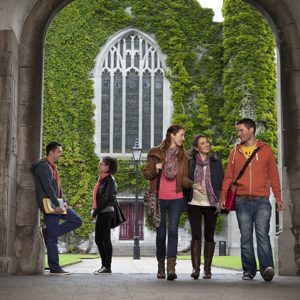
Choosing a course is one of the most important decisions you'll ever make! View our courses and see what our students and lecturers have to say about the courses you are interested in at the links below.
-
University Life
University Life
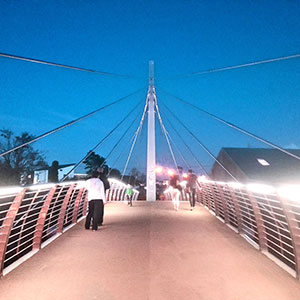
Each year more than 4,000 choose University of Galway as their University of choice. Find out what life at University of Galway is all about here.
-
About University of Galway
About University of Galway
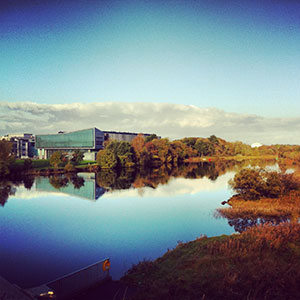
Since 1845, University of Galway has been sharing the highest quality teaching and research with Ireland and the world. Find out what makes our University so special – from our distinguished history to the latest news and campus developments.
-
Colleges & Schools
Colleges & Schools
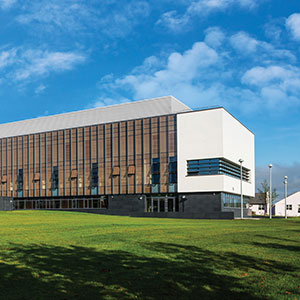
University of Galway has earned international recognition as a research-led university with a commitment to top quality teaching across a range of key areas of expertise.
-
Research & Innovation
Research & Innovation
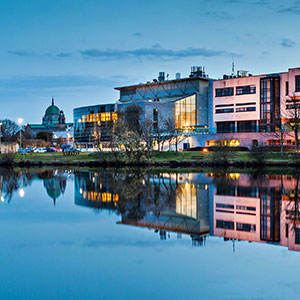
University of Galway’s vibrant research community take on some of the most pressing challenges of our times.
-
Business & Industry
Guiding Breakthrough Research at University of Galway
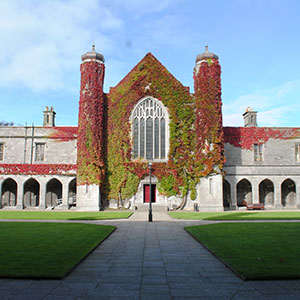
We explore and facilitate commercial opportunities for the research community at University of Galway, as well as facilitating industry partnership.
-
Alumni & Friends
Alumni & Friends
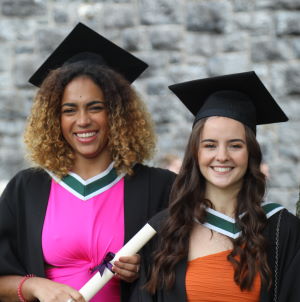
There are 128,000 University of Galway alumni worldwide. Stay connected to your alumni community! Join our social networks and update your details online.
-
Community Engagement
Community Engagement
At University of Galway, we believe that the best learning takes place when you apply what you learn in a real world context. That's why many of our courses include work placements or community projects.
 Accessibility & Language
July
Wednesday, 29 July 2026
Visitors of all ages are invited to discover how creativity can bring mathematics to life at a major exhibition celebrating the connections between mathematics and art, alongside a free Family Day packed with hands-on activities at University of Galway. The Exhibition of Mathematical Art, Craft, and Design will be on display in the Bailey Allen Hall at University of Galway from the 5th to 8th August and is part of the international Bridges 2026 Conference on Mathematics and the Arts. The extensive artworks help to visualise different mathematical models and concepts while showing the deep connections of mathematics to art, music, architecture, and culture. Exhibits include: Handmade paper weaving showing how a simple weaving technique unfolds into complex geometric forms A 3D-printed skeleton holding laser-cut wooden pieces to illustrate a mathematical object that exists beyond familiar geometry Discovering what happens when the famous Telstar football is reassembled into a sphere stitched from 20 white hexagons and 12 black pentagons, rearranged in alternative configurations A painting on silk celebrating five geometric tilings from Spain's Alhambra Palace. The exhibition features more than 200 original artworks by mathematicians, scientists and artists from all over the world, including Neal Bushaw, Amy Wendt, Dana Kolářová, Eleni Vamvakidi and Navah Langmeyer, whose work spans sculpture, quilting, painting, jewellery and digital design, reflecting the many ways mathematics can inspire artistic expression. The full art exhibition catalogue and artist statements can be viewed at: https://gallery.bridgesmathart.org/exhibitions/bridges-2026-exhibition-of-mathematical-art Many of the exhibiting artists use craft forms that are beloved of Galway craftspeople, such as crochet, knitting, origami and metalwork. It includes a piece by University of Galway Lecturer Dr Rachel Quinlan which uses origami as a practical way for exploring discrete geometry and wallpaper classification. Bridges artists will be presenting hands-on activities for visitors at the Bridges Family Day on Saturday August 8th. The free Family Day will include 21 hands-on workshops related to mathematics and arts, a poetry reading, a short film festival and dance workshops in Áras na Mac Léinn. Visitors can interact with a Giant Pantograph drawing machine made from bike parts and everyday materials; create 2D and 3D origami geometric shapes; explore new musical worlds by playing software versions of non-standard piano keyboard; train your own AI to read numbers and learn about algorithms; and explore mathematical ideas using a card, needle and thread. Details of the 21 workshops can be found at: https://www.bridgesmathart.org/b2026/bridges-2026-free-public-events/bridges-2026-family-day/. Run by the Bridges Organisation in collaboration with local organisers, the conference brings together an interdisciplinary group of mathematicians, scientists, artists, educators, musicians, writers, computer scientists, sculptors, dancers, weavers and model builders. Local conference organiser, Dr Rachel Quinlan, School of Mathematical and Statistical Sciences, University of Galway, said: “Having participated and exhibited at the Bridges conferences for several years, it is a big pleasure for me to bring Bridges to University of Galway this year. Bridges celebrates the power of the creative arts to express and communicate mathematical meaning, and the mathematics that is inherent in many widely practised forms of art and craft.” A programme of research talks and paper presentations are part of the four-day conference as well as a mathematical fashion show that will take place on the evening of Friday August 7th in the Bailey Allen Hall. International speakers include bestselling maths author and stand-up comedian Matt Parker and award-winning author Amy Alznauer. George Hart, President of the Bridges Organisation, said: “The Bridges Conference is an annual meeting where several hundred people who love mathematics and the arts come together to share their ideas, show their work, and get a creativity recharge from similar-minded people. Galway and Ireland is the perfect place for this, with its strong culture of the arts, including music, literature, and dance, and its history of significant mathematicians.“ The Bridges Organisation oversees the annual Bridges conference on mathematical connections in art, music, architecture, and culture. Since 1998, Bridges has travelled to North America, Europe, and Asia, and has attracted participants from over thirty countries. Ends
Tuesday, 28 July 2026
Discussion groups aimed at improving understanding of high blood pressure and supporting better cardiovascular health taking place across Cork, Dublin, Letterkenny, Limerick and Galway University of Galway is calling on members of the public to participate in patient discussion groups across Ireland to help develop a better understanding of blood pressure, hypertension and cardiovascular health. The discussion groups, led by University of Galway and supported by a multidisciplinary team of cardiologists, patients, researchers and community organisations, including the Irish Heart Foundation, Croí and the Irish Kidney Association, will explore these issues by engaging directly with people living with high blood pressure and their families. The goal of the campaign is for University of Galway to lead the development of a plain-language, patient-friendly high blood pressure pathway that reflects European Society of Cardiology Guidelines and spans from management in primary care for the majority through to management in hospital/secondary care for the more complex cases. The language used will be informed by the patient voice and lived experience of those with hypertension. The call for participation forms part of the ongoing work of the Expert Steering Group on Hypertension Management, which made a compelling case to politicians in Leinster House in May for the need to tackle high blood pressure nationally by expanding structured blood pressure screening in primary care and commissioning a regional cardiovascular disease prevention framework with an all-Ireland reach. Cardiovascular disease is the second leading cause of death in Ireland, with the Irish Heart Foundation estimating the annual cost to the State is €1.7 billion, approximately half of which comprises direct health service costs. Up to 80% of strokes are preventable through earlier detection and better management of cardiovascular risk factors, particularly high blood pressure. Speaking about the call for patient involvement, Dr Susan Connolly, Consultant Cardiologist and a member of the Expert Steering Group, said: “Patients have a key role to play in improving their cardiovascular health, and that starts with understanding the risks associated with high blood pressure and hypertension. But the language we use to communicate the risk to our patients and how to reduce that risk through managing their blood pressure is equally important. We are encouraging patients to get involved in the development of this pathway to help empower people with a better understanding of these risks.” “As part of the Expert Steering Group’s work, we are calling for a shift towards a more structured, prevention-focused model that supports earlier detection, timely intervention and ongoing management. This will ultimately help patients reduce their risk of serious cardiovascular events before they occur.” Dr Natalie Walsh, Co-Lead of PPI Ignite Network Galway at University of Galway, said: “Patient involvement is central to our work, and we are calling on people to get involved in our discussion groups as we develop the plain-language high blood pressure pathway.” “Our goal is to create a pathway that empowers people to better understand and manage their high blood pressure, helping to prevent avoidable strokes, heart attacks and other cardiovascular complications.” Discussion groups will be held across Cork, Dublin, Letterkenny, Limerick and Galway, and will take place in August and September. People interested in taking part are asked to contact ppi@universityofgalway.ie to register their interest by Friday, 31 July. The final pathway and supporting resources are expected to be completed by September 2026. Ends
Monday, 27 July 2026
Excavation uncovers unique combination of prehistoric portal and court tombs and artefacts dating back almost 6,000 years Archaeologists have rediscovered a ‘lost’ Neolithic tomb and located a second, previously unidentified, tomb during excavations at a prehistoric site revealing new evidence about the earliest farming communities in the west of Ireland. Led by Dr Michelle Comber and Dr Noel McCarthy of the Discipline of Archaeology at University of Galway, the excavation in the Maree area of Co Galway has revealed two different types of megalithic tombs dating back almost 6,000 years. Researchers believe the site represents the only known example in Ireland where a court tomb and a portal tomb are found together, offering important new evidence about the people who built them during the early Neolithic period - the first farmers in this part of the world. Court tombs were burial monuments with an open area or ‘court’ where ritual/ceremonial activities took place, while portal tombs were stone-built burial chambers marked by a large capstone. The discovery of these two monument types side-by-side provides a rare opportunity to examine different approaches to burial, ritual and monument building in the Ireland of the Stone Age. Project co-lead, Dr Michelle Comber, lecturer in Archaeology at University of Galway, said: “The chance to find and excavate sites like these within the area of our larger research project provides a golden opportunity to locate - and attempt to understand - the first farmers of this place. Working here with colleagues, students, and community members, playing a part in such important discoveries, is thrilling both professionally and personally. “The size and scale of the tombs, and the effort required to construct them, reflect a sizeable community living in and farming this part of coastal Galway. Their location right next to each other represents a meeting of two traditions, raising new questions about the nature of that interaction.” Project co-lead, Dr Noel McCarthy, lecturer in Archaeology at University of Galway said: “The opportunity to investigate a site like this is not something that occurs very often. Discovering the second monument has added a layer of complexity that informs our understanding of culture and society in the Neolithic period and beyond. Whole communities came together to create these monuments in what must have been great displays of group identity and religious expression.” Once thought completely destroyed, the court tomb at Prospecthill, Maree, has been uncovered by University of Galway archaeological excavations this summer. One of the southernmost examples of this type of tomb, it is also one of the largest discovered, at approximately 30m in length. Right beside the court tomb, and previously unrecorded as a burial monument, the remains of a large portal tomb have also been discovered. Its impressive capstone measures almost 4m in length and 1m thick, weighing an estimated 14 tonnes. Archaeologists on the site also identified a large bedrock pit in which the portal tomb was originally constructed. This enabled the exceptional preservation of the original burial deposits, providing a rare opportunity to investigate evidence from the monument's earliest use, offering fresh insights into how these communities honoured and buried their dead. The excavation uncovered stone tools, prehistoric pottery and cremated bone, including a small amethyst pendant from the portal tomb. While quartz beads are known from a few megalithic sites, nothing like this amethyst pendant is known from anywhere in Ireland. Both tomb types are dated to the early Neolithic period and, despite their name, both tombs represent much more than just places of burial. They were the focus of communal gatherings and rituals, some of which involved human remains and ancestral interaction. The discoveries have been made as part of the University of Galway research project, MAREE – Land Use Through Time, which is exploring how people lived and used the landscape in the area over thousands of years. The latest discoveries build on the project's first excavation season in 2025, when archaeologists confirmed Rathgurreen Ringfort as a high-status Early Medieval settlement occupied by rulers and nobles. That excavation uncovered links to trade and contact extending to Rome, Scotland, France and Scandinavia. This year's discoveries have extended the research project's timeline back into early prehistory, offering new evidence about the origins of farming, settlement and territoriality in the west of Ireland. This is key to understanding the long and continuing relationship between people and land in this landscape. The excavation is being carried out by researchers and students from University of Galway, alongside community volunteers, and hosted by the local landowner the Burke family, with support from the Royal Irish Academy and survey work by the Discovery Programme, the national archaeological research body supported by the Heritage Council. Ends
Monday, 20 July 2026
University of Galway is to host the world premiere of one of the flagship events of the 2026 Galway International Arts Festival – Irish National Opera’s production of Testament. Adapted from author Colm Tóibín’s acclaimed novella, The Testament of Mary, the show runs for three nights at the University’s Bailey Allen Hall, Friday-Sunday, July 24-26. The work offers a profoundly intimate portrait of Mary in the final years of her life. Moving between memory and immediate experience, Testament explores grief, exile and the contested nature of truth as Mary revisits the events surrounding her son’s death while confronting the narratives that have grown around it. The production is presented by Irish National Opera in association with Galway International Arts Festival. Paul Fahy, Artistic Director of Galway International Arts Festival, commented: "We are delighted to present the world premiere of Testament by Irish National Opera at Bailey Allen Hall at the University of Galway as part of this year's Galway International Arts Festival. It's wonderful to have the support of University of Galway as we transform the Bailey Allen Hall into a theatre for this extraordinary new production, creating a unique Festival experience for audiences. Irish National Opera has earned an outstanding reputation both nationally and internationally for artistic excellence, and we're proud to partner with them to premiere this powerful new work by Tarik O'Regan and Colm Tóibín as part of the Festival.” Professor David Burn, University of Galway President, said: “It’s a privilege for the University to be able to host the world premiere of Testament. It’s a great example of the pioneering creativity that has become so synonymous with the Galway International Arts Festival and something that brings enormous value to our Education Partnership.” The archive of the Galway International Arts Festival is deposited at University of Galway Library. It includes material from the founding years of the festival, from 1978 through to present day, such as festival posters, production and event photographs, programmes, press, and other items. With the University and Galway International Arts Festival marking 16 years of their Education Partnership, the archival work is expanding into a digital archive of festival artists and companies. University of Galway archivist Dr Barry Houlihan said: “The Oral history project of the Galway International Arts Festival is creating a living archive of those who are at the heart of the festival annually – the artists. Conversations are recorded with artists every year, documenting their work, their craft and their experiences of the festival. All oral histories from Galway International Arts Festival are freely available online from University of Galway Library https://digital.library.universityofgalway.ie/p/ms/categories/giaf The acclaimed First Thought Talks series also continues this weekend on the University of Galway campus including Singing - Colm Tóibín in conversation with Iarla Ó Lionáird (25 July, 5.30pm); War, Tariffs, ICE and the Price of Gas - Fintan O’Toole and Marion McKeone in conversation (25 July, 4pm); What Were We Like - The Pope in Galway with Diarmaid Ferriter and Catriona Crowe (25 July, 2pm); AI: So What Happens Next? - Adrian Weckler in conversation Elaine Burke (26 July, 11am); The Wounds of Palestine and Love Stories of Conflict - Nick Maynard and Sally Hayden in conversation with Catriona Crowe (26 July, 12.30pm). Vinyl Hours also brings Festival artists into conversation with music maestro Tiernan Henry for a series of lively, music-filled talks. Galway International Arts Festival would like to acknowledge the support of its principal funding agencies the Arts Council and Fáilte Ireland; its Drinks Partner Heineken®; Education Partner University of Galway. Ends
Monday, 20 July 2026
University of Galway has celebrated the achievements of student innovators at its newly reimagined Start With Us awards, recognising outstanding commercial and social innovation ideas developed over the past six weeks. A flagship incubator programme, delivered by IdeasLab at University of Galway, Start With Us supports students through two pathways - Start100 for commercial innovation and SoStart for social innovation with 10 student teams developing early-stage ideas into solutions with the potential to make a lasting difference to communities, industries and society. The Start100 Commercial Innovation Award was presented to Katie Browne from Galway city, for Native Matcha, a matcha-based drink that provides a natural, sustained source of energy as an alternative to traditional caffeinated beverages. The inaugural So Start Social Innovation Award was presented to Galway local Caoimhe Ní Dhochartaigh, for Catch, a social enterprise supporting adolescent mental health through circus-based programmes that use movement, creativity and community to build confidence, resilience and wellbeing. The WestBIC One to Watch Award went to DripIQ, founded by Tanushree Yadav and Reena Babu, and Kishor Shirsat, all from India. DripIQ is a smart, low-cost clip-on device that improves IV flow accuracy and detects empty IV bags, helping enhance patient care while reducing workload for healthcare staff. 2026 also saw the addition of an Audience Choice Award which recognised SkillSwap, founded by John Hyland, from Galway city, for its approach to strengthening intergenerational connections by developing a platform for people to connect to share practical skills, knowledge and life experience. Dr Natalie Walsh, Director of Entrepreneurial Development at University of Galway, said: "Five years ago, we launched our student incubator with a simple ambition, to give students the confidence to explore an idea. Today, we are celebrating much more than winning pitches. We are celebrating a community of student innovators who have gone on to create businesses, social enterprises, jobs and real impact. The introduction of dedicated commercial and social innovation pathways reflects our belief that innovation creates value in many ways. Whether our students are launching businesses, developing social enterprises or becoming innovators within existing organisations, they are learning how to identify opportunities, work collaboratively and create meaningful change. That is something we are incredibly proud of." Start With Us provides students with the opportunity to explore, test and develop ideas through human-centred design, customer discovery, mentoring and real-world engagement. Working alongside industry, community organisations, users and mentors, participants explored ideas through human-centred design, customer discovery and real-world engagement, testing assumptions, refining solutions and developing skills in communication, teamwork, problem-solving and entrepreneurial thinking. Now in its fifth year, the incubator has become an important part of University of Galway's student innovation programme, supporting students to turn ideas into businesses and social enterprises. Since its launch, the programme has supported 62 student innovators; contributed more than €3 million to the economy; supported the creation of more than 60 jobs. Alumni have gone on to establish companies, develop social enterprises, secure investment, join national accelerator programmes and pursue innovator careers. The final brought together leaders from across Ireland's innovation ecosystem, with representatives from Atlantic Bridge, Enterprise Ireland, WestBIC, Fairstone Ireland and An Mheitheal Rothar serving on the judging panel to evaluate the students' ideas and share their expertise. Dr Walsh added: "The ideas we've seen over the past six weeks demonstrate the creativity and ambition of our students. While some ventures will become businesses and others social enterprises, every participant has developed the confidence and skills to identify opportunities, solve problems and create positive impact. That's what Start With Us is all about." The University also acknowledged the continued support of Rethink Ireland, Ulster Bank, Fairstone and WestBIC, whose support enables students to explore ambitious ideas while building the skills and confidence to bring them forward. Ends
Tuesday, 14 July 2026
Galway International Arts Festival and University of Galway are this year marking 16-years of their long-running partnership. More than 60,000 visitors are expected to attend shows, performances, talks, exhibitions and events at 10 venues on the University’s city centre campus, from the Bailey Allen Hall, to lecture theatres, to the O’Donoghue Theatre and the Bank of Ireland Theatre. Fourteen students are taking part in this year’s SELECTED programme - a whirlwind summer academy for emerging artists, theatre makers, curators and producers, and a key part of the University’s long-running Education Partnership with Galway International Arts Festival. The students of drama, English and theatre studies will get unrivalled behind the scenes experience and access to festival-making, including exclusive meetings with artists and producers. Galway International Arts Festival Chief Executive, John Crumlish, said: “The partnership with the University of Galway has been very important to the Festival. It has been a key contributor to our development over the last number of years, facilitating the expansion of the Festival's presence and providing support for the development of new Irish work.” University of Galway President, Professor David Burn, said: “The sheer breadth and variety of the opportunities presented by Galway International Arts Festival is something that we treasure. We are thrilled to see the festival and our partnership grow year on year. Our academics, students and staff help to make it what it is, and also get huge benefit for this long and growing relationship. We are delighted to see this year, yet again, tens of thousands of people enjoying events across the city and coming to our campus to enjoy performances and experiences with creativity at their core.” Rena Bryson, SELECTED manager and a graduate of the programme, said: “The SELECTED programme offers a unique opportunity for students to make that transition from study to the industry while learning from and networking with industry leaders. And seeing so much work, whether as an ambassador or an audience member, over the two weeks is sure to inspire and offer new perspectives. It’s a group of exceptional young people who often after leaving Selected go on to create work together and that’s what the programme is really about offering the support, knowledge and inspiration for the next generation of artists in Galway.” University of Galway and Galway International Arts Festival launched the Education Partnership in 2010. The collaboration is built around a shared commitment to creativity, the arts and showcasing bold, contemporary, new work, with public engagement and research and learning central to the mission. With 2026 the International Year of the Volunteer, University of Galway is proud to sponsor the Galway International Arts Festival Volunteer Programme as well as hosting the Volunteer Hub on campus. More than 500 volunteers, including students, are taking part and playing a key role in events across the city and county - welcoming audiences and the 40 nationalities taking part in this year’s programme, stewarding at the Heineken Big Top, ushering at performances, invigilating at galleries, assisting at street spectacle events, and acting as Festival Ambassadors and Green Ambassadors. University of Galway also hosts the Festival’s acclaimed First Thought Talks series, bringing together leading journalists, writers and university experts to explore a range of contemporary issues, from falling fertility rates and its societal implications to Irish neutrality to the affordability of home retrofitting. Speakers include renowned journalists and authors Bel Trew, Fintan O’Toole, Marion McKeon, Andrew O’Hagan, Lara Marlowe, Ben Brantley, Sally Hayden and Nick Maynard, alongside a number of distinguished University of Galway academics and researchers. University of Galway will once again host a series of post-show talks to explore the inspirations behind each of the theatre productions. University of Galway is also home to GIAF’s largest venue - the Heineken® Big Top in Fisheries Field which this year features a standout programme of international and Irish artists including the Patti Smith Quartet, Sophie Ellis-Bextor with special guest Kate Nash, James, The Saw Doctors, and, in an Irish exclusive this year The Flaming Lips with special guests Mercury Rev, who will all bring unforgettable live performances to the Festival. In a special double bill, Emeli Sandé and James Morrison share the stage, while Irish acts Bell X1, Block Rockin Beats and Cian Ducrot complete a vibrant Heineken® Big Top line-up. University of Galway’s O’Donoghue Centre will also play host to ‘Assembly’, Ireland’s Pavilion from the Venice Biennale of Architecture. The installation is an interdisciplinary collaboration between architects, a composer, a poet and a woodworker and it is described as a prototype for a structure that facilitates non-hierarchical communication between strangers. Vinyl Hours will again be hosted by university academic, Tiernan Henry who will take us on musical journeys, exploring the inspirations that shaped the music choices of guests, Wayne Coyne of the Flaming Lips and Katie Bel of Just Mustard. Ends
Monday, 13 July 2026
Cuirfear fáilte in Ollscoil na Gaillimhe roimh mhic léinn, an fhoireann, alumni agus an pobal chuig lá oscailte speisialta ina mbeifear ag caitheamh súil siar ar bhóithrín na smaointe sa leabharlann. Tá an deis uathúil seo againn anois mar go bhfuilimid ag ullmhú le bogadh as Leabharlann Shéamais Uí Argadáin, tar éis breis is leathchéad bliain ar an bhfód. Beidh an lá oscailte ar siúl Dé Sathairn, an 25 Iúil idir 11am agus 3pm. Iarrtar ar chuairteoirí freisin a gcuid cuimhní cinn a roinnt linn ar an áit ar chuir siad barr feabhais ar a gcuid oideachais agus ina raibh neart spraoi acu chomh maith. Is féidir le daoine ar spéis leo teacht ar cuairt agus cuimhneamh ar an bhfoghlaim agus ar an spraoi clárú ar líne roimh ré ag https://www.universityofgalway.ie/alumni-friends/upcomingalumnievents/slan-jameshardimanlibraryopenday/ Dúirt Leabharlannaí Ollscoil na Gaillimhe, Monica Crump: “Agus muid ag ullmhú le bogadh ó Leabharlann Shéamais Uí Argadáin go dtí Leabharlann nua an Dr Karen Guinee in 2027, tugaimid cuireadh d’iar-mhic léinn agus d’iar-chomhaltaí foirne Ollscoil na Gaillimhe chomh maith le muintir na Gaillimhe teacht chuig Leabharlann Shéamais Uí Argadáin den uair dheireanach an 25 Iúil idir 11am agus 3pm. “Tar ar cuairt an athuair ar an spota ab ansa leat sa Leabharlann, tabhair chun cuimhne laethanta a chaith tú brabhsáil na seilfeanna agus fág slán le Leabharlann Shéamais Uí Argadáin. Ba bhreá linn dá roinnfeadh sibh bhur gcuimhní cinn linn – na seisiúin staidéir a mhair go dtí amach san oíche, an cairdeas agus na caidrimh ar tháinig bláthú orthu nuair a bhí nótaí lámhscríofa á mbabhtáil, na spriocanna diana, na nóiméid inspioráide, an gáire, an mhoilleadóireacht agus gach eachtra eile a thagann chun cuimhne. “Bí inár dteannta agus ómós á léiriú againn don leabharlann agus don ról a bhí aici i saol na hollscoile le 53 bliain anuas.” Tá an lá oscailte beartaithe agus an Ollscoil ag súil le hoscailt Leabharlann nua an Dr Karen Guinee in 2027. Ainmníodh an leabharlann nua in ómós an Dr Karen Guinee, céimí leighis cumasach agus cineálta a thug faoina cuid oideachais agus oiliúna mar dhochtúir le díograis agus dúthracht. Cinneadh an Leabharlann a ainmniú in ómós di i ndiaidh dúinn tabhartas flaithiúil daonchairdiúil a fháil ó Fhondúireacht Charthanachta Michael Guinee, atá ag tacú le scoláireacht nua do mhic léinn leighis a bhunú i gcuimhne an Dr Guinee chomh maith. Críoch
Monday, 13 July 2026
University of Galway is opening its doors to students, staff, alumni and the public with a special open day for trips down memory lane at the James Hardiman Library. The unique opportunity is being offered as the University prepares to say goodbye to the James Hardiman Library, after more than half a century of service. The open day takes place on Saturday, July 25th and runs from 11am-3pm. Visitors are also being asked to share the stories that made it so much more than just a building and place for studying and learning. Anyone who is interested in coming along for a visit full of fond memories, nostalgia and fun can register online in advance at https://www.universityofgalway.ie/alumni-friends/upcomingalumnievents/slan-jameshardimanlibraryopenday/ University of Galway Librarian Monica Crump said: “As we prepare to move from the James Hardiman Library to the new Dr Karen Guinee Library in 2027, we invite University of Galway alumni, former staff and the people of Galway to come and visit the James Hardiman Library one last time on July 25th between 11am and 3pm. “Come and revisit your favourite seat in the Library, rekindle your memories of browsing the shelves and say one last goodbye to the James Hardiman Library. We’d love to hear your memories of your time in the Library - the late-night study sessions, the friendships and romances that blossomed over shared notes, the stressful deadlines, the eureka moment, the laughter, the procrastination, and the unforgettable moments in between. “Help us honour the library and the role it has played in university life over the last 53 years by joining us on this day of celebration.” The open day is planned as the University looks ahead to the opening of the new Dr Karen Guinee Library in 2027. The new library is named in honour of Dr Karen Guinee, a gifted and compassionate medicine graduate who completed her education and training as a doctor with distinction. The commemorative naming follows a significant philanthropic gift from the Michael Guinee Charitable Foundation, which is also supporting the establishment of a new scholarship for medical students in memory of Dr Guinee. Ends
Tuesday, 7 July 2026
Orbsen Therapeutics reports further clinical progress for single-dose cell therapy being developed to slow diabetic kidney disease Researchers have revealed new evidence that a single stem cell therapy treatment can slow the loss of kidney function in adults who have diabetic kidney disease. The stem cell therapy, ORBCEL-M, was developed by University of Galway spinout company, Orbsen Therapeutics, The new results come from the EU Horizon 2020-funded NEPHSTROM project, which conducted a clinical trial of this therapy as an intravenous infusion in adults with progressive chronic kidney disease due to type 2 diabetes. The early-stage trial involved two groups of patients treated with lower and higher doses of ORBCEL-M as well as a group treated with a placebo infusion. The results for these groups confirmed that a single dose of ORBCEL-M was as safe as the placebo infusion and associated with better preservation of kidney function. Patients taking part in the trial were followed closely for 18 months after receiving the therapy. These promising results could mean more time before kidney failure, more time living independently, and potentially more time before dialysis or transplant becomes necessary for adults with diabetic kidney disease. The project was completed by an international consortium led by University of Galway-including specialised researchers, medical specialists, cell manufacturing facilities and companies from Ireland, Italy, the UK, the Netherlands, Belgium and Germany. The ORBCEL-M cell therapy is a mesenchymal stromal cell (MSC) preparation manufactured from healthy bone marrow which was discovered and developed by Orbsen Therapeutics, a Galway-based clinical-stage cell therapy company which emerged as a spinout from the University of Galway’s Regenerative Medicine Institute (REMEDI). The findings from the trial support plans for a larger clinical trial to test whether a single infusion of ORBCEL-M will slow the rate at which kidney function declines in people with diabetic kidney disease and delays the need for dialysis or kidney transplantation. It is the second positive report following a clinical trial of the therapy. The latest results from the trial can be read in Kidney International Reports here. Steve Elliman, Chief Scientific Officer of Orbsen Therapeutics, said: “Publication of the first NEPHSTROM clinical report was an important milestone for Orbsen and for the NEPHSTROM consortium. Acceptance of the second clinical report adds further independent peer-reviewed support for the programme. “Most importantly, we thank the patients who took part in NEPHSTROM. Every clinical advance begins with patients who are willing to participate in carefully controlled research. These are still early studies, and ORBCEL-M must now be tested in a larger clinical trial. Taken together, the NEPHSTROM publications support the case for that next stage of development.” Matthew Griffin, Professor of Transplant Biology at University of Galway and Consultant Nephrologist at Galway University Hospitals, notes: “While the data are very encouraging, it is important to recognise that the latest results to be published from the NEPHSTROM trial do not prove benefit. Nonetheless, they do strengthen the evidence we need to move toward larger trials. If confirmed in larger studies, that could mean giving people who are at risk of kidney failure due to diabetes more healthy time at home, at work, and with their families.” Chronic kidney disease affects more than 1 in 10 adults in Ireland and is most commonly caused by type 2 diabetes. It is often a silent condition which can progress for years before a person realises anything is wrong. For people with diabetes whose kidney function is worsening despite the best treatments that can be provided, the future can be stark, including a high risk of needing kidney replacement therapies such as dialysis several times a week or kidney transplantation. In the past decade, new medicines have been discovered which have improved treatment for diabetic kidney disease. However, these medicines are taken daily or weekly and some patients still progress towards dialysis or transplant. Orbsen is seeking to test whether a single dose of ORBCEL-M can be added to these medicines to slow the loss of kidney function and keep more people with diabetic kidney disease free of kidney replacement therapy for longer. Orbsen is now seeking funding to advance manufacturing validation, regulatory preparation and the larger clinical trial required to determine whether ORBCEL-M can become a clinically meaningful disease-modifying therapy for progressive diabetic kidney disease. Ends
Monday, 6 July 2026
University of Galway and Ulster University launch All-Island policy brief on strengthening digital mental health supports for young people Cross-border research has examined how digital mental health supports can better meet the needs of young people across the island of Ireland amid rising mental health challenges and limited access to services. The research was developed by the University of Galway and Ulster University through the shared island-funded Atlantic Futures programme, supported by the Higher Education Authority (HEA). Produced as a policy brief, it presents evidence from an Atlantic Futures-hosted all-island policy dialogue event involving policymakers, practitioners, researchers, youth sector representatives and young people. Findings highlight that trust, simplicity and cultural relevance are critical to engagement. Young people, especially marginalised youth, are more likely to use digital mental health tools that are recommended by trusted organisations, peers or adults; are easy to navigate; and reflect their identities, communities and lived experiences. The researchers also found that young people use digital tools mainly for light‑touch emotional regulation, not therapy, and want grounding, distraction, positivity, and short check-in's - not long programmes or clinical content. Additionally, while young people are confident navigating digital spaces, gaps in digital mental health literacy persist largely because the wider digital landscape is fragmented and lacks clear governance, making it difficult to assess the credibility, privacy practices and safety of online platforms, with families further constrained by language, literacy and digital exclusion.A key recommendation is sustained youth participation, highlighting young people stay engaged when treated as equal partners and when they see impact. The briefing calls for long-term, inclusive co-design embedded in policy and service design and development. Project lead, Dr Carmen Kealy, Health Promotion Research Centre, University of Galway, said: “Young people are navigating increasing pressures, and digital supports can genuinely help - but only when they are trustworthy, culturally relevant, and easy to use. Our research shows that young people value clarity, representation, and tools that fit naturally into their daily lives. A coordinated, youth‑centred approach across the island is essential to building a digital mental health ecosystem that feels credible, accessible, and supportive for all young people. Principal Investigator, Professor Siobhan O’Neill, School of Psychology, Ulster University, said: “The briefing forms part of the Atlantic Futures programme, a collaborative all-island initiative supported through the HEA North-South Research Programme under the Shared Island initiative, which seeks to address shared societal challenges through research, innovation and partnership.”The findings conclude that digital mental health supports have significant potential to extend access to care and reduce barriers for young people across the island of Ireland. However, the researchers caution this potential will only be realised when digital solutions are built around trust, cultural relevance, simplicity and meaningful participation. The policy brief calls on policymakers, service providers, educators, youth organisations and technology developers to work collaboratively to create a more coherent and accessible digital mental health ecosystem.The full policy brief can be read here. Ends
Wednesday, 1 July 2026
Taispeántas nua ar stair institiúidí Thuama agus na hÉireann oscailte i Músaem Cathrach na Gaillimhe
Forbairt an chéad suiteáin dá leithéid in Éirinn a bhuíochas le comhoibriú idir Ollscoil na Gaillimhe agus Músaem Cathrach na Gaillimhe. Osclaíodh taispeántas nua, Iad Siúd a Tháinig Slán: Scéalta ó Stair Institiúidí Thuama agus na hÉireann i Músaem Cathrach na Gaillimhe. Is é seo an chéad suiteán músaeim atá dírithe go hiomlán ar na hinstitiúidí Máithreacha agus Naíonán agus ar an tionchar a bhí acu ar shochaí na hÉireann. Tugann an taispeántas léargas ar an gcaoi ar caitheadh le máithreacha singile agus a bpáistí in Éirinn, agus aird ar leith á tabhairt ar institiúid Máithreacha agus Naíonán Thuama agus na fadhbanna oidhreachta atá fós i gceist dóibh siúd a tháinig slán. Agus fócas ar leith sa taispeántas ar an gcion atá déanta ag Catherine Corless ar mhaithe le stair na hÉireann, insítear scéalta 18 nduine a tháinig slán ón institiúid trí thaispeántais fuaime agus amhairc. Tá sraith podchraoltaí curtha i dtoll a chéile freisin a dhéanfaidh éascaíocht don phobal eolas domhain a chur ar scéalta iad siúd a tháinig slán. Dúirt an staraí Catherine Corless: "Is tionscadal iontach agus ríthábhachtach é seo, cuimhní cinn na ndaoine siúd a tháinig slán as Áras Thuama a bhailiú, scéalta a mbeadh dearmad déanta orthu le himeacht ama murach sin. Foireann dhíograiseach in Ollscoil na Gaillimhe faoi cheannas an Dr Sarah-Anne Buckley atá taobh thiar de Thionscadal Béaloidis Thuama agus cuirfear ar taispeáint anois é i Músaem Cathrach na Gaillimhe, a bhfuil spás agus am tugtha go fial acu dóibh siúd ar fad a tháinig slán.” Cruthaíodh an taispeántas i gcomhar le Tionscadal Béaloidis Thuama de chuid Ollscoil na Gaillimhe, atá á stiúradh acu siúd a tháinig slán, faoi cheannas an Dr Sarah-Anne Buckley agus an Dr John Cunningham. Tá fianaise agus déantáin phearsanta eile á mbailiú acu ó 2018 i leith ó dhaoine a tháinig slán ó na hinstitiúidí, óna dteaghlaigh agus ó dhaoine a raibh tionchar díreach ag an stair seo orthu. Tugtar cuireadh do chuairteoirí blaiseadh a fháil, trí chuntais ó bhéal, grianghraif, cáipéisí agus giuirléidí pearsanta, den taithí a bhí acu siúd a chaith tréimhsí dá saol in institiúid agus den tionchar buan a bhí aige sin ar na glúnta a tháinig ina ndiaidh. Is é an taispeántas seo an chéad chomhoibriú idir Músaem Cathrach na Gaillimhe agus Ollscoil na Gaillimhe ó comhaontaíodh meabhrán tuisceana nua chun comhoibriú níos dlúithe idir an dá eagraíocht a éascú. Dúirt Uachtarán Ollscoil na Gaillimhe, an tOllamh David Burn: “Tá sé oiriúnach go mbeidh áit ag Catherine Corless agus acu siúd a tháinig slán as institiúid Máithreachais agus Naíonán Thuama anois taobh le laochra na Gaillimhe inár músaem cathrach. Tá an-áthas orainn a bheith i mbun comhpháirtíochta le Músaem Cathrach na Gaillimhe ar an tionscadal seo mar go léiríonn sé a thiomanta is atáimid ár n-oidhreacht chultúrtha a shaibhriú trí dhul i bhfeidhm ar an bpobal agus, ar an gcaoi sin, cabhrú linn go léir ceachtanna a fhoghlaim ón tréimhse dhuairc sin inár stair. “Tá Muintearas agus Meas ar phéire de chroíluachanna na hollscoile, áit a mbraithfidh gach duine go bhfuil fáilte rompu, go bhfuil tacaíocht ar fáil dóibh, go bhfuil ceangal acu leis an bpobal agus go bhfuil luach orthu mar chuid dhílis dár bpobal. Meabhraítear dúinn sa taispeántas tiomnaithe seo nach raibh na luachanna sin ann san am a caitheadh agus léiríonn sé a thábhachtaí atá sé go mbeadh deis ag an bpobal foghlaim faoi scéalta na 18 nduine seo a tháinig slán.” Áireofar sa taispeántas i Músaem Cathrach na Gaillimhe portráidí grianghrafadóireachta díobh siúd a tháinig slán, fianaise phearsanta, taifid fuaime mar aon le cáipéisí cartlainne, agus réada, lena n-áirítear mionsamhail de réir scála d’institiúid Máithreacha agus Naíonán Thuama a chruthaigh Catherine Corless, agus dlaoi ghruaige ón scríbhneoir a tháinig slán, J.P. Rodgers. Dúirt Stiúrthóir Gníomhach Mhúsaem Cathrach na Gaillimhe, Adam Stoneman: “Tá áthas orainn an taispeántas tábhachtach seo ar institiúid Máithreacha agus Naíonán Thuama, a forbraíodh i ndlúthchomhar le grúpa daoine a tháinig slán trí Thionscadal Béaloidis Thuama, a roinnt leis an bpobal. Tá a bhfuil le rá acu agus a n-eispéiris ríthábhachtach agus muid ag féachaint le teacht ar thuiscint ar an stair chasta seo. Tá músaem in ann a bheith ina ionad machnaimh agus cneasaithe chomh maith le hionad tuisceana, agus is céim thosaigh í an taispeántas seo i dtiomantas fadtéarmach Mhúsaem Cathrach na Gaillimhe agus Ollscoil na Gaillimhe chun feasacht agus tuiscint an phobail maidir le stair institiúideach na hÉireann a chothú.” Beidh an taispeántas ar siúl i Músaem Cathrach na Gaillimhe ó mhí Iúil go mí Mheán Fómhair 2026 i bhforhalla an mhúsaeim agus tá sé mar aidhm aige cuairteoirí Éireannacha agus idirnáisiúnta a mhealladh. Tabharfaidh 29 grúpa turasóireachta ó na Stáit Aontaithe cuairt ar Ghaillimh le linn na tréimhse sin go sonrach chun an taispeántas a fheiceáil agus chun foghlaim faoi stair na hÉireann. Beidh clár cainteanna poiblí, ceardlann agus taispeántas ag gabháil leis an taispeántas. Tuilleadh eolais: GalwayCityMuseum.ie. Críoch
Wednesday, 1 July 2026
Collaboration between University of Galway and Galway City Museum develops the first installation of its kind in Ireland A new exhibition, Survivor Stories: Tuam and Ireland's Institutional Past has opened at Galway City Museum, the first dedicated museum installation to focus on Mother and Baby institutions and their impact on Irish society. The exhibition provides an insight into Ireland's treatment of single mothers and their children, focusing on the Tuam Mother and Baby institution and the legacy issues still faced by survivors today. Highlighting Catherine Corless's immense contribution to Irish history, the exhibition tells the stories of 18 survivors of the institution through audio and visual exhibits. An accompanying podcast series has also been created to allow for in-depth, personal engagement with survivors' stories. Historian Catherine Corless said: “What a wonderful and vital project this is, to gather the life stories of the Tuam Home Survivors, which otherwise would be forgotten in time. This Tuam Oral History Project, created in University of Galway, by a dedicated team, led by Dr Sarah-Anne Buckley, will now be exhibited in the Galway City Museum, who have graciously given space and time for all Survivors.” The exhibition has been created with University of Galway's survivor-led Tuam Oral History Project, led by Dr Sarah-Anne Buckley and Dr John Cunningham, which has been gathering testimonies and other personal artefacts from institutional survivors, their families and those directly affected by this history since 2018. Through oral histories, photographs, documents, and personal objects, visitors are invited to engage with first-hand experiences of institutional life and its lasting impact across generations. The exhibition is the first collaboration between Galway City Museum and the University of Galway since the agreement of a new memorandum of understanding to facilitate closer collaboration between the two organisations. President of University of Galway, Professor David Burn said: “It is fitting that Catherine Corless and survivors of the Tuam Mother and Baby institution will now have a place beside heroes of Galway in our city museum. We are delighted to partner with Galway City Museum on this project as it encapsulates our shared commitment to enrich our cultural heritage by truly engaging audiences to help us all learn lessons from our dark past. “Belonging and Respect are two of our university’s core values where everyone should feel welcomed, supported, connected and valued as an integral part of our community. This dedicated exhibition acts as a powerful reminder of the historical absence of such values and why it is so important that the wider public gets to learn about these 18 survivor life stories.” The exhibition at Galway City Museum will comprise of photographic portraits of survivors, testimonies, audio alongside archival documents, and objects, including a detailed scale model of the Tuam Mother and Baby institution created by Catherine Corless and a very poignant lock of hair from writer and survivor J.P. Rodgers. Acting Director of Galway City Museum, Adam Stoneman said: “We are pleased to share this important exhibition on the Tuam Mother and Baby institution, developed in close collaboration with a group of survivors through the Tuam Oral History Project. Their voices and experiences are vital to understanding this difficult history. Museums can be places of reflection and healing, as well as understanding, and this exhibition marks a first step in a longer-term commitment from Galway City Museum and University of Galway to develop greater public awareness and understanding of Ireland’s institutional histories.” The exhibition will run at Galway City Museum from July to September 2026 in the museum foyer and aims to engage Irish and international visitors. 29 US tour groups will visit Galway over the period specifically to see the exhibition and learn about Ireland's past. A programme of public talks, workshops and screenings will accompany the exhibition. Further information is available at: GalwayCityMuseum.ie. Ends
Featured Stories
Thursday,
15
October
2026
Ollscoil na Gaillimhe ag ceiliúradh agus beagnach 2,800 duine ag fáil a gcéime ag na searmanais bhronnta
Thursday,
15
October
2026
University of Galway celebrates almost 2,800 graduates at conferring ceremonies
Wednesday,
14
October
2026