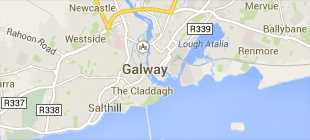
-
Courses
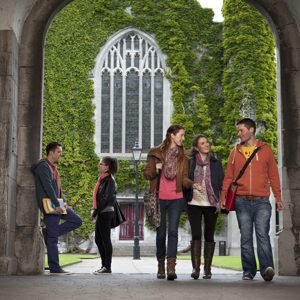
Courses
Choosing a course is one of the most important decisions you'll ever make! View our courses and see what our students and lecturers have to say about the courses you are interested in at the links below.
-
University Life
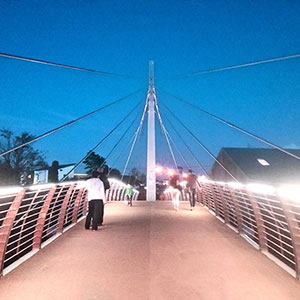
University Life
Each year more than 4,000 choose University of Galway as their University of choice. Find out what life at University of Galway is all about here.
-
About University of Galway
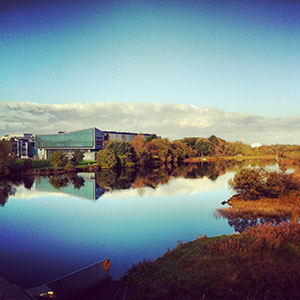
About University of Galway
Since 1845, University of Galway has been sharing the highest quality teaching and research with Ireland and the world. Find out what makes our University so special – from our distinguished history to the latest news and campus developments.
-
Colleges & Schools
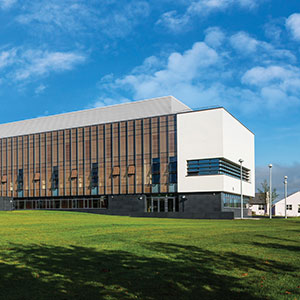
Colleges & Schools
University of Galway has earned international recognition as a research-led university with a commitment to top quality teaching across a range of key areas of expertise.
-
Research & Innovation
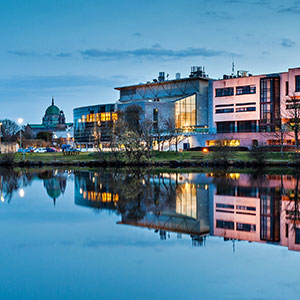
Research & Innovation
University of Galway’s vibrant research community take on some of the most pressing challenges of our times.
-
Business & Industry
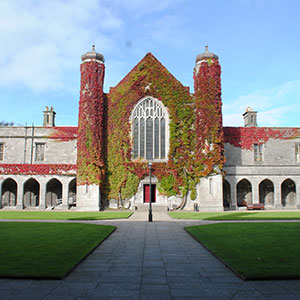
Guiding Breakthrough Research at University of Galway
We explore and facilitate commercial opportunities for the research community at University of Galway, as well as facilitating industry partnership.
-
Alumni & Friends
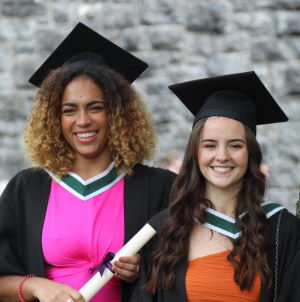
Alumni & Friends
There are 128,000 University of Galway alumni worldwide. Stay connected to your alumni community! Join our social networks and update your details online.
-
Community Engagement
Community Engagement
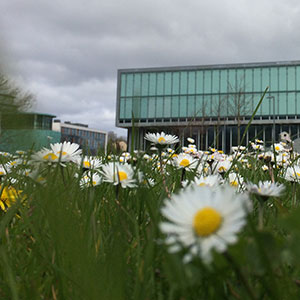
At University of Galway, we believe that the best learning takes place when you apply what you learn in a real world context. That's why many of our courses include work placements or community projects.
 Accessibility & Language
November
Wednesday, 18 November 2026
Two University of Galway academics have been named among the world's most cited researchers. Professor Henry Curran and Professor Patrick Serruys have been listed on the prestigious Clarivate Highly Cited Researchers 2026 list. They are among 6,802 leading scientists from more than 1,200 institutions who have demonstrated exceptional influence within their fields and across the global research community, through publications ranked in the top 1% by citations over the last 11 years. Professor Laoise McNamara, Vice President for Research and Innovation, University of Galway, said: “I’d like to congratulate Professors Henry Curran and Patrick Serruys who are among the world’s top 1% of most highly cited researchers published by Clarivate. To be part of this prestigious global group is testament to the quality and impact of their work. It also demonstrates two of our research pillars in action, Innovation for Health and Sustainable & Resilient Environments: Earth and Ocean, and the strong commitment to research excellence at University of Galway.” Professor Henry Curran, listed in the Engineering category, is Director of the Combustion Chemistry Centre at the School of Biological and Chemical Sciences, College of Science and Engineering and of the Energy Research Centre in the Ryan Institute at University of Galway. His research looks at the study of the chemistry of how fuels burn in combustors to increase efficiency and reduce emissions for a cleaner world. This is Professor Curran’s twelfth time being named a Clarivate Highly Cited Researcher. Professor Patrick Serruys, listed in the Clinical Medicine category, is Established Professor of Interventional Medicine and Innovation, Co-founder and Senior Consultant of the CORRIB Research Centre for Advanced Imaging and Core Laboratory at the College of Medicine and Health at University of Galway. Professor Serruys is a world-renowned expert in interventional cardiology and imaging with more than four decades experience in clinical trials and innovation in medicine. He has pioneered several interventional procedures and devices as well as imaging techniques. This is his sixth time being named a Clarivate Highly Cited Researcher. Bar Veinstein, President of Academia & Government at Clarivate, said: "We celebrate the Highly Cited Researchers 2026 for extending the frontiers of knowledge and inspiring scientific and academic progress around the world. At a time when trust in research is increasingly at risk, we are committed to applying rigorous criteria and expert analysis, upholding the highest standards of research integrity and continuing to strengthen the foundations of our Highly Cited Researchers program." The full 2026 Highly Cited Researchers list can be viewed here or at https://clarivate.com/highly-cited-researchers/. Ends
Wednesday, 18 November 2026
Tá aitheantas á thabhairt ag Ollscoil na Gaillimhe do chúigear ag searmanas Bronnta Céimeanna an Gheimhridh 2026 as a sárobair agus sáréachtaí i réimsí éagsúla. Beidh na searmanais ar siúl ón gCéadaoin, an 18 Samhain go dtí Dé Máirt, an 24 Samhain, agus céimeanna le bronnadh ar bhreis agus 3,200 mac léinn chomh leis an gcúigear a bhfuil Céim Oinigh le bronnadh orthu. Is iad sin: · Máirín Uí Chonchubhair (Dochtúir le hEolaíocht), luibheolaí, oideoir eolaíochta agus údar · Niamh Fahey (Dochtúir le Dlíthe), iarpheileadóir de chuid na hÉireann agus Comhordaitheoir Teicniúil le foireann sacair ban Learphoill · An Ceannasaí Roberta O’Brien (Dochtúir le Dlíthe), an bhean is airde céime i Seirbhís Chabhlaigh na hÉireann agus an chéad bhean a ceapadh ina captaen ar long · Lorna Martyn (Dochtúir le hEolaíocht), Ceannasaí Seirbhísí Teicneolaíochta Corparáideacha agus Príomhoifigeach Faisnéise le Fidelity Investments · Michael Dooley (Dochtúir le Ceol), ceoltóir agus stiúrthóir Dúirt Uachtarán Ollscoil na Gaillimhe, an tOllamh David Burn: “Is mór an onóir é d’Ollscoil na Gaillimhe aitheantas a thabhairt do chúigear eisceachtúil a raibh tionchar nach beag acu ina réimsí féin. Tá ceannaireacht, tallann, tiomantas agus cruthaitheacht den scoth léirithe acu agus tá a gcion féin déanta ag gach duine acu don tsochaí. “Tréimhse speisialta dár bpobal Ollscoile a bhíonn i gceist leis na searmanais bhronnta agus muid ag déanamh ceiliúradh ar éachtaí ár gcéimithe chomh maith leo siúd a bhfuil Céim Oinigh le bronnadh orthu. Ba mhaith liom tréaslú le gach duine dár gcéimithe agus leo siúd a bhfuil Céim Oinigh le bronnadh orthu, agus guím gach rath orthu sa todhchaí.” Tá sceideal iomlán shearmanais bhronnta an gheimhridh 2026 le fáil ag https://www.universityofgalway.ie/conferring/ Críoch
Wednesday, 18 November 2026
University of Galway is recognising five individuals for their outstanding achievements and contributions across a range of fields during its 2026 Winter Conferring ceremonies. The ceremonies, which run from today, Wednesday November 18th to Tuesday November 24th, bring together more than 3,200 graduates alongside the five Honorary Degree recipients. The awardees are: Máirín Uí Chonchubhair (Doctor of Science), botanist, science educator and author Niamh Fahey (Doctor of Laws), former Irish professional footballer and Technical Co-ordinator for Liverpool FC Women Commander Roberta O’Brien (Doctor of Laws), the highest-ranking woman in the Irish Naval Service and the first woman to captain a ship Lorna Martyn (Doctor of Science), Head of Corporate Technology Services and Chief Information Officer at Fidelity Investments Michael Dooley (Doctor of Music), musician and conductor University of Galway President Professor David Burn said: “University of Galway is honoured to recognise five exceptional individuals whose achievements and contributions have made a significant impact across their respective fields. They have demonstrated outstanding leadership, talent, dedication and creativity, and each has made their own distinctive contribution to society. “Our conferring ceremonies are a very special time for the University community, as we celebrate the achievements of our graduates alongside those of our Honorary Degree recipients. I would like to congratulate all of our graduates and honorary degree recipients and wish them every success in the future.” The full schedule for the 2026 winter conferring ceremonies is available at https://www.universityofgalway.ie/conferring/ Ends
Monday, 16 November 2026
A scientist at University of Galway will lead research to create ‘mini-brains’ in the lab to better understand how stroke and other blood vessel-related brain conditions develop. The project will build a mini human brain to investigate stroke damage and therapies that can ultimately reduce reliance on animal testing and lead to successful translation to clinical practice. Dr Siobhan Crilly has been awarded €1.96million through The Royal Society - Research Ireland University Research Fellowship programme to progress the research. The Fellowship awards aim to support outstanding scientists who are in the early stages of their research career and have the potential to become leaders in their fields. Diseases that affect the brain’s blood vessels - like haemorrhagic stroke which is caused by bleeding in or around the brain - are among the leading causes of disability and death worldwide, yet remain poorly understood. By developing advanced human-relevant brain models, Dr Crilly aims to improve understanding of the biological mechanisms underlying stroke and support the future development of effective therapies. Based at the University’s Institute for Health Discovery and Innovation, Dr Crilly’s research focuses on developing innovative systems to understand neurodevelopment and neurological disease. The project uses state-of-the-art techniques to grow human tissue from stem cells that mimic the human brain and its blood supply, to create a model of haemorrhagic stroke. Dr Siobhan Crilly, Postdoctoral Fellow with the School of Biological and Chemical Sciences and Rinn Medical Devices, University of Galway, said: “My research will create a new, human-based model of the brain and its blood supply using lab-grown ‘mini-brains’, known as cerebral organoids. These organoids are made from stem cells and partially mimic the structure and function of the human brain. “Human induced pluripotent stem cells are adult cells, reprogrammed to act like early-stage cells, that can turn into almost any other cell type in the body. With new techniques we can add blood vessels and even simulate blood flow through these mini-brains, allowing us to study stroke in a much more realistic way. “This exciting research opens the door to understanding how stroke and other blood vessel-related brain conditions develop, how they damage brain cells, and how we might stop or even reverse that damage, perhaps better than the animal models can.” The research builds on work carried out at Rinn Medical Devices through MedTrain+; a postdoctoral fellowship programme and aims to develop better treatments, reduce the need for animal testing, support greener science and ensure new therapies are safer and more effective for patients. It also aims to help patients recover faster, while reducing the long-term cost of care for society. Professor Derek Morris, Established Professor of Human Genetics and Genomics and Head of the School of Biological and Chemical Sciences, University of Galway, said: “We are absolutely delighted to see Dr Siobhan Crilly awarded this prestigious Royal Society - Research Ireland University Research Fellowship. Siobhan's research combines scientific excellence with innovative approaches to tackling one of the most challenging areas of neurological disease research. "This award recognises her outstanding achievements and her potential to become a future leader in the field. We look forward to seeing the significant impact her work will have on advancing our understanding of haemorrhagic stroke and ultimately improving outcomes for patients." The Royal Society - Research Ireland University Research Fellowship is designed to support outstanding scientists in the Republic of Ireland. The highly competitive programme provides researchers with the opportunity to establish an independent research career and build a strong platform for future leadership within universities and research organisations. Successful candidates are awarded a fellowship by the Royal Society, funded by Research Ireland, for up to eight years. Ends
Friday, 13 November 2026
Research breakthroughs from Rinn Medical Devices at University of Galway are addressing a major obstacle for cell therapies as a potential treatment for Type 1 diabetes. Two recent research studies have found a way to keep fragile insulin-producing cells alive and functional between their manufacture and delivery to patients. Historically, these cells often perish during transportation due to exposure to harmful oxidants that lead to cell damage. In the first study, published in the Journal of Materials Chemistry B, Dr Amir Alsharabasy and Professor Abhay Pandit set out how their research has developed a new vitamin C hydrogel to protect insulin-producing cells. The team attached vitamin C to hyaluronan, a natural substance found in the body's tissues. In laboratory tests, lab-grown insulin-producing cells that were exposed to harmful oxidants had healthier energy production when protected by the gel. The cells also released about 41 per cent more insulin in response to glucose than cells in a standard gel, and showed fewer signs of stress during storage. Dr Amir Alsharabasy, Rinn Medical Devices, University of Galway, said: "Cells that make insulin are very easily damaged by oxidative stress when they are handled and stored. By building vitamin C into the gel itself, the protection stays right next to the cells instead of washing away." Professor Abhay Pandit, Director of Rinn Medical Devices at University of Galway, said: "These are early but encouraging, laboratory-based results using cell lines. The next step is to test the gel with real insulin-producing cells and stem-cell-derived cells, which are much closer to what a patient would receive."In another related study, scientists from University of Galway - Dr Daniel Domingo-Lopez, Dr Ruth Tarpey, Professor Garry Duffy and Dr Ruth Levey, published results of their research on the development of a new dual-chamber device that supplies oxygen to cells through a gas-permeable membrane in the Advanced Functional Materials journal. Dr Ruth Levey, Institute for Health Discovery and Innovation, University of Galway, said: “Many of today's cell therapies have to be frozen and kept ultra-cold the whole way from the lab to the patient which needs specialist equipment, is expensive and can damage the cells. In practice, it means that access to these therapies is very limited. Our device keeps the cells fresh and supplied with oxygen, so they can travel using standard courier networks with the aim of making it easier for these therapies to reach more patients, wherever they live.” Insulin-producing cells are particularly difficult to transport because they are highly sensitive to low oxygen and do not survive freezing well. As part of the study, insulin-producing cells shipped from Ireland to Italy at ambient temperature showed around 80 per cent viability after 48 hours and formed functional insulin-secreting clusters, unlike cells that had been frozen and thawed using standard transport methods. A computer model of how oxygen moves through the device, suggests one device could transport 2,000 to 2,500 human islets, the clusters of insulin-producing cells found in the pancreas, for 48 hours. Professor Garry Duffy, Director of the ARC Hub for Healthtech and Principal Investigator at Rinn Medical Devices at University of Galway, said:: "Human islet validation is the essential next step, but we hope that the platform can be adapted to many cell types. For patients, higher-quality cells could mean more reliable treatments and, eventually, less reliance on insulin injections. Professor Abhay Pandit added: "At Rinn Medical Devices, we bring materials scientists, engineers, biologists and industry partners together because no single field could solve this on its own. Both studies show what becomes possible when disciplines work side by side. One tackled a chemistry problem, protecting cells with a vitamin C-bonded gel. The other tackled an engineering problem, delivering oxygen during transport. Each group solved a different piece of the puzzle, and that is how promising ideas reach patients faster." The work involved researchers from Rinn Medical Devices, the University of Galway's regenerative medicine institute REMEDI, the University of Limerick, Trinity College Dublin, RCSI and Explora Biotech in Rome, and was backed by Research Ireland and European funding. Ends
Wednesday, 11 November 2026
University of Galway's ReelLIFE SCIENCE awards go to budding producers in schools and youth groups in Cork, Dublin, Galway, Leitrim, Louth, Roscommon and Sligo From diabetes to dreaming, and photosynthesis to Formula 1, short science films made by young people have been celebrated at the 14th Annual ReelLIFE SCIENCE Awards in University of Galway. The event took place on Sunday November 8th as part of Science Week 2026 and the 29th Galway Science and Technology Festival. More than 200 short science films were entered - created by 1,000 young science enthusiasts in 78 schools and youth groups across the island of Ireland. Winning videos were selected by a panel of guest judges including Superhero Scientist Dr Barry Fitzgerald, Midlands Science Chief Executive Jackie Gorman and the 2026 Stripe Young Scientist and Technology Exhibition winner Aoibheann Daly from Mercy Secondary School Mounthawk in Tralee, Co Kerry. ReelLIFE SCIENCE Winners 1st Prize Primary School – Twenty-six talented third-class students from Abbey Primary School in Boyle, Co Roscommon, guided by teacher Clíodhna O'Donnell, won the €1,000 first prize for their hair-raising video ‘Nitty Gritty Science’ about the lifecycle of headlice. Runners-up Primary School – Bringing humour, creativity and fun to photosynthesis were 29 fifth and sixth class students and teacher Thomas Egan from Sooey National School in Sligo, claiming second prize for ‘Shedding a Light on Photosynthesis’. Finishing third, and led by teacher Brian Ó Meacháin, 30 fourth and fifth class students from Gaelscoil Riabhach in Baile Locha Riach, Co na Gaillimhe explained this summer’s solar eclipse in ‘Urú na Gréinne’. 1st Prize Post-Primary – Eight second and third year students from Coláiste Ghobnait on Inis Oírr, Co na Gaillimhe, won the €1,000 first prize under the guidance of science teacher Rebecca Ní Chríocháin, for their video Céard é Diaibéiteas?’ rapping about the different types of diabetes through Irish. Runners-up Post-Primary – In second place, with an animated video answering the question ‘How Do Noise-Cancelling Headphones Work?’ were Transition Year students Yuqi Lu and Audrey Yang, from Alexandra College Dublin. Finishing third, with her hand-drawn animated short explaining the science behind ‘Lucid Dreaming’ was Anna Wing Yin Hui, a third-year student from Nord Anglia International School in Dublin. 1st Prize Youth Organisation – Answering the question ‘How Do We Make Sound?’, using props including a piano and a pet chicken, third year student Arden Oakes, representing Grow Music from Dundalk, Co Louth, claimed the first prize in the youth organisation category. Runners-up Youth Organisation – Brogan O’Donnell from Trident Swim Club in Carrick on Shannon, Co Leitrim came second, mixing animation and underwater footage when exploring the body’s production of the energy required for swimming in ‘Fuel for the Pool’. Paige Connolly, Jodie Buckley, Ciarán Callaghan and Lauren Keohane from Ballyphehane and Greenmount Foróige group in Cork were third for their video about the aerodynamics and physics of Formula 1 cars through the years. All of the winning videos can be viewed at https://www.youtube.com/ReelLifeScience. Jackie Gorman, Midlands Science CEO and ReelLIFE SCIENCE judge, said: “I was really delighted to be a judge this year for ReelLIFE SCIENCE. It was really heartening to see the science explained so well and to see that, not only was the science so accurate and engaging, but the communication itself. We need lots of people all over Ireland to engage with Science, Technology, Engineering and Maths, but we equally need people who are going to communicate the science well, so that as many people as possible understand that science is not just part of our economy but it’s a really valuable part of our society and our everyday lives.” The ReelLIFE SCIENCE programme challenges young people in schools and youth groups across the island of Ireland to engage with science and technology while developing their communication and digital skills, by producing short educational videos for the public. Since being launched in 2013 by Dr Enda O’Connell and a team of scientists from the University of Galway, this challenge has been met by over 33,000 young people, supported by teachers and staff in 850 schools and youth groups, producing almost 4,000 short science videos. ReelLIFE SCIENCE is supported by the Research Ireland Discover Programme, University of Galway’s College of Science and Engineering, Rinn Medical Devices, the Cell EXPLORERS programme and Foróige. Ends
Tuesday, 10 November 2026
Fellowships will see researchers work with Government departments and public bodies University of Galway has secured the highest number of awards nationally under Research Ireland's 2026 Public Service Fellowship programme. The 13 researchers will work with government departments and other public sector organisations on projects which seek to address issues of national importance, including rural development; online safety; energy systems; food safety; water quality; healthcare planning and health promotion; and inclusion in schools. The Research Ireland programme offers academics a unique opportunity for secondment to Government and across the public sector enabling the exchange of expertise and fostering innovation, whilst giving researchers valuable insight into government decision-making and policy development. Research Ireland has confirmed 41 researchers in this year's programme, with a total investment of €3.9 million across 24 organisations. The University of Galway researchers and their projects are: Dr Aisling Murtagh - Measuring impact across rural development policy, in collaboration with Department of Rural and Community Development and the Gaeltacht Dr Autumn Johnson - Estimating of prevalence rates of certain health conditions through linking primary and secondary data sources, with the Central Statistics Office Dr Carmen Kealy - Knowledge translation in health promotion services: addressing the measurement gap, with the Health Service Executive Dr Cormac Forkan - Measuring and implementing effective inclusion policies in primary and secondary education, working with the Department of Education and Youth Dr Elizabeth Hunter - System Dynamics for Population Cohort: Simulation modelling to support population-based planning for national and regional public health teams in HSE Ireland, with the Health Service Executive Professor Eoin Whelan - Supporting the effective implementation of Ireland’s Online Safety Framework, in collaboration with the Department of Culture, Communications and Sport Dr Erik de Jong - Informing the development of an Irish One Health data hub, with the Health Service Executive Dr Joanne Hurst - Enhancing health equity for underserved communities, with the Health Service Executive Dr Kodeeswaran Sankararaj - Investigating the opportunity to future proof households from energy price fluctuations, working with the Sustainable Energy Authority of Ireland Dr Marcos Eduardo Cruz Victorio - Electricity Storage Policy Framework Action #8: An economic analysis of market revenue structures for electricity storage systems, in collaboration with the Department of Climate, Energy and the Environment Dr Nastaran Sharifian - Predicting temporal and geographical risk of food and drinking water non-compliance due to chemical hazards in Ireland, with the Food Safety Authority of Ireland Dr Nessa Golden - Review of the supporting conditions used to assign ecological status to Irish water bodies, with the Environmental Protection Agency Dr Rahmin Bender-Salazar - Systems thinking approach to food safety issues, in collaboration with the Food Safety Authority of Ireland Professor Laoise McNamara, Vice-President for Research and Innovation at University of Galway, said: “This exceptional outcome is a significant achievement for our research community and a strong signal of our commitment to supporting evidence-informed policymaking. These collaborations with Government Departments and Public Sector Bodies will provide important opportunities to strengthen the connections between research, policy and practice. Importantly, they will enable a two-way exchange of knowledge and expertise, creating new opportunities for learning, collaboration and impact.” Ends
Wednesday, 4 November 2026
The 8th International Universal Design Conference 2026 (UD26) will explore how Universal Design can help create a more inclusive, equitable and sustainable society. University of Galway and the Centre for Excellence in Universal Design (CEUD) at the National Disability Authority (NDA), will welcome almost 400 delegates from Ireland and around the world to UD26 at the Galmont Hotel, Galway from 4 to 6 November. In-person registration is now closed. Registration is available to attend some of the three-day events streamed online at the UD26 website. Recognised as an associated event of Ireland's Presidency of the Council of the European Union, UD26 will bring together researchers, policymakers, educators, industry leaders, designers, practitioners, disability advocates, students and community organisations. Prominent keynote speakers include: · Inmaculada Placencia Porrero, Independent Expert on the United Nations Committee on the Rights of Persons with Disabilities (UNCRPD). · Sarah Herrlinger, Senior Director, Global Accessibility Policy & Initiatives at Apple. · Per-Olof Hedvall, Professor of Design, Mid Sweden University, and Bevica Guest Professor in Universal Design, Kolding School of Design · Valerie Fletcher, Executive Director, Institute for Human Centered Design · Igor Stefanovic, Technical Coordinator of Ethics, Culture and Social Responsibility Department at UN Tourism (World Tourism Organization). The conference theme, "Advancing an Inclusive and Sustainable World through Universal Design", reflects the growing international importance of designing environments, services, technologies, communications and policies that are accessible, usable and welcoming for everyone, regardless of age, size, ability or disability. As Ireland holds the Presidency of the Council of the European Union in 2026, UD26 provides an important opportunity to showcase Irish and international leadership in accessibility, inclusion and sustainable development. Over three days, delegates will participate in plenary panel discussions, scientific presentations, practical workshops, case studies, exhibitions and networking opportunities. Discussions will focus on the role of Universal Design in shaping inclusive communities, public services, education systems, workplaces, built environments and digital technologies. Dr Helen Maher, Vice President for Equality, Diversity and Inclusion at University of Galway, said: “Universal Design is about inclusion by design which enables the creation of environments, services, policies and technologies to advance equality by recognising our diversity. UD26 provides a unique platform to enhance international collaboration, innovation and shared learning to continue to effect progressive change. We are delighted to welcome delegates to Galway to explore how Universal Design can support us to shape a more inclusive, equitable and sustainable future for all.” Dr. Gerald Craddock, Chief Officer, Centre for Excellence in Universal Design at the NDA, said: “Advancing an inclusive and sustainable world through Universal Design is the catalyst to transform our society in a way that is welcoming, safe and celebrates the difference in each and every one of us.” Per-Olof Hedvall, Professor of Design, Mid Sweden University, and Bevica Guest Professor in Universal Design, Kolding School of Design, said: “I’m looking forward to meeting colleagues and friends to discuss new theories and practices, but most of all I hope UD26 will urge the field to keep universal designing and to keep asking: What kind of world are we building?” A conference highlight on Friday 6 November (evening) features the documentary World Premiere of Driven to Ride. The documentary tells the story of a class action case won by disabled women that is transforming Boston Public Transport. Since its establishment in 2012, the International Universal Design Conference has become a leading international forum for sharing research, policy developments, innovation and best practice. The conference is guided by the enduring principle: "Difference is the condition of everyone." Brigid (c. 450-525 AD). This principle recognises that human diversity is a universal experience and that inclusive design benefits everyone. UD26 will provide a unique platform for international collaboration and knowledge exchange, enabling participants to explore practical and innovative approaches to removing barriers and creating opportunities for full participation in society. To view the conference programme, speakers and accessibility details, visit: UD26 website Ends
Monday, 2 November 2026
University of Galway has announced a new sponsorship partnership with Supermac’s, marking a significant investment in the development of Gaelic Games at the University. The sponsorship will provide valuable support to the University's Men's Football, Ladies Football and Hurling programmes, including new playing jerseys, team kit and essential resources. The investment will help strengthen the clubs, enhance the student-athlete experience and support the continued development of Gaelic Games at the University of Galway. At the official launch, the University showcased newly designed Gaelic Games jerseys, produced by McKeever Sports, the new official kit supplier for University of Galway Gaelic Games. Founded in Ballinasloe, Co. Galway, in 1978 by Pat McDonagh, Supermac’s has grown into one of Ireland’s most recognisable indigenous businesses, with a strong commitment to supporting Irish sport and the communities in which it operates. The new partnership with University of Galway represents a further extension of that commitment, supporting the next generation of players as they balance their academic studies with their sporting ambitions. Des Ryan, Director of Sport and Physical Wellbeing at University of Galway, said: "We are delighted to announce this new partnership with Supermac’s. They have been tremendous supporters of Gaelic Games in Galway for many years, and it's fantastic to see that commitment now extending to our students here at University of Galway. "This sponsorship will make a real difference to our Men's Football, Ladies Football and Hurling clubs, helping us provide the resources and support our players need to develop, compete and enjoy their sport. "We are also delighted to welcome McKeever Sports as our new Gaelic Games kit supplier. The new jersey’s look fantastic, and it's great to see our clubs coming together with a strong and recognisable identity. "Our ambition is to build a Gaelic Games programme that provides opportunities for everyone, from students taking up the games for the first time to those competing at the highest level of Higher Education sport. Partnerships like these are hugely important in helping us achieve that." Pat McDonagh, Founder and Managing Director of Supermac’s, said: “Supermac’s has always been proud of its Galway roots and our longstanding association with the GAA. For more than three decades, we have been committed to supporting the development of hurling and football, and we have seen first-hand the positive impact that sport can have on individuals, teams and communities. “Our support for the GAA has always been about more than having our name on a jersey. It is about making a meaningful contribution to the development of sport, supporting the communities that have supported our business and creating opportunities for young people to participate and succeed. "We are delighted to begin this new partnership with University of Galway and support its Men's Football, Ladies Football and Hurling clubs. “University sport provides a fantastic opportunity for young players to continue developing both on and off the field while pursuing their education. This partnership is a natural extension of our longstanding commitment to the GAA, and we are pleased to play a part in supporting these students. We wish all three clubs every success in the years ahead.” The new sponsorship with Supermac’s, alongside the appointment of McKeever Sports as the University's Gaelic Games kit supplier, represents an important step in the continued development of the University's sporting programme. Ends
Featured Stories
Wednesday,
18
November
2026
Déanann Ollscoil na Gaillimhe ceiliúradh ar chúigear a bhfuil Céim Oinigh le bronnadh orthu
Wednesday,
18
November
2026
Two University of Galway academics named among world’s top researchers
Wednesday,
18
November
2026