-
Courses
Courses
Choosing a course is one of the most important decisions you'll ever make! View our courses and see what our students and lecturers have to say about the courses you are interested in at the links below.
-
University Life
University Life
Each year more than 4,000 choose University of Galway as their University of choice. Find out what life at University of Galway is all about here.
-
About University of Galway
About University of Galway
Since 1845, University of Galway has been sharing the highest quality teaching and research with Ireland and the world. Find out what makes our University so special – from our distinguished history to the latest news and campus developments.
-
Colleges & Schools
Colleges & Schools
University of Galway has earned international recognition as a research-led university with a commitment to top quality teaching across a range of key areas of expertise.
-
Research & Innovation
Research & Innovation
University of Galway’s vibrant research community take on some of the most pressing challenges of our times.
-
Business & Industry
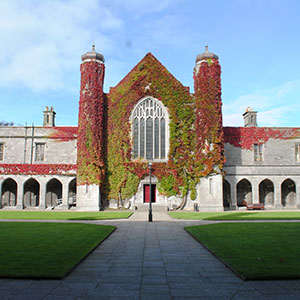
Guiding Breakthrough Research at University of Galway
We explore and facilitate commercial opportunities for the research community at University of Galway, as well as facilitating industry partnership.
-
Alumni & Friends
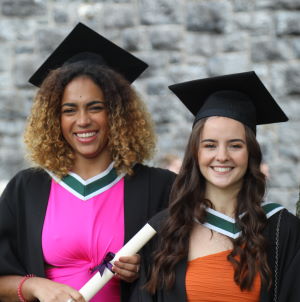
Alumni & Friends
There are 128,000 University of Galway alumni worldwide. Stay connected to your alumni community! Join our social networks and update your details online.
-
Community Engagement
Community Engagement
At University of Galway, we believe that the best learning takes place when you apply what you learn in a real world context. That's why many of our courses include work placements or community projects.
 Accessibility & Language
Spring 2026 Courses
The Youth Academy is offering Spring courses for high-ability primary and secondary school students.
Dates and Times
| Course Dates | Time |
|---|---|
| Saturday February 7th | 10am - 12.30pm |
| Saturday February 14th | 10am - 12.30pm |
| Saturday February 28th | 10am - 12.30pm |
| Saturday March 7th | 10am - 12.30pm |
| Saturday March 21st | 10am - 12.30pm |
| Saturday March 28th | 10am - 12.30pm |
When to apply?
- Applications are open in the first instance to those who applied in Autumn but were not offered a place.
- Any remaining places will be open to the general public from Friday 9th January to Thursday 15th January. Applications are made online via our application portal here
- Please note that if selected, all primary age children are required to be signed in and out of class by an adult.
- No offered places can be deferred or transferred to another child.
Fees and Scholarships
A fee of €160 applies for all courses. We have a limited number of scholarships, based on economic circumstances. Please see here.
Spring course descriptions
No prior knowledge is needed.
Découvrons le Français : Over 300 Million People Speak It — Will You?
Did you know French is spoken on all five continents by over 300 million people as a native or second language? Learning French opens countless doors around the world.
Over six weeks, this course invites primary school pupils to explore the French language and begin communicating with confidence at a basic level. Through games, songs, hands-on activities, and collaborative group work, learners will discover French in a fun and natural way while learning about the richness and diversity of French-speaking cultures around the world. By the end of the course, pupils will be able to:
-use greetings and everyday useful phrases
-introduce themselves and share basic information about their family
-count to 20 and solve basic equations
-talk about their food preferences and activities they like and dislike
-read and write short, simple dialogues in French
-show a basic understanding of the Francophonie and the cultures of French-speaking communities
Familiarising yourself or ‘getting an ear for’ a modern foreign language at primary schools helps smooth the path for learning a new language at secondary school, as well as benefiting literacy in general.
Fundamentals of Computer Programming
This introductory course offers a fun and accessible way for students to begin their journey in computer programming. We start with Scratch, a visual, block-based programming tool that simplifies core programming concepts, making it ideal for beginners. In these first sessions, students will develop a foundational understanding of programming basics by building interactive games and animations.
We then transition to Python, a versatile text-based language, which empowers students to create small projects and further explore programming. The course covers essential topics such as:
- Introduction to Programming
- What is programming and why is it beneficial for young people?
- Getting Started with Scratch (emphasizing programming fundamentals over character animations)
- How to create and structure a new project
- Using blocks to build simple programs
- Implementing loops, conditions, sounds, and graphics in interactive games
- Introduction to Python
- Why Python? Exploring its strengths as a beginner-friendly language
- Navigating error messages and debugging
- Understanding variables, data types, operators, and expressions
- Working with input and output functions
- Applying conditional statements and loops
- Final Project
- Students put their skills to the test with a hands-on project.
Each topic includes tailored exercises, with additional tasks provided based on each student's pace and understanding.
Checkmate! A Path to Chess Success
From opening moves to checkmating the opponent, this course offers a full overview of everything chess! Considered by many to be the gentleman’s game, chess has captured the hearts of millions of girls and boys with its strategic depth and endless possibilities.
Students will soon discover why this classic game has stood the test of time. This course will teach students how to strategize, spot tactics and position their pieces so that they always have the advantage over the competition.
Students will learn chess theory such as openings, chess fundamentals and endgames, they will then be able to put this theory into practice by playing the game and solving chess puzzles.
Students will also study games from Grandmasters to gain top level insight. By the end of this course, students will not only have elevated their chess skills to the next level, but they will also obtain the important life skills that chess teaches such as patience, creativity and critical thinking.
So, get ready for chess success because in this course, all roads lead to checkmate!
Basic Electronics: Understanding electrical circuits
This hands-on course introduces students to the fundamentals of electronics and the principles of electrical circuits. Through engaging, practical activities, students will explore essential components and learn how simple electric circuits function. The course also includes beginner-friendly programming using mBlock and Arduino, leading into the basics of robotics.
Introduction to Electronics and Electrical Circuits
- Importance and real-world applications of electronics
- Basics of electricity: voltage, current, resistance
- Understanding circuit types: series vs. parallel
- Key components: LEDs, batteries, resistors, switches, transistors, and more
Introduction to mBlock and Arduino
- Overview of mBlock: visual programming for beginners
- Introduction to Arduino and its integration with mBlock
- Setting up the environment and writing basic programs
Interactive Projects Using mBlock and Arduino
- LED Control: Blinking, dimming, and sequencing LEDs
- Traffic Light Simulation: Timed control of multiple LEDs
- Switch-controlled LEDs
- Photoresistor-triggered actions (including building an optocoupler switch)
- Temperature sensing (room and body) with visual feedback
Introduction to Robotics
- mBot Assembly: Hands-on robot building
- Basic mBot Controls: Movement, turning, and obstacle interaction
- Advanced Activities: Obstacle avoidance, Line following, etc
Further Exploration and Learning Resources:
- Guidance for independent project development
- Project ideas to inspire creativity and problem-solving
By the end of the course, students will:
- Understand core concepts in electronics and circuits
- Gain hands-on experience with mBlock and Arduino
- Develop simple but functional electronic and robotic projects
- Be equipped with resources to pursue further learning in electronics and robotics
A world that we cannot see - The secret life of microbes
This course teaches you all about microorganisms, the good, bad and evil! Learn all about their secret world through fun and interactive experiments. Some activities include:
- Ever wondered about microorganisms in our food?
- Uncover how good microbes can be used to make food products.
- Carry out your own fermentation experiment at home to learn about the process of bread making.
- Let's put hand hygiene to the test! You will carry out an experiment using agar to see how many microbes are killed when we clean our hands.
- Discover the dangerous side of microorganisms and how they can cause disease. You will be shown magnified images of different microbes and learn all about the illnesses they can cause.
- Find out how we can fight harmful microorganisms. Discover the world of vaccines and antibiotics, but also how microorganisms can fight back. Can you help the scientist figure out which antibiotics will save the patient?
- Finally, you will get to be the doctor for a day! Learn about how infection is diagnosed and how to check vital signs when microbes make us sick!
The Secret Life of Physics: A rollercoaster ride through Life, Energy, and Cosmic Wonders!
From our toes to the sky: Physics is everywhere!
Calling all young scientists:
Ever wondered why things fall when you drop them? Or how our planet stays floating in space?
From the smallest atom to the depths of the ever-expanding universe, there is so much to explore.
Welcome to The Secret Life of Physics, where we’re going to explore the wild science that makes our world, and the whole universe, go round!
- Explore the secrets of matter, density, and forces!
- Dive into electricity and electromagnetism!
- Blast off into astronomy!
- Study waves (not all of them are in the sea!)
- Uncover the mystery of radiation!
This course will open your mind to the possibilities an understanding of physics can give you. Who knows where it will take you!
Impariamo coi cartoni! Learning Italian by captioning and re-voicing cartoons
This course is focused on the needs and interests of children who want to learn the Italian language for the first time. Children learn more effectively when they are having fun and enjoying the learning process. Learning a foreign language can be an enjoyable activity, and this course aims to create a comfortable and friendly environment where children can maximise their learning experience. During this course, children will have fun learning how to give voice to cartoon characters through captioning and re-voicing, inventing stories and rearranging plots, sparking their imagination and expressing their creativity. They will meet popular Italian cartoon characters and will learn how to create an audiovisual product, using innovative online platforms. Additionally, they will develop creative thinking and problem-solving skills while improving their pronunciation, and their communicative and intercultural competence in the Italian language.
Familiarising yourself or ‘getting an ear for’ a modern foreign language at primary schools helps smooth the path for learning a new language at secondary school, as well as benefiting literacy in general.
Bone Voyage: Discovering the Secrets of Your Skeleton
In this course, students will embark on an in-depth journey through the skeletal system from a biomedical perspective. Participants will examine the anatomy of bones, from the structure of the skull down to the toes!
Learn the secrets of our amazing skeleton at the cellular level, revealing bone composition and its vital functions, and discover the processes in bone remodelling and repair.
Take part in engaging activities such as Bone Bingo, building a robotic hand, and safely testing bone fractures, helping you gain a deeper understanding of bone structure, function, and development, as well as recent research advancements.
Students will discover how bones heal, what can go wrong with fractures and in osteoporosis, and explore the effects of space travel on astronauts' bones.
From observing bone tissue under a microscope, and making and testing splints for fractures, this course will ignite curiosity and excitement about the critical role bones play in health and biomedical research.
Ich verstehe nur Bahnhof: A brief introduction to the German language
While the German language may be rather notorious for its complex grammar and propensity towards seemingly endlessly long words – Mark Twain once famously claimed that one would need an eternity just to learn German -, getting started with the language is actually much easier than it seems!
In six weeks, this course aims to familiarise students with the German language and to get them comfortable with basic communication in a foreign language. To achieve this, this course is intended to make beginners interact with the language organically (through games, crafts activities, and group work) and to introduce them to various aspects of German culture.
By the end of this course, students will have learned how to
- introduce themselves and talk about their family
- count to 20 and solve basic equations
- talk about food, hobbies, and daily routines
- read and write simple German texts
- use some common German idioms
Familiarising yourself or ‘getting an ear for’ a modern foreign language at primary schools helps smooth the path for learning a new language at secondary school, as well as benefiting literacy in general.
Foundations of Marine & Coastal Engineering: Oceans Unleashed!
Dive into the dynamic world of Marine & Coastal Engineering! This course empowers young learners to explore how engineers tackle real-world challenges, from safeguarding coastlines to building resilient structures in ocean environments.
Topics covered include:
- Overview of what marine and coastal engineers do and why Ireland needs them!
- Understanding waves, currents and tides and why they matter in engineering
- Coastal protection structures
- Engineering for rising sea levels
- Underwater engineering and marine ecosystems
- Observation techniques including remote sensing, buoys and satellite data
Perfect for budding engineers, each session combines theory with interactive experiments. Through hands-on activities, students will engage with wave mechanics, construct model coastlines and design protective structures.
Join us and 'seas the day'!
Philosophy in Dialogue: Exploring Life’s Big Questions
In this course, participants will engage in philosophical dialogues and enquiries, learn about great philosophers and, through games and story-telling, explore what engaging philosophically with the world can mean in a modern, digital world.
Through the Philosophy for Children (p4c) approach, this course invites children to explore areas such as education, friendship, art, democracy, and climate change, and work together to envision innovative ways to bring attention to these urgent issues through philosophical dialogue. This course offers a caring and democratic space for children to think critically together and discover how a philosophical approach to the world can be an important companion to everyone’s every day life.
Bio-Builders: Can we fix it? Yes, we can! - An Introduction to Biomedical Engineering
Calling all young innovators and problem solvers! Are you curious about how science, engineering, and imagination come together to solve real challenges in healthcare and medicine? In this 6-week journey into the world of biomedical engineering, we’ll explore how living systems inspire groundbreaking technologies — and how engineers create tools that help people live healthier, better lives.
From exploring how our bodies move and communicate, to designing devices that support or even replace our body functions, you’ll dive into hands-on activities that combine biology, mechanics, and creativity. Whether we're tinkering with model organs, designing assistive devices, or experimenting with bio-inspired materials, you'll begin to see the human body as a fascinating blueprint for innovation.
Get ready to think like a biomedical engineer — and discover how you can help build a better, healthier future! Topics Include:
- Think Like an Engineer: Solving Problems with Purpose
- What Is Biomedical Engineering?
- Bio-Inspired Design: Learning from Living Systems
- Tools That Heal: Prosthetics, Implants, and Devices
- Signals and Sensors: Communicating with the Body
- Bioengineering the Future: What Will You Create?
Thinking caps on! From brain waves to brain teasers, a Brain-cation awaits!
Want to learn about the most complex organ of the body? Of course you do- it's a no-brainer! Come along while we explore many key aspects of neuroscience:
- The brain is boss- why is the brain so important and what structures make it up?
- No man is an island- how does the nervous system help the brain carry out its functions?
- Communication is key- how do neurons help the brain to communicate its messages?
- Our brain has superpowers- what are some of the amazing things our brain can do?
- It’s all an illusion- how does perception play a role in how we see things?
- Time to catch some brainwaves- how can we use EEG to see and interpret brain activity?
Extras: brain jokes & puns, quizzes, brain teaser activities, riddles and neuroscience art
Sounds Class! Analysing media and making your own radio show/podcast
"Media literacy is the ability to access, analyze, evaluate, and create media. This includes; television, radio, Internet, newspapers, magazines, books, billboards, video games, music, and all other forms of media."
Over this course you will;
- Identify programme formats, production features and target audiences of different shows
- Start the lifelong habit of active interaction with media, as opposed to passive consumption
- Learn basic technical terms for radio, podcast & television production
- Use storyboards and running orders to describe how a programme is structured
- Plan segments for a show using the broadcast clock
- Develop a production plan, divide up team roles, prepare a running order and script for your own show
- Look at interview structures, skills, and plan an online audio interview with a person you admire
- Use online recording sites, and free to download software to make a short programme which will be broadcast on Flirt FM 101.3, and uploaded to the station's Mixcloud to listen back later
- If time permits, design visual assets to promote your show/podcast
- Kick off your amazing career in media!
Cells, Signals & Nanomedicine: How Tiny Technologies Help Us Heal
Get ready to zoom into a world you can’t normally see! Cells, Signals & Nanomedicine takes students on a 6-week adventure through the tiny technologies and microscopic mysteries that keep our bodies alive. Each session is packed with hands-on experiments - from looking at your own cells under a microscope, to extracting real DNA, growing yeast under different conditions, building model “medicine bubbles,” and acting out the battles of the immune system. Students will discover how cells communicate, how scientists deliver medicines to exactly the right place, and how the heart and lungs spring into action to protect our cells when we move. If you enjoy experimenting, solving puzzles, and uncovering how biology and technology work together, this course turns you into a real mini-scientist exploring the secrets of life at every scale!
The Superpower of Materials
Do you want to discover what materials are and what they are used for? Put on your lab coat and join researchers for this hands-on course!
Materials are the superheroes of our modern world. They build our cities, heal our bodies, and protect us from the cold. But every superpower has a dark side—when discarded carelessly, these same materials can become immortal supervillains.
This course explores both sides of the story: the heroic potential of materials and the environmental dangers they can unleash when their powers are misused. Together, we’ll discover how materials are found in nature, their unique abilities, but also their downsides and impact on the environment.
Join this adventure to:
- Visit the secret hideout of superheroes (a research lab)
- Save fish from plastic pollution
- Become a professional healer
- Learn if you can change shape as fast as a pinecone
- Transform like Elastic Woman
- Become as invisible as sugar in water
Imagination in Action: An Introduction to Creative Writing
Unleash your creativity and let your ideas take form. Writing is more than words on a page. It is a chance to explore new worlds, meet unforgettable characters, and bring your imagination to life. This six-week course invites young writers on an exciting journey to discover the art of storytelling and learn how to craft their own original tales.
Over the six weeks, students will explore the key elements of fiction, including setting, character development, and narrative design. Each session includes fun exercises and creative activities designed to help children shape their ideas into engaging stories. Through group discussions, imaginative prompts, and individual guidance tailored to each child’s needs, participants will also learn that inspiration can be found anywhere. It might be in everyday life, in books, or even in the smallest moments around them. By the end of the course, each student will have completed a full short story, which will be printed. They’ll leave the course with a story in hand, ready to share it with the world!
Imagination in Action is perfect for children who want to explore storytelling in a supportive, inspiring, and fun environment. Students will leave the course with practical writing skills, greater confidence, and a story that is entirely their own.
Innovators in Action: The Ultimate Engineering Expedition
Calling all young explorers and future world changers! Join us for an electrifying journey that turns ordinary kids into extraordinary problem-solvers and inventors! 🚀🛠️
This isn't just a course—it's a mission to unlock your superpowers of creativity and innovation! Students will design bridges, creating electronic gadgets and explore how engineers are real-life superheroes who solve the world's most incredible puzzles.
Each week is a new adventure into a different engineering universe:
- Dive into electronics
- Construct amazing structures that defy gravity
- Explore how technology can help heal and save lives
- Unleash your inner software wizard
- Learn how engineers are changing the world, one brilliant idea at a time!
This is your chance to play, experiment, and discover the incredible world of engineering. This is where your journey to becoming a world-changing engineer begins!
Get ready to inspire the next generation of innovators, inventors, and world-changers.