-
Courses
Courses
Choosing a course is one of the most important decisions you'll ever make! View our courses and see what our students and lecturers have to say about the courses you are interested in at the links below.
-
University Life
University Life
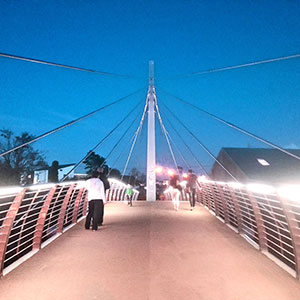
Each year more than 4,000 choose University of Galway as their University of choice. Find out what life at University of Galway is all about here.
-
About University of Galway
About University of Galway
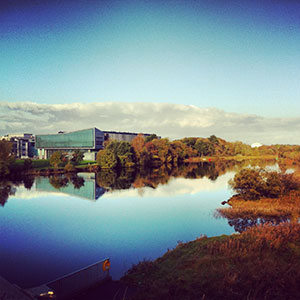
Since 1845, University of Galway has been sharing the highest quality teaching and research with Ireland and the world. Find out what makes our University so special – from our distinguished history to the latest news and campus developments.
-
Colleges & Schools
Colleges & Schools
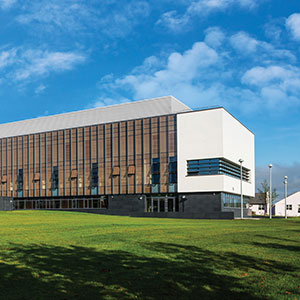
University of Galway has earned international recognition as a research-led university with a commitment to top quality teaching across a range of key areas of expertise.
-
Research & Innovation
Research & Innovation
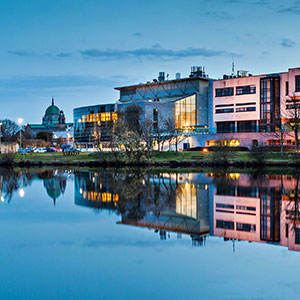
University of Galway’s vibrant research community take on some of the most pressing challenges of our times.
-
Business & Industry
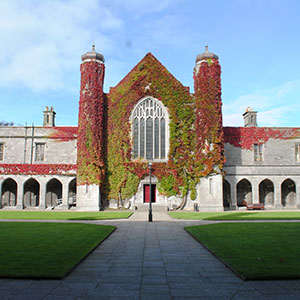
Guiding Breakthrough Research at University of Galway
We explore and facilitate commercial opportunities for the research community at University of Galway, as well as facilitating industry partnership.
-
Alumni & Friends
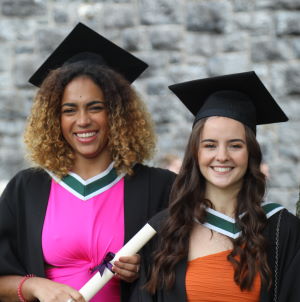
Alumni & Friends
There are 128,000 University of Galway alumni worldwide. Stay connected to your alumni community! Join our social networks and update your details online.
-
Community Engagement
Community Engagement
At University of Galway, we believe that the best learning takes place when you apply what you learn in a real world context. That's why many of our courses include work placements or community projects.
 Accessibility & Language
Spring 2026 Courses
The Youth Academy is offering Autumn courses for high-ability primary and secondary school students.
Dates and Times
| Course Dates | Time |
|---|---|
| Saturday October 3rd | 10am - 12.30pm |
| Saturday October 10th | 10am - 12.30pm |
| Saturday October 17th | 10am - 12.30pm |
| Saturday October 31st | 10am - 12.30pm |
| Saturday November 7th | 10am - 12.30pm |
| Saturday November 14th | 10am - 12.30pm |
A graduation ceremony will take place on Saturday November 21st (Evening time)
When to apply?
- Applications are open on the 1st of September 2026 and will close on the 10th of September 2026.
- Applications are made online via our application portal here
- Please note that if selected, all primary age children are required to be signed in and out of class by an adult.
- Offered places cannot be deferred to another term, or transferred to another child.
Fees and Scholarships
A fee of €160 applies for primary school courses.
The Youth Academy offers a limited number of scholarships based on economic circumstances. Under this scheme, the Youth Academy covers 90% of the course fee, with parents/guardians contributing the remaining 10%.
If your child has a medical card, you are eligible to apply for one of these scholarship. Please apply via the online application form by uploading proof of your child's medical card details. You can take a photo/scan of your child's medical card and upload to the form. 25% of the total number of places we have on offer are allocated on a scholarship basis, so not all who apply for a scholarship will be successful.
Autumn course descriptions
No prior knowledge is needed to attend any of our courses.
Courses are subject to change.
Teicneolaíocht, Códú agus Cruthaitheacht (in Ionad an Acadaimh, Gaoth Dobhair, Co. Dhún na nGall)
Tá Acadamh na nÓg á reáchtáil ag Ollscoil na Gaillimhe do pháistí ó Rang 4 go Rang 6 in Ionad an Acadaimh, Gaoth Dobhair, Co. Dhún na nGall.
Is cúrsa sé seachtaine é a thugann deis do pháistí teicneolaíocht a fhiosrú ar bhealach spraíúil, praiticiúil agus cruthaitheach – trí mheán na Gaeilge. Gheobhaidh na páistí taithí phraiticiúil ar chódú, ar róbataic, ar leictreonaic, ar chrua-earraí agus ar dhéanamh digiteach, agus bainfear úsáid as gléasanna ar nós an Raspberry Pi agus an BBC micro:bit.
Beidh deis acu a gcuid smaointe féin a dhearadh, a thógáil agus a thabhairt chun beatha, agus iad ag forbairt scileanna digiteacha agus cruthaitheacha a bheidh úsáideach dóibh amach anseo. Is deis iontach é Acadamh na nÓg do pháistí a gcuid spéiseanna sa teicneolaíocht a fhiosrú agus spraoi a bheith acu agus iad ag foghlaim trí Ghaeilge.
Faigheann an cúrsa seo fóirdheontas flaithiúil ó MPTIT (Meitheal Pleanála Teanga an Iarthuaiscirt). A bhuíochas don mhaoiniú seo, táimid in ann an cúrsa a thairiscint ar phraghas laghdaithe de €100 in áit an ghnáthphraghais de €160. Táimid an-bhuíoch as a bhflaithiúlacht.
Technology, Coding and Creativity
Youth Academy is a six-week course from University of Galway for children from 4th to 6th Class, taking place in Ionad an Acadaimh, Gaoth Dobhair, Co. Donegal.
The course gives children the opportunity to explore technology in a fun, practical and creative way – entirely through Irish. Participants will gain hands-on experience in coding, robotics, electronics, hardware and digital making, using devices such as the Raspberry Pi and BBC micro:bit.
They will have the opportunity to design, build and bring their own ideas to life while developing digital and creative skills that will be valuable to them in the future. Youth Academy is a great opportunity for children to explore their interest in technology, develop their creativity and have fun while learning through Irish.
This course is generously subsidised by MPTIT (Meitheal Pleanála Teanga an Iarthuaiscirt). Thanks to this funding we can offer the course for the reduced price of €100 instead of €160. We are very grateful for their generosity.
Découvrons le Français : Over 300 Million People Speak It — Will You?
Did you know French is spoken on all five continents by over 300 million people as a native or second language? Learning French opens countless doors around the world.
Over six weeks, this course invites primary school pupils to explore the French language and begin communicating with confidence at a basic level. Through games, songs, hands-on activities, and collaborative group work, learners will discover French in a fun and natural way while learning about the richness and diversity of French-speaking cultures around the world.
By the end of the course, pupils will be able to:
- use greetings and everyday useful phrases
-
introduce themselves and share basic information about their family
-
count to 20 and solve basic equations
-
Name parts of the body and say how they feel
-
talk about their food preferences and activities they like and dislike
- read and write short, simple dialogues in French
- show a basic understanding of the Francophonie and the cultures of French-speaking communities
Familiarising yourself or ‘getting an ear for’ a modern foreign language at primary schools helps smooth the path for learning a new language at secondary school, as well as benefiting literacy in general.
Be a Bio-Engineer: Build, Test and Hack the Human Body
Have you ever wondered how doctors use machines to see inside the body or how some people use special limbs to walk and move again? In this exciting course, students will explore the world of biomedical engineering, where science, technology, and creativity come together to improve people’s health.
Students will learn how the human body works and how engineers design tools to help doctors understand and treat it. Topics include the basics of the heart and muscles, simple biomedical devices (such as heart rate monitors and prosthetic limbs), and how images of the body are created using technology. They will also explore how sensors can measure things like heart rate and movement.
Through hands-on activities and guided exploration, students will investigate real-life challenges and design their own solutions. Activities will include building a simple model of a prosthetic limb; measuring and recording their heart rate during different activities; creating models to explore how the body works; and solving real-world “medical mysteries” through teamwork
By the end of the course, students will be able to:
· Describe how parts of the human body work
· Explain how simple medical technologies help doctors and patients
· Design and present simple solutions to health-related problems
· Collect and understand basic body measurements (like heart rate)
Basic Electronics: Understanding electrical circuits
This hands-on course introduces students to the fundamentals of electronics and the principles of electrical circuits. Through engaging, practical activities, students will explore essential components and learn how simple electric circuits function. The course also includes beginner-friendly programming using mBlock and Arduino, leading into the basics of robotics.
Introduction to Electronics and Electrical Circuits
- Importance and real-world applications of electronics
- Basics of electricity: voltage, current, resistance
- Understanding circuit types: series vs. parallel
- Key components: LEDs, batteries, resistors, switches, transistors, and more
Introduction to mBlock and Arduino
- Overview of mBlock: visual programming for beginners
- Introduction to Arduino and its integration with mBlock
- Setting up the environment and writing basic programs
Interactive Projects Using mBlock and Arduino
- LED Control: Blinking, dimming, and sequencing LEDs
- Traffic Light Simulation: Timed control of multiple LEDs
- Switch-controlled LEDs
- Photoresistor-triggered actions (including building an optocoupler switch)
- Temperature sensing (room and body) with visual feedback
Introduction to Robotics
- mBot Assembly: Hands-on robot building
- Basic mBot Controls: Movement, turning, and obstacle interaction
- Advanced Activities: Obstacle avoidance, Line following, etc
Further Exploration and Learning Resources:
- Guidance for independent project development
- Project ideas to inspire creativity and problem-solving
By the end of the course, students will:
- Understand core concepts in electronics and circuits
- Gain hands-on experience with mBlock and Arduino
- Develop simple but functional electronic and robotic projects
- Be equipped with resources to pursue further learning in electronics and robotics
A world that we cannot see - The secret life of microbes
This course teaches you all about microorganisms, the good, bad and evil! Learn all about their secret world through fun and interactive experiments. Some activities include:
- Ever wondered about microorganisms in our food?
- Uncover how good microbes can be used to make food products.
- Carry out your own fermentation experiment at home to learn about the process of bread making.
- Let's put hand hygiene to the test! You will carry out an experiment using agar to see how many microbes are killed when we clean our hands.
- Discover the dangerous side of microorganisms and how they can cause disease. You will be shown magnified images of different microbes and learn all about the illnesses they can cause.
- Find out how we can fight harmful microorganisms. Discover the world of vaccines and antibiotics, but also how microorganisms can fight back. Can you help the scientist figure out which antibiotics will save the patient?
- Finally, you will get to be the doctor for a day! Learn about how infection is diagnosed and how to check vital signs when microbes make us sick!
The Secret Life of Physics: A rollercoaster ride through Life, Energy, and Cosmic Wonders!
From our toes to the sky: Physics is everywhere!
Calling all young scientists:
Ever wondered why things fall when you drop them? Or how our planet stays floating in space?
From the smallest atom to the depths of the ever-expanding universe, there is so much to explore.
Welcome to The Secret Life of Physics, where we’re going to explore the wild science that makes our world, and the whole universe, go round!
- Explore the secrets of matter, density, and forces!
- Dive into electricity and electromagnetism!
- Blast off into astronomy!
- Study waves (not all of them are in the sea!)
- Uncover the mystery of radiation!
This course will open your mind to the possibilities an understanding of physics can give you. Who knows where it will take you!
Ich verstehe nur Bahnhof: A brief introduction to the German language
While the German language may be rather notorious for its complex grammar and propensity towards seemingly endlessly long words – Mark Twain once famously claimed that one would need an eternity just to learn German -, getting started with the language is actually much easier than it seems!
In six weeks, this course aims to familiarise students with the German language and to get them comfortable with basic communication in a foreign language. To achieve this, this course is intended to make beginners interact with the language organically (through games, crafts activities, and group work) and to introduce them to various aspects of German culture.
By the end of this course, students will have learned how to
- introduce themselves and talk about their family
- count to 20 and solve basic equations
- talk about food, hobbies, and daily routines
- read and write simple German texts
- use some common German idioms
Familiarising yourself or ‘getting an ear for’ a modern foreign language at primary schools helps smooth the path for learning a new language at secondary school, as well as benefiting literacy in general.
Foundations of Marine & Coastal Engineering: Oceans Unleashed!
Dive into the dynamic world of Marine & Coastal Engineering! This course empowers young learners to explore how engineers tackle real-world challenges, from safeguarding coastlines to building resilient structures in ocean environments.
Topics covered include:
- Overview of what marine and coastal engineers do and why Ireland needs them!
- Understanding waves, currents and tides and why they matter in engineering
- Coastal protection structures
- Engineering for rising sea levels
- Underwater engineering and marine ecosystems
- Observation techniques including remote sensing, buoys and satellite data
Perfect for budding engineers, each session combines theory with interactive experiments. Through hands-on activities, students will engage with wave mechanics, construct model coastlines and design protective structures.
Join us and 'seas the day'!
Bio-Builders: Can we fix it? Yes, we can! - An Introduction to Biomedical Engineering
Calling all young innovators and problem solvers! Are you curious about how science, engineering, and imagination come together to solve real challenges in healthcare and medicine? In this 6-week journey into the world of biomedical engineering, we’ll explore how living systems inspire groundbreaking technologies — and how engineers create tools that help people live healthier, better lives.
From exploring how our bodies move and communicate, to designing devices that support or even replace our body functions, you’ll dive into hands-on activities that combine biology, mechanics, and creativity. Whether we're tinkering with model organs, designing assistive devices, or experimenting with bio-inspired materials, you'll begin to see the human body as a fascinating blueprint for innovation.
Get ready to think like a biomedical engineer — and discover how you can help build a better, healthier future! Topics Include:
- Think Like an Engineer: Solving Problems with Purpose
- What Is Biomedical Engineering?
- Bio-Inspired Design: Learning from Living Systems
- Tools That Heal: Prosthetics, Implants, and Devices
- Signals and Sensors: Communicating with the Body
- Bioengineering the Future: What Will You Create?
Becoming the Business Leaders of Tomorrow: An Introduction to Business
Do you ever wonder how businesses make money, why your favourite brands become popular or how businesspeople structure and run companies? This six-week course will investigate different aspects of business, providing students with the chance to learn how creativity, problem-solving, teamwork, and innovation can turn business ideas into reality.
Using real-world case study examples such as Apple, Disney and Ryanair, students will gain an introduction to business, with each week covering a different topic, including human resources and leadership, marketing, economics and sustainability. They will also have the opportunity to form their own business team and work together to produce an innovative new business plan.
Each week students will have the opportunity to engage in hands-on activities to explore how businesses are created, attract customers and what it takes to become a profitable business. Activities will include creating and branding their own business, designing a fun marketing campaign to attract customers, managing a business budget and making decisions about pricing and profit, and building a business team by solving workplace challenges through teamwork and creative problem-solving. Towards the end of each class, students will work in their designated teams to put together their business plan to be presented in the final class.
By the end of the course, students will be able to:
-
Describe the roles of marketing, finance, and people in a business
-
Create and present their own business idea
-
Understand simple business decisions about pricing, economics and profit
-
Work as a team to solve real-world business challenges
Fundamentals of Computer Programming
This introductory course offers a fun and accessible way for students to begin their journey in computer programming. We start with Scratch, a visual, block-based programming tool that simplifies core programming concepts, making it ideal for beginners. In these first sessions, students will develop a foundational understanding of programming basics by building interactive games and animations.
We then transition to Python, a versatile text-based language, which empowers students to create small projects and further explore programming. The course covers essential topics such as:
- Introduction to Programming
- What is programming and why is it beneficial for young people?
- Getting Started with Scratch (emphasizing programming fundamentals over character animations)
- How to create and structure a new project
- Using blocks to build simple programs
- Implementing loops, conditions, sounds, and graphics in interactive games
- Introduction to Python
- Why Python? Exploring its strengths as a beginner-friendly language
- Navigating error messages and debugging
- Understanding variables, data types, operators, and expressions
- Working with input and output functions
- Applying conditional statements and loops
- Final Project
- Students put their skills to the test with a hands-on project.
Each topic includes tailored exercises, with additional tasks provided based on each student's pace and understanding.
Beyond the Wild: The World of Exotic Animals
Step into the fascinating world of exotic animals! In this hands-on course, young zoologists will discover some of the world's most unusual species and explore the incredible adaptations that help them survive. From camouflage, venom and super senses to strange diets and behaviours, students will investigate what makes these animals so unique.
We'll also journey behind the scenes of the exotic pet and wildlife trade, exploring where exotic pets come from, how they travel around the world, what they need to thrive in our care, and why responsible ownership and conservation matter.
Through interactive challenges, investigations, games and real-world examples, students will discover the amazing connections between animals, people and the wild.
From Tiny Worlds to Big Life - A Journey Through Biology
This course explores the levels of biological organization, from tiny cells to the complexity of the human body. Students will discover how different types of cells give rise to diverse organisms, from simple life forms such as bacteria and fungi to more complex living systems.
Through hands-on experiments, including microscope investigations of bacteria and human cell slides, students will explore cell structure and learn to identify key organelles, as well as remarkable molecules such as DNA and RNA. Additional activities include using a forensic kit and gel electrophoresis to visualize DNA bands, introducing students to the fundamentals of molecular biology in an engaging, practical way.
In the final session, students will focus on the different systems of the human body, with special attention to the nervous system and its role in movement and coordination. Interactive activities, such as building or exploring a robotic hand and playing educational card games, will make learning both entertaining and memorable. Throughout the course, students will gain a deeper understanding of how living organisms function while exploring biology through fun, interactive, and educational experiments.
Becoming a bug scientist – Introduction to Entomology
This course introduces students to the study of insects, and their relationship with humans, the environment, and other living beings.
Students will learn how to identify insects, explore their unique characteristics and behaviour, and understand the different roles they play in our daily lives and as an integral part of the ecosystem. There will also be a focus on the different threats to insect populations and efforts for insect conservation, using examples from local surroundings. Through interactive sessions, group tasks, outdoor and indoor activities, students will explore key aspects of studying insects and build the skills of observation and scientific inquiry.
Across the 6 weeks, students will learn the basics of insect anatomy and classification, explore insect biodiversity and behaviour, and think more critically about human-insect interactions. Activities will include nature walks, creative projects, insect sampling and identification techniques, and more, helping students develop skills to begin their journey as an entomologist.
This course is suitable for students with an interest in insects or the natural world. No prior knowledge is required.
The Chemistry of You: Exploring the Science Inside and Around Us
Have you ever watched your mum cooking in the kitchen, mixing ingredients together to make a meal? Or seen chemists in a laboratory combining chemicals to create new materials and medicines?
Did you know that something just as amazing is happening inside your body every second?
Inside your cells, tiny chemical reactions are constantly taking place. These reactions give you the energy to run, play, think, grow, and stay healthy.
Join us to discover the chemistry happening inside your body and how it connects to the world around you. Students will learn the basics of chemical compounds, how molecules bond and interact, and how these interactions make life possible. They will also explore the structure and function of cells and discover how they work together to keep our bodies alive and healthy.
Through fun, hands-on experiments, students will create, observe, and visualise science in action. Students will also have the opportunity to visit the University's Biomedical Research Building and explore the Museum's Superhuman exhibit, discovering how scientists study the human body and develop new ways to improve health.
Big ideas in action: Exploring Life’s Big Questions
In this course, participants will engage in philosophical inquiries into the biggest questions about how to live well. They'll learn about how great philosophers have thought about ideas like: friendship, justice, beaty and reality, and build their own answers to these enduring questions through games and story-telling, exploring what engaging philosophically with the world can mean in a modern, digital world.
This course offers a caring and democratic space for children to think critically together and discover how a philosophical approach to the world can be an important companion to everyone’s every day life.
Imagination in Action: An Introduction to Creative Writing
Unleash your creativity and let your ideas take form. Writing is more than words on a page. It is a chance to explore new worlds, meet unforgettable characters, and bring your imagination to life. This six-week course invites young writers on an exciting journey to discover the art of storytelling and learn how to craft their own original tales.
Over the six weeks, students will explore the key elements of fiction, including setting, character development, and narrative design. Each session includes fun exercises and creative activities designed to help children shape their ideas into engaging stories. Through group discussions, imaginative prompts, and individual guidance tailored to each child’s needs, participants will also learn that inspiration can be found anywhere. It might be in everyday life, in books, or even in the smallest moments around them. By the end of the course, each student will have completed a full short story, which will be printed. They’ll leave the course with a story in hand, ready to share it with the world!
Imagination in Action is perfect for children who want to explore storytelling in a supportive, inspiring, and fun environment. Students will leave the course with practical writing skills, greater confidence, and a story that is entirely their own.