-
Courses
Courses
Choosing a course is one of the most important decisions you'll ever make! View our courses and see what our students and lecturers have to say about the courses you are interested in at the links below.
-
University Life

University Life
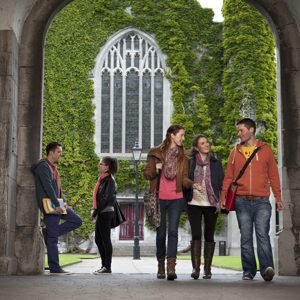
Each year more than 4,000 choose University of Galway as their University of choice. Find out what life at University of Galway is all about here.
-
About University of Galway

About University of Galway
Since 1845, University of Galway has been sharing the highest quality teaching and research with Ireland and the world. Find out what makes our University so special – from our distinguished history to the latest news and campus developments.
-
Colleges & Schools
Colleges & Schools
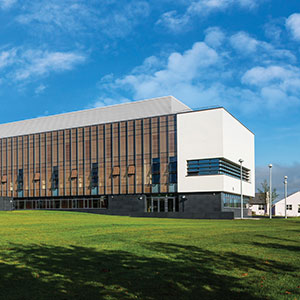
University of Galway has earned international recognition as a research-led university with a commitment to top quality teaching across a range of key areas of expertise.
-
Research & Innovation

Research & Innovation
University of Galway’s vibrant research community take on some of the most pressing challenges of our times.
-
Business & Industry
Guiding Breakthrough Research at University of Galway
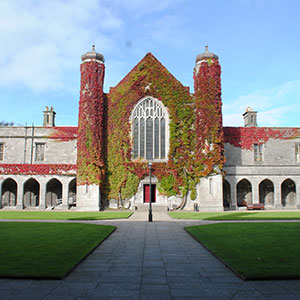
We explore and facilitate commercial opportunities for the research community at University of Galway, as well as facilitating industry partnership.
-
Alumni & Friends
Alumni & Friends
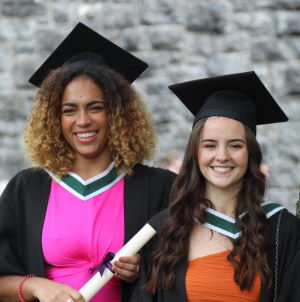
There are 128,000 University of Galway alumni worldwide. Stay connected to your alumni community! Join our social networks and update your details online.
-
Community Engagement
Community Engagement
At University of Galway, we believe that the best learning takes place when you apply what you learn in a real world context. That's why many of our courses include work placements or community projects.
 Accessibility & Language
Graduate Entry Medicine - Rural and Connected Health (GY506)

Graduate Entry Medicine - Rural and Connected Health (GY506) Subject to accreditation by the Irish Medical Council
College of Medicine and Health, School of Medicine- Title of Award
- MB BCh BAO
- Course Code
- 1GEM1
- Delivery
- On Campus
- NFQ
- Level 8
- Award Type
- Major
- Duration
- 4 year
- ECTS Weighting
- 240 ECTS
Why Choose This Course?
Course Information
What will I study?
Graduate Entry Medicine - Rural and Connected Health is delivered over four years in two phases: a Foundation Phase (Years 1-2) and a Clinical Phase (Years 3-4). Each year comprises a 60-credit (ECTS) module, totalling 240 ECTS on graduation.
Phase 1 - Foundation (Years 1 and 2)
Year 1 is based in Galway city, giving students access to anatomy and physiology laboratories, University facilities, student support services, and the wider University of Galway community. Teaching is built around week-long patient scenarios using case-based learning (CBL). Each case contextualises foundational medical sciences within a real clinical presentation - for example, a case of sore throat leads into examination of the head and neck, relevant anatomy, microbiology, pharmacology, and related public health issues. Cases become progressively more complex and clinically focused as the year advances, grouping around body systems including cardiovascular, respiratory, neurological, psychiatric, and musculoskeletal medicine. .
Year 2 introduces a further series of patient scenarios following the same weekly CBL structure. Teaching is distributed across the region and students should be prepared to live and study outside Galway city during this year. Semester 1 continues the systems-based approach, covering endocrinology, renal, gastrointestinal, genitourinary, obstetrics and gynaecology, and paediatrics. Semester 2 focuses on integration - frailty, multimorbidity, and palliative medicine.
During phase 1, students will also be exposed to the vibrant med tech sector in Galway, with a view to completing a research, innovation or quality improvement project.
Phase 2 - Clinical (Years 3 and 4)
Year 3 is delivered as a Longitudinal Integrated Clerkship (LIC) - a model with a strong international evidence base.. Students join a GP or integrated care hub for an extended year (38 weeks, starting from early August), following patients through their illness journeys as full team members. Approximately half the week is spent in primary care; the remainder in hospital placements, small group tutorials, remote lectures, asynchronous content, and private study. The patient becomes the unit of learning, and you learn in the same way as qualified doctors do.
Year 4 is a comprises clinical rotations, based in distributed regional settings outside Galway city. Mandatory rotations (each four weeks) cover General Medicine, General Surgery, Paediatrics, Psychiatry, Obstetrics and Gynaecology, and an Intern Preparation for Practice module. Students also complete two Student Selected Components (each four weeks) with options such as Rural Medicine , Public Health, Medical Technology and Connected Health, Emergency Medicine, and International Elective.
Curriculum Information
Curriculum information relates to the current academic year (in most cases).Course and module offerings and details may be subject to change.
Glossary of Terms
- Credits
- You must earn a defined number of credits (aka ECTS) to complete each year of your course. You do this by taking all of its required modules as well as the correct number of optional modules to obtain that year's total number of credits.
- Module
- An examinable portion of a subject or course, for which you attend lectures and/or tutorials and carry out assignments. E.g. Algebra and Calculus could be modules within the subject Mathematics. Each module has a unique module code eg. MA140.
- Optional
- A module you may choose to study.
- Required
- A module that you must study if you choose this course (or subject).
- Semester
- Most courses have 2 semesters (aka terms) per year.
Year 1 (60 Credits)
OptionalMD1401: Foundations of Medical Practice
MD1401: Foundations of Medical Practice
Semester 1 and Semester 2 | Credits: 60
This module emphasis is on foundational sciences. Clinically and rural community orientated weekly cases will have 15 intended learning outcomes, which will emphasise foundational science. All cases will be framed for the generalist i.e. they will be based on an undifferentiated clinical presentation. Cases will largely be explored using small group methods, facilitated by a generalist clinical mentor (GCM). Faculty from cognate disciplines will provide complementary lectures, seminars, practical's and recommended content for private study. Students will also spend a day / week in practice to contextualise the case in real care settings.
(Language of instruction: English)
Learning Outcomes
- Knowledge: By the end of Year 1, students will be able to: Explain core biomedical and behavioral science principles underpinning normal human structure, function, and development across the lifespan. Describe the social, cultural, economic, and environmental determinants of health, with particular reference to rural and underserved populations. Demonstrate an introductory understanding of population health, public health principles, and health systems organisation. Use foundational scientific evidence to explain mechanisms of health, illness, and disease in a generalist context.
- Professionalism: Students will be able to: Demonstrate professional behavior, ethical awareness, as related to clinical care. Reflect on personal values, biases, and learning needs, demonstrating developing self-awareness and reflective practice. Work respectfully and effectively within small groups, demonstrating accountability and responsibility for learning.
- Clinical Skills: Students will be able to: Demonstrate basic communication and consultations skills, including active listening and information gathering, in simulated and early clinical encounters. Perform foundational clinical skills safely and appropriately. Take a structured patient history in a simulated or supervised clinical environment. Develop an awareness of patient safety principles and infection prevention.
Assessments
- Written Assessment (40%)
- Department-based Assessment (60%)
Teachers & Administrators
Click a name to search for their researcher profile. Note: Only teachers publish research profiles.
The above information outlines module MD1401: "Foundations of Medical Practice " and is valid from 2026 onwards.Note: Module offerings and details may be subject to change.
Year 2 (60 Credits)
Year 3 (60 Credits)
Year 4 (60 Credits)
- Ireland’s first graduate-entry medical programme in the West of Ireland, designed to widen participation into medical careers
- Co-designed with the HSE, explicitly guided by the principle of social accountability in medical education, targeting workforce deficits in the Irish health system and aligned to National Health Service reform ie Sláintecare
- Clinically immersive from Year 1 - no traditional pre-clinical/clinical divide
- Case-based learning linked to the HSE National Clinical Presentation Database
- Longitudinal Integrated Clerkship in Year 3 - patients, not rotations, are the unit of learning
- Clinical placements in community and regional settings from Year 1, with significant exposure outside Galway city in Years 2-4
- Integrated connected and digital health training throughout the programme, with access to a world-leading digital and connected health ecosystem
- Student Selected Components in Year 4 including international elective options
- Interprofessional education central to programme design
- Small cohort with high staff-to-student contact and clinical mentorship from Year 1
- Four-year graduate-entry medical programme leading to the MB BCh BAO, subject to accreditation by the Irish Medical Council.
Graduates of Graduate Entry Medicine - Rural and Connected Health will be awarded the MB BCh BAO, the same medical degree awarded through the University of Galway five-year direct-entry medicine programme.
Subject to successful accreditation of the programme by the Irish Medical Council, graduates will be eligible to apply for internship in the Irish health service and to seek registration with the Irish Medical Council.
The programme is designed to prepare graduates for medical careers across primary, integrated and secondary care, with particular experience of rural and regional healthcare settings. Graduates may pursue any medical career pathway. Following internship, graduates may pursue specialist training through the relevant postgraduate medical training bodies in Ireland.
Clinical placement is central to Graduate Entry Medicine – Rural and Connected Health throughout all four years of the programme.
Year 1: Early clinical learning
Students undertake early clinical learning, enabling them to relate their case-based learning to real healthcare settings.
Year 2: Distributed regional learning
Students undertake distributed clinical learning across community and health-service settings in the West and North-West. Students should be prepared to undertake periods of study and clinical placement outside Galway city.Students will learn across community, primary care and regional healthcare settings, gaining experience of healthcare delivery across rural, regional and underserved communities.
Year 3: Longitudinal Integrated Clerkship
Students undertake a 38-week Longitudinal Integrated Clerkship (LIC) in General Practice.Students follow patients and clinical presentations across primary and secondary care, gaining exposure to different specialties through a generalist model and developing an understanding of continuity of care.
Year 4: Clinical rotations and Student Selected Components
Students undertake six mandatory four-week clinical rotations and two four-week Student Selected Components.
Mandatory rotations are:
- General Medicine – 4 weeks
- General Surgery – 4 weeks
- Paediatrics – 4 weeks
- Psychiatry – 4 weeks
- Obstetrics and Gynaecology – 4 weeks
- Intern Preparation for Practice – 4 weeks
Students also undertake two Student Selected Components, each four weeks. Options include:
- Rural General Practice
- Public Health
- International Elective
- Integrated Care
- Medical Technology & Connected Health
- Medical Specialty
- Surgical Specialty
- Anaesthetics and Intensive Care
- Emergency Medicine
- Retrieval Medicine / Pre-Hospital Care
International elective opportunities are subject to programme requirements, placement availability, University approval and any applicable travel, insurance, health, visa or regulatory requirements.
Medical Academies and Regional Clinical Settings
Clinical learning will be delivered through a distributed network of community, primary care and regional healthcare settings across the West and North-West of Ireland.
The programme includes significant clinical exposure outside Galway city, particularly in Years 2–4. This distributed approach is supported by the University’s Medical Academies in Donegal, Sligo, Mayo and Ballinasloe. Placement locations will depend on programme requirements, available clinical capacity and individual placement allocation.
Further information is available below:
Graduate Entry Medicine – Rural and Connected Health is currently progressing through accreditation by the Irish Medical Council, the statutory body responsible for regulating medical education in Ireland.
Eligibility for internship and registration is subject to successful accreditation.
Programme Director: Professor Robert Scully
Professor of Rural and Remote Medicine | General Practitioner
Clinical Lead: Professor Michelle Canavan | Consultant Geriatrician and Galway Integrated Care Programme for Older Persons (ICPOP) UHG
Senior Lecturer: Dr Alanna Stanley | Senior Lecturer in Anatomy and Radiology
Teaching on GEM Rural and Connected Health is delivered through a range of methods designed to reflect the realities of clinical practice and to develop the knowledge, clinical skills, and professional attributes of a modern doctor.
Phase 1 (Years 1-2) teaching is built around case-based learning, with each week structured around a clinical case, clearly defined learning outcomes, lectures, anatomy and physiology labs, clinical skills sessions, clinical mentorship, and a plenary consolidation session. Students work in small groups supported by a clinical mentor throughout.
Phase 2 (Years 3-4) teaching takes place in clinical settings, where students attend in pairs, supplemented by weekly small group tutorials, remote lectures, asynchronous content, and private study.
Assessment
Assessment contributes to the degree award as follows:
Year 1: 20% of degree award (40% knowledge, 40% clinical, 20% professionalism)
Year 2: 20% of degree award (40% knowledge, 40% clinical, 20% professionalism)
Year 3: 30% of degree award (common assessment with Year 4 of the five-year programme)
Year 4: 30% of degree award (common assessment with Year 5 of the five-year programme)
To progress to the next year, students must pass all assessed components - written examinations, portfolio, and OSCE (Objective Structured Clinical Examination). Progression is also subject to satisfactory professionalism and attendance (minimum 80% of compulsory components required).
Postgraduate Open Evening- In Person
Date: Tuesday, 10th November 2026, from 4pm, University of Galway
Programme Director, Prof Robert Scully, will be presenting on GEM Rural and Connected Health Programme.
Details and Registration: https://www.universityofgalway.ie/postgraduate-open-day/
Online Information Webinar - Graduate Entry Medicine - Rural and Connected Health (GY506)
Date: Wednesday, 18th November 2026, 7pm (Irish time)
Members of the GEM academic team will present on the programme.
Register here: https://universityofgalway-ie.zoom.us/webinar/register/WN_PSFDmJatTniHx94qDBY1-w#/registration
These sessions will provide an overview of the programme including, entry requirements, application process, key dates, and what to expect as a GEM student.
.
Course queries: gem@universityofgalway.ie
Fees queries and EU fee-status assessments: fees@universityofgalway.ie
Programme Director: Professor Robert Scully
Professor of Rural and Remote Medicine | General Practitioner: robert.scully@universityofgalway.ie
Senior Lecturer: Dr Alanna Stanley: alanna.stanley@universityofgalway.ie
Please complete this form to receive updates about Graduate Entry Medicine- Rural and Connected Health (GY506)
About the Programme
What qualification will I receive?
You will receive an MB BCh BAO, the same medical degree awarded through the five-year direct-entry medicine programme at University of Galway.
Is the programme accredited?
The programme is progressing through accreditation by the Irish Medical Council. Eligibility for internship and professional registration is subject to successful accreditation.
How long is the programme?
The programme is four years long and comprises 240 ECTS.
How many places are available?
The planned intake is 24 students in 2027, increasing to 48 students from 2028.
Entry Requirements
What is the minimum academic requirement?
You must hold at least a Second Class Honours Grade 2 (2H2), or equivalent, in your first NFQ Level 8 honours bachelor’s degree.
Applicants with a qualification below a 2H2 are not eligible.
Do I need a science degree?
No. Your eligible NFQ Level 8 honours bachelor’s degree may be in any discipline.
Do I need to take GAMSAT?
Yes. For entry in 2027, you must have a valid GAMSAT result from one of the following sittings:
- September 2025
- March 2026
- September 2026
- March 2027
Can I apply if I am graduating in 2027?
Yes. Your degree award and final classification must be formally approved and ratified by your awarding institution.
The required evidence must be received by CAO no later than 5.00 pm on 1 July 2027. Provisional results are not accepted.
Does a master’s degree or PhD increase my academic score?
If you hold a 2H2 Level 8 degree and a completed Level 9 or Level 10 award, you may receive the maximum academic contribution of 5%.
Your postgraduate award must be completed and formally ratified by the relevant deadline.
Applications and Deadlines
How do I apply?
Eligible applicants with EU fee status must apply through CAO using course code GY506.
You must also meet the published academic, GAMSAT, documentation and selection requirements.
What is the application deadline?
The main CAO application deadline is 5.00 pm on 1 February 2027.
The late application deadline is 1 May 2027.
When must I submit my supporting documents?
The deadlines are:
- Applicants who graduated before 2027: 5.00 pm on 15 March 2027
- Applicants graduating in 2027: 5.00 pm on 1 July 2027
You are responsible for ensuring that CAO receives all required documents by the relevant deadline.
Selection and Interview
How are applicants shortlisted for interview?
Applicants who meet the eligibility requirements are ranked by GAMSAT score.
The highest-ranked applicants will be invited to a Multiple Mini Interview (MMI) in accordance with the published selection process and available interview capacity.
How is the final admissions score calculated?
The final admissions score consists of:
- 55%: GAMSAT
- 40%: Multiple Mini Interview
- Up to 5%: Previous academic attainment
How is previous academic attainment scored?
The maximum academic contribution is 5%.
- First-class honours Level 8 degree: 5%
- 2H1 Level 8 degree: 5%
- 2H2 Level 8 degree plus a completed Level 9 or Level 10 award: 5%
- 2H2 Level 8 degree only: 2.5%
- Qualification below 2H2: Not eligible
Will I have to attend an interview?
Yes. If shortlisted, you must complete a compulsory in-person Multiple Mini Interview (MMI) at University of Galway.
When will the interview take place?
The interview will take place on one designated date between 14 and 30 June 2027.
Shortlisted applicants will receive the exact date by email at least three weeks in advance.
Can I attend the interview online or request another date?
No. You must attend the interview in person. Alternative interview dates cannot be offered.
Studying on the Programme
Where will I study?
Year 1 is based in Galway city.
From Year 2, you will undertake increasing amounts of learning and clinical experience in regional healthcare settings across the West and North-West of Ireland.
Will I need to travel or live outside Galway?
Yes. Regional and rural clinical learning is a central part of the programme.
You should be prepared to travel and undertake periods of study and clinical placement outside Galway city, particularly during Years 2 to 4.
Where will clinical placements take place?
Clinical learning will take place in community, primary care and regional healthcare settings.
The regional network is supported by University of Galway Medical Academies in:
- Donegal
- Sligo
- Mayo
- Ballinasloe
Your placement location will depend on programme requirements, clinical capacity and placement allocation.
What will I study?
The programme combines the scientific and clinical foundations of medicine with:
- Case-based learning
- Anatomy and physiology
- Clinical skills
- Professionalism
- Research
- Connected and digital health
- Early patient contact
What is the Longitudinal Integrated Clerkship?
In Year 3, you will undertake a 38-week Longitudinal Integrated Clerkship.
You will follow patients across primary and secondary care while learning in GP practices and integrated care settings.
How will I be assessed?
Assessment includes written examinations, portfolios, clinical examinations and assessment of clinical performance and professionalism.
You must pass all required components to progress through the programme.
Careers and Internship
Will I be eligible to apply for internship?
Subject to successful accreditation by the Irish Medical Council, graduates will be eligible to apply for internship in the Irish health service and to seek professional registration.
Fees and International Applicants
Who can apply through CAO?
Applicants competing for a CAO place must be eligible for EU fee status.
If you currently live, or have previously lived, outside the EU, EEA or UK, contact the University of Galway Fees Office before applying.
Can non-EU applicants apply?
Please see the University’s non-EU Applicant Pathways for information on regional agents, entry requirements and how to apply.
Where can I find information about programme fees?
See the University of Galway student fees information for current details.
For questions about fees or EU fee status, email fees@universityofgalway.ie.
Further Information
Where can I find the complete application requirements?
Read the Graduate Entry Medicine Guidelines for CAO Applicants for full information on:
- Eligibility
- GAMSAT
- Supporting documentation
- Fee status
- Application deadlines
- Interviews
- Admissions scoring
- Offers and appeals
Who can I contact if I have a question?
For programme queries, email gem@universityofgalway.ie.
For fees and EU fee-status queries, email fees@universityofgalway.ie.
Accreditations & Awards
The University of Galway’s GEM programme offers a transformative opportunity to address the critical need for more medical graduates, and particularly those from diverse backgrounds, including rural and remote areas. The graduates of this programme will be equipped to pursue any medical career, but by immersing them in the West and North West, we can improve recruitment and retention and ensure that underserved communities receive the high-quality care they deserve.
Professor Robert Scully
Programme Director
Meet our Employers
Entry Requirements and Fees
- Subject to medical council approval
- Applicants must hold a minimum Second Class Honours Grade 2 (2H2), or equivalent, in their first NFQ Level 8 honours bachelor’s degree. Applicants presenting a qualification below a 2H2 are not eligible.
- The degree award and final classification must be formally approved and ratified by the awarding institution, and the required evidence must be received by CAO by 17:00 on 1st July 2027. Applicants whose graduation ceremony takes place after this date may still be eligible where the award and final classification have been formally approved and ratified by the deadline. Provisional results are not accepted.
- Applicants must hold a valid GAMSAT result from September 2025, March 2026, September 2026 or March 2027.
- Applicants must apply through CAO by 17:00 on 1st February 2027, or by the late application deadline of 1 May 2027.
Shortlisting to Multiple Mini Interview (MMI)
Applicants who meet the eligibility requirements will be ranked according to their GAMSAT score. The University will determine the number of applicants to be invited to the Multiple Mini Interview based on the number of eligible applicants, the distribution of GAMSAT scores, interview capacity and other operational requirements for the admissions cycle. Invitations to interview will be issued to the highest-ranked applicants in accordance with this process.
Attendance at and completion of the in-person Multiple Mini Interview is compulsory. The interview will take place at University of Galway on one designated date between 14th and 30th June 2027. Shortlisted applicants will be notified of the exact date by email at least three weeks in advance. Alternative interview dates cannot be offered.
Final Admissions Score
The final admissions score comprises:
- Up to 5% for previous academic attainment
- 55% for GAMSAT
- 40% for the Multiple Mini Interview
Academic scoring breakdown:
- 5% – First-class honours Level 8 degree
- 5% – Second Class Honours Grade 1 (2H1) Level 8 degree
- 5% – Second Class Honours Grade 2 (2H2) Level 8 degree plus a completed Level 9 and/or Level 10 award
- 2.5% – 2H2 Level 8 degree only
- Below 2H2 – Ineligible
The maximum score available for previous academic attainment is 5%. Applicants submitting a Level 9 or Level 10 award for consideration must ensure that evidence of the completed and ratified award is received by CAO by 17:00 on 1st July 2027.
Applicant Information
Applicants are responsible for monitoring their email, including junk or spam folders, for communications from CAO and University of Galway.
Supporting Documentation Deadlines
- Applicants who graduated before 2027: 17:00 on 15th March 2027
- Applicants graduating in 2027: 17:00 on 1st July 2027
Full Application Guidance
Please refer to the Graduate Entry Medicine Guidelines for CAO Applicants for complete information on eligibility, GAMSAT, supporting documentation, fee status, key dates, shortlisting, interviews, scoring, offers and appeals.
CAO website: www.cao.ie
| Course Type | Year | EU Tuition | Student Contribution | Non-EU Tuition | Levy | Total Fee | Total EU Fee | Total Non-EU Fee |
|---|
Applicants competing for a CAO place must be eligible for EU fee status. If you now live, or have previously lived, outside the EU, EEA or UK, you should contact the University of Galway Fees Office before applying to confirm your fee status.
International (Non-EU) Applicants
If you are from outside the EU/EFTA/UK, apply through the University’s approved application partner for your region. Visit our International Applicant Pathways page for details of the relevant regional agents, entry requirements and application process.
Find Out More / Useful Links
Why University of Galway?
World renowned research led university nestled in the vibrant heart of Galway city on Ireland's scenic West Coast.
Contact the School of Medicine
Clinical Science Institute, Costello Road, Shantalla, Galway, H91 V4AY


Downloads

Meet Our Alumni
Course Introduction
Graduate Entry Medicine - Rural and Connected Health
Graduate Entry Medicine - Rural and Connected Health is Ireland's first graduate-entry medical programme with a mandate to address specific medical workforce deficits. Open to graduates of any discipline, it leads to the award of MB BCh BAO - the same qualification as GY501 – but your training will be largely be based in rural, regional, and underserved communities. First intake: September 2027.
This programme is currently progressing through accreditation by the Irish Medical Council and programme details may be subject to change.