-
Courses

Courses
Choosing a course is one of the most important decisions you'll ever make! View our courses and see what our students and lecturers have to say about the courses you are interested in at the links below.
-
University Life

University Life
Each year more than 4,000 choose University of Galway as their University of choice. Find out what life at University of Galway is all about here.
-
About University of Galway

About University of Galway
Since 1845, University of Galway has been sharing the highest quality teaching and research with Ireland and the world. Find out what makes our University so special – from our distinguished history to the latest news and campus developments.
-
Colleges & Schools
Colleges & Schools
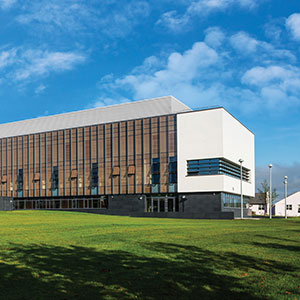
University of Galway has earned international recognition as a research-led university with a commitment to top quality teaching across a range of key areas of expertise.
-
Research & Innovation

Research & Innovation
University of Galway’s vibrant research community take on some of the most pressing challenges of our times.
-
Business & Industry

Guiding Breakthrough Research at University of Galway
We explore and facilitate commercial opportunities for the research community at University of Galway, as well as facilitating industry partnership.
-
Alumni & Friends

Alumni & Friends
There are 128,000 University of Galway alumni worldwide. Stay connected to your alumni community! Join our social networks and update your details online.
-
Community Engagement
Community Engagement
At University of Galway, we believe that the best learning takes place when you apply what you learn in a real world context. That's why many of our courses include work placements or community projects.
 Accessibility & Language
Key Enabling Technologies (PCert)

Key Enabling Technologies (PG Cert)
College of Science and Engineering- Title of Award
- Postgraduate Certificate
- Course Code
- PET1
- Delivery
- Blended Learning
- NFQ
- Level 9
- Award Type
- Minor
- Duration
- 1 year part-time
- ECTS Weighting
- 30 ECTS
Why Choose This Course?
Course Information
Key enabling technologies lead to breakthroughs where significant problems in society are resolved with a technology that is suddenly possible. This course provides learners with an opportunity to embark on a research and innovation journey, by understanding the leveraging impacts achievable with four of the six key enabling technologies identified by Europe in areas such as Advanced Materials, Advanced Manufacturing, Micro-/nano-electronics, and Artificial Intelligence.
The PG Cert is envisaged as the first year of a three-year part-time postgraduate journey. Completion of modules in the second year results in a PG Diploma (+30 ECTS, 60 total). The third year is a research-intensive year and will result in an MSc in Key Enabling Technologies (+30 ECTS, 90 credits).
This course seeks to upskill employees who are seeking leadership roles in the twin transformation of manufacturing towards sustainability and digitalisation. It will provide learners with a comprehensive knowledge of R&D concepts in manufacturing, including simulation, automation, materials, processes, and manufacturing technologies. It will enable them to apply knowledge to design, implement, and optimize manufacturing processes and systems using digital simulation or prototyping techniques.
Participants will demonstrate their understanding by undertaking project activities.
Informed by three reports: IBEC Manufacturing Report 2023/4, The OECD Future Skills Report for Ireland 2030, and the Irish Medtech Report "Talent to Thrive" 2024, the course is strategically positioned to provide employees with additional cross-cutting skills in problem-solving, leadership in the transformation of manufacturing systems, and the commercial acumen required to justify innovation.
Aims of the programme:
The PG Cert in Key Enabling Technologies aims to equip students with advanced knowledge and skills to operate research-led enterprises, focusing on areas like advanced materials, manufacturing, micro-/nano-electronics, and AI. It supports research, innovation, and upskilling for leadership roles in sustainable and digital manufacturing. The course emphasizes applied learning, workplace relevance, and interdisciplinary collaboration to address future skill needs in Ireland's economy.
Progression:
This is a 30 ECTS graduate course which awards a University level PG Cert in Key Enabling Technologies upon successful course completion. Successful candidates may progress in subsequent years to PG Diploma or an MSc in Key Enabling Technologies award.
The course will consist of three 10 ECTS modules. Three modules can be selected from the list:
- KE1146: Enterprise Simulation for Digital Twinning with Research Project.
- KE1144: Robotics & Automated systems with Research Project.
- KE1147: Materials Science & Processes with Research Project.
- KE1143: Manufacturing Technology with Research Project.
- KE1145: Programming, Sensor, & Actuators with Research Project.
- KE1142: Enabling (Laser) Technology for Advanced Manufacturing with Research Project.
- KE1148: Rapid Prototyping & Pilot Production with Research Project
- KE1140: Design of Engineering Systems with Research Project
- KE1141: Scalable Science, Technology and Innovation with Research Project.
Curriculum Information
Curriculum information relates to the current academic year (in most cases).Course and module offerings and details may be subject to change.
Glossary of Terms
- Credits
- You must earn a defined number of credits (aka ECTS) to complete each year of your course. You do this by taking all of its required modules as well as the correct number of optional modules to obtain that year's total number of credits.
- Module
- An examinable portion of a subject or course, for which you attend lectures and/or tutorials and carry out assignments. E.g. Algebra and Calculus could be modules within the subject Mathematics. Each module has a unique module code eg. MA140.
- Optional
- A module you may choose to study.
- Required
- A module that you must study if you choose this course (or subject).
- Semester
- Most courses have 2 semesters (aka terms) per year.
Year 1 (30 Credits)
OptionalKE1141: Scalable Science, Technology and Innovation with Research Project
KE1141: Scalable Science, Technology and Innovation with Research Project
12 months long | Credits: 10
Scalable science, technology and innovations are described. The evolution of how science, technology and innovation intertwine will be considered. Participants will elicit the value of technology. A historical evolution of scientific thought and industrial development is first presented. The second part centres on understanding competition, analysing value chains, and the role of geography in innovation. The third part is technical, and is focused on key technologies and patent literature. The fourth and fifth parts are strategic to the twin transition towards sustainability and digitalisation as it focuses on the formulation of a business hypothesis using approaches based on customer discovery.
(Language of instruction: English)
Learning Outcomes
- Recognise the historical evolution of scientific thought and the periods of major industrial development
- Apply the five forces of competition by assessing the competitive position of research, development or innovation project.
- Construct and analyse a technical value chain for the technology used in a particular R&D project.
- Apply learning gained from two or more published patent filings to compare technical concepts to formulate and appraise the scalability of an innovative concept using the system model.
- Develop an entrepreneurial hypothesis by using in-person communication skills and assess the scalability in practice of an emergent R&D project.
Assessments
- Continuous Assessment (80%)
- Oral, Audio Visual or Practical Assessment (20%)
Teachers & Administrators
Click a name to search for their researcher profile. Note: Only teachers publish research profiles.
Reading List
- "Scalable Innovation" by Eugene Shteyn, Max Shtein
ISBN: 9781466590977.
Publisher: CRC press
Chapters: 30 - "On Competition" by Michael E. Porter
ISBN: 1422155625.
Publisher: Harvard Business Press - "The Mom Test" by Rob Fitzpatrick
ISBN: 9781492180746.
Publisher: Robfitz Ltd - "Sapiens" by Yuval Noah Harari
ISBN: 9780099590088.
Publisher: Vintage Books
Note: Module offerings and details may be subject to change.
OptionalKE1140: Design of Engineering Systems with Research Project
KE1140: Design of Engineering Systems with Research Project
12 months long | Credits: 10
Theoretical and practical concepts of engineering systems design is introduced. The module describes design process, highlighting the main stages. The significance, characteristics, requirements and methods of evaluation are considered. The module describes both product and process design, design for high reliability and safety with practical emphasis on important modern problems, such as design for energy efficiency, design for low environmental impact and digitalisation. 1
(Language of instruction: English)
Learning Outcomes
- Identify engineering design principles to produce solutions that meet specified needs with consideration of health and safety, as well as global, cultural, social, environmental, digital and economic factors
- Apply principles of the systematic design to help identify, define and eliminate known or potential failure modes in designing products, processes and prototyping systems for research.
- Analyse engineering problems in research and industrial settings and apply appropriate techniques and design processes to resolve issues
- Demonstrate the ability to evaluate, integrate, and apply appropriate information from various sources to create cohesive, persuasive arguments, and to propose engineering design concepts and solutions
- Critically evaluate all parts of design process by the development of a design for a product, process or R&D system from ideation through to specification.
Assessments
- Continuous Assessment (80%)
- Oral, Audio Visual or Practical Assessment (20%)
Teachers & Administrators
Click a name to search for their researcher profile. Note: Only teachers publish research profiles.
Reading List
- "Engineering Design" by Gerhard Pahl,W. Beitz,Jörg Feldhusen,Karl-Heinrich Grote
ISBN: 9781846283185.
Publisher: Springer Science & Business Media
Chapters: 12 - "The Engineering Design of Systems" by Dennis M. Buede
ISBN: 9780470164020.
Publisher: Wiley
Note: Module offerings and details may be subject to change.
OptionalKE1148: Rapid Prototyping and Pilot Production with Research Project
KE1148: Rapid Prototyping and Pilot Production with Research Project
12 months long | Credits: 10
An in-depth understanding for how prototypes can be fabricated using the latest advanced makerspace tools will be generated. The module provides students with hands on experience of advanced metrology, additive and subtractive manufacturing, relevant for progressing functional prototypes in R&D projects.
(Language of instruction: English)
Learning Outcomes
- Review and apply state of the art metrology tools.
- Review and employ subtractive tools to create 2D and 3D structures safely.
- Review and apply available additive processes to create 2D and 3D structures.
- Synthesize the processes of responsible design, materials selection, prototyping and evaluation for the purpose of developing an R&D prototype, relevant to the ethos of improving lives and or making places better.
- Evaluate the success or otherwise of applying a rapid prototyping project in a pilot production system to realise a functional prototype.
Assessments
- Continuous Assessment (80%)
- Oral, Audio Visual or Practical Assessment (20%)
Teachers & Administrators
Click a name to search for their researcher profile. Note: Only teachers publish research profiles.
The above information outlines module KE1148: "Rapid Prototyping and Pilot Production with Research Project" and is valid from 2025 onwards.Note: Module offerings and details may be subject to change.
OptionalKE1146: Enterprise Simulation & Digital Twinning with Research Project
KE1146: Enterprise Simulation & Digital Twinning with Research Project
12 months long | Credits: 10
Enterprise Simulation involves building models in whole or part of a process. Digital Tinning deals with the process of understanding an enterprise and improving its performance through creation of numerical models which can be used to evaluate change.
(Language of instruction: English)
Learning Outcomes
- Identify the fundamental concepts, principles and terminology used in modelling and simulation of processes in enterprises.
- Solve complex simulation problems by using simulation software packages.
- Recommend changes arising from the simulation of processes in an enterprise.
- Identify and rank risks associated implementing changes arising from simulations.
- Generate and evaluate a simulation of specific process steps in a R&D project.
Assessments
- Continuous Assessment (70%)
- Oral, Audio Visual or Practical Assessment (30%)
Teachers & Administrators
Click a name to search for their researcher profile. Note: Only teachers publish research profiles.
The above information outlines module KE1146: "Enterprise Simulation & Digital Twinning with Research Project" and is valid from 2025 onwards.Note: Module offerings and details may be subject to change.
OptionalKE1144: Robotics and Automated Systems with Research Project
KE1144: Robotics and Automated Systems with Research Project
12 months long | Credits: 10
Core elements of automated systems including Robotics, AGVs and other Processing equipment are described. Learners will develop skills in basic robotic programming. Project management issues in automation will be demonstrated.
(Language of instruction: English)
Learning Outcomes
- Describe core elements of automated systems including Robotics, AGVs and other materials processing equipment
- Understand some of the project management techniques involved in automation
- Apply robotic programming to resolve a specific task
- Compare and contrast different approaches to automated material storage and handling
- Complete an R&D project where a robotic system is developed and applied for a specific application.
Assessments
- Continuous Assessment (50%)
- Oral, Audio Visual or Practical Assessment (20%)
- Department-based Assessment (30%)
Teachers & Administrators
Click a name to search for their researcher profile. Note: Only teachers publish research profiles.
Reading List
- "Automation, Production Systems, and Computer-integrated Manufacturing" by Mikell P. Groover
ISBN: 0133499618.
Publisher: Prentice Hall - "Industrial Automation and Robotics" by JEAN RIESCHER. WESTCOTT,A K Gupta,S K Arora
ISBN: 1683929616.
Note: Module offerings and details may be subject to change.
OptionalKE1147: Materials Science & Processes with Research Project
KE1147: Materials Science & Processes with Research Project
12 months long | Credits: 10
This module provides an indepth review of materials, at atomic scale through the micro-scale (grains, crystals, fibres etc.) to the macro or large scale (components, devices, etc.). The learner considers, "How is failure at the large scale dictated by what is observed at the micro- or atomic scale?" It covers Atomic Bonding; Structure of Materials; Imperfections in Crystalline Solids; Diffusion; Phase Diagrams; Mechanical Properties of Materials; Failure Mechanisms & Corrosion; Processing of Materials – Polymers, Ceramics and Metals.
(Language of instruction: English)
Learning Outcomes
- Identify key issues relating to the structure of advanced materials
- Interpret key features associated with phase diagrams of materials.
- Compare and contrast different material failure mechanisms (brittle, ductile, fatigue, creep, corrosion)
- Analyse and interpret thermomechanical data associated with materials.
- Solve problems relating to optimising the properties materials used in emerging applications
- Critically assess the impact of manufacturing methods and processes on materials structure and functionality.
Assessments
- Continuous Assessment (70%)
- Department-based Assessment (30%)
Teachers & Administrators
Click a name to search for their researcher profile. Note: Only teachers publish research profiles.
The above information outlines module KE1147: "Materials Science & Processes with Research Project" and is valid from 2025 onwards.Note: Module offerings and details may be subject to change.
OptionalKE1143: Manufacturing Technology with Research Project
KE1143: Manufacturing Technology with Research Project
12 months long | Credits: 10
This course describes how manufacturing processes are used to shape and form materials in modern manufacturing. The materials that are covered include metals, ceramics, semiconductors, polymers, and composite materials. Extensive range of processes that are included are based on solidification, particulate processing, metal forming, material removal, joining, assembly and surface processing.
(Language of instruction: English)
Learning Outcomes
- Identify the fundamental principles of key manufacturing technologies
- Critique, with peers, how materials structure, properties, and applications are impacted by the selection of manufacturing processes
- Assess the strengths and weaknesses of the manufacturing technologies in terms of precision, throughput and sustainability
- Evaluate how manufacturing systems can be adapted to meet the twin transition towards sustainability and digitalisation.
- Generate a detailed specification for the manufacturing process and materials used in the scalable sustainable production of a functional R&D prototype.
Assessments
- Continuous Assessment (80%)
- Oral, Audio Visual or Practical Assessment (20%)
Teachers & Administrators
Click a name to search for their researcher profile. Note: Only teachers publish research profiles.
Reading List
- "Fundamentals of Modern Manufacturing: Materials, Processes and Systems" by Mikell P. Groover
ISBN: 978-111970642.
Publisher: Wiley
Chapters: 36
Note: Module offerings and details may be subject to change.
OptionalKE1145: Programming, Sensors and Actuators with Research Project
KE1145: Programming, Sensors and Actuators with Research Project
12 months long | Credits: 10
Automated sensors, actuators, motors, pneumatics, Programmable Logic Controllers (PLC) are described. Programming of automated systems are considered to improve quality control, increased throughput and increasing competitive advantage.
(Language of instruction: English)
Learning Outcomes
- Describe the core elements of automation technology applied in industry and the main principles behind various automation solutions
- Design, program and deploy automated systems
- Solve problems based on a defined set of requirements for automation in industrial scenarios
- Apply advanced analytical methods to size and specify automation solutions in a number of industrial applications
- Complete a research project where the breadth and depth of knowledge gained is used to develop an automated system.
Assessments
- Continuous Assessment (70%)
- Department-based Assessment (30%)
Teachers & Administrators
Click a name to search for their researcher profile. Note: Only teachers publish research profiles.
Reading List
- "Automation, Production Systems, and Computer-integrated Manufacturing" by Mikell P. Groover
ISBN: 0133499618.
Publisher: Prentice Hall - "Programmable Logic Controllers" by Dag H. Hanssen
ISBN: 9781118949221.
Publisher: John Wiley & Sons - "Make: Getting Started with Arduino" by Massimo Banzi,Michael Shiloh
ISBN: 9781449363338.
Publisher: Maker Media
Note: Module offerings and details may be subject to change.
OptionalKE1142: Enabling (Laser) Technology for Advanced Manufacturing with Research Project
KE1142: Enabling (Laser) Technology for Advanced Manufacturing with Research Project
12 months long | Credits: 10
This course describes how a key enabling technology, such as photonics, can be used to transform future manufacturing. The module describes how laser light is generated and delivered to the workpiece. The laser material interaction is then described for material modification, removal and assembly. A student focus on advanced research applications will be expected.
(Language of instruction: English)
Learning Outcomes
- Identify the fundamental principles of laser enabled material modification.
- Critique, with peers, how the selection of components and subsystems in laser workstation may impact R&D and future manufacturing processes.
- Assess the strengths and weaknesses of different laser material interactions in terms of precision, throughput and sustainability.
- Evaluate how laser and optical systems can be adapted to meet the twin transition towards sustainability and digitalisation.
- Generate and evaluate a detailed specification for laser-enabled R&D process.
Assessments
- Continuous Assessment (80%)
- Oral, Audio Visual or Practical Assessment (20%)
Teachers & Administrators
Click a name to search for their researcher profile. Note: Only teachers publish research profiles.
The above information outlines module KE1142: "Enabling (Laser) Technology for Advanced Manufacturing with Research Project" and is valid from 2025 onwards.Note: Module offerings and details may be subject to change.
Each module features a substantial workplace project component, and students are encouraged to join the course with an industry-based project concept. This approach provides valuable opportunities to build transferable skills that can be applied directly in professional settings.
Career Opportunities
The PG Cert in Enabling Technologies will prepare students for careers in areas such as:
- Research & Development functions in medical device companies
- Research & Development functions in the wider manufacturing workforce
- Leadership roles in the transformation of manufacturing systems towards sustainability and digitalization
Dr Adam Collins
Lecturer, School of Natural Sciences, Physics
Dr Gerard O'Connor
Personal Professor, School of Natural Sciences, Physics
Mr Padraig Conneely
Lecturer, School of Engineering, Mechanical Engineering
The course is delivered part-time through a blended learning approach. Learners will be provided with online materials for each module, specifically developed for independent study. These will be complemented by recommended readings and interactive resources where relevant. In-person attendance is required for approximately 10 hours per module, typically scheduled on Saturdays.
Assessment is carried out through a combination of assignments, written examinations, and, where applicable, practical laboratory work. Examinations are scheduled at the end of each semester, and each module is assessed individually.
Course queries:
sciencetech@universityofgalway.ie
Programme Director(s):
Professor Gerard O’Connor
Physics, School of Natural Sciences
College of Science and Engineering
E: gerard.oconnor@universityofgalway.ie
T: 091 492513
University of Galway recognises that knowledge and skills can be acquired from a range of learning experiences. This is in line with the National Framework of Qualifications (NFQ) goals which aim to recognise all learning achievements by supporting the development of alternative pathways to qualifications (or awards) and by facilitating the recognition of prior learning (RPL).
If you wish to apply but you do not meet the minimum entry criteria, please contact the programme administrator to discuss RPL eligibility (This may involve an interview to determine if you are suitable for the course.)
Applicants who do not have the required academic qualifications for entry purposes, but have relevant work experience in cybersecurity or business risk management, may also be entitled to apply under the University’s Recognition of Prior Learning Policy.
Further, students may apply for exemption(s) from some programme courses based on equivalent courses already completed. Further information is available on the University’s Recognition of Prior Learning website
The PG Cert in Enabling Technologies provides the student with several transferable skills, including:
- Teamwork: Through team-based work and collaborative learning activities.
- Communication: Enhanced via group learning activities and project presentations.
- Creativity and Innovation: Developed through experiential learning, research projects, and problem-solving tasks.
- Leadership: Focused on transforming manufacturing systems and driving innovation.
- Problem-Solving: By predicting problems and formulating solutions through critical thinking and research.
- Commercial Acumen: Gained through modules like "Scalable Science, Technology and Innovation," which include business strategy, financial metrics, and customer discovery.
- Technical Skills: Practical experience in areas such as automation, digital simulation, rapid prototyping, and advanced manufacturing technologies.
- Research Skills: Including the ability to select and employ research techniques and secure competitive advantages from research activities.
These skills are designed to prepare learners for leadership roles and innovation in manufacturing and related industries.
Accreditations & Awards
Meet our Employers
Entry Requirements and Fees
Applicants should hold one of the following:
- an undergraduate bachelor’s degree 1st or 2nd class honours in any discipline (level 8), along with three years of relevant industrial experience;
- an ordinary bachelor’s degree or 3rd class honours undergraduate degree (level 7), along with five years of relevant industrial experience;
- a recognised professional qualification and five years of relevant industrial experience.
Candidates who do not meet the minimum entry criteria are encouraged to contact the programme's administrators to discuss eligibility through a process of Recognition of Prior Learning (RPL) and may be interviewed to ascertain their suitability for the course.
Academic entry requirements standardised per country are available here.
English Language Entry Requirements
For applicants whose first language is not English, an English language proficiency of IELTS score of 6.5 is required (with no less than 6.5 in Writing and no less than 6.0 in any other band) or equivalent.
More information on English language test equivalency are available here.
You can apply online to the University of Galway application portal here.
Please review the entry requirements set out in the section above.
You will be required to upload supporting documentation to your application electronically. See the section above on entry requirements for further information on the supporting documentation required for this course.
Closing Dates
Rolling intake up to Friday 28 August 2026
Notes
- You will need an active email account to use the website and you'll be guided through the system, step by step, until you complete the online form.
Browse the FAQ's section for further guidance.
| Course Type | Year | EU Tuition | Student Contribution | Non-EU Tuition | Levy | Total Fee | Total EU Fee | Total Non-EU Fee |
|---|
Application Process
Students applying for full time postgraduate programmes from outside of the European Union (EU), You can apply online to the University of Galway application portal here.
Our application portal opens on the 1st October each year for each the following September.
Further Information
Please visit the postgraduate admissions webpage for further information on closing dates, documentation requirements, application fees and the application process.
Why University of Galway?
World renowned research led university nestled in the vibrant heart of Galway city on Ireland's scenic West Coast.
Contact the College of Science and Engineering
University of Galway, University Road, Galway, Ireland, H91 TK33