-
Courses

Courses
Choosing a course is one of the most important decisions you'll ever make! View our courses and see what our students and lecturers have to say about the courses you are interested in at the links below.
-
University Life

University Life
Each year more than 4,000 choose University of Galway as their University of choice. Find out what life at University of Galway is all about here.
-
About University of Galway

About University of Galway
Since 1845, University of Galway has been sharing the highest quality teaching and research with Ireland and the world. Find out what makes our University so special – from our distinguished history to the latest news and campus developments.
-
Colleges & Schools

Colleges & Schools
University of Galway has earned international recognition as a research-led university with a commitment to top quality teaching across a range of key areas of expertise.
-
Research & Innovation

Research & Innovation
University of Galway’s vibrant research community take on some of the most pressing challenges of our times.
-
Business & Industry

Guiding Breakthrough Research at University of Galway
We explore and facilitate commercial opportunities for the research community at University of Galway, as well as facilitating industry partnership.
-
Alumni & Friends

Alumni & Friends
There are 128,000 University of Galway alumni worldwide. Stay connected to your alumni community! Join our social networks and update your details online.
-
Community Engagement

Community Engagement
At University of Galway, we believe that the best learning takes place when you apply what you learn in a real world context. That's why many of our courses include work placements or community projects.
 Accessibility & Language
Nursing: Emergency Care (MHSc/PDip)


MHSc/PDip (Emergency Care)
College of Medicine and Health, School of Nursing, Midwifery and Evidence Science- Title of Award
- Postgraduate Diploma/Master of Health Science
- Course Code
- 1MCE1 (MHSc) 1MCE9 (PGDip)
- Average Intake
- 10
- Delivery
- On Campus
- NFQ
- Level 9
- Award Type
- Major
- Next Intake
- September 2027
- Duration
- PDip 1 year, full-time MHSc 2 years, full-time
- ECTS Weighting
- PDip 60 | MHSc 90
Why Choose This Course?
Course Information
Who is this course for?
Registered nurses who want to specialise in emergency care, strengthen their clinical skills, and enhance critical thinking. Perfect for those aiming to progress to Advanced Nurse Practitioner roles, Clinical Nurse Specialist positions, or MSc-level study.
What you will study
Year 1 (60 ECTS)
- Specialist modules: Medical Emergencies, Major Trauma & Surgical Emergencies, Specialist Patient Populations
- Core modules: Clinical Governance, Service Improvement, Advanced Research Methods
- Clinical competency documents: NU921 and NU922
Year 2 (30 ECTS, optional for eligible students)
- Research Dissertation
How you will learn?
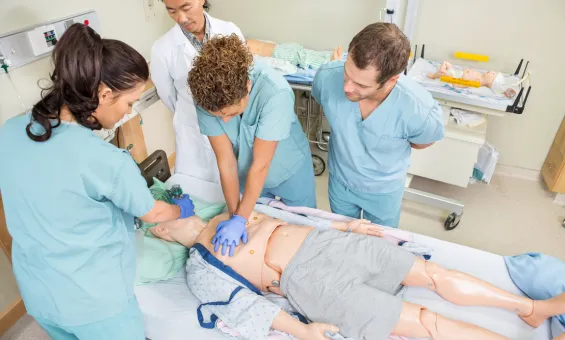
A blended learning model combines flexible online study with face-to-face workshop days featuring high-fidelity simulation, interprofessional learning, and expert clinical faculty. Students complete a minimum of 500 hours of supervised clinical practice in approved emergency care settings.
Why this course?
Integrating theory, practical skills, and real-world experience, this course equips graduates with the confidence, competence, and professional recognition to provide expert emergency care and advance to specialist roles or research-focused study.
Curriculum Information
Curriculum information relates to the current academic year (in most cases).Course and module offerings and details may be subject to change.
Glossary of Terms
- Credits
- You must earn a defined number of credits (aka ECTS) to complete each year of your course. You do this by taking all of its required modules as well as the correct number of optional modules to obtain that year's total number of credits.
- Module
- An examinable portion of a subject or course, for which you attend lectures and/or tutorials and carry out assignments. E.g. Algebra and Calculus could be modules within the subject Mathematics. Each module has a unique module code eg. MA140.
- Optional
- A module you may choose to study.
- Required
- A module that you must study if you choose this course (or subject).
- Semester
- Most courses have 2 semesters (aka terms) per year.
Year 1 (60 Credits)
RequiredNU611: Specialist I (Medical Emergencies)
NU611: Specialist I (Medical Emergencies)
Semester 1 | Credits: 10
Unit 1: Respiratory Assessment Respiratory assessment, Physical assessment skills, SpO2 & ABG monitoring, Airway adjuncts, oxygen delivery and mechanical ventilation Unit 2: Care and Management of Acute Respiratory Emergencies The unit introduced the international guidance on ‘best practice’ to be used when caring for patients with COPD, Asthma, Pneumonia and COPD. Unit 3: Cardiovascular Emergencies Prevalence, pathophysiology and prevention of cardiovascular disease Assessment of patients with cardiovascular emergencies. Acute cardiac emergencies and the evidence-based guidelines that exist in relation to the assessment and management of these patients in Emergency nursing – Acute Coronary syndromes. Unit 4 Cardiac Arrhythmias Anatomy of the heart and the physiology of the cardiac cycle to enable understanding of the electrophysiological component of heart function. ECG and rhythm interpretation Medical and nursing care and implications of specific arrhythmias Unit 5 Haematological and Endocrine Emergencies Focus on the pathophysiology, presenting features, assessment and management of specific haematological and endocrine emergencies
(Language of instruction: English)
Learning Outcomes
- Develop a comprehensive evidence-based approach to the assessment of the patient presenting with an acute medical condition
- Describe and interpret correctly the symptoms of altered respiratory function, and the disease process associated with this
- Demonstrate safe, appropriate evidence-based use of all airway management, airway adjuncts and the role of the emergency nurse in assisting with Rapid Sequence Induction Anaesthesia. CPAP,BIPAP and NIMV methods.
- Demonstrate an understanding physiological changes demonstrated by arterial blood gasses, the oxygen dissociation curve and the role of SaO2 monitoring and their implications for patient care.
- Demonstrate the ability to analyse and respond effectively to the care of the person with sudden parameter changes in relation to respiratory function.
- Critically discuss the evidence based guidelines which determine the management of patients with COPD, Asthma, Pneumonia and Pulmonary Embolus.
- Discuss the role of the nurse in caring for patients with cardiovascular emergencies, an evidence-based approach to the care and management of patients with Acute Coronary Syndromes, Angina, and Myocardial infarction, the principles underpinning the assessment of a patient who presents with chest pain to the emergency department.
- Give a detailed description of an evidence-based approach to the care and management of patients with Acute Coronary Syndromes, Angina, and Myocardial infarction along with demonstrating understanding of the interpretation of rhythm strip, cardiac investigations/bloods
- Critically discuss the evidence-based management of patients presenting with haematological and endocrine emergencies
- Integrate research findings in the provision of evidence-based care to acutely ill clients
Assessments
- Continuous Assessment (10%)
- Department-based Assessment (90%)
Teachers & Administrators
Click a name to search for their researcher profile. Note: Only teachers publish research profiles.
The above information outlines module NU611: "Specialist I (Medical Emergencies)" and is valid from 2025 onwards.Note: Module offerings and details may be subject to change.
RequiredNU921: Clinical Competence 1
NU921: Clinical Competence 1
Semester 1 | Credits: 0
(Language of instruction: English)
Assessments
- Continuous Assessment (100%)
Teachers & Administrators
Click a name to search for their researcher profile. Note: Only teachers publish research profiles.
- MAURA DOWLING 🖂
- FRANCES FARRELLY 🖂
- SINÉAD HAHESSY 🖂
- ANDREW HUNTER 🖂
- BRONA MOONEY 🖂
- MARI MORAN 🖂
- MARCELLA HORRIGAN-KELLY 🖂
- CLAIRE QUINN 🖂
- ELAINE O'HARA 🖂
- Derek O'Keeffe 🖂
- Peter Carr 🖂
- Katherine Pigott 🖂
Note: Module offerings and details may be subject to change.
RequiredNU623: Clinical Governance: Supporting Safe Practice
NU623: Clinical Governance: Supporting Safe Practice
Semester 2 | Credits: 10
This module will examine clinical governance and its role in supporting safe practice. It is estimated that patient harm is the 14th leading cause of the global disease burden (Organization for Economic Cooperation and Development (OECD), 2017). An estimated 17% of all hospitalizations are affected by one or more adverse events, with 30-70% potentially preventable (Rafter et al., 2015;2016). In the UK an estimated 5.2% of adverse events resulted in Patient Death (Hogan et al., 2012). Recently in Ireland, the health service has placed an important emphasis on quality and patient safety by developing an infrastructure for integrated quality, safety and risk management with the aim of achieving excellence in clinical governance (HSE, 2024). The Quality and Patient Safety Directorate has built on this clinical governance infrastructure. Formalized governance arrangements ensure that everyone working in the health and personal social service are aware of their responsibilities, authority and accountability and work towards achieving improved patient outcomes. Effective governance recognizes the inter-dependence between corporate and clinical governance across services and integrates them to deliver high quality, safe and reliable healthcare (HSE, 2024). Everyone is responsible for creating a safer healthcare system (HSE, 2024). To ensure this happens it is important that programs prepare nurses and midwives to promote and enhance patient safety. The module is guided by the World Health Organization (WHO) Patient Safety Guidance (WHO, 2023), Patient Safety Act 2023 Patient Safety (Notifiable Incidents and Open Disclosure) Act 2023, National Patient Safety Strategy 2019-2024 (HSE, 2019), Patient Safety (Notifiable Incidents and Open Disclosure) Act 2023, and the HSE Code of Governance (HSE, 2024).
Teaching and Learning Activities/ Strategies
This is a blended learning module. Students completing this module will have the opportunity to attend lectures and seminars and seek answers to their questions on a blog facilitated by a named lecturer(s). The lecturer will not only answer questions on the blog but also provide opinions and share learning resources.
(Language of instruction: English)
Learning Outcomes
- Examine the concept of ‘clinical governance’ in the Irish healthcare system
- Identify and evaluate the factors that determine the quality and safety of healthcare from the perspective of (i) the nurse or midwife (ii) the client (iii) the multidisciplinary team and (iv) the wider healthcare system
- Explore their role in promoting and enhancing safety as a member of the multidisciplinary team
- Critically evaluate risk assessment processes and issues relevant to their practice setting.
- Evaluate their contribution to quality improvement in their practice setting
Assessments
- Continuous Assessment (100%)
Teachers & Administrators
Click a name to search for their researcher profile. Note: Only teachers publish research profiles.
- EIMEAR BURKE 🖂
- FRANCES FARRELLY 🖂
- SINÉAD HAHESSY 🖂
- CATHERINE MEAGHER 🖂
- MARI MORAN 🖂
- CLAIRE O'TUATHAIL 🖂
- CLAIRE QUINN 🖂
- Katherine Pigott 🖂
- Ciara O'Meara 🖂
Reading List
- "Differentiating clinical governance, clinical management and clinical practice. Clinical Governance" by Brennan NM, Flynn MA.
ISBN: 2013;18(2):11. - "Framework for Public Involvement in Clinical Effectiveness Processes" by Department of Health and Children
- "National Clinical Effectiveness Committee National Clinical Audits" by Department of Health
- "Patient Safety (Notifiable Incidents and Open Disclosure) Act 2023" by Department of Health
- "Department of Health (2025) NCEC Standards for Clinical Practice Guidance Version 2" by Department of Health
Publisher: Department of Health - "Clinical Effectiveness" by Department of Health
- "Patient Safety Surveillance & Performance" by Department of Health
- "National Clinical Guidelines." by Department of Health
- "Supporting and activating clinical governance development in Ireland: sharing our learning. Journal of health organization and management" by Flynn, M. A., Burgess, T., & Crowley, P.
Publisher: Journal of health organization and management,
Chapters: 29(4) - "The effectiveness of continuous quality improvement for developing professional practice and improving health care outcomes: a systematic review" by Hill, J. E., Stephani, A. M., Sapple, P., & Clegg, A. J.
Publisher: Implementation science : IS
Chapters: 15(1), - "A Guide to the National Standards for Safer Better Health Care. (Version 2)." by HIQA
Publisher: HIQA: Dublin - "Patient Safety (Notifiable Incidents and Open Disclosure) Act 2023" by HSE
- "Quality Improvement Toolkit." by HSE
- "Quality and patient safety - Clinical governance development, an assurance check for health service providers" by HSE
- "HSE Code of Governance" by HSE
- "Patient Safety Strategy 2019-2024" by HSE
- "Our Clinical Governance" by HSE
- "Patient Engagement in the Governance and Development of National Clinical Effectiveness Processes’, A Systematic Literature Review and Desktop Analysis" by Lambart, V.
- "Clinical decision-making processes among graduate nurses, specialist nurses and nurse practitioners A collaborative international study." by Levy-Malmberg, R., Boman, E., Lehwaldt, D., Fagerström, L., & Lockwood, E. B.
Publisher: International nursing review.
Chapters: 71(2) - "What is clinical governance?" by Macfarlane A. J. R.
Publisher: BJA education
Chapters: 19(6) - "Rethinking clinical governance: healthcare professionals' views: a Delphi study." by Veenstra, G. L., Ahaus, K., Welker, G. A., Heineman, E., van der Laan, M. J., & Muntinghe, F. L.
Publisher: BMJ open
Chapters: 7(1) - "Patient Safety." by World Health Organisation
Publisher: WHO
Note: Module offerings and details may be subject to change.
RequiredNU613: Specialist 3 (Specialist Patient Populations)
NU613: Specialist 3 (Specialist Patient Populations)
Semester 1 | Credits: 10
This module is wide-ranging and the content is reflective of patients who present to emergency departments from specialist patient populations. This module addresses the unique needs and challenges of caring for paediatric, psychiatric, gynaecologic/ obstetric, cancer patients (haemotology & oncology) and older persons in Emergency Departments. A review of relevant national care pathways, protocols and agreed standards of care aimed at these groups shall be explored.
(Language of instruction: English)
Learning Outcomes
- Critically evaluate the nurse’s role in caring for paediatric emergencies and the concept of child and family centered care.
- Recognise the potential causes of bleeding in early and late pregnancy and discuss the treatment and pathophysiology of miscarriage and ectopic pregnancy.
- Critically analyze and evaluate nursing interventions when caring for specialist client groups such as Mental Health.
- Critically discuss the physical and psychological care of the person/child following self-inflicted overdose/intoxication.
- Critically discuss the multidisciplinary approach to the care and management of older person in the Emergency Department and compare evidence based guidelines and recommendations.
- Critically analyse and evaluate nursing interventions when caring for specialist client groups such as ENT and minor injuries.
- Critically examine the role of the nurse in analysing and responding to the patient’s experience of pain during emergency department care and with cancer diagnosis.
- Understand the Emergency Medicine Programme (EMP) Clinical Guidelines and na1onal agendas for specific assessment and intervention at triage and for certain populations attending the ED.
- Demonstrate knowledge of guidelines, policies, procedures, and tools used to detect and screen client groups that are ‘at risk’.
Assessments
- Continuous Assessment (100%)
Teachers & Administrators
Click a name to search for their researcher profile. Note: Only teachers publish research profiles.
- ANDREW HUNTER 🖂
- ALISON VAN LAAR 🖂
- DEIRDRE FITZGERALD 🖂
- Peter Carr 🖂
- Katherine Pigott 🖂
- Ciara O'Meara 🖂
Note: Module offerings and details may be subject to change.
RequiredNU612: Specialist 2 (Major Trauma & Surgical Emergencies)
NU612: Specialist 2 (Major Trauma & Surgical Emergencies)
Semester 2 | Credits: 10
This module focuses on surgical and trauma emergencies and uses simulation facilities for the on site workshops Unit 1: Multiple Trauma This unit focuses on the assessment and management of patients who present with multiple injuries to the Emergency Department. Multiple trauma patients require a systematic collaborative team approach in order to optimise patient outcome. Unit 2 Thoracic and Abdominal Trauma This unit concentrates on the nursing care of patients with thoracic and abdominal trauma. Emphasis is given to the mechanism of injury, history taking and physical assessment aspects of nursing care and management Unit 3 Orthopaedic Trauma This unit focuses on the care of patients with musculo-skeletal injuries and spinal trauma. The unit will examine the appropriate preparation required in the emergency department for receipt of patients with these types of injuries in addition to exploring best practice in the assessment, management and evaluation of them. Unit 4 Brain, Spinal Cord, Peripheral Nervous System Trauma This unit shall focus on the care and management of patients who present with neurological trauma. The medical and surgical principles of treatment shall be reviewed and some of the more common disorders/presentations considered. Unit 5 – Gastrointestinal, Renal and Genitourinary Emergencies Emphasis within this unit is on rapid, but thorough patient assessment, history taking, physical examination, diagnostic investigations and data collection. Timely initial resuscitation, early symptom relief and acute management such as surgery are the key priorities.
(Language of instruction: English)
Learning Outcomes
- Develop a comprehensive evidence-based approach to the assessment of the patient presenting with an acute surgical condition
- Examine the nurse’s role in holistically caring for the emergency patient who requires surgery including family support, reassurance and spiritual care
- Demonstrate the knowledge and understanding necessary in the comprehensive assessment and management of care for patients in the first golden hour of trauma care.
- Appraise and identify actual and potential problems which may arise when patients have been exposed to traumatic injuries
- Identify components of the primary and secondary trauma survey and demonstrate how to conduct a head to toe assessment.
- Develop an awareness of the impact of trauma on the individual and their families including the physiologic, psychological, spiritual and socioeconomic perspectives
- Understand the importance and potential influence of the Emergency Nurses role in relation to issues of injury prevention and control.
- Demonstrate knowledge of the nursing assessment, care and management of patients with the following thoracic injuries: Rib and Sternal Fractures, Flail Chest, Pneumothorax, Haemothorax, Pulmonary Contusion, Ruptured Diaphragm, Tracheobronchial Injury, Myocardial Contusion, Pericardial Tamponade, Aortic Injuries
- Demonstrate knowledge of the nursing assessment, care and management of patients with the following selected abdominal injuries: Hepatic injuries, Splenic injuries, Hollow Organ Injury, Renal injuries, Bladder and Urethral Injuries. Discuss the nursing assessment of patients with thoracic and abdominal trauma
- Critically examine the application of theory to clinical practice when assessing, planning, implementing and evaluating care of the trauma patient.
- Critically examine the role of the nurse in caring for patients with musculo-skeletal and spinal injuries
- Critically examine the role of the nurse in preparing the patient for transfer to definitive care Develop a comprehensive evidence based approach to the assessment of patients with neurological disorders
- Critically examine the role of the nurse in caring for patients with neurological disorders.
- Discuss the principles underpinning the assessment of a patient who presents with abdominal pain to the emergency department.
- Demonstrate proficiency in the related clinical skills of inspection, palpation, percussion and auscultation of the abdomen
- Critically examine the role of the nurse in caring for patients with gastro-intestinal, genitourinary or renal emergencies
Assessments
- Continuous Assessment (100%)
Teachers & Administrators
Click a name to search for their researcher profile. Note: Only teachers publish research profiles.
The above information outlines module NU612: "Specialist 2 (Major Trauma & Surgical Emergencies)" and is valid from 2025 onwards.Note: Module offerings and details may be subject to change.
RequiredNU6439: Service Improvement
NU6439: Service Improvement
Semester 2 | Credits: 10
This module will allow the student the opportunity to plan and implement, with their manager, and an academic facilitator, a service improvement initiative. The project will focus on an issue of relevance to client care or service improvement and must be supported by the student’s line manager and/or clinical facilitator. Examples of the types of projects include: completion of a defined literature review supporting some aspect of unit work, preparation of a patient education leaflet (supported by an evidence based rationale presented separately), development of a patient education pack (supported by an evidence based rationale presented separately), development of a strategy to reduce waiting time, an initiative that will improve patient/staff safety, development/implementation of guidelines/policies, an initiative that improves the quality of patient services or the work environment, an initiative that saves time/money or any issue/problem/change that can be addressed through action. This work must be completed within a calendar year.
(Language of instruction: English)
Learning Outcomes
- Critically examine a practice issue and contribute to service improvement
- Integrate and apply learning from other modules
- Work collaboratively with peers and clients
- Become an autonomous and independent learner
- Develop the skills and knowledge needed to implement a change in clinical practice
- Develop their skills of analysis, critical thinking, problem-solving and reflection
Assessments
- Continuous Assessment (100%)
Teachers & Administrators
Click a name to search for their researcher profile. Note: Only teachers publish research profiles.
- MAURA DOWLING 🖂
- FRANCES FARRELLY 🖂
- SINÉAD HAHESSY 🖂
- CATHERINE MEAGHER 🖂
- MARI MORAN 🖂
- MARCELLA HORRIGAN-KELLY 🖂
- CLAIRE QUINN 🖂
- DEIRDRE FITZGERALD 🖂
- Duygu Sezgin 🖂
- Martina Giltenane 🖂
- Katherine Pigott 🖂
- Ciara O'Meara 🖂
Note: Module offerings and details may be subject to change.
RequiredNU502: Advanced Research Methods
NU502: Advanced Research Methods
Semester 1 | Credits: 10
. This module is designed to enable students to explore the methodological and practical issues of research. It will help students determine the appropriate research design for research questions in their practice and provides an opportunity for students to debate, challenge and clarify research issues. This module will also help students understand the systematic review process and types of reviews, Finally, the module prepares students to develop a research protocol.
(Language of instruction: English)
Learning Outcomes
- Demonstrate an understanding of what is meant by ‘evidence-based practice’
- Discuss theoretical perspectives on research methodology
- Formulate an answerable clinical question using the PICO approach
- Develop a database search strategy
- Explain the key characteristics, strengths and weaknesses of the main qualitative and quantitative research methodologies
- Articulate a research problem and formulate a research question or hypothesis as appropriate to guide the conduct of a study
- Justify the use of appropriate data collection, sampling, and data analysis methods for qualitative and quantitative research
- Discuss rigour in the context of quantitative and qualitative research
- Discuss evidence synthesis of quantitative and qualitative research
- Create a plan with clear rationales for data collection, sampling, data analysis and rigour to be used when conducting a primary qualitative or quantitative study or evidence synthesis
Assessments
- Continuous Assessment (100%)
Teachers & Administrators
Click a name to search for their researcher profile. Note: Only teachers publish research profiles.
- MAURA DOWLING 🖂
- BERNARD MCCARTHY 🖂
- BRONA MOONEY 🖂
- MARI MORAN 🖂
- CLAIRE O'TUATHAIL 🖂
- SIOBHÁIN SMYTH 🖂
- AMANDA WALSH 🖂
- DECLAN DEVANE 🖂
- FIONNUALA JORDAN 🖂
- STEPHEN KENNETH BRADLEY 🖂
- Peter Carr 🖂
- Katherine Pigott 🖂
Note: Module offerings and details may be subject to change.
RequiredNU922: Clinical Competence 2
NU922: Clinical Competence 2
Semester 2 | Credits: 0
Assessments
- Continuous Assessment (100%)
Teachers & Administrators
Click a name to search for their researcher profile. Note: Only teachers publish research profiles.
- MAURA DOWLING 🖂
- ANDREW HUNTER 🖂
- BRONA MOONEY 🖂
- MARI MORAN 🖂
- ANNE O'GRADY 🖂
- DEIRDRE ROCHE 🖂
- MARCELLA HORRIGAN-KELLY 🖂
- ELAINE O'HARA 🖂
- Derek O'Keeffe 🖂
- Peter Carr 🖂
Note: Module offerings and details may be subject to change.
Year 2 (30 Credits)
RequiredNU6515: Research Dissertation
NU6515: Research Dissertation
Semester 1 and Semester 2 | Credits: 30
Students will be required to undertake a piece of primary research or an evidence synthesis on a topic relevant to their practice area. Students will be assigned a research supervisor who will support them in undertaking this work.
(Language of instruction: English)
Learning Outcomes
- Demonstrated knowledge of ethical requirements and procedures by negotiating access to research site/participants by securing ethical approval from the appropriate Research Ethics Committee in the case of primary research. Or in the case of evidence synthesis/secondary data analysis, demonstrate knowledge in the process of negotiating access to full text data not available in the library databases.
- Developed a research question(s) of significance to area of of significance to their specialist nursing/midwifery professional practice or a problem statement(s) based on a review of evidence-based literature.
- Identified and apply an appropriate method(s) to achieve the objectives of the research question (s)/ hypothesis for primary data collection, or in the case of secondary data analysis, employ valid and reliable method(s) for processing and analysing archived research data
- Critically discuss research findings with reference to the methods used, current literature and professional practice.
- Prepared a scholarly report (Option A) research article (Option B) ready for publication which will demonstrate accurate expression, analysis, and synthesis of the research subject.
Assessments
- Continuous Assessment (100%)
Teachers & Administrators
Click a name to search for their researcher profile. Note: Only teachers publish research profiles.
- GLORIA AVALOS 🖂
- MIRIAM BRENNAN 🖂
- EIMEAR BURKE 🖂
- DYMPNA CASEY 🖂
- MAURA DOWLING 🖂
- ANNE FALLON 🖂
- FRANCES FARRELLY 🖂
- SINÉAD HAHESSY 🖂
- ANDREW HUNTER 🖂
- BERNARD MCCARTHY 🖂
- TERESA MEANEY 🖂
- BRONA MOONEY 🖂
- MARI MORAN 🖂
- CLAIRE O'TUATHAIL 🖂
- SIOBHÁIN SMYTH 🖂
- PATRICIA HEALY 🖂
- GEORGINA GETHIN 🖂
- DECLAN DEVANE 🖂
- MARCELLA HORRIGAN-KELLY 🖂
- FIONNUALA JORDAN 🖂
- CATHERINE HOUGHTON 🖂
- STEPHEN KENNETH BRADLEY 🖂
- CLAIRE QUINN 🖂
- MARION O'REGAN 🖂
- Derek O'Keeffe 🖂
- Peter Carr 🖂
- Katherine Pigott 🖂
- Ciara O'Meara 🖂
Note: Module offerings and details may be subject to change.
- Blended learning approach: Combines flexible online study with face-to-face workshop days, including high-fidelity simulation and interprofessional learning.
- Critical thinking & knowledge contribution: Develops advanced critical thinking skills and enables nurses to contribute to the evidence base and body of knowledge in emergency care.
- Hands-on clinical practice: Minimum of 500 hours of supervised clinical experience in approved emergency care settings, integrating theory with real-world practice.
- Specialist and core modules: Offers a balanced curriculum of emergency-focused specialist modules and core modules in governance, service improvement, and research methods.
- Career progression: Equips graduates with the knowledge, skills, and critical thinking needed to advance to Advanced Nurse Practitioner or Clinical Nurse Specialist roles, or progress to MSc-level study.
- Simulation-led training: High-fidelity simulation workshops with Emergency Department medical and nursing staff allow students to practice complex emergency scenarios in a safe, supportive environment.
- Professional accreditation: Category 2 approval by the Nursing and Midwifery Board of Ireland (NMBI) ensures recognised professional standards and credibility.
Where graduates work
Hospitals, trauma centres, urgent care units, and specialised clinics - nationally and internationally.
Roles you can pursue
- Specialist emergency nurse
- Advanced Nurse Practitioner
- Clinical leadership or management
- Educator or trainer in nursing programmes
- Research or service improvement role
Career progression
Move into senior clinical positions, lead service development, or transition into academic research and teaching. High-achieving graduates can progress to MSc or PhD study.
Skills employers value
Advanced clinical decision-making, critical thinking, leadership, evidence-based practice, and simulation experience - all developed through this course.
Opportunities in the field
Growing demand for skilled emergency nurses, nurse-led clinics, virtual care services, and service improvement initiatives creates strong career prospects nationally and internationally.
Clinical Hours
Students complete a minimum of 500 supervised clinical hours in an Emergency Department setting, allowing them to apply theory to real-world practice. Clinical experience is recorded in two Clinical Competency Documents, completed collaboratively with the student’s clinical mentor. Document 1 (NU921) is submitted at the end of Semester 1, and Document 2 (NU922) at the end of Semester 2.
Accrediting Body
This course is Category 2 approved by the Nursing and Midwifery Board of Ireland (NMBI), ensuring it meets recognised professional standards and is formally accredited for practice-based learning in emergency nursing.
- Naomi Davies Clinical Tutor and Programme Director
- Dr Lisa Glynn Lecturer
- Deirdre Fitzgerald Lecturer
- Karen Faherty ED Clinical facilitator
- Linda O'Neill ED Clinical facilitator
A variety of interprofessional educationalists, clinicians, simulationists, and healthcare employees also teach on this programme.
How will I learn?
Modules are assessed through a combination of coursework and practical teaching assessments, including OSCEs, MCQs, written assignments, and other methods. This approach ensures students develop both theoretical knowledge and practical clinical competence.
Programme Director:
Naomi Davies
School of Nursing, Midwifery and Evidence Science
T: +353 91 493528
E: naomi.davies@universityofgalway.ie
Level 8 Certificate in Emergency Nursing is recognised as prior learning.
Accreditations & Awards

The MSc (Emergency Care) has transformed my clinical practice and professional confidence throughout the 2 yr programme. The curriculum is designed with the student in mind; blending theoretical knowledge using innovative ways for each student learning needs, it includes simulation sessions, informative talks from the MDT (ICU Outreach, MICAS, etc). It had pushed me to think critically, lead effectively, provide evidence-based care to patients and advocate for patients in high-pressure situations. I would highly recommend this course to any nurse who wants to ameliorate their nursing practice.
Ciara Naughton
RN Emergency Department
Meet our Employers
Entry Requirements and Fees
Minimum Entry Requirements
All applicants must meet the following entry requirements:
- Be a registered nurse on the General Nurse division of the register maintained by the Nursing and Midwifery Board of Ireland (NMBI);
- Have a minimum of six months’ post-registration experience (exclusive of post-registration courses);
- Be currently working in the required specialist area, i.e., emergency, and have, as a minimum, six months’ clinical experience in this specialist area;
- Have an honours bachelor’s degree at NFQ Level 8 in nursing or a comparable qualification. Applicants who do not hold an honours degree or Higher Diploma (Level 8) must demonstrate that they have successfully completed (in the previous two years) a module at Level 9. Please consult the professional credit awards at Level 9 at: www.nuigalway.ie/pca/pca.html.
Academic entry requirements standardised per country are available here.
English Language Entry Requirements
For applicants whose first language is not English, an English language proficiency of IELTS score of 6.5 is required (with no less than 6.5 in Writing and no less than 6.0 in any other band) or equivalent.
More information on English language test equivalency are available here.
Supporting Documents
You will be required to provide supporting documentation as part of your application. You can check here what supporting documents are required for this course.
Firstly, please review the entry requirements set out in the section above. If you are self-funding please contact your local NMPDU/CNE for funding support this is a separate application. Succes with this funding approval does not mean you have secured a place on the programme. You must apply online to the University of Galway application portal here.
You will be required to upload supporting documentation to your application electronically. See the section above on entry requirements for further information on the supporting documentation required for this course.
Closing Dates
The closing date for receipt of applications is the 31st of July. Applications will be accepted on a rolling basis and course quotes will be reviewed continuously throughout the application cycle.
Notes
- You will need an active email account to use the website and you'll be guided through the system, step by step, until you complete the online form.
- Browse the FAQ's section for further guidance.
Fees for Academic Year 2026/27
| Course Type | Year | EU Tuition | Student Contribution | Non-EU Tuition | Levy | Total Fee | Total EU Fee | Total Non-EU Fee |
|---|---|---|---|---|---|---|---|---|
| Masters Full Time | 1 | €7,900 | €18,300 | €150 | €8,050 | €18,450 | ||
| PG Diploma Full Time | 1 | €8,200 | €- | €19,000 | €150 | €150 | €8,350 | €19,150 |
| Masters Full Time | 2 | €3,650 | €- | €18,300 | €75 | €3,725 | €18,375 |
Postgraduate students in receipt of a SUSI grant – please note an F4 grant is where SUSI will pay €4,500 towards your tuition . You will be liable for the remainder of the total fee. A P1 grant is where SUSI will pay tuition up to a maximum of €6,270. SUSI will not cover the student levy.
Note to non-EU students: learn about the 24-month Stayback Visa here.
Application Process
This programme does not accept students from outside of the European Union (EU).
Our application portal opens on the 1st October each year for entry the following September.
Further Information
Please visit the postgraduate admissions webpage for further information on closing dates, documentation requirements, application fees and the application process.
Why University of Galway?
World renowned research led university nestled in the vibrant heart of Galway city on Ireland's scenic West Coast.
Contact the School of Nursing, Midwifery and Evidence Science
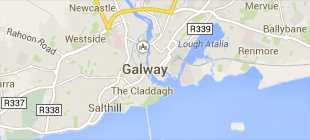
Áras Moyola, Upper Newcastle, Galway


Downloads


Meet Our Alumni
Course Introduction
Advancing Knowledge and Critical Thinking in Emergency Care
This course prepares registered nurses to excel in the fast-paced world of emergency care through a dynamic blend of online learning, expert-led workshops, interprofessional high-fidelity simulation, and clinical practice- sharpening knowledge, skills, and critical thinking to deliver expert emergency nursing care.