-
Courses

Courses
Choosing a course is one of the most important decisions you'll ever make! View our courses and see what our students and lecturers have to say about the courses you are interested in at the links below.
-
University Life

University Life
Each year more than 4,000 choose University of Galway as their University of choice. Find out what life at University of Galway is all about here.
-
About University of Galway

About University of Galway
Since 1845, University of Galway has been sharing the highest quality teaching and research with Ireland and the world. Find out what makes our University so special – from our distinguished history to the latest news and campus developments.
-
Colleges & Schools

Colleges & Schools
University of Galway has earned international recognition as a research-led university with a commitment to top quality teaching across a range of key areas of expertise.
-
Research & Innovation

Research & Innovation
University of Galway’s vibrant research community take on some of the most pressing challenges of our times.
-
Business & Industry

Guiding Breakthrough Research at University of Galway
We explore and facilitate commercial opportunities for the research community at University of Galway, as well as facilitating industry partnership.
-
Alumni & Friends

Alumni & Friends
There are 128,000 University of Galway alumni worldwide. Stay connected to your alumni community! Join our social networks and update your details online.
-
Community Engagement

Community Engagement
At University of Galway, we believe that the best learning takes place when you apply what you learn in a real world context. That's why many of our courses include work placements or community projects.
 Accessibility & Language
Nursing: Intensive Care (MHSc/PDip)


MHSc/PDip (Nursing: Intensive Care)
College of Medicine and Health, School of Nursing, Midwifery and Evidence Science- Title of Award
- Postgraduate Diploma/Master in Health Sciences
- Course Code
- 1MDI1
- Average Intake
- 10
- Delivery
- On Campus
- NFQ
- Level 9
- Award Type
- Major
- Next Intake
- September 2027
- Duration
- PDip: 1 year, full-time; MHSc: 2 years, full-time
- ECTS Weighting
- 90
Why Choose This Course?
Course Information
Who is this course for?
The Postgraduate Diploma in Health Sciences (Intensive Care) is designed for registered nurses who wish to pursue a specialist qualification in Intensive Care Nursing.
All students will register for a full-time one-year Postgraduate Diploma. On successful completion of both theoretical and clinical modules for year one, students may graduate with a Postgraduate Diploma or (if they have achieved the minimum 60% average mark across these modules) they may apply to transfer to year two of the MHSc programme.
A blended learning format is adopted for the delivery of this programme. Students are required to attend a total of 12 workshop days across the first year of the programme making it possible to combine working full-time with studying.
On the advice of the Nursing and Midwifery Board of Ireland (NMBI), students are also required to undertake a minimum of 500 clinical hours in an approved clinical practice setting within Ireland, normally within the students own work setting. Students may also be required to undertake additional placement(s) to attain the required competency to meet programme learning outcomes.
What will I study?
The course has a strong clinical emphasis, offering further opportunities to develop specialist nursing skills in intensive care. Blended learning is an innovative and flexible approach to learning that uses a combination of virtual teaching and learning through Canvas, our online learning platform. Our face-to-face workshops combine lectures and simulation with interprofessional speakers with specialist expertise.
Curriculum Information
Curriculum information relates to the current academic year (in most cases).Course and module offerings and details may be subject to change.
Glossary of Terms
- Credits
- You must earn a defined number of credits (aka ECTS) to complete each year of your course. You do this by taking all of its required modules as well as the correct number of optional modules to obtain that year's total number of credits.
- Module
- An examinable portion of a subject or course, for which you attend lectures and/or tutorials and carry out assignments. E.g. Algebra and Calculus could be modules within the subject Mathematics. Each module has a unique module code eg. MA140.
- Optional
- A module you may choose to study.
- Required
- A module that you must study if you choose this course (or subject).
- Semester
- Most courses have 2 semesters (aka terms) per year.
Year 1 (60 Credits)
RequiredNU921: Clinical Competence 1
NU921: Clinical Competence 1
Semester 1 | Credits: 0
(Language of instruction: English)
Assessments
- Continuous Assessment (100%)
Teachers & Administrators
Click a name to search for their researcher profile. Note: Only teachers publish research profiles.
- MAURA DOWLING 🖂
- FRANCES FARRELLY 🖂
- SINÉAD HAHESSY 🖂
- ANDREW HUNTER 🖂
- BRONA MOONEY 🖂
- MARI MORAN 🖂
- MARCELLA HORRIGAN-KELLY 🖂
- CLAIRE QUINN 🖂
- ELAINE O'HARA 🖂
- Derek O'Keeffe 🖂
- Peter Carr 🖂
- Katherine Pigott 🖂
Note: Module offerings and details may be subject to change.
RequiredNU623: Clinical Governance: Supporting Safe Practice
NU623: Clinical Governance: Supporting Safe Practice
Semester 2 | Credits: 10
This module will examine clinical governance and its role in supporting safe practice. It is estimated that patient harm is the 14th leading cause of the global disease burden (Organization for Economic Cooperation and Development (OECD), 2017). An estimated 17% of all hospitalizations are affected by one or more adverse events, with 30-70% potentially preventable (Rafter et al., 2015;2016). In the UK an estimated 5.2% of adverse events resulted in Patient Death (Hogan et al., 2012). Recently in Ireland, the health service has placed an important emphasis on quality and patient safety by developing an infrastructure for integrated quality, safety and risk management with the aim of achieving excellence in clinical governance (HSE, 2024). The Quality and Patient Safety Directorate has built on this clinical governance infrastructure. Formalized governance arrangements ensure that everyone working in the health and personal social service are aware of their responsibilities, authority and accountability and work towards achieving improved patient outcomes. Effective governance recognizes the inter-dependence between corporate and clinical governance across services and integrates them to deliver high quality, safe and reliable healthcare (HSE, 2024). Everyone is responsible for creating a safer healthcare system (HSE, 2024). To ensure this happens it is important that programs prepare nurses and midwives to promote and enhance patient safety. The module is guided by the World Health Organization (WHO) Patient Safety Guidance (WHO, 2023), Patient Safety Act 2023 Patient Safety (Notifiable Incidents and Open Disclosure) Act 2023, National Patient Safety Strategy 2019-2024 (HSE, 2019), Patient Safety (Notifiable Incidents and Open Disclosure) Act 2023, and the HSE Code of Governance (HSE, 2024).
Teaching and Learning Activities/ Strategies
This is a blended learning module. Students completing this module will have the opportunity to attend lectures and seminars and seek answers to their questions on a blog facilitated by a named lecturer(s). The lecturer will not only answer questions on the blog but also provide opinions and share learning resources.
(Language of instruction: English)
Learning Outcomes
- Examine the concept of ‘clinical governance’ in the Irish healthcare system
- Identify and evaluate the factors that determine the quality and safety of healthcare from the perspective of (i) the nurse or midwife (ii) the client (iii) the multidisciplinary team and (iv) the wider healthcare system
- Explore their role in promoting and enhancing safety as a member of the multidisciplinary team
- Critically evaluate risk assessment processes and issues relevant to their practice setting.
- Evaluate their contribution to quality improvement in their practice setting
Assessments
- Continuous Assessment (100%)
Teachers & Administrators
Click a name to search for their researcher profile. Note: Only teachers publish research profiles.
- EIMEAR BURKE 🖂
- FRANCES FARRELLY 🖂
- SINÉAD HAHESSY 🖂
- CATHERINE MEAGHER 🖂
- MARI MORAN 🖂
- CLAIRE O'TUATHAIL 🖂
- CLAIRE QUINN 🖂
- Katherine Pigott 🖂
- Ciara O'Meara 🖂
Reading List
- "Differentiating clinical governance, clinical management and clinical practice. Clinical Governance" by Brennan NM, Flynn MA.
ISBN: 2013;18(2):11. - "Framework for Public Involvement in Clinical Effectiveness Processes" by Department of Health and Children
- "National Clinical Effectiveness Committee National Clinical Audits" by Department of Health
- "Patient Safety (Notifiable Incidents and Open Disclosure) Act 2023" by Department of Health
- "Department of Health (2025) NCEC Standards for Clinical Practice Guidance Version 2" by Department of Health
Publisher: Department of Health - "Clinical Effectiveness" by Department of Health
- "Patient Safety Surveillance & Performance" by Department of Health
- "National Clinical Guidelines." by Department of Health
- "Supporting and activating clinical governance development in Ireland: sharing our learning. Journal of health organization and management" by Flynn, M. A., Burgess, T., & Crowley, P.
Publisher: Journal of health organization and management,
Chapters: 29(4) - "The effectiveness of continuous quality improvement for developing professional practice and improving health care outcomes: a systematic review" by Hill, J. E., Stephani, A. M., Sapple, P., & Clegg, A. J.
Publisher: Implementation science : IS
Chapters: 15(1), - "A Guide to the National Standards for Safer Better Health Care. (Version 2)." by HIQA
Publisher: HIQA: Dublin - "Patient Safety (Notifiable Incidents and Open Disclosure) Act 2023" by HSE
- "Quality Improvement Toolkit." by HSE
- "Quality and patient safety - Clinical governance development, an assurance check for health service providers" by HSE
- "HSE Code of Governance" by HSE
- "Patient Safety Strategy 2019-2024" by HSE
- "Our Clinical Governance" by HSE
- "Patient Engagement in the Governance and Development of National Clinical Effectiveness Processes’, A Systematic Literature Review and Desktop Analysis" by Lambart, V.
- "Clinical decision-making processes among graduate nurses, specialist nurses and nurse practitioners A collaborative international study." by Levy-Malmberg, R., Boman, E., Lehwaldt, D., Fagerström, L., & Lockwood, E. B.
Publisher: International nursing review.
Chapters: 71(2) - "What is clinical governance?" by Macfarlane A. J. R.
Publisher: BJA education
Chapters: 19(6) - "Rethinking clinical governance: healthcare professionals' views: a Delphi study." by Veenstra, G. L., Ahaus, K., Welker, G. A., Heineman, E., van der Laan, M. J., & Muntinghe, F. L.
Publisher: BMJ open
Chapters: 7(1) - "Patient Safety." by World Health Organisation
Publisher: WHO
Note: Module offerings and details may be subject to change.
RequiredNU140: Intensive Care Nursing 1
NU140: Intensive Care Nursing 1
Semester 1 | Credits: 10
This module focuses on the fundamental principles of critical care nursing. Students are provided with an opportunity to further develop their knowledge and understanding of the physiological effects of critical illness on multiple systems. There will be a particular emphasis on the assessment, monitoring, diagnostic and multidisciplinary management of critically ill patients. The practice component of the module affords the student an opportunity to apply this knowledge and further practice the related skills.
Learning Outcomes
- Demonstrate and critically reflect on the application of critical care nursing knowledge and skills when performing a comprehensive physical assessment of the critically ill patient
- Demonstrate the ability to interpret patient data from bedside monitoring devices and communicate their significance to the relevant members of the multidisciplinary team.
- Critically discuss the impact of single and multiple organ dysfunction on the physiological condition of the critically ill patient
- Critically appraise and apply relevant theory to support the different methods of delivering oxygen therapy to critically ill patients.
- Critically discuss the key pharmacological agents used in the management of the critically ill patient who is haemodynamically unstable
- Critically appraise and apply relevant theory to support the diagnosis and management of an Acute Kidney Injury in critically ill patients.
- Critically evaluate evidence-based practice guidelines used to support your critical care nursing practice
- Critically discuss the role of the nurse in reducing risks to and promoting safety of patients, staff, and visitors in critical care settings
Assessments
- Continuous Assessment (60%)
- Oral, Audio Visual or Practical Assessment (40%)
Teachers & Administrators
Click a name to search for their researcher profile. Note: Only teachers publish research profiles.
Reading List
- "Critical Care Nursing." by Aitken, L., Marshall, A and Chaboyer, W
Publisher: Elsevier - "Critical care manual of clinical procedures and competencies." by Bench, S., Credland, N., and Hill, C.
Publisher: John Wiley & Sons. - "Essentials of Critical Care Nursing: A holistic Approach." by Morton, P and Fontaine,
Publisher: Wolters Kluwer/Lippincott Williams & Wilkins. - "Critical Care Nursing: Diagnosis and Management." by Urden, L.D., Stacey, K.M and Lough, M.E
Publisher: Saunders - "Intensive Care Nursing" by Woodrow, P and Hill, B
Publisher: Routledge
Note: Module offerings and details may be subject to change.
RequiredNU141: Intensive Care Nursing 2
NU141: Intensive Care Nursing 2
Semester 1 | Credits: 10
This module aims to provide the student with an opportunity to extend their knowledge and understanding to further develop their competence in critical care nursing. The focus will be on the holistic nursing care and management of the acute critically ill patient with increasing levels of critical illness from single to multiple organ failure. Students will be encouraged to reflect on their nursing practice and develop an analytical approach to evidence-based patient care.
(Language of instruction: English)
Learning Outcomes
- Critically appraise the nurse’s role in the assessment, monitoring and evaluation of patients requiring invasive ventilation including the prevention of lung injury using evidence-based guidelines
- Apply the relevant theory to support the nurse's role in liberating the patient from ventilatory supports
- Critically appraise the assessment, interventions, and evaluation of patients with circulatory collapse requiring vasoactive medications and circulatory support devices in critical care
- Critically discuss measures undertaken in critical care to reduce the risk of complications associated with Shock and Multi-Organ Dysfunction (MOD) using evidence-based guidelines.
- Recognise precursors to the catastrophic outcomes in shocked patients with MOD.
- Critically examine and apply relevant theory to support clinical decisions and the use of life sustaining therapies in a critical care setting.
- Critically analyse the impact of critical illness on patients and their families and demonstrate your understanding of the importance of holistic approaches to care in contemporary critical care settings.
Assessments
- Continuous Assessment (60%)
- Oral, Audio Visual or Practical Assessment (40%)
Teachers & Administrators
Click a name to search for their researcher profile. Note: Only teachers publish research profiles.
Reading List
- "ritical Care Nursing. 4th Ed." by Aitken, L., Marshall, A and Chaboyer, W
Publisher: Elsevier - "Critical care manual of clinical procedures and competencies.," by Bench, S., Credland, N., and Hill, C
Publisher: John Wiley & Sons. - "Essentials of Critical Care Nursing: A holistic Approach. Philadelphia: Wolters Kluwer/Lippincott Williams & Wilkins." by Morton, P and Fontaine, D
Publisher: Wolters Kluwer/Lippincott Williams & Wilkins. - "Critical Care Nursing: Diagnosis and Management." by Urden, L.D., Stacey, K.M and Lough, M.E
Publisher: Saunders. - "Intensive Care Nursing" by Woodrow, P and Hill B
Publisher: Routledge
Note: Module offerings and details may be subject to change.
RequiredNU6439: Service Improvement
NU6439: Service Improvement
Semester 2 | Credits: 10
This module will allow the student the opportunity to plan and implement, with their manager, and an academic facilitator, a service improvement initiative. The project will focus on an issue of relevance to client care or service improvement and must be supported by the student’s line manager and/or clinical facilitator. Examples of the types of projects include: completion of a defined literature review supporting some aspect of unit work, preparation of a patient education leaflet (supported by an evidence based rationale presented separately), development of a patient education pack (supported by an evidence based rationale presented separately), development of a strategy to reduce waiting time, an initiative that will improve patient/staff safety, development/implementation of guidelines/policies, an initiative that improves the quality of patient services or the work environment, an initiative that saves time/money or any issue/problem/change that can be addressed through action. This work must be completed within a calendar year.
(Language of instruction: English)
Learning Outcomes
- Critically examine a practice issue and contribute to service improvement
- Integrate and apply learning from other modules
- Work collaboratively with peers and clients
- Become an autonomous and independent learner
- Develop the skills and knowledge needed to implement a change in clinical practice
- Develop their skills of analysis, critical thinking, problem-solving and reflection
Assessments
- Continuous Assessment (100%)
Teachers & Administrators
Click a name to search for their researcher profile. Note: Only teachers publish research profiles.
- MAURA DOWLING 🖂
- FRANCES FARRELLY 🖂
- SINÉAD HAHESSY 🖂
- CATHERINE MEAGHER 🖂
- MARI MORAN 🖂
- MARCELLA HORRIGAN-KELLY 🖂
- CLAIRE QUINN 🖂
- DEIRDRE FITZGERALD 🖂
- Duygu Sezgin 🖂
- Martina Giltenane 🖂
- Katherine Pigott 🖂
- Ciara O'Meara 🖂
Note: Module offerings and details may be subject to change.
RequiredNU922: Clinical Competence 2
NU922: Clinical Competence 2
Semester 2 | Credits: 0
Assessments
- Continuous Assessment (100%)
Teachers & Administrators
Click a name to search for their researcher profile. Note: Only teachers publish research profiles.
- MAURA DOWLING 🖂
- ANDREW HUNTER 🖂
- BRONA MOONEY 🖂
- MARI MORAN 🖂
- ANNE O'GRADY 🖂
- DEIRDRE ROCHE 🖂
- MARCELLA HORRIGAN-KELLY 🖂
- ELAINE O'HARA 🖂
- Derek O'Keeffe 🖂
- Peter Carr 🖂
Note: Module offerings and details may be subject to change.
RequiredNU502: Advanced Research Methods
NU502: Advanced Research Methods
Semester 1 | Credits: 10
. This module is designed to enable students to explore the methodological and practical issues of research. It will help students determine the appropriate research design for research questions in their practice and provides an opportunity for students to debate, challenge and clarify research issues. This module will also help students understand the systematic review process and types of reviews, Finally, the module prepares students to develop a research protocol.
(Language of instruction: English)
Learning Outcomes
- Demonstrate an understanding of what is meant by ‘evidence-based practice’
- Discuss theoretical perspectives on research methodology
- Formulate an answerable clinical question using the PICO approach
- Develop a database search strategy
- Explain the key characteristics, strengths and weaknesses of the main qualitative and quantitative research methodologies
- Articulate a research problem and formulate a research question or hypothesis as appropriate to guide the conduct of a study
- Justify the use of appropriate data collection, sampling, and data analysis methods for qualitative and quantitative research
- Discuss rigour in the context of quantitative and qualitative research
- Discuss evidence synthesis of quantitative and qualitative research
- Create a plan with clear rationales for data collection, sampling, data analysis and rigour to be used when conducting a primary qualitative or quantitative study or evidence synthesis
Assessments
- Continuous Assessment (100%)
Teachers & Administrators
Click a name to search for their researcher profile. Note: Only teachers publish research profiles.
- MAURA DOWLING 🖂
- BERNARD MCCARTHY 🖂
- BRONA MOONEY 🖂
- MARI MORAN 🖂
- CLAIRE O'TUATHAIL 🖂
- SIOBHÁIN SMYTH 🖂
- AMANDA WALSH 🖂
- DECLAN DEVANE 🖂
- FIONNUALA JORDAN 🖂
- STEPHEN KENNETH BRADLEY 🖂
- Peter Carr 🖂
- Katherine Pigott 🖂
Note: Module offerings and details may be subject to change.
RequiredNU142: Intensive Nursing Care 3
NU142: Intensive Nursing Care 3
Semester 2 | Credits: 10
This module focuses on the specialist populations in critical care settings.
Learning Outcomes
- Critically review the nurse’s role in assessment, intervention and evaluation of patients presenting with haematological dysfunction in critical care
- Critically discuss the nurse’s role in assessment, intervention and evaluation of patients following trauma
- Demonstrate the ability to provide evidenced based care safely and effectively for patients undergoing cardiothoracic surgical procedures
- Critically examine special considerations caring for the paediatric patient in an adult intensive care in consultation with the multidisciplinary team (MDT).
- Critically review the nurse’s role in assessment, intervention, and evaluation of obstetric patients in consultation with the MDT
- Critically review the nurse’s role in assessment, intervention and evaluation of bariatric patients requiring critical care.
- Critically evaluate the social and psychological impact of critical illness on older patients and their loved ones and analyse evidence-based practices that supports older persons' recovery and promotes well-being long term
- Demonstrate an understanding of the role of the MDT in providing ongoing care needs of the chronically ill critical care patient including assessment, interventions, and evaluation of long-term care and rehabilitation needs
- Critically reflect on the critical care nurse's role in the context of critical care practice and apply relevant theory to support the further development of advanced nursing roles in contemporary care settings.
Assessments
- Continuous Assessment (40%)
- Oral, Audio Visual or Practical Assessment (60%)
Teachers & Administrators
Click a name to search for their researcher profile. Note: Only teachers publish research profiles.
Reading List
- "Critical Care Nursing." by Aitken, L., Marshall, A and Chaboyer, W
Publisher: Elsevier - "Essentials of Critical Care Nursing: A holistic Approach." by Morton, P and Fontaine, D
Publisher: Wolters Kluwer/Lippincott Williams & Wilkins. - "Critical Care Nursing: Diagnosis and Management. 8th ed." by Urden, L.D., Stacey, K.M and Lough, M.E.,
Publisher: Saunders - "Critical care manual of clinical procedures and competencies" by Bench, S., Credland N. and Hill, C
Publisher: John Wiley & Sons, - "Intensive Care Nursing" by Woodrow, P and Hill B
Publisher: Routledge
Note: Module offerings and details may be subject to change.
Year 2 (30 Credits)
RequiredNU6515: Research Dissertation
NU6515: Research Dissertation
Semester 1 and Semester 2 | Credits: 30
Students will be required to undertake a piece of primary research or an evidence synthesis on a topic relevant to their practice area. Students will be assigned a research supervisor who will support them in undertaking this work.
(Language of instruction: English)
Learning Outcomes
- Demonstrated knowledge of ethical requirements and procedures by negotiating access to research site/participants by securing ethical approval from the appropriate Research Ethics Committee in the case of primary research. Or in the case of evidence synthesis/secondary data analysis, demonstrate knowledge in the process of negotiating access to full text data not available in the library databases.
- Developed a research question(s) of significance to area of of significance to their specialist nursing/midwifery professional practice or a problem statement(s) based on a review of evidence-based literature.
- Identified and apply an appropriate method(s) to achieve the objectives of the research question (s)/ hypothesis for primary data collection, or in the case of secondary data analysis, employ valid and reliable method(s) for processing and analysing archived research data
- Critically discuss research findings with reference to the methods used, current literature and professional practice.
- Prepared a scholarly report (Option A) research article (Option B) ready for publication which will demonstrate accurate expression, analysis, and synthesis of the research subject.
Assessments
- Continuous Assessment (100%)
Teachers & Administrators
Click a name to search for their researcher profile. Note: Only teachers publish research profiles.
- GLORIA AVALOS 🖂
- MIRIAM BRENNAN 🖂
- EIMEAR BURKE 🖂
- DYMPNA CASEY 🖂
- MAURA DOWLING 🖂
- ANNE FALLON 🖂
- FRANCES FARRELLY 🖂
- SINÉAD HAHESSY 🖂
- ANDREW HUNTER 🖂
- BERNARD MCCARTHY 🖂
- TERESA MEANEY 🖂
- BRONA MOONEY 🖂
- MARI MORAN 🖂
- CLAIRE O'TUATHAIL 🖂
- SIOBHÁIN SMYTH 🖂
- PATRICIA HEALY 🖂
- GEORGINA GETHIN 🖂
- DECLAN DEVANE 🖂
- MARCELLA HORRIGAN-KELLY 🖂
- FIONNUALA JORDAN 🖂
- CATHERINE HOUGHTON 🖂
- STEPHEN KENNETH BRADLEY 🖂
- CLAIRE QUINN 🖂
- MARION O'REGAN 🖂
- Derek O'Keeffe 🖂
- Peter Carr 🖂
- Katherine Pigott 🖂
- Ciara O'Meara 🖂
Note: Module offerings and details may be subject to change.
- Specialist Focus - Designed exclusively for registered nurses aiming to advance in intensive care nursing.
- Dual Academic Pathway - Option to graduate with a Postgraduate Diploma or progress to MHSc if you achieve a 60% average.
- Blended Learning Format - Flexible delivery combining online study with 12 in-person workshop days, making it possible to work full-time while studying.
- Extensive Clinical Experience – Minimum of 500 clinical hours in approved Irish intensive care settings, ensuring strong practical competence.
- Competency-Based Training - Additional placements may be required to meet programme learning outcomes, ensuring readiness for advanced roles.
Graduates have found employment and promotion opportunities nationally and internationally in intensive care settings, in managerial positions and in educational roles.
Clinical Placement
Students must complete a minimum of 500 clinical hours in an approved intensive care setting, typically within their own workplace. Additional placements may be required to meet competency standards.
This Masters / Postgraduate Diploma in Health Sciences (Intensive Care) is accredited by the Nursing and Midwifery Board of Ireland (NMBI).
- Ann Sheehan: Programme Director
- Claire Lavelle, Clinical Nurse Manager 3
- Christine Sheehan: Registered Advanced Nurse Practitioner
- Pauline May
- Ms Laura Burke, Clinical Facilitator ICU
- Ms Esther Ni Chonghaile, Clinical Facilitator ICU
- Ms Marcia Tavares, Clinical Facilitator, ICU
The course has a strong clinical emphasis, offering further opportunities to develop specialist nursing skills in intensive care. Blended learning is an innovative and flexible approach to learning that uses a combination of virtual teaching and learning through Canvas, our online learning platform. Our face-to-face workshops combine lectures and simulation with interprofessional speakers with specialist expertise.
How Will I Be Assessed?
Modules are assessed using a combination of coursework and examinations.
Programme Director(s):
Ann Sheehan
School of Nursing, Midwifery and Evidence Science
E: ann.sheehan@universityofgalway.ie
University of Galway recognises that knowledge and skills can be acquired from a range of learning experiences. This is in line with the National Framework of Qualifications (NFQ) goals which aim to recognise all learning achievements by supporting the development of alternative pathways to qualifications (or awards) and by facilitating the recognition of prior learning (RPL).
Applicants for this programme who have undertaken the National Foundation Education Module in Intensive Care Nursing at UCD or UCC may apply for exemption for the Specialist Module 1 on the Masters/Postgraduate Diploma in Health Sciences (Intensive Care) in University of Galway.
Accreditations & Awards

The intensive care unit is where patients are at their sickest, with single- or multi-organ failure, requiring high levels of life-sustaining support. After completing the postgraduate ICU course in Galway Uni, I became far more knowledgeable and confident in caring for critically ill patients and delivering the highest standard of evidence-based care. The course strengthened my critical thinking, communication, and ability to question practice. It also supported my professional development and helped me progress to my role as an Advanced Nurse Practitioner on the Critical Care Outreach Team.
Yvonne Fehily
RGN, RANP, Critical Care Outreach, Galway University Hosp.

The Postgraduate Diploma in ICU is a challenging yet equally rewarding course which reflects the very nature of Intensive Care. I would consider the Postgraduate Diploma to be a solid investment for a career in critical care. It is delivered by leaders in their respective fields and the knowledge gained is invaluable as it can be applied to any critical care or acute care setting. The postgrad course also provided the foundation for me to continue my education and complete my master's degree in Intensive Care.
Grace Callaghan
CNM2 Clinical Facilitator,Intensive Care, (SUH)

I completed the postgraduate diploma in Intensive Care Nursing in 2016. The program taught me the knowledge and skills to care for the critically ill patient safely and competently. The blended teaching through lectures, tutorials and workshops facilitates any learning style while also working full time. I have since progressed on to become an Advanced Nurse Practitioner on the Critical Care Outreach Team.
Lisa Ní Thuathail
RGN, RANP Critical Care Outreach, GUH.

I completed my PG ICU few years ago and found the course helped me understand the rationale for some common ICU procedures and many modalities of patient care. The course menu has the best ingredients delivered by expert facilitators and tutors which helped us to deliver the best patient care with evidence-based practice. Since completing the course, I have progressed further in my career in both specialist and managerial roles in Nursing. I strongly recommend every ICU Nurse to enrol in this programme as the outcome will be rewarding.
Philip Parackal Augusthinose
CNM3, Simulation Clinical Nurse Educator
Meet our Employers
Entry Requirements and Fees
All applicants must meet the following entry requirements:
- Be a registered nurse on the General division of the register maintained by the Nursing and Midwifery Board of Ireland (NMBI);
- Have a minimum of one years post registration experience including six months' clinical experience in the specialist area of Intensive Care (exclusive of post-registration courses).
- Be currently working in Ireland in the required specialist area i.e. Intensive Care
- Provide written evidence of support from their Director of Nursing for the duration of the programme;
- Have an honours bachelor’s degree at NFQ Level 8 in nursing or a comparable qualification. Applicants who do not hold an honours degree or Higher Diploma (Level 8) must demonstrate that they have successfully completed (in the previous two years) a module at Level 9 at: www.nuigalway.ie/pca/pca.html;
- Applicants for this programme who have undertaken the National Foundation Education Module in Intensive Care Nursing at UCD or UCC may apply for exemption for the Specialist Module 1 on the Masters/Postgraduate Diploma in Health Sciences (Intensive Care) in University of Galway.
You can apply online to the University of Galway application portal here.
Please review the entry requirements set out in the section above.
You will be required to upload supporting documentation to your application electronically. See the section above on entry requirements for further information on the supporting documentation required for this course.
Closing Dates
For this programme, there is no specific closing date for receipt of applications. Applications will be accepted on a rolling basis and course quotes will be reviewed continuously throughout the application cycle.
Notes
- You will need an active email account to use the website and you'll be guided through the system, step by step, until you complete the online form.
- Browse the FAQ's section for further guidance.
Fees for Academic Year 2026/27
| Course Type | Year | EU Tuition | Student Contribution | Non-EU Tuition | Levy | Total Fee | Total EU Fee | Total Non-EU Fee |
|---|---|---|---|---|---|---|---|---|
| Masters Full Time | 1 | €7,900 | €18,300 | €150 | €8,050 | €18,450 | ||
| PG Diploma Full Time | 1 | €8,200 | €- | €19,000 | €150 | €150 | €8,350 | €19,150 |
| Masters Full Time | 2 | €3,550 | €- | €18,300 | €75 | €3,625 | €18,375 |
Postgraduate students in receipt of a SUSI grant – please note an F4 grant is where SUSI will pay €4,500 towards your tuition . You will be liable for the remainder of the total fee. A P1 grant is where SUSI will pay tuition up to a maximum of €6,270. SUSI will not cover the student levy.
Note to non-EU students: learn about the 24-month Stayback Visa here.
Postgraduate Excellence Scholarships
This scholarship is valued at €1,500 for EU students applying for full-time taught master's postgraduate courses. You will be eligible if:
- You have been accepted to a full-time taught master's course at University of Galway,
- You have attained a first class honours (or equivalent) in a Level 8 primary degree.
An application for the scholarship scheme is required (separate to the application for a place on the programme). The application portal for 2026 is now open and available here. Applications will close on the 30th September 2026. Full details available here.
Global Scholarships
University of Galway offers a range of merit-based scholarships to students from a number of countries outside of the EU. Visit here for schemes currently available.
Application Process
Students applying for full time postgraduate programmes from outside of the European Union (EU), You can apply online to the University of Galway application portal here.
Our application portal opens on the 1st October each year for entry the following September.
Further Information
Please visit the postgraduate admissions webpage for further information on closing dates, documentation requirements, application fees and the application process.
Note to non-EU students: learn about the 24-month Stayback Visa here.
Why University of Galway?
World renowned research led university nestled in the vibrant heart of Galway city on Ireland's scenic West Coast.
Contact the School of Nursing, Midwifery and Evidence Science
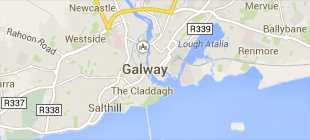
Áras Moyola, Upper Newcastle, Galway


Downloads


Meet Our Alumni
Course Introduction
Advance Your Skills in Intensive Care Nursing
The Postgraduate Diploma in Health Sciences (Intensive Care) offers registered nurses a specialist qualification in intensive care nursing through a flexible, blended learning format.