-
Courses

Courses
Choosing a course is one of the most important decisions you'll ever make! View our courses and see what our students and lecturers have to say about the courses you are interested in at the links below.
-
University Life

University Life
Each year more than 4,000 choose University of Galway as their University of choice. Find out what life at University of Galway is all about here.
-
About University of Galway

About University of Galway
Since 1845, University of Galway has been sharing the highest quality teaching and research with Ireland and the world. Find out what makes our University so special – from our distinguished history to the latest news and campus developments.
-
Colleges & Schools
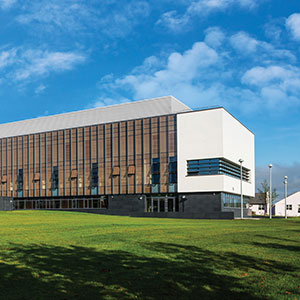
Colleges & Schools
University of Galway has earned international recognition as a research-led university with a commitment to top quality teaching across a range of key areas of expertise.
-
Research & Innovation

Research & Innovation
University of Galway’s vibrant research community take on some of the most pressing challenges of our times.
-
Business & Industry
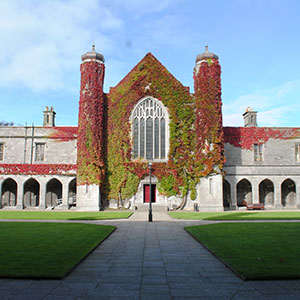
Guiding Breakthrough Research at University of Galway
We explore and facilitate commercial opportunities for the research community at University of Galway, as well as facilitating industry partnership.
-
Alumni & Friends

Alumni & Friends
There are 128,000 University of Galway alumni worldwide. Stay connected to your alumni community! Join our social networks and update your details online.
-
Community Engagement
Community Engagement
At University of Galway, we believe that the best learning takes place when you apply what you learn in a real world context. That's why many of our courses include work placements or community projects.
 Accessibility & Language
Teaching & Learning
Overview
The Discipline of Medical Education (DME) contributes to teaching and learning across the full medical education journey - from Foundation Year and undergraduate medicine to intern training and postgraduate education. We lead curriculum innovation and work closely with students, public and patients (experts by experience), clinicians, healthcare professionals, and the wider community to create engaging, evidence-informed learning experiences that prepare compassionate, collaborative, and future-ready doctors.
Undergraduate
The Discipline of Medical education plays a central role in supporting the undergraduate/direct entry medicine programme through course development, delivery and assessment support, and ongoing evaluation and quality improvement.
Course development:
- Curriculum design and innovation – Supports programme teams to develop innovative, evidence-based curricula and promotes student-centred curriculum development and competency-based education.
- Programme and module leadership - Contributes to leadership at both module and programme level.
- Integration of modern educational approaches – Incorporates: Simulation-based education, interprofessional learning and communication and professional practice training.
- Support for New programme developments – the DME plays a role in implementing revised or new undergraduate programmes.
Delivery and Assessment:
Delivery of Teaching
- Faculty Development: The DME provides training and resources for academic and clinical educators and builds staff capacity in teaching methods, supervision and clinical education.
- Support for teaching methodologies – Promotes innovative delivery approaches such as simulation-based learning, work-based clinical teaching and interprofessional education.
- Direct teaching involvement - DME staff contribute directly to teaching within modules & clinical supervision.
Assessment
- Assessment design and methodology – The DME provides expertise in teaching and assessment methodologies, supports development of work-based assessments and clinical competence assessments.
- Ensuring validity and alignment – Aligns assessment with learning outcomes, competency frameworks & clinical practice requirements.
- Supporting educators in assessment – Trains faculty in designing assessments, giving feedback to students and applying fair and consistent marking practices.
Evaluation and Quality Improvement:
- Quality Assurance – Direct involvement in programme quality assurance processes and ensures standards required by regulatory bodies are met.
- Programme evaluation - Supports evaluation of teaching, learning, and assessment practices using student feedback, performance data and faculty input.
- Continuous improvement – the DME drives ongoing curriculum review and enhancement and contributes to implementation of programme changes and reforms.
- Educational research – The DME conducts health professions education research and builds evidence for best practice in teaching and assessment.
- Simulation and patient safety evaluation – Through ICAPSS, the DME supports evaluation of simulation-based training and patient safety education.
Postgraduate
Taught
The DME delivers the Diploma and Masters in Clinical Education.
Diploma in Clinical Education
Delivery method:
- Fully online, distance‑learning programme
- Flexible study over one or two years
Key features:
- Designed for clinicians and health professionals involved in teaching
- Focuses on understanding how learning works in clinical settings
- Develops practical teaching skills for classrooms, workplaces, and clinical environments
- Covers core areas such as learning theory, teaching methods, assessment, and course design
- Strong emphasis on reflective practice and improving everyday teaching
- Interactive online learning with discussion boards, live web conferences, and skills workshops
Masters in Clinical Education
Delivery method:
- Primarily online with structured distance‑learning modules
- Self‑directed research year with remote academic supervision
Key features:
- Focuses on educational research in health professions education
- Supports students to design, conduct, and write an original research study
- Includes modules in evidence‑based education and educational research methods
- Develops skills in critical appraisal, research design, and data analysis
- Culminates in a publishable‑style research thesis
- Ideal for clinicians seeking leadership, scholarship, or academic roles in education
In addition, the Diploma/Masters in Healthcare Simulation and Patient Safety, is delivered by The Irish Centre for Applied Patient Safety & Simulation (ICAPSS), within the Discipline fo Medical Education. https://www.universityofgalway.ie/icapss/
Research
The Discipline of Medical Education supports research opportunities in medical education, simulation, patient safety, professionalism, communication, assessment, curriculum development, and student wellbeing.
Undergraduate students, postgraduate students, clinicians, and healthcare professionals are encouraged to engage in research projects, educational scholarship, and innovation in teaching and learning.
Research is supported through partnerships with hospitals, healthcare services, public/patient representatives, simulation experts, and interdisciplinary academic teams.
We aim to support the next generation of educators, researchers, and clinical leaders through mentorship, supervision, and opportunities to deliver high quality research.
See Research Office - University of Galway
Innovation is embedded throughout our programmes.
We aim to graduate compassionate, adaptable doctors ready for modern clinical practice
Students learn through innovative teaching methodologies we have developed including simulation, patient partnership and curriculum co-development and delivery, case based learning, and reflective e-portfolio. Interprofessional learning prepares students for real teamwork in healthcare.
We promote student autonomy by offering experiences range from novel placements, leadership, innovation and research opportunities and immersive clinical placements.
We continually innovate in digital technology for healthcare education.