-
Courses
Courses
Choosing a course is one of the most important decisions you'll ever make! View our courses and see what our students and lecturers have to say about the courses you are interested in at the links below.
-
University Life
University Life
Each year more than 4,000 choose University of Galway as their University of choice. Find out what life at University of Galway is all about here.
-
About University of Galway
About University of Galway
Since 1845, University of Galway has been sharing the highest quality teaching and research with Ireland and the world. Find out what makes our University so special – from our distinguished history to the latest news and campus developments.
-
Colleges & Schools
Colleges & Schools
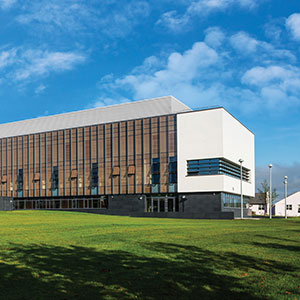
University of Galway has earned international recognition as a research-led university with a commitment to top quality teaching across a range of key areas of expertise.
-
Research & Innovation

Research & Innovation
University of Galway’s vibrant research community take on some of the most pressing challenges of our times.
-
Business & Industry
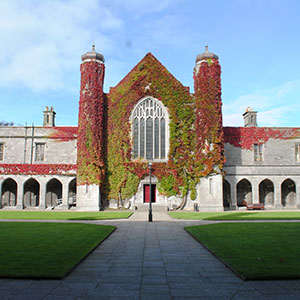
Guiding Breakthrough Research at University of Galway
We explore and facilitate commercial opportunities for the research community at University of Galway, as well as facilitating industry partnership.
-
Alumni & Friends

Alumni & Friends
There are 128,000 University of Galway alumni worldwide. Stay connected to your alumni community! Join our social networks and update your details online.
-
Community Engagement
Community Engagement
At University of Galway, we believe that the best learning takes place when you apply what you learn in a real world context. That's why many of our courses include work placements or community projects.
 Accessibility & Language
Energy Systems Engineering (MSc)

MSc (Energy Systems Engineering)
College of Science and Engineering- Title of Award
- Master of Science
- Course Code
- 1ESE1
- Average Intake
- 20
- Delivery
- On Campus
- NFQ
- Level 9
- Award Type
- Major
- Next Intake
- September 2026
- Duration
- 1 Year Full-Time
- ECTS Weighting
- 90 ECTS
Why Choose This Course?
Course Information
Who is this course for?
The MSc in Energy Systems Engineering empowers students with comprehensive knowledge and hands-on expertise in energy systems, blending foundational principles with emerging innovations. The programme explores key themes such as green and sustainable energy, energy-efficient technologies, and the integration of digital and AI-driven solutions.
What will I study?
The course comprises four main areas of study:
Project Thesis (30 ECTS)
Undertake an independent research and development project on a relevant engineering topic, addressing the rapid growth of the energy sector and the global transition to clean, sustainable energy.
Specialist Subjects
Gain in-depth knowledge in energy technologies, including energy generation, distribution and storage, green/sustainable systems, and energy-efficient innovations.
Advanced Technical Topics
Explore cutting-edge subjects such as composite materials, modelling and simulation, and digital technologies.
Industry Leadership
Develop professional and leadership skills through modules in economics and policy, life-cycle analysis, management, planning, and law.
Credits and Assessment
Students complete 90 ECTS in total — with 60 ECTS of core modules (including the project thesis) and 30 ECTS of optional modules. Assessment methods include written exams, assignments, mini-projects, and the year-long 30 ECTS individual research project.
Curriculum Information
Curriculum information relates to the current academic year (in most cases).Course and module offerings and details may be subject to change.
Glossary of Terms
- Credits
- You must earn a defined number of credits (aka ECTS) to complete each year of your course. You do this by taking all of its required modules as well as the correct number of optional modules to obtain that year's total number of credits.
- Module
- An examinable portion of a subject or course, for which you attend lectures and/or tutorials and carry out assignments. E.g. Algebra and Calculus could be modules within the subject Mathematics. Each module has a unique module code eg. MA140.
- Subject
- Some courses allow you to choose subjects, where related modules are grouped together. Subjects have their own required number of credits, so you must take all that subject's required modules and may also need to obtain the remainder of the subject's total credits by choosing from its available optional modules.
- Optional
- A module you may choose to study.
- Required
- A module that you must study if you choose this course (or subject).
- Required Core Subject
- A subject you must study because it's integral to that course.
- Semester
- Most courses have 2 semesters (aka terms) per year, so a three-year course will have six semesters in total. For clarity, this page will refer to the first semester of year 2 as 'Semester 3'.
Year 1 (90 Credits)
OptionalCT561: Systems Modelling and Simulation - 5 Credits - Semester 1OptionalEE6102: Power Systems - 5 Credits - Semester 1
OptionalEE5103: Digital Control Systems for Automation and Robotics (Level 9) - 5 Credits - Semester 1
OptionalME5113: Advanced Wind Energy Engineering and Design - 5 Credits - Semester 1
OptionalMG5155: Sustainability Measurement: Introduction to Life Cycle Management and Assessment - 5 Credits - Semester 1
OptionalME5115: Composite Materials - 5 Credits - Semester 1
OptionalEE4104: Machine Learning and Artificial Intelligence for Engineering Applications - 5 Credits - Semester 1
OptionalEOS6101: Global Change - 5 Credits - Semester 1
OptionalLW361: Planning And Law I - 5 Credits - Semester 1
OptionalCE464: Design of Sustainable Environmental Systems I - 5 Credits - Semester 1
OptionalME432: Technology Innovation & Entrepreneurship - 5 Credits - Semester 1
OptionalAY872: Financial Management I - 5 Credits - Semester 1
OptionalCT5200: Fundamentals of Python Programming - 5 Credits - Semester 1
OptionalEE5127: Internet of Things Systems Design - 5 Credits - Semester 1
RequiredME5118: MSc Energy Systems Engineering Capstone Project - 30 Credits - Semester 1
RequiredEG5101: Advanced Energy Systems Engineering - 5 Credits - Semester 1
RequiredCE5100: Sustainable Energy - 5 Credits - Semester 1
RequiredME521: Research Methods for Engineers - 5 Credits - Semester 1
OptionalEG5108: Green Hydrogen Technology, Design and Analysis - 5 Credits - Semester 2
OptionalME426: Turbomachines and Advanced Fluid Dynamics - 5 Credits - Semester 2
OptionalCE6113: Energy in Buildings - 5 Credits - Semester 2
RequiredEC5102: Renewable Energy Economics and Policy - 10 Credits - Semester 2
RequiredCT549: SmartGrid - 5 Credits - Semester 2
RequiredCE6113: Energy in Buildings - 5 Credits - Semester 2
- Multidisciplinary Energy Expertise
Designed for engineers from various backgrounds, the programme provides full-spectrum knowledge across power generation, energy conversion, storage, and sustainable systems—bridging traditional engineering with modern energy challenges. - Real-World Research and Innovation
Students complete a 30 ECTS independent research thesis, tackling real engineering and sustainability problems. This hands-on experience develops innovation, critical thinking, and technical excellence for the evolving energy sector.
- Career-Ready Skills and Employability
Graduates are equipped for careers in energy design, management, consultancy, and policy, or for further research and teaching roles. Transferable skills in project management, digital and AI tools, sustainability, and communication make them highly sought after by employers.
- Leadership for a Sustainable Future
The programme nurtures future leaders who understand not only the technical side of energy systems but also the economic, policy, and environmental dimensions—empowering graduates to shape the clean energy transition and influence global sustainability goals.
Graduates of the MSc in Energy Systems Engineering are prepared for diverse and rewarding careers across the global energy sector, research, and policy development. The programme develops both the technical and professional skills required to lead in the clean energy transition.
Energy Industry
Graduates can pursue roles in design, procurement, construction, testing, management, and consultancy across all areas of energy systems — including power generation, transmission and distribution, energy conversion and storage, renewable energy, mobility, and built-environment energy efficiency.
Research and Education
Opportunities also exist in academic and industrial research focused on green and sustainable energy technologies, energy storage techniques, climate change mitigation, and the application of digital and AI-based solutions to energy challenges
Authorities and Governing Bodies
Graduates may contribute to public sector organisations and regulatory authorities, supporting the development of energy policies, environmental regulations, and sustainability strategies at local, national, or international levels.
Because it is a new programme, starting in 2026-2027, it has not been accredited by Engineers Ireland yet. The School of Engineering of University of Galway aims to get it accredited by Engineers Ireland as soon as it is allowed by Engineers Ireland according to related guidelines.
Dr. Pouyan Ghabezi
https://research.universityofgalway.ie/en/persons/pouyan-ghabezi/
Prof. Rory Monaghan
https://www.universityofgalway.ie/therme/people/rory/
Dr. Stephen Nash
https://research.universityofgalway.ie/en/persons/stephen-nash/
Prof. Maeve Duffy
https://research.universityofgalway.ie/en/persons/maeve-duffy/
Prof. Kathryn Cormican
https://research.universityofgalway.ie/en/persons/kathryn-cormican/
Dr. Marcus Keane
https://www.universityofgalway.ie/iruse/people/drmarcusmkeane/
On the MSc in Energy Systems Engineering, you’ll learn by doing — combining theory, innovation, and hands-on experience to develop the skills needed to lead the global energy transition. The programme gives you a full-spectrum understanding of energy systems while exploring cutting-edge topics such as green and sustainable energy, energy-efficient technologies, and the use of digital and AI tools in engineering.
You’ll learn through an exciting mix of interactive lectures, laboratory sessions, tutorials, group projects, and independent research. From day one, you’ll apply your engineering knowledge to real-world energy challenges, guided by experts who are shaping the future of sustainable technology.
The course is built around four key areas of learning:
Project Thesis (30 ECTS): You’ll carry out a year-long independent research project on an energy-related topic of your choice — developing original solutions that support global clean energy goals.
Specialist Subjects: Deepen your expertise in areas such as energy generation, storage, and distribution, renewable systems, and energy efficiency.
Advanced Technical Topics: Explore the latest developments in composite materials, simulation and modelling, and digital engineering technologies.
Industry Leadership: Build essential professional skills in economics, policy, life-cycle analysis, management, and law — preparing you to lead teams and drive innovation.
You’ll be assessed through exams, projects, reports, and presentations, completing 90 ECTS of learning with both core and optional modules.
By the end of the programme, you’ll graduate with the technical expertise, research confidence, and leadership skills to create real impact in the fast-growing sustainable energy sector.
Course queries:
energyeng@universityofgalway.ie
Programme Director(s):
Dr. Mingming Tong
mingming.tong@universityofgalway.ie
University of Galway recognises that knowledge and skills can be acquired from a range of learning experiences. This is in line with the National Framework of Qualifications (NFQ) goals which aim to recognise all learning achievements by supporting the development of alternative pathways to qualifications (or awards) and by facilitating the recognition of prior learning (RPL).
Transferable Skills Employers Value
Students graduate with a strong foundation in project management, policy and law, research methods, life cycle analysis, and sustainability. The programme also enhances key professional skills such as communication, teamwork, financial management, IT proficiency, and the use of AI tools, ensuring employability across a wide range of sectors.
Accreditations & Awards
Meet our Employers
Entry Requirements and Fees
Minimum Entry Requirements
Second Class Honours (H2.1) in a Level 8 (bachelor’s or equivalent) engineering degree in a related discipline, with substantial elements of such as energy, mechanical, electrical or civil engineering, from a recognised university or third-level college. English Language Requirements of University of Galway apply.
English Language Entry Requirements
For applicants whose first language is not English, an English language proficiency IELTS score of 6.5 is required with no less than 6.0 in any band.
More information on English language test equivalency is available here.
Supporting Documents
You will be required to provide supporting documentation as part of your application. You can check what supporting documents are required for this course here
You can apply online to the University of Galway application portal here
Please review the entry requirements set out in the section above.
You will be required to upload supporting documentation to your application electronically. See the section above on entry requirements for further information on the supporting documentation required for this course.
Closing Dates
For this programme, there is no specific closing date for receipt of applications. Applications will be accepted on a rolling basis and course quotes will be reviewed continuously throughout the application cycle.
Notes
- You will need an active email account to use the website and you'll be guided through the system, step by step, until you complete the online form.
Browse the FAQ section for further guidance.
Fees for Academic Year 2026/27
| Course Type | Year | EU Tuition | Student Contribution | Non-EU Tuition | Levy | Total Fee | Total EU Fee | Total Non-EU Fee |
|---|---|---|---|---|---|---|---|---|
| Masters Full Time | 1 | €8,900 | €28,500 | €140 | €9,040 | €28,640 |
For 26/27 entrants, where the course duration is greater than 1 year, there is an inflationary increase approved of 1.8% per annum for continuing years fees.
Postgraduate students in receipt of a SUSI grant – please note an F4 grant is where SUSI will pay €4,500 towards your tuition (2026/27). You will be liable for the remainder of the total fee. A P1 grant is where SUSI will pay tuition up to a maximum of €6,270. SUSI will not cover the student levy of €140.
Note to non-EU students: learn about the 24-month Stayback Visa here.
Postgraduate Excellence Scholarships
This scholarship is valued at €1,500 for EU students applying for full-time taught master's postgraduate courses. You will be eligible if:
- You have been accepted to a full-time taught master's course at University of Galway,
- You have attained a first-class honours (or equivalent) in a Level 8 primary degree.
An application for the scholarship scheme is required (separate to the application for a place on the programme). The application portal for 2026 is now open and available here. Applications will close on the 30th September 2026. Full details available here.
Global Scholarships
University of Galway offers a range of merit-based scholarships to students from a number of countries outside of the EU. See a full list of schemes currently available here.
Application Process
Students applying for full time postgraduate programmes from outside of the European Union (EU), You can apply online to the University of Galway application portal here
Our application portal opens on the 1st October each year for each the following September.
Further Information
Please visit the postgraduate admissions webpage for further information on closing dates, documentation requirements, application fees and the application process.
Why University of Galway?
World renowned research led university nestled in the vibrant heart of Galway city on Ireland's scenic West Coast.
Contact the College of Science and Engineering
University of Galway, University Road, Galway, Ireland, H91 TK33


Downloads
Meet Our Alumni
Advance your career in energy innovation
The Master of Science in Energy Systems Engineering is a 12-month, 90-ECTS programme designed for engineers from diverse disciplines. Combining lectures, labs, and a major research project, it equips students with the technical and practical skills to address real-world energy challenges in a dynamic, sustainable industry.