-
Courses
Courses
Choosing a course is one of the most important decisions you'll ever make! View our courses and see what our students and lecturers have to say about the courses you are interested in at the links below.
-
University Life
University Life
Each year more than 4,000 choose University of Galway as their University of choice. Find out what life at University of Galway is all about here.
-
About University of Galway
About University of Galway
Since 1845, University of Galway has been sharing the highest quality teaching and research with Ireland and the world. Find out what makes our University so special – from our distinguished history to the latest news and campus developments.
-
Colleges & Schools
Colleges & Schools
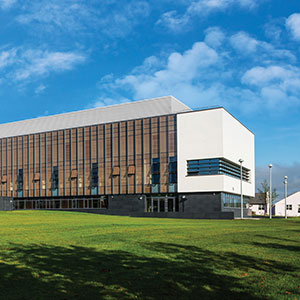
University of Galway has earned international recognition as a research-led university with a commitment to top quality teaching across a range of key areas of expertise.
-
Research & Innovation
Research & Innovation
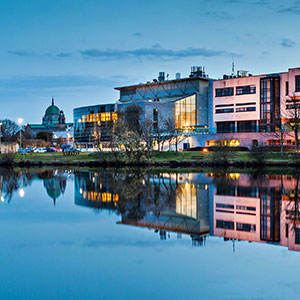
University of Galway’s vibrant research community take on some of the most pressing challenges of our times.
-
Business & Industry
Guiding Breakthrough Research at University of Galway
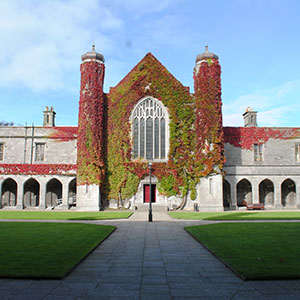
We explore and facilitate commercial opportunities for the research community at University of Galway, as well as facilitating industry partnership.
-
Alumni & Friends
Alumni & Friends
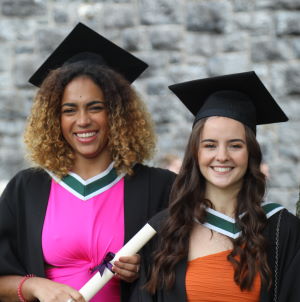
There are 128,000 University of Galway alumni worldwide. Stay connected to your alumni community! Join our social networks and update your details online.
-
Community Engagement
Community Engagement
At University of Galway, we believe that the best learning takes place when you apply what you learn in a real world context. That's why many of our courses include work placements or community projects.
 Accessibility & Language
Hanif Ibrahim
Biography
Hanif Ibrahim holds a BEng (Hons) in Mechanical Engineering, an MSc in Industrial Engineering, and a PhD in Industrial Engineering. His doctoral research focused on renewable-energy integration, sustainability and external-cost assessment, climate-compatible power systems, system dynamics, multi-criteria decision-making, and technology-readiness progression. His work has examined electricity demand and supply planning, sustainable power-generation mixes, renewable-energy transitions, and the environmental and economic implications of energy infrastructure in developing economies.
Hanif is currently a postdoctoral researcher on the Horizon Europe Restoration of deep-sea habitats
to rebuild European Seas (REDRESS) project. His research investigates the environmental, economic, and supply-chain dimensions of deep-sea and cold-water coral reef restoration. He leads supply-chain mapping for deep-sea restoration industries using NACE classifications and input–output analysis, identifying the economic sectors, organisations, material flows, service providers, equipment suppliers, vessels, and logistics activities that support restoration operations. He also contributes to EU-level economic impact modelling, cost analysis, and life-cycle assessment of restoration activities, examining impacts on output, gross value added, employment, and the development of a deep-sea restoration economy.
Research Interests
- Life-cycle assessment and environmental impact modelling
- Sustainable manufacturing and circular economy
- Additive manufacturing, CNC machining, CFRP processing, and aerospace manufacturing
- Renewable-energy systems, energy planning, and sustainability transitions
- Techno-economic analysis and environmental external-cost assessment
- Supply-chain mapping and NACE-sector analysis
- Input–output modelling and economic impact assessment
- Deep-sea and cold-water coral reef restoration
- Data-driven performance improvement, uncertainty analysis, and systems modelling
Publications and Other Outputs
Peer-reviewed articles
- Ibrahim, H. A., Harrison, N., Flanagan, T., & Mitchell, S. (2026). Life cycle assessment in aerospace manufacturing processes: A review. Cleaner Environmental Systems, 100503.
- Ibrahim, H. A., Harrison, N., Flanagan, T., & Mitchell, S. (2026). Life cycle and re-entry assessment of CNC-manufactured AlSi aerospace freeform mirrors. Cleaner Manufacturing, 100008.
- Ibrahim, H. A., & Thopil, G. A. (2025). Life cycle external cost assessment of an onshore wind farm in South Africa. Applied Energy, 388, 125708.
- Ibrahim, H. A., & Thopil, G. A. (2025). Life cycle assessment of external impacts and external costs of a potential offshore wind farm off the Southern African coast. Energy, 138382.
- Ibrahim, H. A., Ayomoh, M. K., Bansal, R. C., Gitau, M. N., Yadavalli, V. S. S., & Naidoo, R. (2023). Sustainability of power generation for developing economies: A systematic review of power sources mix. Energy Strategy Reviews, 47, 101085.
- Ibrahim, H. A., & Ayomoh, M. K. (2022). Optimum predictive modelling for a sustainable power supply mix: A case of the Nigerian power system. Energy Strategy Reviews, 44, 100962.
- Ibrahim, H. A., & Ayomoh, M. K. (2022). Identification and prioritization of factors affecting the transition to renewables in developing economies. Energy Reports, 8, 94–104.
- Ibrahim, H. A., & Kirkil, G. (2018). Electricity demand and supply scenario analysis for Nigeria using long-range energy alternatives planning. Journal of Scientific Research and Reports, 19(2), 1–12.
Conference proceedings
- Ibrahim, H. A., Harrison, N., Flanagan, T., Jennings, A., Mundy, S., Willis, G., & Mitchell, S. (2026). Life cycle assessment of CNC machining for freeform mirrors. Procedia CIRP, 140, 108–113.
- Ibrahim, H. A., & Thopil, G. A. (2024). Externality assessment of an onshore wind farm. International Association for the Management of Technology Conference, 127–133.
- Ibrahim, H. A., & Ayomoh, M. K. (2021). Identification and prioritisation of electricity driving factors. IEEE Asia-Pacific Conference on Computer Science and Data Engineering, 1–6.