-
Courses
Courses
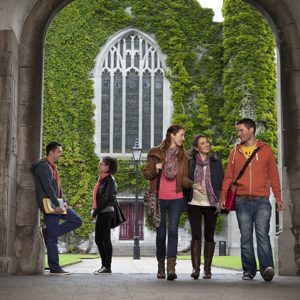
Choosing a course is one of the most important decisions you'll ever make! View our courses and see what our students and lecturers have to say about the courses you are interested in at the links below.
-
University Life

University Life
Each year more than 4,000 choose University of Galway as their University of choice. Find out what life at University of Galway is all about here.
-
About University of Galway
About University of Galway
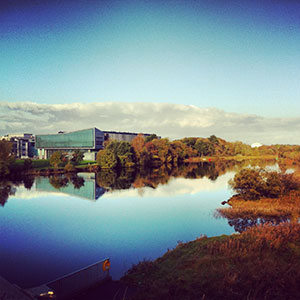
Since 1845, University of Galway has been sharing the highest quality teaching and research with Ireland and the world. Find out what makes our University so special – from our distinguished history to the latest news and campus developments.
-
Colleges & Schools
Colleges & Schools
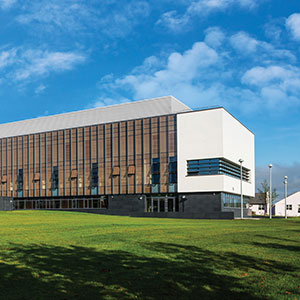
University of Galway has earned international recognition as a research-led university with a commitment to top quality teaching across a range of key areas of expertise.
-
Research & Innovation
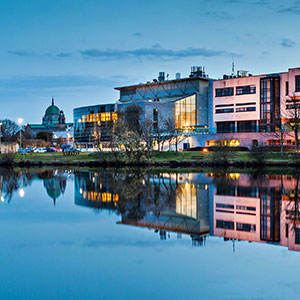
Research & Innovation
University of Galway’s vibrant research community take on some of the most pressing challenges of our times.
-
Business & Industry
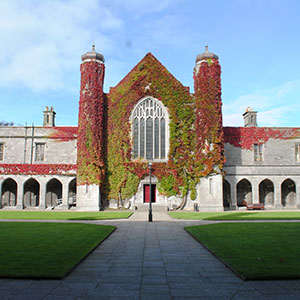
Guiding Breakthrough Research at University of Galway
We explore and facilitate commercial opportunities for the research community at University of Galway, as well as facilitating industry partnership.
-
Alumni & Friends
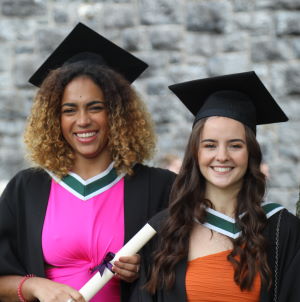
Alumni & Friends
There are 128,000 University of Galway alumni worldwide. Stay connected to your alumni community! Join our social networks and update your details online.
-
Community Engagement
Community Engagement
At University of Galway, we believe that the best learning takes place when you apply what you learn in a real world context. That's why many of our courses include work placements or community projects.
 Accessibility & Language
August
Monday, 31 August 2026
Ireland's first dedicated national rural seminar series enters a new phase as a joint initiative, supported by the Department of Rural and Community Development and the Gaeltacht University of Galway and Atlantic Technological University (ATU) have joined forces to revive Rural Voices – a nationwide seminar series bringing together research, policy and practice to explore the issues shaping rural and regional development. Supported by the Department of Rural and Community Development and the Gaeltacht, the monthly series provides a platform for researchers, policymakers and rural stakeholders to share research, exchange ideas and contribute to rural development thinking. The relaunch marks a new chapter for the series, which originally ran from January 2022 to May 2025, and was established as Ireland's first dedicated national rural seminar initiative. The new series was formally launched by University of Galway President Professor David Burns and President of Atlantic Technological University (ATU) Dr Orla Flynn at an event chaired and organised by the series' co-organisers, Professor Maura Farrell of the School of Geography, Archaeology and Irish Studies at University of Galway, and Dr Shane Conway, Research Coordinator at ATU. Professor Maura Farrell, University of Galway, said: "The Rural Voices seminar series connects rural development practitioners and those working in agriculture with key research they wouldn't otherwise access, and gives policymakers a direct line to recognised research and practice in rural development and farming, helping them make evidence-based decisions." Dr Shane Conway, ATU, said: “Rural Voices allows us to explore the many different issues shaping rural life from regional, national, European and international perspectives. It is also a practical example of how we can communicate and share research more widely, making it visible, understandable and relevant, while creating opportunities for rural stakeholders to connect and exchange ideas.” The first seminar under the new joint initiative will take place on September 30th, with John Daly, Economist with the Northern and Western Regional Assembly. Rural Voices provides a monthly, open platform for academics, policymakers and rural stakeholders to come together to discuss rural issues, share research and contribute to rural development thinking at national level. The series grew from the Higher Education and Research Network for Rural Development, established as a commitment under Our Rural Future, Ireland's national rural development policy for 2021 to 2025. The network brings together academics from 16 higher education institutions and three research institutes nationally. The seminars are open to the public, policymakers and rural stakeholders at home and from overseas. The renewed partnership brings together research, practitioner and stakeholder networks across the West and North-West, strengthening connections between research, policy and practice on rural and regional development while maintaining the series' national focus. The core structure and ethos of Rural Voices remains unchanged. The series will continue as monthly online seminars combining policy, research and practice-based perspectives, open to all sectors, and will continue to operate on a self-funded basis, with the Department of Rural and Community Development and the Gaeltacht providing strategic support and ensuring alignment with national rural development priorities. The seminars will take place on the last Wednesday of every month from 3 to 4pm. Ends
Friday, 28 August 2026
University of Galway Professor receives prestigious European Society of Cardiology President’s Award
Professor David Allan Wood honoured for lifetime contribution to cardiovascular prevention as ESC marks 30 years of EUROASPIRE Professor David Allan Wood, Honorary Professor of Preventive Cardiology at University of Galway and Director of Science, Strategy and Implementation at the National Institute for Prevention and Cardiovascular Health (NIPC), has received the prestigious European Society of Cardiology (ESC) President’s Award. Professor Wood received the award from ESC President Professor Thomas F. Lüscher during the Opening Ceremony of ESC Congress 2026 in Munich on Friday, 28 August. The award recognises Professor Wood’s exceptional contribution to cardiovascular medicine and a career spanning more than three decades dedicated to advancing cardiovascular disease prevention through research, clinical guidelines, education, policy and implementation. The recognition is particularly timely as ESC Congress 2026 also marks the 30th anniversary of EUROASPIRE, the landmark European programme initiated by Professor Wood to evaluate how effectively evidence-based cardiovascular prevention is implemented in everyday clinical practice. Successive EUROASPIRE surveys have provided a unique picture of cardiovascular prevention and risk-factor management across Europe. The latest programme spans 27 European countries, generating contemporary evidence on the implementation of prevention and rehabilitation in patients with cardiovascular disease. A pioneer of preventive cardiology Professor Wood has contributed to international cardiovascular prevention policy and guidelines since the first ESC guideline on the prevention of coronary heart disease in 1994, with leadership roles across the European Society of Cardiology, World Heart Federation and World Health Organization. He was founder and President of the European Association for Cardiovascular Prevention and Rehabilitation, served on the ESC Board and as Secretary/Treasurer, and subsequently became President of the World Heart Federation. He also founded the European Journal of Cardiovascular Prevention and Rehabilitation and served as its first Joint Editor-in-Chief. From Imperial College London to Galway The National Institute for Prevention and Cardiovascular Health (NIPC) was co-founded by University of Galway and Croí Heart & Stroke Charity in 2014 to build dedicated expertise in cardiovascular prevention. Professor Wood subsequently moved his cardiovascular prevention research group from Imperial College London to NIPC at University of Galway, bringing an established international research programme and network. Today, his primary research leadership role is as Director of Science, Strategy and Implementation at NIPC, alongside his appointment as Honorary Professor of Preventive Cardiology at University of Galway. He remains Emeritus Professor of Cardiology at the National Heart and Lung Institute, Imperial College London. Among his most significant contributions is the establishment of EUROASPIRE, the first European registry programme focused on cardiovascular prevention and implementation of prevention guidelines in clinical practice. Thirty years later, the programme continues through NIPC, with the latest results being presented at ESC Congress 2026. Professor Wood also led the EUROACTION trials, evaluating nurse-led multidisciplinary approaches to primary and secondary cardiovascular prevention across Europe. Professor David Wood said: “It is an enormous honour to receive the President’s Award from the European Society of Cardiology, and particularly meaningful to receive it as we celebrate 30 years of EUROASPIRE. When we began EUROASPIRE, our aim was simple: to understand whether the evidence and guidelines we were developing for cardiovascular prevention were reaching patients in everyday clinical practice. Three decades later, that question remains as important as ever. EUROASPIRE has become an extraordinary European collaboration, and I regard this award as recognition of all those who have contributed to that work across the ESC, NIPC, University of Galway, Imperial College London and our many partner centres across Europe.” Dr Sandra Ganly, Chief Executive Officer of NIPC, said: “Professor Wood’s contribution to cardiovascular prevention has been exceptional. Through EUROASPIRE and three decades of influential publications, his work has exposed the gap between guidelines and practice, shaped European prevention policy and improved cardiovascular care. His decision to bring his research programme to NIPC at University of Galway was pivotal for cardiovascular prevention research in Ireland, and we are privileged to build on his scientific leadership and international legacy. The ESC President’s Award is richly deserved recognition of an extraordinary career and a proud moment for Professor Wood, NIPC, Croí and University of Galway.” President David Burn, University of Galway, said: “On behalf of our research community at University of Galway, I congratulate Professor Wood on this honour. His work, his endeavours and his leadership on preventive cardiology and patient care has made a truly remarkable difference to huge numbers of people worldwide. We are proud to have created a home for that vision, alongside Croí, through the National Institute for Prevention and Cardiovascular Health and we look forward to the next generation of clinical and research excellence driven by the innovative outlook of Professor Wood and his team.” Professor Fidelma Dunne, Director of the Institute for Clinical Trials at University of Galway, said: “Professor Wood’s career is an outstanding example of how rigorous research can shape clinical practice and improve health outcomes at scale. His work through EUROASPIRE has generated invaluable evidence about the implementation of cardiovascular prevention in real-world settings, while also demonstrating the importance of international collaboration in translating research into meaningful change for patients. His leadership has made a lasting contribution to preventive cardiology and provides an important model for how research excellence can drive better healthcare.” Professor Wood’s award comes during a significant ESC Congress for NIPC at University of Galway, with the latest results from NIPC-led cardiovascular prevention research also being presented in Munich. The award adds to previous honours for Professor Wood, including a Platinum Clinical Excellence Award for services to the NHS, the Mackenzie Medal from the British Cardiovascular Society, and the European Association for Preventive Cardiology Medal. Ends
Wednesday, 26 August 2026
Tá níos mó ná 4,000 tairiscint déanta ag Ollscoil na Gaillimhe do mhic léinn fochéime nua don bhliain acadúil 2026/27. Roinn Ollscoil na Gaillimhe teachtaireacht comhghairdis le rang na hArdteistiméireachta 2026 inniu as ucht a gcuid iarrachtaí agus a bhfuil bainte amach acu agus na tairiscintí do bhabhta 1 CAO á n-eisiúint. Dúirt Uachtarán Ollscoil na Gaillimhe, an tOllamh David Burn: “Lá cinniúnach atá ann do gach mac léinn a bhfuil an chéad chéim eile ina gcuid oideachais á beartú acu. Guím gach rath orthu thar ceann Ollscoil na Gaillimhe, agus tá an-áthas orainn fáilte a chur rompu siúd a bhfuil sé d’ádh orthu freastal ar an ollscoil anseo. Tá ardmholadh tuillte agaibh as bhur gcuid éachtaí acadúla, agus as na torthaí Ardteistiméireachta atá faighte agaibh, agus tá súil agam go n-éireoidh go geal libh agus sibh ag cur tús leis an tréimhse spreagúil nua seo. “Seal foghlama i do shaol is ea an Ollscolaíocht, seans chun dúshlán a chur romhat féin, cairde nua a dhéanamh agus deiseanna nua a aimsiú. Táimid ag súil le tacú lenár mic léinn nua a fhad is a bheidh siad in éineacht linn, oideachas agus deiseanna den chéad scoth a chur ar fáil dóibh, chomh maith leis an eispéireas mac léinn agus an campas is fearr sa tír. “Ba mhaith liom aitheantas a thabhairt freisin do chomhghleacaithe san Ollscoil trí chéile a bhfuil an oiread sin oibre ar siúl acu go ciúin chun tacú le mic léinn agus lena dteaghlaigh, idir thairiscintí agus seisiúin eolais a ullmhú, mar aon le fáilte chroíúil a chur roimh gach mac léinn nua in Ollscoil na Gaillimhe.” Ní raibh líon na n-iarratas CAO riamh chomh hard is atá sé i mbliana, agus tá Ollscoil na Gaillimhe ag súil go mbeidh breis agus 3,800 mac léinn ag clárú agus ag cur tús lena gcuid staidéir fochéime i mí Mheán Fómhair. Tá roinnt treochtaí le feiceáil i ndáil le cláir Ollscoil na Gaillimhe i mBabhta 1, lena n-áirítear: Cógaisíocht (MPharm) - tá an dara cohórt mac léinn le tosú i mí Mheán Fómhair ar an gcúrsa fochéime 5 bliana in Ollscoil na Gaillimhe agus líon na n-áiteanna ardaithe anois ó 40 áit in 2025 go 75, ar freagra an t-ardú sin ar an ngá do chógaiseoirí, agus an t-éileamh atá ann don ghairm sin. Clár nua do 2026 is ea an BSc (Zó-eolaíocht) ar 473 pointe, agus muid ag súil go gcláróidh isteach is amach le 40 mac léinn sa chéad chohórt. D’ardaigh na pointí do chúrsaí Gaeilge, cosúil leis an BComm (Gaeilge) agus an BA (Gaeilge agus Léann an Aistriúcháin), agus 488 agus 405 pointe, faoi seach, ag teastáil do na cúrsaí sin. Bhí ardú sna pointí i gcás 25 cúrsa in Ollscoil na Gaillimhe i mbliana, rud a fhágann go bhfuil 28 cúrsa anois ann a dteastaíonn níos mó ná 500 pointe chun áit a fháil orthu. Fanann gach clár Innealtóireachta ag 500 pointe nó os a chionn, ar léiriú é sin ar a thábhachtaí atá earnálacha an réigiúin cosúil le teicneolaíocht leighis, chomh maith le deiseanna gairme láidre do chéimithe. Tá éileamh níos mó ar chláir sna healaíona cruthaitheacha, agus tá ardú 44 pointe ann go 404 don BA (Léann na Drámaíochta, na hAmharclannaíochta agus an Taibhléirithe), agus ardú 12 pointe sa BA (Ceol) go 413. 455 pointe a theastaíonn chun áit a fháil ar an bpríomhchlár eolaíochta BSc (GY301), ar ardú 15 pointe é sin ar phointí na bliana seo caite, agus d’ardaigh na pointí freisin don Domhaneolaíocht agus Aigéaneolaíocht, Biteicneolaíocht, Muireolaíocht, agus Matamaitic Airgeadais & Eacnamaíocht. Tá ardú leanúnach le feiceáil san Altranas agus Cnáimhseachas, agus d’ardaigh na pointí don Bhaitsiléir Eolaíochta Cnáimhseachais ó 429 go 498 pointe. Críoch
Wednesday, 26 August 2026
University of Galway has made more than 4,000 offers to new undergraduate students for the 2026/27 academic year. With Round 1 CAO offers issued today, University of Galway shared a message of congratulations to the Leaving Certificate class of 2026 for their efforts and achievements. Professor David Burn, President of University of Galway, said: “Today is a milestone for all students taking the next step in their education. On behalf of University of Galway, I wish them all well and for those who are lucky enough to come to our university, we are delighted to welcome them. You deserve huge congratulations on your achievements at school and in the Leaving Certificate and I wish you every success as you begin this exciting new chapter. “University is a time to learn, to challenge yourself, to make new friends and to discover new opportunities. We look forward to supporting our new students throughout their time with us and providing them with an excellent education and opportunities and the very best student experience and campus in the country. “I would also like to acknowledge colleagues across the University who do so much work behind the scenes to support students and their families, from preparing offers and orientation and the warm welcome that all our new students get at University of Galway.” With another year of record levels of applications to the CAO, University of Galway expects more than 3,800 students to register to begin their undergraduate studies in September. Round 1 offers show some trends across University of Galway’s programmes, including: Pharmacy (MPharm) - the 5-year undergrad course at University of Galway is due to have its second intake of students in September and has expanded to 75 places, up from 40 in 2025, responding to the need for qualified pharmacists and the demand for the career. BSc (Zoology) is a new programme for 2026, with points at 473 and about 40 students expected to enrol in the first intake. Courses offering Gaeilge experienced an increase in points, such as BComm (Gaeilge) and BA (Gaeilge agus Leann Aistriúcháin), cutting off at 488 and 405 respectively 25 courses at University of Galway saw points increases this year, bringing the number of courses cutting off over 500 points to 28. All Engineering programmes remain above 500 points, emphasising the significance of sectors such as medtech in the region and strong career opportunities for graduates. Programmes in the creative arts saw increased demand with the BA (Drama, Theatre and Performance) increasing by 44 points to 404 and the BA (Music) up by 12 points to 413. The flagship science degree, BSc (GY301) cut off at 455, up 15 on last year and increases were also seen in Earth and Ocean Sciences, Biotechnology, Marine Science and Financial Mathematics & Economics. Nursing and Midwifery saw continued growth, in particular the Bachelor of Midwifery Science increasing from 429 to 498 points. Ends
Tuesday, 18 August 2026
University of Galway is part of a new European Union research project that will advance sustainable ruminant agriculture through microbiome science. Rumen-Innovate is a consortium including 11 universities and research bodies as well as farming organisations and industry in eight countries across Europe to support the training and development of the next generation of ruminant microbiome scientists. With EU-funding of €4.8 million, the project’s focus is on cleaner air, more sustainably produced food, and healthier animals. Dr Sinead Waters, lecturer in the School of Biological and Chemical Sciences in University of Galway, said: “Our participation in Rumen-Innovate provides University of Galway and our Ryan Institute with the opportunity to contribute to novel transformative research at the intersection of microbiome science, animal production, and climate action. Importantly, this collaboration will produce highly skilled researchers and technologies with real-world impact for the livestock sector.” The project is funded under the Marie Skłodowska-Curie Doctoral Network as part of Horizon Europe. University of Galway will host two doctoral students in ruminant microbiome science to advance the generation of greenhouse gas mitigation technologies to improve sustainable agriculture. Ruminant microbiome scientists study the complex communities of bacteria, archaea, protozoa, and fungi living inside the digestive tracts of animals like cows and sheep. Their research focuses on improving animal health, boosting feed efficiency, and reducing agricultural methane emissions. Cattle and sheep produce a significant amount of methane, a greenhouse gas that is far more potent than CO₂ in the short term. The network addresses critical global challenges facing the livestock sector: feeding a growing population sustainably, reducing greenhouse gas emissions from ruminant animals, and improving animal health and production efficiency. The project is funded under the Horizon Europe Marie Skłodowska-Curie Actions programme (Grant Agreement ID: 101311612). Full project details are available on the EU CORDIS database: https://cordis.europa.eu/project/id/101311612 Ends
Monday, 17 August 2026
Landmark international gathering in Galway to shape the future of EU and Atlantic Ocean Research The Marine Institute, University of Galway, and Atlantic Technological University, with the support of the Department of Further and Higher Education, Research, Innovation and Science, today unveiled the programme and opened pre-registration for Atlantic Summit Galway 2026. Taking place on 8-9 October 2026 at University of Galway, the Summit is an Associated Event of Ireland's Presidency of the Council of the European Union 2026. Atlantic Summit Galway 2026 will bring together Europe’s leading ocean strategists, researchers, policymakers, innovators, and communities to shape the future of the Atlantic and Europe’s ocean research agenda. Under the theme "Advancing Europe's Ocean Research, Innovation and Skills Agenda during Ireland's EU Presidency", the Summit will provide a unique forum for dialogue, collaboration, and strategic exchange at a pivotal moment for European ocean policy and international cooperation. The Atlantic connects us, it drives our economy, it shapes our climate and it holds enormous potential for Europe’s future. At a time of growing environmental, economic and geopolitical challenges impacting the Atlantic, the Summit will focus on several strategic objectives, including: Defining priorities and raising the ambition for the next chapter of Atlantic Ocean research and innovation; Advancing knowledge-based implementation of the EU Ocean Pact and Ocean Act; Accelerating innovation to strengthen Europe's competitiveness and global leadership in ocean science and technology; Addressing future capacity, training and skills requirements to support sustainable blue economy development. The Summit will convene senior representatives from the European Commission, national governments, research organisations, industry, regional authorities, civil society and international ocean initiatives, creating a unique opportunity to strengthen Atlantic cooperation, foster new partnerships and help shape future priorities for ocean research, innovation, and governance. At a time when ocean challenges increasingly transcend national boundaries, the Summit will provide a vital platform for collaboration across disciplines, sectors and countries, enabling shared solutions to shared challenges. Dr Rick Officer, CEO of the Marine Institute, said: “Ireland’s Presidency of the EU Council falls during the second half of the UN Decade of Ocean Science for Sustainable Development. For many years Ireland has played a leading role in advancing Atlantic Ocean research and we are proud to make Galway the location yet again to set future ocean research and policy priorities. The Summit will help build the partnerships and solutions needed to address shared challenges for a healthy, resilient, and productive Atlantic Ocean." Professor David Burn, President of University of Galway, said: "As Europe looks to address increasingly complex ocean challenges, robust scientific knowledge and evidence-based decision-making have never been more important. Atlantic Summit Galway 2026 will provide a vital platform for connecting research, policy and practice, helping to inform future priorities for ocean sustainability, resilience, and innovation." Dr Orla Flynn, President of Atlantic Technological University, said: "The Atlantic region has enormous potential to drive sustainable economic growth, innovation, and societal benefit. Realising that potential will require investment in people, skills, and collaboration alongside research and technological advancement. Atlantic Summit Galway 2026 will bring together diverse expertise from across Europe and the wider Atlantic region to explore how we can build the talent, partnerships and solutions needed for a sustainable and competitive blue economy." Located on Europe's Atlantic seaboard, Galway is internationally recognised as a centre of excellence for marine and ocean science, research and innovation, making it an ideal location for this important gathering. The event represents a unique opportunity for ocean leaders to strengthen Atlantic cooperation and ensure that ocean policy remains at the forefront of Europe's competitiveness, sustainability, and resilience agenda. Over two days, participants will engage in a dynamic programme of keynote addresses, high-level policy dialogues, plenary discussions, and networking exchanges. The Summit will explore some of the most pressing opportunities and challenges facing Europe and the wider Atlantic region, including resilient coastal communities, the future of Atlantic economies, ocean observation and innovation, healthy and productive oceans, and the role of science diplomacy, governance and geopolitical change in shaping the future of the Atlantic. Reflecting the Summit's commitment to international cooperation and intergenerational engagement, the programme will also examine the future role of the All-Atlantic Ocean Research and Innovation Alliance as a model for ocean science diplomacy, partnership, and collaboration across the Atlantic basin. At a pivotal moment for Europe's ocean agenda, the insights and recommendations emerging from the Summit will contribute to implementation of the EU Ocean Pact and Ocean Act and help inform Europe's future ocean priorities. The summit will build ambition among European decision-makers and stakeholders for stronger and more targeted investment in ocean research and innovation under the next Multiannual Financial Framework (MFF) and the next Framework Programme for Research and Innovation (FP10). Pre-Register Now Atlantic Summit 2026 | Atlantic Summit 2026 Pre-registration is now invited from individuals and organisations seeking to contribute to discussions shaping Europe's ocean future. To ensure balanced representation across policy, research, industry and society, places will be allocated through an application process. Given the strong level of interest anticipated from across Europe and beyond, prospective participants are encouraged to submit their applications early. Ends
Monday, 17 August 2026
Imeacht idirnáisiúnta tábhachtach á reáchtáil i nGaillimh chun todhchaí an Taighde Aigéin AE agus Atlantaigh a mhúnlú Inniu d’fhógair Foras na Mara, Ollscoil na Gaillimhe, Ollscoil Teicneolaíochta an Atlantaigh, le tacaíocht ón Roinn Ardoideachais agus Breisoideachais, Taighde, Nuálaíochta agus Eolaíochta, an clár agus thug siad cead do dhaoine réamhchlárú do Chruinniú Mullaigh an Atlantaigh na Gaillimhe 2026. Beidh an t-imeacht ar siúl ar an 8-9 Deireadh Fómhair 2026 in Ollscoil na Gaillimhe agus is Imeacht Gaolmhar le hUachtaránacht na hÉireann ar Chomhairle an Aontais Eorpaigh 2026 é an Cruinniú Mullaigh. I láthair ag Cruinniú Mullaigh an Atlantaigh na Gaillimhe 2026 beidh straitéisithe, taighdeoirí, déantóirí beartais, nuálaithe agus pobail aigéin aitheanta a bheidh ag díriú ar thodhchaí chlár oibre taighde aigéin an Atlantaigh agus na hEorpa a mhúnlú. Bunaithe ar an téama "Clár Oibre Taighde, Nuálaíochta agus Scileanna Aigéin na hEorpa a Chur Chun Cinn i rith Uachtaránacht na hÉireann ar an AE", beidh an Cruinniú Mullaigh ag feidhmiú mar fhóram speisialta do phlé, comhoibriú agus malartú straitéiseach ag uair chinniúnach chomh fada is a bhaineann le beartas aigéin agus comhar idirnáisiúnta Eorpach. Cruthaíonn an tAtlantach nasc eadrainn ar fad, cuireann sé dlús lenár ngeilleagar, múnlaíonn sé ár n-aeráid agus baineann féidearthachtaí go leor leis chomh fada is a bhaineann le todhchaí na hEorpa. Ag tráth ina bhfuil níos mó dúshlán comhshaoil, eacnamaíoch agus geopholaitiúil le sárú, a bhfuil tionchar acu ar an Atlantach, i rith an Chruinnithe Mullaigh díreofar ar roinnt cuspóirí straitéiseacha lena n-áirítear: Tosaíochtaí a shonrú agus an uaillmhian a mhéadú don chéad chaibidil eile de thaighde agus nuálaíocht a bhaineann leis an Aigéan Atlantach; Dlús a chur le cur chun feidhme eolasbhunaithe an Chomhshocraithe Eorpaigh um an Aigéan agus an Ghnímh Eorpaigh um an Aigéan. Dlús a chur le nuálaíocht chun iomaíochas agus ceannaireacht dhomhanda na hEorpa i réimse na heolaíochta agus na teicneolaíochta aigéin a threisiú. Díriú ar cheanglais acmhainne, oiliúna agus scileanna a bheidh ann amach anseo chun tacú le forbairt inbhuanaithe an gheilleagair ghoirm. I láthair ag an gCruinniú Mullaigh beidh ionadaithe sinsearacha ón gCoimisiún Eorpach, rialtais náisiúnta, eagraíochtaí taighde, an tionscal, údaráis réigiúnacha, an tsochaí shibhialta agus tionscnaimh aigéin idirnáisiúnta, rud a chiallóidh go mbeidh deis ar leith ann chun comhar Atlantach a threisiú, comhpháirtíochtaí nua a bhunú agus tosaíochtaí a bheidh ann amach anseo a bhaineann le taighde, nuálaíocht agus rialachas aigéin a mhúnlú. Tráth a bhfuil dúshláin aigéin ag sárú teorainneacha náisiúnta, soláthróidh an Cruinniú Mullaigh ardán ríthábhachtach do chomhar i ndisciplíní, earnálacha agus tíortha difriúla, rud a thacóidh le réitigh roinnte ar dhúshláin roinnte a fhorbairt. Bhí an méid seo a leanas le rá ag An Dr Rick Officer, POF Fhoras na Mara: “Tá Uachtaránacht na hÉireann ar Chomhairle an AE ag tarlú i rith an dara leath de Dheich mBliana na Náisiún Aontaithe um an Eolaíocht Aigéin ar mhaithe leis an bhForbairt Inbhuanaithe. Tá ról ceannaireachta ag Éire le fada an lá chomh fada is a bhaineann le dlús a chur le taighde ar an Aigéan Atlantach agus tá áthas orainn go mbeidh an Cruinniú ar siul i nGaillimh arís, cruinniú a bhfuil sé mar aidhm leis tosaíochtaí taighde agus beartais aigéin na todhchaí a shocrú. Deis a bheidh sa Chruinniú Mullaigh chun cur leis na comhpháirtíochtaí agus réitigh atá ag teastáil chun déileáil le dúshláin roinnte ionas gur féidir linn a chinntiú go mbeidh an tAigéan Atlantach sláintiúil, athléimneach agus táirgiúil." Bhí an méid seo a leanas le rá ag an Ollamh David Burn, Uachtarán Ollscoil na Gaillimhe: "Ó tharla go bhfuil iarracht á déanamh ag an Eoraip déileáil le dúshláin aigéin atá ag éirí níos casta an t-am ar fad, tá níos mó tábhachta ag baint anois ná riamh le heolas eolaíochta stuama agus le cinnteoireacht atá bunaithe ar fhianaise. Is ardán a bheidh i gCruinniú Mullaigh an Atlantaigh na Gaillimhe 2026 chun taighde, beartas agus cleachtas a nascadh, a chabhróidh chun bonn eolais a chur ar fáil do thosaíochtaí a bheidh ann amach anseo i gcomhthéacs na hinbhuanaitheachta, na hathléimneachta agus na nuálaíochta aigéin." Bhí an méid seo a leanas le rá ag An Dr Orla Flynn, Uachtarán Ollscoil Teicneolaíochta an Atlantaigh: "Tá go leor féidearthachtaí ag baint le réigiún an Atlantaigh chomh fada is a bhaineann le dlús a chur le fás eacnamaíoch inbhuanaithe, nuálaíocht agus tairbhe shochaíoch. Ionas gur féidir tairbhe a bhaint as na féidearthachtaí sin beidh gá le hinfheistíocht i ndaoine, scileanna agus comhar mar aon le taighde agus forbairt theicneolaíoch. I láthair ag Cruinniú Mullaigh Atlantaigh na Gaillimhe 2026 beidh saineolaithe éagsúla as ar fud na hEorpa agus réigiún an Atlantaigh trí chéile chun scrúdú a dhéanamh ar an tslí is féidir linn cur leis an gcumas, na comhpháirtíochtaí agus na réitigh a bheidh ag teastáil chun tacú le geilleagar gorm inbhuanaithe agus iomaíoch." Suite ar bhord farraige Atlantach na hEorpa, tá cáil idirnáisiúnta ar Ghaillimh mar ionad bairr feabhais don eolaíocht, taighde agus nuálaíocht mhuirí agus aigéin, rud a chiallaíonn nach bhféadfaí áit níos fearr a roghnú chun an Cruinniú seo a eagrú inti. Is ionann an t-imeacht seo agus deis ar leith do cheannairí aigéin chun comhar Atlantach a threisiú agus a chinntiú go mbíonn beartas aigéin i gcroílár chlár iomaíochais, inbhuanaitheachta agus athléimneachta na hEorpa. Thar thréimhse dhá lá, beidh deis ag rannpháirtithe páirt a ghlacadh i gclár spéisiúil a bheidh bunaithe ar spreagaithisc, plé beartais ardleibhéil, plé iomlánach agus malartú líonraithe. I rith an Chruinnithe díreofar ar chuid de na deiseanna agus dúshláin is práinní atá le tabhairt faoi deara san Eoraip agus i réigiún an Atlantaigh go ginearálta, lena n-áirítear pobail chósta a bhfuil teacht aniar iontu, todhchaí gheilleagair an Atlantaigh, breathnóireacht agus nuálaíocht aigéin, aigéin shláintiúla agus tháirgiúla, agus ról na taidhleoireachta eolais, an rialachais agus an athraithe gheopholaitiúill i dtodhchaí an Atlantaigh a mhúnlú. Ag teacht le tiomantas an Chruinnithe Mullaigh do chomhar idirnáisiúnta agus do rannpháirtíocht idirghlúine, mar chuid den chlár déanfar scrúdú freisin ar ról Chomhghuaillíocht Taighde agus Nuálaíochta Aigéin Uile-Atlantaigh mar shamhail do thaidhleoireacht, comhpháirtíocht agus comhoibriú eolaíochta aigéin ar fud imchuach an Atlantaigh. Ag tréimhse chinniúnach chomh fada is a bhaineann le clár aigéin na hEorpa, cabhróidh an léargas agus na moltaí a dhéanfar i rith an Chruinnithe le cur chun feidhme an Chomhshocraithe Eorpaigh um an Aigéan agus an Ghnímh Eorpaigh um an Aigéan, agus cabhróidh siad freisin le bonn eolais a chur ar fáil do thosaíochtaí aigéin na hEorpa amach anseo. Spreagfaidh an Cruinniú Mullaigh uaillmhian chinnteoirí agus pháirtithe leasmhara Eorpacha ionas go ndéanfar infheistíocht níos láidre agus níos spriocdhírithe i dtaighde agus nuálaíocht aigéin faoin gcéad Chreat Airgeadais Ilbhliantúil (CAI) eile agus faoin gcéad Chlár Réime um Thaighde agus um Nuálaíocht (CR10) eile. Réamhchláraigh Anois Cruinniú Mullaigh an Atlantaigh 2026 | Cruinniú Mullaigh an Atlantaigh 2026 Is féidir le daoine agus le heagraíochtaí ar mian leo cur leis an bplé a bhfuil todhchaí aigéin na hEorpa á mhúnlú aige réamhchlárú anois. Chun ionadaíocht chothrom a chinntiú chomh fada is a bhaineann le beartas, taighde, tionscal agus sochaí, leithdháilfear áiteanna trí phróiseas iarratais. Bunaithe ar an leibhéal spéise a bhfuiltear ag súil leis ar fud na hEorpa agus in áiteanna eile níos faide i gcéin, moltar do rannpháirtithe a gcuid iarratas a chur isteach go luath. Críoch
Tuesday, 4 August 2026
Researchers have developed an implant that could deliver next generation therapies for ovarian cancer precisely where it is needed while simultaneously monitoring how the disease responds. The project was carried out by a team at CÚRAM, the Research Ireland Centre for Medical Devices based at University of Galway, along with the collaborators from the University of Minnesota, Massachusetts Institute of Technology (MIT) and the Wyss Institute. The research has been set out in the scientific journal Device. It showed how the team developed a flexible, porous implant which is designed to sit inside the peritoneal cavity - the space surrounding the abdominal organs in a woman’s body where ovarian cancer predominantly occurs. The device is designed to connect to an external port through the skin, so it can be replenished with therapeutic agents as often as needed, without requiring further surgery. Dr Aoibhín Sheedy, PhD graduate with CÚRAM at University of Galway and lead researcher on the project, said: "One of the most frustrating aspects of treating ovarian cancer is that we know localised delivery of therapy works better, but the tools we've had until now weren't built for the job. We designed this implant with ovarian cancer patients in mind. We wanted an implant that can deliver living cell therapies repeatedly, reliably, and with real precision to the tumour site." Ovarian cancer is often diagnosed at late stages, as symptoms such as bloating, pain and pelvic pressure are non-specific and can be overlooked. Treatment often involves surgery to remove as much of the tumour as possible, but currently targeted treatment and effective methods of detecting reoccurrence of the disease are impossible. There is a critical need for new therapeutic approaches for ovarian cancer. The implant is made from a flexible biomaterial that conforms naturally to the body's internal contours, its porous membrane allows therapeutic cargo to diffuse gently and evenly into the surrounding tissue, reducing the risk of mechanical complications. In preclinical studies, the implant remained fully functional for up to 70 days with zero implant-related complications and showed significantly greater control of the tumour over time, compared to conventional treatments. The team have designed this implant to deliver living cell therapies, the most challenging type of therapy to delivery, but it could be used to deliver a range of cell or non-cell based therapies. Dr Martin Felices, co-senior author Associate Professor in Medicine at the University of Minnesota, said: "The tricky part about working with novel therapies, such as immunotherapies, in the setting of ovarian cancer is that repeated delivery is done with outdated materials that are not designed for this setting. It is also very difficult to sample through these systems. The delivery system, created by Dr Dolan's laboratory, allows for safer repeated delivery of cellular and biologic therapies in the context of the peritoneal cavity. It also allows us to sample the effects of those therapies in the tumour microenvironment in real-time, which is extremely exciting." A key feature of the implant is its monitoring capability. By applying gentle suction through the same external port, a sample of fluid can be drawn from inside the peritoneal cavity during treatment, without any additional procedure. Associate Professor in Biomedical Engineering at University of Galway Dr Eimear Dolan, and co-lead on the research, said: "What excites us most is the two-way nature of this approach. It doesn't just deliver living cell therapies, it lets us create a picture of what's happening inside the peritoneal space. Clinicians could use this to track how the immune cells are performing, whether the tumour is responding, and then adapt treatment accordingly. That kind of real-time intelligence is something we've never had access to before in this setting." The researchers envision that the implant would be put in place during initial surgery that patients undergo to remove as much tumour tissue as possible, allowing it to then address any residual disease in the weeks and months that follow. The ultimate aim would be to leave the implant in long-term, to allow for local monitoring of disease recurrence and early retreatment if required. Professor Melissa Gellar, Professor of Gynecologic Oncology and Associate Director of the Clinical Research Masonic Cancer Centre at the University of Minnesota and co-lead on the research, said: “This work represents a shift in how we think about treating ovarian cancer, bringing therapy directly to the disease site while simultaneously learning from the tumour microenvironment in real time which provides important insight to guide precision care." The research also highlights the exciting possibilities of cross disciplinary research and while further studies are needed before this approach reaches clinical trials, the team of engineers and clinicians believe its versatile design could ultimately benefit patients with other peritoneal cancers, including gastric, colorectal, and pancreatic disease. The full paper is available at https://www.cell.com/device/fulltext/S2666-9986(26)00002-5 Ends
Featured Stories
Tuesday,
20
October
2026
Circular farming could help insulate Ireland’s farmers and taxpayers from global shocks
Monday,
19
October
2026
Four generations of women share a University of Galway connection
Monday,
19
October
2026