-
Courses

Courses
Choosing a course is one of the most important decisions you'll ever make! View our courses and see what our students and lecturers have to say about the courses you are interested in at the links below.
-
University Life

University Life
Each year more than 4,000 choose University of Galway as their University of choice. Find out what life at University of Galway is all about here.
-
About University of Galway

About University of Galway
Since 1845, University of Galway has been sharing the highest quality teaching and research with Ireland and the world. Find out what makes our University so special – from our distinguished history to the latest news and campus developments.
-
Colleges & Schools

Colleges & Schools
University of Galway has earned international recognition as a research-led university with a commitment to top quality teaching across a range of key areas of expertise.
-
Research & Innovation

Research & Innovation
University of Galway’s vibrant research community take on some of the most pressing challenges of our times.
-
Business & Industry
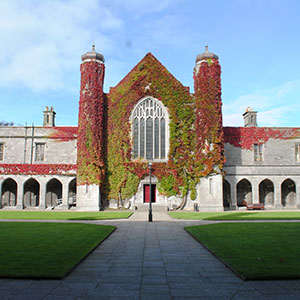
Guiding Breakthrough Research at University of Galway
We explore and facilitate commercial opportunities for the research community at University of Galway, as well as facilitating industry partnership.
-
Alumni & Friends

Alumni & Friends
There are 128,000 University of Galway alumni worldwide. Stay connected to your alumni community! Join our social networks and update your details online.
-
Community Engagement

Community Engagement
At University of Galway, we believe that the best learning takes place when you apply what you learn in a real world context. That's why many of our courses include work placements or community projects.
 Accessibility & Language
Tab 1 Content
Landmark Mexican Supreme Court ruling on enforced disappearance cites ICHR PhD Researcher

Feb
17
2026
Posted: 13:57 GMT
The Mexican Supreme Court (SCJN) has issued a significant judgment interpreting the General Law on Enforced Disappearance of Persons, Disappearances Committed by Individuals, and the National Missing Persons System (2017). The judgment project was prepared under the responsibility of Justice Arístides Rodrigo Guerrero García and elaborated by Edwin Antony Pazol Rodríguez and Monserrat Jacqueline Cámara Santos.
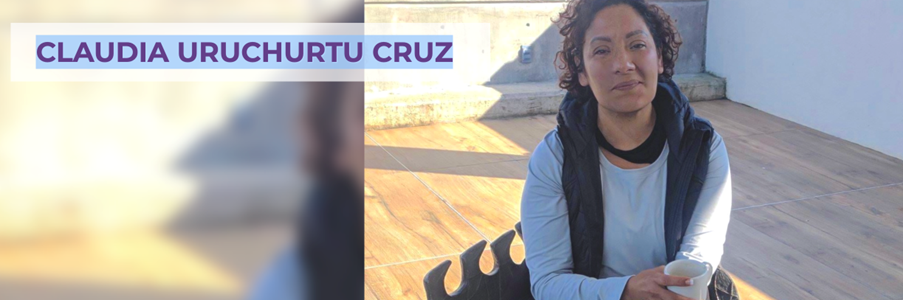
The case arose from a constitutional challenge concerning the scope of investigative and search obligations in the enforced disappearance of human rights defender Claudia Uruchurtu Cruz, represented by Instituto Mexicano de Derechos Humanos y Democracia. The petition raised questions regarding whether authorities had adequately incorporated a gender perspective and whether they had properly assessed the potential link between the enforced disappearance and the victim’s human rights work. The Court was therefore required to clarify the constitutional and conventional standards governing due diligence in disappearance cases involving structurally vulnerable persons.
A central contribution of the ruling lies in its recognition that enforced disappearance must not be treated as a gender-neutral violation. The Court acknowledged that women and girls face differentiated risks, often linked to sexual violence, trafficking, and structural discrimination. It also highlighted the disproportionate burden borne by women relatives — particularly mothers — who frequently lead search efforts. The Court held that investigative and search authorities must incorporate a gender perspective from the earliest stages of action. This includes examining possible links to gender-based violence, identifying context-specific risk factors, eliminating stereotypes, and ensuring meaningful participation of women relatives. Due diligence, the Court stressed, must be structural and context-sensitive rather than merely formal.
Equally significant is the Court’s recognition that enforced disappearances of human rights defenders demand heightened scrutiny. When the disappeared person is a human rights defender, authorities must assess from the outset whether the disappearance is linked to their advocacy work and situate the case within broader patterns of attacks. The ruling thus articulates a differentiated due diligence standard: investigative authorities must consider potential reprisals, avoid prematurely excluding motives connected to human rights activity, and adopt protective measures where necessary. This approach strengthens the constitutional protection of defenders operating in high-risk environments.
Engagement with academic scholarship
The judgment is also notable for its engagement with academic and civil society scholarship. In paragraph 73, the Court cites ICHR PhD Researcher Salvador Leyva Morelos Zaragoza, “The Mexican General Law on the Forced Disappearance of Persons, Disappearances Committed by Individuals and the National Missing Persons System: How Many Steps Forward?” (Mexican Law Review, 12(1), pp. 125–154), in the context of evaluating the legislative design and institutional architecture of the 2017 General Law.
The decision situates this reference alongside broader doctrinal and analytical contributions, including scholarship on the autonomous right to truth within the Inter-American system (Urrejola & Pascual), conceptual analyses of the Latin American development of enforced disappearance as a legal category (Dulitzky), and recent civil society assessments of structural impunity and obstacles to justice and search efforts in Mexico (University Network for Human Rights & Fundar, 2024). This engagement reflects a jurisprudential openness to academic and empirical analysis in assessing both normative advances and persistent implementation challenges.
The Amparo Directo en Revisión 5887/2025 is available here (Spanish only): https://www2.scjn.gob.mx/Juridica/Engroses/Cerrados/Publico/Proyecto/2026/01/ADR5887_2025.pdf