-
Courses

Courses
Choosing a course is one of the most important decisions you'll ever make! View our courses and see what our students and lecturers have to say about the courses you are interested in at the links below.
-
University Life

University Life
Each year more than 4,000 choose University of Galway as their University of choice. Find out what life at University of Galway is all about here.
-
About University of Galway

About University of Galway
Since 1845, University of Galway has been sharing the highest quality teaching and research with Ireland and the world. Find out what makes our University so special – from our distinguished history to the latest news and campus developments.
-
Colleges & Schools
Colleges & Schools
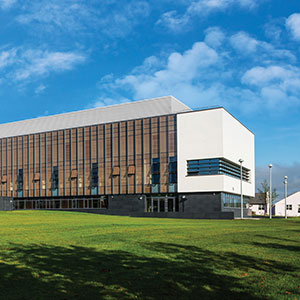
University of Galway has earned international recognition as a research-led university with a commitment to top quality teaching across a range of key areas of expertise.
-
Research & Innovation

Research & Innovation
University of Galway’s vibrant research community take on some of the most pressing challenges of our times.
-
Business & Industry
Guiding Breakthrough Research at University of Galway
We explore and facilitate commercial opportunities for the research community at University of Galway, as well as facilitating industry partnership.
-
Alumni & Friends

Alumni & Friends
There are 128,000 University of Galway alumni worldwide. Stay connected to your alumni community! Join our social networks and update your details online.
-
Community Engagement
Community Engagement
At University of Galway, we believe that the best learning takes place when you apply what you learn in a real world context. That's why many of our courses include work placements or community projects.
 Accessibility & Language
Discipline of Philosophy Speakers Series
Tuesday, 3 March 2026
Discipline of Philosophy presents “New Interpretations of Heidegger” by Aengus Daly (Bergische Universität Wuppertal) and Matt Barnard (Manchester Metropolitan University) Time: Tuesday, 3rd March @ 1:00-2:30 pm (Lunch will be provided) Location: THB G-011 Description: Aengus Daly and Matt Barnard both published independently two exciting monographs on the work of Martin Heidegger. Matt Barnard: Heidegger’s Conception of Freedom: Beyond Cause and Effect (Palgrave, 2024) and Aengus Daly: Heidegger's Metaphysics: The Overturning of 'Being and Time' (Bloomsbury, 2024). We are delighted to host both of them to discuss these important books. In the aftermath of his incomplete, work Being and Time, Heidegger strove to address the themes of that work culminating in the famous turning (Kehre) in his thinking. This ‘in-between’ period of Heidegger’s journey, a time in the later 1920s/early 1930s when Germany and the world at large was in the grip of crisis, is underexplored, making all the more welcome the work of these two scholars who explore Heidegger’s engagement in the phenomenology of the mythical world, temporality and human existence, freedom beyond causality, the human experience of existential guilt and mortality all in the context of grappling with the legacy of Western metaphysics. We are looking forward to an engaging discussion.
Tuesday, 24 February 2026
Discipline of Philosophy Speakers Series presents Collective intentionality and the critical power of assembly: Ethyl Smyth’s ‘March of the Women’ by Férdia Stone-Davis (DCU) Time: Tuesday, 24th February @ 1:00-2:30 pm (Lunch will be provided) Location: MY127 (Arus Moyola) Abstract: The focus of this paper is the intersection of collective intentionality, the performativity of assembly, and Ethyl Smyth’s Suffragette anthem, the March of the Women (1910). Drawing on John Searle’s account of collective intentionality, I will show how the March brings together in a coordinated and cooperative way the variety of “I-intends” of its members, acting as a powerful assertion of a “we-intend” that is not the “we-intend” that constitutes the government and is included within its laws, thereby issuing a challenge. But I will go further. Building on Judith Butler’s account of assembly, which locates the power of assembly in its “transient” and “critical” status, through which it challenges established norms and creates space for new political possibilities—and noting the ways in which it intersects with Searle both in relation to its concern with “we” as well as the manner in which it relates assembly to speech act—I will suggest that the March “performs victory”, instantiating and sustaining meaningful change, even if only for a limited time.
Tuesday, 17 February 2026
Discipline of Philosophy Speakers Series presents “Ontological Exhaustion”: From Indignation to Resignation and Exhaustion by Marina Christodoulou (Constructor University Bremen, Germany) Time: Tuesday, 17th February @ 1:00-2:30 pm (Lunch will be provided) Location: THB G010 Abstract: In this talk I will examine the passage from indignation to resignation and its culmination in what I call and conceptualize as "ontological exhaustion". While indignation arises as a moral revolt against injustice, repeated frustration often transforms it into resignation, that is, a passive acceptance that signals the depletion of ethical and political energy. Resignation, in turn, extends into ontological exhaustion, where not only the will to act but even the will to be collapses. By drawing on Plato, Spinoza, and other contemporary thinkers, I argue that resignation is a critical pivot, marking both the failure of indignation and the threshold of possible renewal.
Tuesday, 10 February 2026
Discipline of Philosophy Speakers Series presents “The Three Aristotles of James Joyce" by Fran O’Rourke (Emeritus Professor, UCD) Time: Tuesday, 10th February @ 1:00-2:30 pm (Lunch will be provided) Location: AMB-G065 (in Psychology part of Arts Millennium Building)
Tuesday, 20 January 2026
Discipline of Philosophy Speakers Series presents Living without Beliefs by Daniel Vázquez (Mary Immaculate College) Time: Tuesday, 20th January @ 1:00-2:30 pm (Lunch will be provided) Location: THB G010 Abstract: In this talk, I shall argue that it is not only possible but also preferable to live without beliefs. I will begin by defining my terms and what I do not mean by this claim. But there is, I hope, no catch. I do not mean “belief” or “living” (or any of the other words) in any particularly idiosyncratic way. I am, of course, not the first one to argue for this thesis, so I shall offer, as an example among many, a brief outline of how ancient Greek sceptics defended it. This will include a brief look at texts and arguments by Pyrrho (c.360–270 BCE), Arcesilaus (315/4–241/40 BCE), Carneades (214–129/8 BCE), and Sextus Empiricus (fl. mid-late 2nd century CE). As I will explain, the interpretation of many of these philosophers is hotly debated and, in some cases, complicated by a lack of decisive evidence or by incompatible reports. For my purposes, however, I will highlight one possible interpretation of Carneades’ contributions, not because it is correct (though it might be), but for its philosophical potential and as a springboard for my own argument. I will conclude by outlining how, in my view, living without beliefs would positively affect our lives, relationships and politics, and would allow for morality, knowledge, and even faith.
Thursday, 27 November 2025
Discipline of Philosophy Speakers Series presents "Dōgen’s Negative Ocularcentrism" by Adam Loughnane (University College Cork) Time: Thursday 27th November @ 1:00-2:30 pm (Lunch will be provided) Location: The River Room (AS203) Abstract: Scholars have long identified a tendency within the Western intellectual tradition known as ocularcentrism—the overdetermination of philosophy by the metaphysics of vision. While critics have warned of the “hegemony of the visual” (Jay, McMahan, Levin), I argue that the real danger lies not in the privileging of sight over other senses, but in the latent positivism that visual metaphor entails. The problem, I propose, is not ocularcentrism per se, but positivist ocularcentrism. As a counterpoint, I turn to the Buddhist philosopher Dōgen, who also privileges vision, yet in a radically different key—what I call “negative ocularcentrism”. Dōgen subverts the representational model of vision by embracing blindness, opacity, invisibility, and darkness as constitutive dimensions of the visual. His thought thus transforms seeing into a complex site of negation and depth rather than simple clarity and presence. I conclude by tracing how this form of negative ocularcentrism resonates in phenomenology and modern science.
Thursday, 16 October 2025
Discipline of Philosophy Speakers Series presents "A Balanced Formula: Scientific Pathologies, Deviant Naturalism and the Research-Recommendation Gap in Infant Feeding" by Claire Moriarty (Trinity College Dublin) Time: Thursday 16th October @ 1:00-2:30 pm (Lunch will be provided)Location: Bridge Room, Hardiman BuildingAbstract: Health guidance from institutions such as the World Health Organization or the UK’s National Health Service aim to reflect scientific evidence in their recommendations. Yet there are often gaps between the strength, diversity and breadth of evidence and the conclusiveness of recommendations they issue. There are also further gaps between this evidence and broader public discussion and dissemination of scientific recommendations. We analyse this problem by concentrating on one instance of the research-recommendation gap as it arises in infant feeding guidance. After outlining key events in the relationship between scientific research and institutional recommendations on feeding, we suggest reasons to be cautious in drawing conclusions from research to-date in this area before noting the existence of a research-recommendation gap in infant feeding: formal guidelines emphasise exclusive breastfeeding with a degree of confidence that seems unwarranted by evidence. Discussion over infant feeding is clouded by an inconsistent version of naturalism, and we thus offer an analysis of naturalism that is sensitive to the political-scientific complexity of the issue.
Tuesday, 7 October 2025
Discipline of Philosophy Speakers Series presents “World” in Günther Anders’ early thought: Epistemology, Anthropology, Phenomenology by Daria-Leona Mac Award (Paderborn University, Germany) Time: Tuesday 7th October @ 1-2:30 pm (Lunch will be provided) Location: AS203 River Room Abstract: I would like to take this opportunity to give an insight into Günther Anders’ work, that emphasizes his phenomenological roots, and the theoretical work which was later overshadowed, not only by World War II and exile, but also by his own doing: His main focus remained the same for decades. The dangers of technology, especially the nuclear complex. I will take statements from his dissertation, his anthropological writings as well as his epistemological analysis of experience. I will begin with some of his quotes and aspects regarding “world”, but to give a more nuanced and accurate account, I compare his concept of world to his notion and description of nature. For this, I take into consideration one of his early works from, namely Über das Naturtreffen (Encountering Nature (my transl.)1928). How can World be defined and contrasted to Nature? Based on this comparison, I would like to define the concept of world along with some characteristics it exhibits according to Anders. I think this could be another aspect worth a discussion.
Thursday, 18 September 2025
Discipline of Philosophy Speakers Series presents “Simone Weil in an Age of Inattention” (online presentation) by Prof. Kate Lawson (University of King’s College, Halifax (Canada) Time: Thursday 18th September @ 1-2:30 pm (Lunch will be provided) Location: THB G011 Abstract: Our current age has aptly been labelled a “grind culture,” which demands a continual reliance on our technology and necessitates that people carry cell phones, check computers, and remain available to both work and social obligations through all hours of the day and night. This constant surface-level attention serves to distract from the deeper spiritual and ethical possibilities of attention suggested by 20th century Parisian philosopher Simone Weil. This talk will examine the concept of Weilian attention and how it leads to Weil’s distinct process of decreation, then onto ethics, and political action.
Tuesday, 11 March 2025
Discipline of Philosophy Speakers Series in conjunction with the Centre for the Study of Religion presents "Theistic Scepticism, Externalism, Faith, and Hope" by Dr. Daniel Deasy (University College Dublin) Time: Tuesday 11th March @ 1-2:30 pm (Lunch will be provided) Location: Bridge Room, Hardiman Building (first floor) Abstract: This talk is about theistic scepticism, the view that we cannot know that God exists. In the talk, I first describe a version of the (in)famous argument for radical scepticism, the view that we cannot know anything about the world beyond our private sensations, and then show how theistic scepticism can be motivated on similar grounds. Next, I describe the currently popular externalist response to theistic scepticism, to the effect that the justification for our theistic beliefs is secured not (as the sceptic assumes) by the relative strength of our evidence, but by the extent to which our evidence connects us with the truth. Finally, I voice some common sources of dissatisfaction with the externalist response to theistic scepticism, and then (most speculatively) try to connect those dissatisfactions with the notions of faith and hope.
Tuesday, 25 February 2025
Discipline of Philosophy Speakers Series presents: “Plumbing the Surfaces: Susan Sontag as Philosopher of Art and Film”by Dr. Patrick O'Connor (University of Staffordshire) Time: Tuesday 25th February 2025 @ 1-2:30 pm (Lunch will be provided) Location: Bridge Room, Hardiman Building Abstract: Susan Sontag’s intellectual legacy is often celebrated for its incisive artisticcommentary, cultural criticism and literary contributions, yet her work has received relativelylittle attention as a cohesive body of philosophical thought. This paper argues that Sontagshould be understood not only as a critic and essayist but as a thinker with significantcontributions to the philosophy of art and film. By situating Sontag within the traditions ofaesthetic and philosophical inquiry, this paper aims to illuminate as well as critically evaluateher distinct contributions to the philosophy of art and film. It contends that her insights remainvital for on the role of criticism, the phenomenology of perception, and the transformativepotential of various artistic mediums. Her essays on aesthetics, particularly in AgainstInterpretation (1961), On Style (1966) On Photography (1977), articulate a philosophy rootedin phenomenological attentiveness and advocacy for what she termed an "erotics of art." Thisapproach challenges theoretical abstraction, interpretative overreach and extols experientialengagement, emphasizing art’s capacity to reveal sensuous immediacy as a form of thinkingin its own right. This talk will also discuss Sontag’s engagement with cinema as a focusedcase study to explore her broader aesthetic philosophy. Essays such as "Film and Theatre,""Godard", "The Imagination of Disaster", alongside the later "The Decay of Cinema" allillustrate a nascent theory of film as a temporal art.
Tuesday, 14 January 2025
Discipline of Philosophy Speakers Series presents: "Nietzsche's critical engagement with Staël” by Dr. Rebecca Bamford (Queens University Belfast) Time: Tuesday 14th January 2025 @ 1-2:30 pm (Lunch will be provided) Location: Bridge Room, Hardiman Building Abstract: Nietzsche’s remarks about the philosopher Germaine de Staël present a puzzle, which I aim to examine and to resolve in this paper. In several of his published and unpublished works, and especially in Beyond Good and Evil, Nietzsche makes some highly critical remarks about Staël. My aim in this paper is to investigate three interlinked issues: (i) who exactly is the ‘Staël’ featured in this text; (ii) how we are to explain the remarks that are directed towards Staël, and (iii) why Staël is discussed by Nietzsche here at all. I will lay out an account of what Nietzsche claims about Staël in Beyond Good and Evil, and will compare this with Nietzsche's wider references to Staël in others of his writings. I will then consider three potential explanations for Nietzsche's critical engagement with Staël: (1) that Nietzsche’s claims are indicative purely of his misogyny towards the historical figure of Staël (e.g. Diethe 1996); (2) that Nietzsche is highlighting and responding to a specific problem concerning Enlightenment values as a part of his project of translating humanity back into nature (e.g. Lemm 2020); (3) that from an Enlightenment perspective, Nietzsche’s claims about Staël are misogynistic, but his remarks need not be deemed so from a possible perspective in which humanity has been translated back into nature. I will propose that a combination of these first and third potential explanations is the most defensible interpretative approach.
Tuesday, 1 October 2024
Discipline of Philosophy Speaker Series presents "Entrustments of emergencies: some reflections on ethical action in deep time" by Dr. Basil Vassilicos, Mary Immaculate College Limerick. Time: Tuesday 1st October 1-2:30 pm (Lunch will be provided) Location: Hardiman Building THB-G010 Abstract: This talk relates to two actions; one of creation and one of bequeathal. They both concern what is known as “high-level nuclear waste” (HLNW), and in that sense are tied together – the collective action of bringing it about, and the collective action of bequeathing it to the future. Neither of these actions are easy to understand. Particularly, if they are both considered to have an ethical dimension, the badness (or evil) of our having created HLNW is difficult to fathom – just how bad (or evil) it is - and likewise what might be the good or right way to bequeath HLNW is most uncertain, even if one has the intuition that there should be some better and worse ways of doing so. Here, I attempt to clarify the ethical nature of that second action –bequeathing HLNW to the future. It seems like our bequeathing such waste to many futures is unavoidable. The imperative we then face is the quality with which we undertake such bequeathal. The suggestion I explore is that such bequeathal ought to take the form of an ‘entrustment of an emergency’ - an entreaty for the future to participate in care for, and memory of, the waste and its dangers. At the same time, sketching such a form of entrustment in relation to deep time quickly encroaches the very limits of what may be considered as concerned communicative action towards future forms of life. Biography: Dr. Vassilicos has a PhD from the KU Leuven and teaches now at Mary Immaculate College in Limerick. He has published in a wide range of areas including phenomenology of emotion, phenomenology of expression and questions of freedom, agency and communicative ethics. He is presently working in a book project with Nicholas de Warren (Penn State) on the issue of ethical action in the Anthropocene.