-
Courses

Courses
Choosing a course is one of the most important decisions you'll ever make! View our courses and see what our students and lecturers have to say about the courses you are interested in at the links below.
-
University Life

University Life
Each year more than 4,000 choose University of Galway as their University of choice. Find out what life at University of Galway is all about here.
-
About University of Galway

About University of Galway
Since 1845, University of Galway has been sharing the highest quality teaching and research with Ireland and the world. Find out what makes our University so special – from our distinguished history to the latest news and campus developments.
-
Colleges & Schools

Colleges & Schools
University of Galway has earned international recognition as a research-led university with a commitment to top quality teaching across a range of key areas of expertise.
-
Research & Innovation

Research & Innovation
University of Galway’s vibrant research community take on some of the most pressing challenges of our times.
-
Business & Industry

Guiding Breakthrough Research at University of Galway
We explore and facilitate commercial opportunities for the research community at University of Galway, as well as facilitating industry partnership.
-
Alumni & Friends

Alumni & Friends
There are 128,000 University of Galway alumni worldwide. Stay connected to your alumni community! Join our social networks and update your details online.
-
Community Engagement

Community Engagement
At University of Galway, we believe that the best learning takes place when you apply what you learn in a real world context. That's why many of our courses include work placements or community projects.
 Accessibility & Language
Professional Diploma in Applied Cybersecurity (part-time)
.jpg)

Professional Diploma in Applied Cybersecurity (part-time)
College of Science and Engineering, School of Computer Science- Title of Award
- Professional Diploma
- Course Code
- 1PAC1
- Average Intake
- 27
- Delivery
- Online
- NFQ
- Level 9
- Award Type
- Special Purpose
- Next Intake
- September 2027
- Duration
- 1 year, part-time
- ECTS Weighting
- 30
Why Choose This Course?
Course Information
This course is designed for professionals who have prior programming skills and want to upskill or transition into the field or cybersecurity. In this course, you will learn to:
- Master programming languages, scripting, frameworks, and tools essential for cybersecurity, focusing on secure coding, data protection, and cryptography.
- Implement foundational concepts such as network security, data protection laws, and cybersecurity frameworks to address cyber threats.
- Develop secure web applications using advanced coding practices, vulnerability assessment tools, and security frameworks for resilient online systems.
- Explore AI for cybersecurity applications such as anomaly detection, threat prediction, and process automation to mitigate cyber risks proactively.
- Design and execute projects addressing real-world, industry-focused cybersecurity challenges while adhering to ethical, legal, and regulatory standards.
- Validate end-to-end cybersecurity solutions for modern digital environments.
Curriculum Information
Curriculum information relates to the current academic year (in most cases).Course and module offerings and details may be subject to change.
Glossary of Terms
- Credits
- You must earn a defined number of credits (aka ECTS) to complete each year of your course. You do this by taking all of its required modules as well as the correct number of optional modules to obtain that year's total number of credits.
- Module
- An examinable portion of a subject or course, for which you attend lectures and/or tutorials and carry out assignments. E.g. Algebra and Calculus could be modules within the subject Mathematics. Each module has a unique module code eg. MA140.
- Optional
- A module you may choose to study.
- Required
- A module that you must study if you choose this course (or subject).
- Semester
- Most courses have 2 semesters (aka terms) per year.
Year 1 (30 Credits)
RequiredCT5224: Web Applications Security (CA)
CT5224: Web Applications Security (CA)
Semester 2 | Credits: 5
This module introduces learners to the theory and practice of web application development with a focus on security. Students will explore, analyze, and assess common web vulnerabilities to identify and apply effective countermeasures. By studying the tools and techniques used in web attacks, learners will gain the knowledge needed to strengthen web applications against threats.
(Language of instruction: English)
Learning Outcomes
- Define the principles of web development.
- Define the security aspects of web development.
- Evaluate web applications and their vulnerabilities against attacks.
- Apply countermeasures to prevent such vulnerabilities from being exploited.
- Develop solutions for securing web applications using relevant programming languages and associated tools.
- Validate the developed tools against different attacks.
Assessments
- Continuous Assessment (100%)
Teachers & Administrators
Click a name to search for their researcher profile. Note: Only teachers publish research profiles.
The above information outlines module CT5224: "Web Applications Security (CA)" and is valid from 2025 onwards.Note: Module offerings and details may be subject to change.
RequiredCT5223: Cybersecurity Fundamentals (CA)
CT5223: Cybersecurity Fundamentals (CA)
Semester 1 | Credits: 5
This module covers the importance of cybersecurity, awareness, data confidentiality, and appropriate practices when using cyberspace. In this module, learners are taken through every aspect of cybersecurity, explaining why personal and organisational data should be protected. It covers foundational knowledge in all aspects of security in the cyber world, including information security, systems security, network security, mobile security, physical security, data protection laws, and Cybersecurity frameworks. Learners engage in hands-on learning through labs to explore technologies, procedures, and mitigation strategies. They gain practical experience with the defense tactics that organisations employ to ensure security, bridging theory with real-world application.
(Language of instruction: English)
Learning Outcomes
- Explain the relationship of confidentiality, integrity, and availability principles to data states and cybersecurity countermeasures.
- Identify data breaches and privacy issues for organisations.
- Critically assess the security posture of enterprise systems and networks.
- Evaluate network threat models, conduct network attacks and implement defence measures.
- Evaluate mobile attack vectors and platform vulnerabilities and propose secure design principles.
- Review data protection laws, and cybersecurity legal frameworks to address cyber threats.
Assessments
- Continuous Assessment (100%)
Teachers & Administrators
Click a name to search for their researcher profile. Note: Only teachers publish research profiles.
The above information outlines module CT5223: "Cybersecurity Fundamentals (CA)" and is valid from 2025 onwards.Note: Module offerings and details may be subject to change.
RequiredCT5229: Programming and Tools for Artificial Intelligence (CA)
CT5229: Programming and Tools for Artificial Intelligence (CA)
Semester 1 | Credits: 5
This module is about programming and computational tools required for artificial intelligence. It uses the Python language as the main vehicle, but focusses on conceptual material rather than just the language itself. It moves fast through introductory Python workings. It covers several important Python libraries in detail, especially for numerical computing, machine learning, plotting, graphs. It discusses approaches to building re-usable, high quality code but not software engineering per se. It also visits some extra topics such as version control and introduction to the R language for statistics. The module is core for the University of Galway MSc in Artificial Intelligence (MScAI) Part-time (online) and Full-time (classroom). The syllabus and assessment will be the same for both.
(Language of instruction: English)
Learning Outcomes
- Read and write simple Python programs, e.g. for data munging, with a high degree of comfort.
- Use R for simple statistics and data exploration.
- Use numerical Python libraries for manipulation, input/output, visualisation of numerical data using Numpy array types.
- Use essential tools for AI, including libraries for data gathering, numerical computing, machine learning, combinatorial programming, and modelling networks.
- Plan/design a program using any of the above facilities; test it; document it; execute it locally or in the cloud as appropriate.
Assessments
- Continuous Assessment (100%)
Teachers & Administrators
Click a name to search for their researcher profile. Note: Only teachers publish research profiles.
- DEIRDRE KING 🖂
- GERALDINE HEALY 🖂
- JAMES MCDERMOTT 🖂
- Adrian Clear 🖂
- Mamoona Asghar 🖂
- Joseph Lemley 🖂
- Priyanka Verma 🖂
Reading List
- "A Whirlwind Tour of Python," by Jake Vanderplas
- "Think Python 2nd edition" by Allen B. Downey
Note: Module offerings and details may be subject to change.
RequiredCT5225: Cybersecurity Tools and Techniques (CA)
CT5225: Cybersecurity Tools and Techniques (CA)
Semester 2 | Credits: 5
The purpose of this module is to facilitate the learners in understanding and practicing secure software development lifecycles (DevSecOps) using different libraries and tools. It enables learners to understand tools for penetration testing comprehensively. It will also provide cryptography concepts and mechanisms, including how they can be applied, individually and in combination, to build secure development operations.
(Language of instruction: English)
Learning Outcomes
- Explain secure software development lifecycles (SecDevOps) and their importance.
- Use various programming libraries and APIs to integrate security measures within the software development process.
- Apply cryptographic mechanisms, individually and in combination, to enhance the security of software systems.
- Critically appraise the use of different/alternate security mechanisms for the provision of security defenses.
- Perform ethical hacking techniques to identify and assess security vulnerabilities.
- Implement modern cryptography algorithms to fomalise security goals.
Assessments
- Continuous Assessment (100%)
Teachers & Administrators
Click a name to search for their researcher profile. Note: Only teachers publish research profiles.
The above information outlines module CT5225: "Cybersecurity Tools and Techniques (CA)" and is valid from 2025 onwards.Note: Module offerings and details may be subject to change.
RequiredCT5226: Capstone Cybersecurity Project
CT5226: Capstone Cybersecurity Project
15 months long | Credits: 10
This module connects academic knowledge with real-world application, equipping students with practical learning either through industry placement (internships) or capstone projects. It emphasises research-based practical learning to enhance problem-solving and cybersecurity skills.
(Language of instruction: English)
Learning Outcomes
- Recognise the role of a Security-Aware IT/Tech Professional and their collaboration with related professionals.
- Integrate new design methods with a focus on Cybersecurity, relevant technologies, and industry practices.
- Apply technical knowledge and skills from the degree program to Artificial Intelligence driven Cybersecurity or Computing projects.
- Implement modern secure software development life cycle (SSDLC) practices and cybersecurity tools.
- Evaluate security risks and vulnerabilities in software projects using industry-standard assessment techniques.
- Communicate technical findings, design decisions, and security solutions effectively to both technical and non-technical stakeholders.
Assessments
- Continuous Assessment (100%)
Teachers & Administrators
Click a name to search for their researcher profile. Note: Only teachers publish research profiles.
The above information outlines module CT5226: "Capstone Cybersecurity Project" and is valid from 2025 onwards.Note: Module offerings and details may be subject to change.
The applied nature of this course sets it apart from the competition, aiming to deliver job-ready graduates. This specialised course has been meticulously designed in collaboration with industry partners and informed by feedback from employers (placement providers), and regional skills fora. We engaged with companies such as Genesys, Dell, HPE, Channel Mechanics, TitanHQ, PFH, Sky, Clubforce, Garda National Cyber Crime Bureau Galway and Wieland-Werke AG (Germany), all of whom have previously hosted interns from our various cybersecurity courses.
The course features a 'Capstone Cybersecurity Project' module aimed at equipping students for job readiness. This module bridges academic learning with real-world application, allowing students to gain hands-on experience through a capstone project.
Graduates of this programme will be equipped with job-ready specialised cybersecurity skills. Furthermore, this Professional Diploma opens the door to diverse career pathways across various industries. The key career pathways include:
- Security Platform Engineer
- ML Engineer
- Cybersecurity Detection Engineer
- Cybersecurity Specialists/Leads
- Information Security, Cybersecurity, or Vulnerability Analysts
- Penetration Tester
- DevSecOps Engineer
- Security Architect
- Security Risk Analyst
- Security Operations Analyst
Dr. Priyanka Verma - Programme Director
Online lectures/labs/tutorials comprise approximately 8 class hours per week during the evenings, Monday to Friday. All lectures are pre-recorded and made available online to registered students via the University's virtual learning environment. Some modules include labs which are scheduled in the evening with direct interaction and feedback from the instructor (also via the University's virtual learning environment).
Efforts are made to ensure that these live labs are accessible and at times that permit people in full-time employment to fully participate.
Throughout the course, your progress is assessed through various continuous assessments, including reports, assignments, presentations, and quizzes.
Online proctoring platforms may be used in some assessments, and oral examinations (online Viva) can also be used from time to time.
Gail Cassidy
ICT Skills Conversion Courses Administrator
Centre for Adult Learning & Professional Development
E: ictskills@universityofgalway.ie
T: 091-495241
Programme Director:
Dr Priyanka Verma
Lecturer
School of Computer Science
College of Science and Engineering
E: Priyanka.Verma@universityofgalway.ie
University of Galway recognises that knowledge and skills can be acquired from a range of learning experiences. This is in line with the National Framework of Qualifications (NFQ) goals which aim to recognise all learning achievements by supporting the development of alternative pathways to qualifications (or awards) and by facilitating the Recognition of Prior Learning (RPL).
Recognition of prior learning is facilitated automatically during the application phase.

Graduates of the Professional Diploma in Applied Cybersecurity will gain the following skills:
- Problem-solving & analytical thinking
Ability to identify vulnerabilities, assess risks, and design effective solutions - Technical proficiency
Strong foundation in programming, tools, and frameworks applicable across IT roles - Risk assessment & compliance awareness
Understanding of security, legal, and regulatory considerations - Project management & execution
Planning, developing, and delivering real-world technical projects - Adaptability & digital innovation
Applying new technologies (including AI) to solve evolving challenges - Communication & teamwork
Explaining technical concepts clearly and collaborating across teams
Accreditations & Awards
Meet our Employers
Entry Requirements and Fees
Prior programming experience is a prerequisite. The course is open to applicants from a wide range of backgrounds, including Engineering, Science, IT, Mathematics, Psychology, Law, Economics, Business, and Accounting. You should have a Level 8 qualification (or equivalent) with at least a Second Class Honours from a recognised university or college. If your background is not in a numerate field, you may still be considered if you have relevant IT or technical experience.
Applicants with a Level 7 qualification can also apply if they can show they have gained Level 8 skills through at least two years of work experience in IT or a tech-related role.
NB: As this is a Springboard+ funded course, you will need to check your eligibilty here.
Springboard+ is co-funded by the Government of Ireland and the European Union. Please see www.EUFunds.ie for further details.
You can apply for the Professional Diploma in Applied Cybersecurity online via Springboard+
Please review the entry requirements set out in the section above.
You will be required to upload supporting documentation to your application electronically. See the section above on entry requirements for further information on the supporting documentation required for this course.
Those not eligible for Spingboard+ funding can apply online via the University of Galway application portal here.
Fees for Academic Year 2027/28
| Course Type | Year | EU Tuition | Student Contribution | Non-EU Tuition | Levy | Total Fee | Total EU Fee | Total Non-EU Fee |
|---|---|---|---|---|---|---|---|---|
| Diploma | €4,100 | €- | €4,100 | €0 | €4,100 | €4,100 |
The full fees for AY26/27 are €4,100 per student, however as this is a Springboard+ funded course, students who are in employment pay 10% of the fee (€410), with the remaining 90% of their course fees covered by Springboard+. Students who are not in employment (where eligible) or those who apply as Returners, have 100% of their course fees covered by Springboard+. More information is available on the Springboard+ website.
Why University of Galway?
World renowned research led university nestled in the vibrant heart of Galway city on Ireland's scenic West Coast.
Contact the College of Science and Engineering
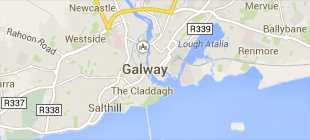
University of Galway, University Road, Galway, Ireland, H91 TK33


Downloads


Meet Our Alumni
Course Introduction
Cybersecurity solutions for modern digital environments
The Professional Diploma in Applied Cybersecurity is designed to upskill IT/Tech/Software professionals transitioning into the evolving cybersecurity field or those aiming to excel in advanced roles within this challenging domain. The course emphasises practical skills through hands-on learning, programming expertise, and the tools and techniques needed for real-world cybersecurity applications. In tandem with industry demand, this course also prepares learners to explore AI-driven methodologies to tackle cybersecurity challenges.
Springboard+ is co-funded by the Government of Ireland and the European Union. Please see www.EUFunds.ie for further details.