-
Courses

Courses
Choosing a course is one of the most important decisions you'll ever make! View our courses and see what our students and lecturers have to say about the courses you are interested in at the links below.
-
University Life

University Life
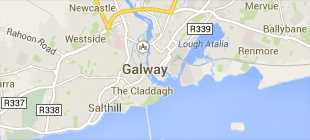
Each year more than 4,000 choose University of Galway as their University of choice. Find out what life at University of Galway is all about here.
-
About University of Galway
About University of Galway
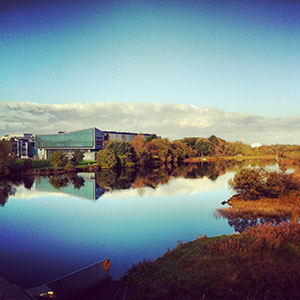
Since 1845, University of Galway has been sharing the highest quality teaching and research with Ireland and the world. Find out what makes our University so special – from our distinguished history to the latest news and campus developments.
-
Colleges & Schools
Colleges & Schools
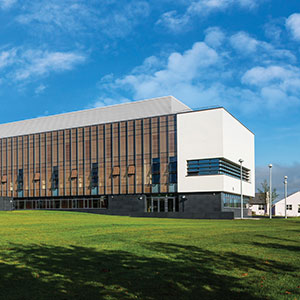
University of Galway has earned international recognition as a research-led university with a commitment to top quality teaching across a range of key areas of expertise.
-
Research & Innovation

Research & Innovation
University of Galway’s vibrant research community take on some of the most pressing challenges of our times.
-
Business & Industry
Guiding Breakthrough Research at University of Galway
We explore and facilitate commercial opportunities for the research community at University of Galway, as well as facilitating industry partnership.
-
Alumni & Friends
Alumni & Friends
There are 128,000 University of Galway alumni worldwide. Stay connected to your alumni community! Join our social networks and update your details online.
-
Community Engagement
Community Engagement
At University of Galway, we believe that the best learning takes place when you apply what you learn in a real world context. That's why many of our courses include work placements or community projects.
 Accessibility & Language
Electronic & Computer Engineering (MSc)

MSc (Electronic & Computer Engineering)
College of Science and Engineering, School of Engineering- Title of Award
- Master of Science
- Course Code
- 1MSEC1
- Delivery
- On Campus
- NFQ
- Level 9
- Award Type
- Major
- Duration
- 1 year
- ECTS Weighting
- 90 ECTS
Why Choose This Course?
Course Information
Why Choose This Course?
Graduates of the MSc in Electronic & Computer Engineering will be well positioned for careers in a rapidly evolving global technology sector. The programme develops advanced expertise in high-demand areas including robotics, embedded systems, communications and artificial intelligence, while also building transferable skills in project management, innovation and sustainability.
The combination of specialist technical knowledge and a substantial design-and-build project ensures that graduates are equipped with the practical and professional skills sought by employers across industries such as electronics, software, telecommunications, manufacturing, automation, and emerging technology sectors worldwide.
Who is this course for?
The MSc in Electronic & Computer Engineering is designed for graduates with a strong background in electronic engineering, computer engineering, electrical engineering, or closely related disciplines who wish to deepen their technical expertise and advance their career opportunities.
The programme is particularly suited to students who are interested in emerging technologies such as robotics, embedded systems, communications, artificial intelligence, and intelligent electronic systems. It is ideal for those seeking to develop advanced engineering knowledge, gain practical project experience, and prepare for careers in high-growth technology sectors.
Whether you are looking to enhance your professional skills, transition into specialist engineering roles, or pursue further research opportunities, this programme provides the technical and transferable skills needed to succeed in a rapidly evolving global industry.
What will I study?
The MSc in Electronic & Computer Engineering provides advanced study in contemporary electronic and computer engineering, combining specialist technical knowledge with practical project experience. Throughout the programme, you will explore key areas such as robotics, embedded systems, communications, artificial intelligence, and intelligent electronic systems, while developing the skills needed to solve complex engineering challenges.
In addition to advanced technical modules, you will build professional and transferable skills in areas including project management, sustainability, innovation, teamwork, and communication. These skills are highly valued by employers and support successful careers across a wide range of engineering and technology sectors.
A major component of the programme is a substantial 30 ECTS design-and-build project, where you will apply your learning to the development of a real-world engineering solution. This project enables you to gain practical experience in research, design, implementation, testing, and evaluation while working on a significant engineering challenge.
By the end of the programme, you will have developed the advanced technical expertise, practical experience, and professional competencies required to contribute to the design and development of next-generation electronic and computer engineering technologies.
Curriculum Information
Curriculum information relates to the current academic year (in most cases).Course and module offerings and details may be subject to change.
Glossary of Terms
- Credits
- You must earn a defined number of credits (aka ECTS) to complete each year of your course. You do this by taking all of its required modules as well as the correct number of optional modules to obtain that year's total number of credits.
- Module
- An examinable portion of a subject or course, for which you attend lectures and/or tutorials and carry out assignments. E.g. Algebra and Calculus could be modules within the subject Mathematics. Each module has a unique module code eg. MA140.
- Subject
- Some courses allow you to choose subjects, where related modules are grouped together. Subjects have their own required number of credits, so you must take all that subject's required modules and may also need to obtain the remainder of the subject's total credits by choosing from its available optional modules.
- Optional
- A module you may choose to study.
- Required
- A module that you must study if you choose this course (or subject).
- Required Core Subject
- A subject you must study because it's integral to that course.
- Semester
- Most courses have 2 semesters (aka terms) per year, so a three-year course will have six semesters in total. For clarity, this page will refer to the first semester of year 2 as 'Semester 3'.
Year 1 (90 Credits)
OptionalEE4104: Machine Learning and Artificial Intelligence for Engineering Applications - 5 Credits - Semester 1OptionalEE551: Embedded Image Processing - 5 Credits - Semester 1
OptionalEE5116: Mobile Device Technologies - 5 Credits - Semester 1
OptionalEE5126: UX Design for Wearable Electronics - 5 Credits - Semester 1
OptionalEE5127: Internet of Things Systems Design - 5 Credits - Semester 1
OptionalEE445: Digital Signal Processing - 5 Credits - Semester 1
OptionalEE4101: Mobile Networks: Architecture and Services - 5 Credits - Semester 1
OptionalEE5110: Sensing and Perception for Robotics and Autonomous Vehicles - 5 Credits - Semester 1
OptionalEE5105: Applied Circuit Design for Medical Electronics - 5 Credits - Semester 1
OptionalAY872: Financial Management I - 5 Credits - Semester 1
OptionalME432: Technology Innovation & Entrepreneurship - 5 Credits - Semester 1
OptionalME521: Research Methods for Engineers - 5 Credits - Semester 1
OptionalIE450: Lean Systems - 5 Credits - Semester 1
OptionalIE446: Project Management - 5 Credits - Semester 1
OptionalME4105: Safety Engineering - 5 Credits - Semester 1
OptionalBSS2103: Introduction to Sustainability 1 - 5 Credits - Semester 1
RequiredEE5132: MSc Project Thesis - 30 Credits - Semester 1
OptionalEE502: Bioinstrumentation Design - 5 Credits - Semester 2
OptionalCT4104: Computer and Network Security - 5 Credits - Semester 2
OptionalCT5134: Agents, Multi-Agent Systems and Reinforcement Learning - 5 Credits - Semester 2
OptionalEE5104: Embedded Machine Vision - 5 Credits - Semester 2
OptionalEE5108: Digital Twins for Robotics - 5 Credits - Semester 2
OptionalEE5109: Robotic Control, Navigation and Locomotion - 5 Credits - Semester 2
OptionalEE5107: Signal Processing and Machine Learning for Digital Health - 5 Credits - Semester 1
OptionalBSS2104: Introduction to Sustainability 2 - 5 Credits - Semester 2
OptionalEE5131: Machine Learning and FPGA Co-Design - 5 Credits - Semester 2
- Advanced study in high-demand areas including robotics, embedded systems, communications and artificial intelligence.
- A substantial 30 ECTS design-and-build project, providing valuable hands-on experience in solving real-world engineering challenges.
- Integration of technical expertise with professional skills development in project management, innovation and sustainability.
- Opportunities to work with contemporary technologies and engineering tools used across industry and research.
- Preparation for careers in a wide range of sectors including telecommunications, medical devices, automation, microelectronics and renewable energy.
- Strong alignment with emerging digital technologies, intelligent systems and AI-driven innovation shaping the future of engineering.
The MSc in Electronic & Computer Engineering prepares graduates for careers at the forefront of technological innovation. As organisations across the globe continue to invest in digital transformation, automation, artificial intelligence, communications technologies and intelligent systems, demand for highly skilled Electronic and Computer Engineers continues to grow.
This programme combines advanced technical knowledge with practical engineering experience, enabling graduates to design, develop and implement the technologies that underpin modern society. Through specialist modules and a substantial design-and-build project, students gain expertise in areas such as robotics, embedded systems, communications and AI, developing the skills required to solve complex engineering challenges in industry and research environments.
Graduates of this programme are well positioned to pursue career opportunities across a broad range of sectors, including:
- Automotive electronics
- Microelectronics and semiconductor technologies
- Telecommunications and communications systems
- Renewable energy and smart energy systems
- Industrial automation and robotics
- Medical devices and healthcare technologies
- Consumer electronics
- Financial technology (FinTech)
- Software and technology companies
- Research and development organisations
Typical graduate roles include:
- Electronic Design Engineer
- Computer Engineer
- Embedded Systems Engineer
- Robotics Engineer
- Artificial Intelligence Engineer
- Software Engineer
- Automation Engineer
- Communications Engineer
- Systems Engineer
- Applications Engineer
- Product Development Engineer
- Technology Consultant
- Project Manager
- Research and Development Engineer
The programme also develops highly valued transferable skills in project management, problem-solving, communication, teamwork and sustainability. These professional competencies complement technical expertise and prepare graduates to take on leadership roles within multidisciplinary engineering teams.
For students interested in research and innovation, the programme provides an excellent foundation for doctoral study and research careers in emerging areas of electronic and computer engineering. The substantial project component allows students to develop independent research, design and analytical skills while addressing real-world engineering problems.
By combining advanced technical training with practical project experience, the MSc in Electronic & Computer Engineering equips graduates with the knowledge, skills and confidence to succeed in a rapidly evolving global technology landscape and to contribute to the development of the next generation of intelligent systems and digital technologies.
Engineers Ireland
The MSc in Electronic & Computer Engineering has been designed in accordance with internationally recognised engineering education standards and builds on the University's long-standing tradition of accredited engineering programmes. The programme supports graduates in developing the advanced technical knowledge and professional competencies expected of modern engineering professionals.
Engineers Ireland accreditation provides assurance that engineering programmes meet rigorous academic and professional standards and are aligned with the needs of industry. Accredited qualifications are internationally recognised through agreements such as the Washington Accord, supporting graduate mobility and career opportunities worldwide.
Accreditation from Engineers Ireland will be sought for this programme in accordance with established accreditation processes. Engineers Ireland-accredited qualifications are recognised internationally and provide graduates with a strong foundation for professional engineering practice and progression towards Chartered Engineer status, where applicable.
The MSc in Electronic & Computer Engineering uses a combination of teaching and learning methods designed to help students develop advanced technical knowledge, practical engineering skills, and professional competencies.
You will learn through:
- Lectures that introduce advanced concepts in areas such as Embedded Systems, Communications, Signal Processing, Robotics, Power Electronics, Energy Conversion, and Biomedical Electronics.
- Tutorials that provide opportunities to explore engineering problems in greater depth, apply theory, and develop analytical and problem-solving skills.
- Laboratory sessions where you will gain hands-on experience using modern engineering equipment, software tools, instrumentation, and modelling techniques.
- Independent study and research, allowing you to deepen your understanding of specialist topics and develop self-directed learning skills.
- Project-based learning, including a substantial 30 ECTS research project, where you will investigate a complex engineering problem and develop innovative solutions.
- Team-based and collaborative activities that help build communication, teamwork, and project management skills relevant to professional engineering practice.
- Research-informed teaching, ensuring that learning is connected to current developments, emerging technologies, and industry needs.
Through these learning experiences, you will develop the ability to analyse complex engineering challenges, apply research methods, design innovative solutions, communicate technical information effectively, and work both independently and as part of a team.
How Will I Be Assessed?
Assessment is designed to evaluate both your technical knowledge and your ability to apply that knowledge in practical and professional contexts.
You will be assessed through a variety of methods, including:
- Written examinations to assess your understanding of advanced engineering principles, theories, and analytical techniques.
- Laboratory assessments and reports that evaluate your practical skills, experimental methods, data analysis, and interpretation of results.
- Assignments and coursework that require the application of engineering concepts to solve complex problems.
- Design and engineering projects that assess your ability to develop innovative solutions to real-world challenges.
- Presentations that develop and evaluate your oral communication and technical reporting skills.
- Technical and research reports that demonstrate your ability to communicate complex information clearly and professionally.
- The MSc research project and dissertation, which assess your capacity for independent research, project management, critical analysis, innovation, and technical communication.
Assessment throughout the programme combines both formative and summative approaches. Regular feedback from academic staff supports your learning and development, helping you identify strengths and areas for improvement. The range of assessment methods ensures that graduates demonstrate the advanced knowledge, practical expertise, research capability, and professional skills expected of a Level 9 engineer and aligned with the educational requirements for Chartered Engineer accreditation.
Course queries:
Mary.costello@universityofgalway.ie (Administrator)
Programme Director(s):
Professor Martin Glavin martin.glavin@universityofgalway.ie
School of Engineering
College of Science and Engineering
What is the duration of the programme?
The MSc in Electronic & Computer Engineering is a full-time programme completed over one academic year.
What are the entry requirements?
Applicants should normally hold a H2.1 (Second Class Honours, Grade 1) degree or equivalent in Electronic Engineering, Computer Engineering, Electrical Engineering, or a closely related discipline. Applicants should refer to the official programme entry requirements for full details.
What areas of engineering will I study?
The programme covers contemporary topics in electronic and computer engineering, including robotics, embedded systems, communications, artificial intelligence, and intelligent systems, alongside professional skills development in project management and sustainability.
Is there a research or project component?
Yes. A key feature of the programme is a substantial 30 ECTS design-and-build project, allowing students to apply their knowledge and skills to a significant real-world engineering challenge.
What career opportunities are available after graduation?
Graduates can pursue careers in areas such as electronics design, embedded systems, artificial intelligence, robotics, telecommunications, automation, software development, medical devices, renewable energy, and technology consultancy. The programme also provides a strong foundation for doctoral research and further postgraduate study.
Is this programme suitable for international students?
Yes. The programme welcomes applications from suitably qualified students from Ireland and around the world and is designed to prepare graduates for careers in the global technology and engineering sectors.
What transferable skills will I develop?
In addition to advanced technical knowledge, you will develop skills in project management, problem-solving, teamwork, communication, leadership, research, innovation, and sustainable engineering practice.
How is the programme assessed?
Assessment methods may include examinations, assignments, laboratory work, project reports, presentations, and the final design-and-build project, depending on the modules chosen.
Do I need prior experience in artificial intelligence or robotics?
No. While a strong engineering background is expected, the programme is designed to build advanced knowledge in specialist areas and does not require prior professional experience in AI or robotics.
Can this programme lead to Chartered Engineer status?
The programme may support progression towards professional accreditation and Chartered Engineer status, subject to Engineers Ireland requirements and any applicable accreditation arrangements. Applicants should consult the School for the most up-to-date information.
What makes this programme different?
The programme combines advanced study in electronics, computing and intelligent systems with a substantial practical project. Students graduate with both specialist technical expertise and the professional skills needed to succeed in a rapidly evolving engineering sector.
The University of Galway recognises that valuable knowledge, skills and competencies can be gained through a wide range of learning experiences, including formal education, professional training, employment, and other relevant life experiences.
Recognition of Prior Learning (RPL) provides an opportunity for applicants to have prior certified and experiential learning considered as part of the admissions process. This approach supports lifelong learning by acknowledging that learning can take place in many different settings and at different stages of a person's personal and professional development.
Graduates of the MSc in Electronic & Computer Engineering develop a broad range of transferable skills that are highly valued by employers across engineering, technology and innovation-led industries. In addition to advanced technical expertise, students gain practical experience in solving complex problems, working collaboratively, and managing projects from concept through to implementation.
Throughout the programme, students enhance their abilities in:
- Project planning and management
- Analytical and critical thinking
- Problem-solving and decision-making
- Technical communication and presentation skills
- Teamwork and collaboration
- Research and innovation
- Sustainable engineering practices
- Independent learning and professional development
- Data analysis and interpretation
- Leadership and organisational skills
The substantial design-and-build project provides an opportunity to apply these skills in a real-world context, requiring students to manage resources, meet project objectives, communicate results effectively, and deliver practical engineering solutions. These transferable skills complement technical knowledge and prepare graduates to thrive in multidisciplinary, fast-paced professional environments throughout their careers.
Accreditations & Awards
Meet our Employers
Entry Requirements and Fees
Minimum Entry Requirements
Candidates must hold at least a Second Class Honours Level 8 primary degree in a related subject area or hold a primary degree in a related area (which is acceptable to the college) without honours and have three years’ relevant practical experience in the subject area.
Academic entry requirements standardised per country are available here.
English Language Entry Requirements
For applicants whose first language is not English, an English language proficiency of IELTS score of 6.5 is required (with no less than 6.5 in Writing and no less than 6.0 in any other band) or equivalent.
More information on English language test equivalency are available here.
Supporting Documents (replace/edit the text below)
You will be required to provide supporting documentation as part of your application. You can check here what supporting documents are required for this course.
You can apply online to the University of Galway application portal here.
Please review the entry requirements set out in the section above.
You will be required to upload supporting documentation to your application electronically. See the section above on entry requirements for further information on the supporting documentation required for this course.
Closing Dates
For this programme, there is no specific closing date for receipt of applications. Applications will be accepted on a rolling basis and course quotes will be reviewed continuously throughout the application cycle.
Notes
You will need an active email account to use the website and you'll be guided through the system, step by step, until you complete the online form.
Browse the FAQ's section for further guidance.
| Course Type | Year | EU Tuition | Student Contribution | Non-EU Tuition | Levy | Total Fee | Total EU Fee | Total Non-EU Fee |
|---|
Postgraduate Excellence Scholarships
This scholarship is valued at €1,500 for EU students applying for full-time taught master's postgraduate courses. You will be eligible if:
- You have been accepted to a full-time taught master's course at University of Galway,
- You have attained a first class honours (or equivalent) in a Level 8 primary degree.
An application for the scholarship scheme is required (separate to the application for a place on the programme). The application portal for 2027 is now open and available here. Applications will close on the 30th September 2027. Full details available here.
Global Scholarships
University of Galway offers a range of merit-based scholarships to students from a number of countries outside of the EU. Visit here for schemes currently available.
Application Process
Students applying for full time postgraduate programmes from outside of the European Union (EU), You can apply online to the University of Galway application portal here.
Our application portal opens on the 1st October each year for each the following September.
Further Information
Please visit the postgraduate admissions webpage for further information on closing dates, documentation requirements, application fees and the application process.
Why University of Galway?
World renowned research led university nestled in the vibrant heart of Galway city on Ireland's scenic West Coast.
Contact the College of Science and Engineering
University of Galway, University Road, Galway, Ireland, H91 TK33


Downloads

Meet Our Alumni
Engineering Intelligent Systems for Tomorrow
The MSc in Electronic & Computer Engineering equips graduates with advanced knowledge in robotics, embedded systems, communications and artificial intelligence. Through specialist modules and a substantial design-and-build project, students develop technical expertise alongside professional skills in project management, innovation and sustainability.