-
Courses
Courses
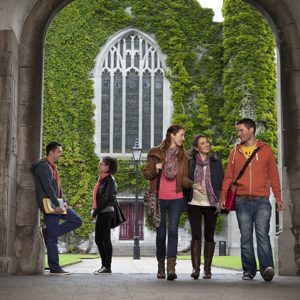
Choosing a course is one of the most important decisions you'll ever make! View our courses and see what our students and lecturers have to say about the courses you are interested in at the links below.
-
University Life

University Life
Each year more than 4,000 choose University of Galway as their University of choice. Find out what life at University of Galway is all about here.
-
About University of Galway
About University of Galway
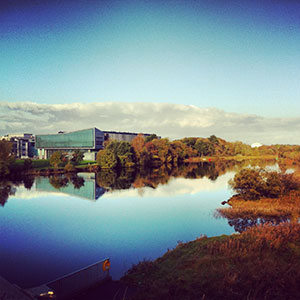
Since 1845, University of Galway has been sharing the highest quality teaching and research with Ireland and the world. Find out what makes our University so special – from our distinguished history to the latest news and campus developments.
-
Colleges & Schools
Colleges & Schools
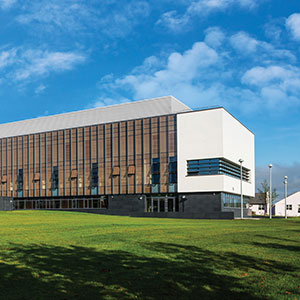
University of Galway has earned international recognition as a research-led university with a commitment to top quality teaching across a range of key areas of expertise.
-
Research & Innovation
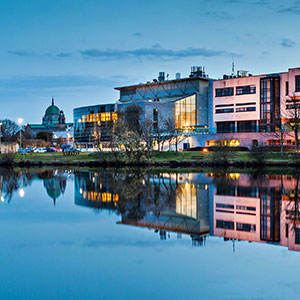
Research & Innovation
University of Galway’s vibrant research community take on some of the most pressing challenges of our times.
-
Business & Industry
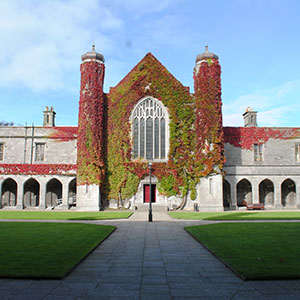
Guiding Breakthrough Research at University of Galway
We explore and facilitate commercial opportunities for the research community at University of Galway, as well as facilitating industry partnership.
-
Alumni & Friends
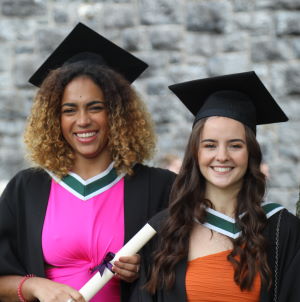
Alumni & Friends
There are 128,000 University of Galway alumni worldwide. Stay connected to your alumni community! Join our social networks and update your details online.
-
Community Engagement
Community Engagement
At University of Galway, we believe that the best learning takes place when you apply what you learn in a real world context. That's why many of our courses include work placements or community projects.
 Accessibility & Language
Recent News
International Women's Day event 9th March 2026
The Office of the Vice President for Equality, Diversity and Inclusion celebrated International Women's Day on Monday, the 9th March, with a panel discussion "Give to Gain: Supporting Women in our Community".
This year's Global theme, "Give to Gain", highlighted the power of reciprocity. When we invest our time, resources, or advocacy into supporting women, our entire community is impacted. We welcomed leaders from important charities and NGOs in our Community.
- Cathy Connolly, Executive Director, Galway Rape Crisis Centre
- Gillian McNamee, Head of Domestic Abuse Services, COPE Galway
- Caroline Loughnane, Chairperson, National Breast Cancer Research Institute
The event was chaired by Dr Helen Maher, Vice President for EDI, and we heard about the vital work of these organisations and how they protect, empower, and advocate for women.
The Future is Universal Design
University of Galway (Dr Deirdre Mc Hugh) hosted "The Future is Universal Design"- the third mutual learning event in the HEIs as Places for People series, on the 25th February 2026.
This mutual learning event was held for the HEA-funded project, Higher Education Institutes (HEIs) as Places for People: Inclusive Infrastructures to Support Intersectionality in HEIs. As all of our Project Partner Institutions – Trinity College Dublin, University of Galway, Technological University Dublin, and Royal College of Surgeons in Ireland – have a mix of heritage and modern buildings on our campuses, our priority is to ensure that our heritage preservation strategies best serve our diverse student, staff and research communities now and into the future.
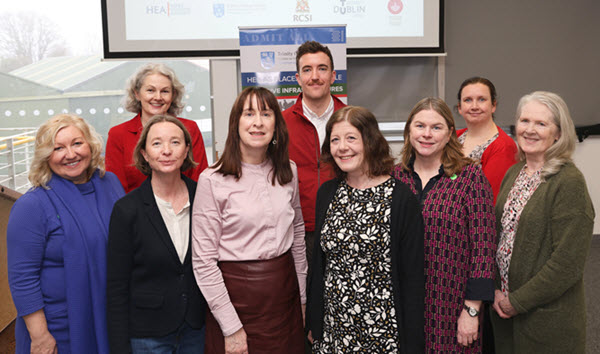
Front Row - Professor Lorraine Leeson (TCD), Collette Burns (TU Dublin), Dr Helen Maher, Dr Deirdre Mc Hugh (University of Galway), Siobán O'Brien Green (TCD), Professor Yvonne Galligan (TUD)
Back row - Liz Hughes (RCSI), Dam Eames (National Disability Authority/Centre for Excellence in Universal Design), Rebecca Grogan (TU Dublin);
Our buildings and estates staff members (Kevin O'Sullivan and Patrick Faherty) took us on a tour of our university's South Campus Tour – highlighting the Physical and sensory accessibility improvements to a Heritage Campus.
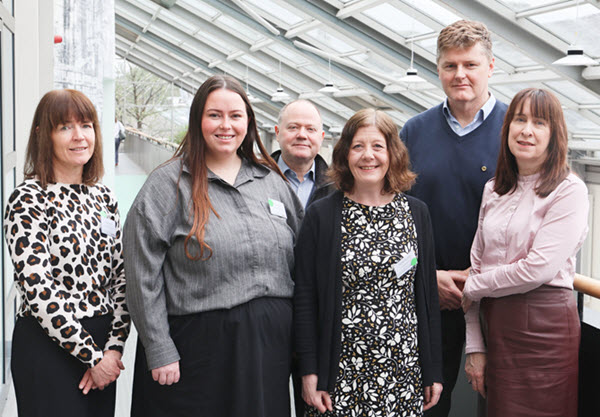
Front Row (Office of the VP for EDI). Aoife Cooke, Tara Flannagan, Dr Deirdre McHugh & Dr Helen Maher
Back Row ( Buildings and Estates ) Kevin O'Sullivan & Patrick Faherty
Mathematical & Statistical Sciences Bronze Renewal
Congratulations to the School of Mathematical & Statistical Sciences on the renewal of their Athena Swan Bronze award. The application was led by Rachel Quinlan (SAT Chairperson). See the full timeline of our university's awards to date here.
National Anti-Racism Campaign in Irish Higher Education
The University of Galway has been awarded funding from the Higher Education Authority (HEA) to lead the development and implementation of a national Anti-Racism Campaign across the Irish Higher Education sector. This initiative represents a significant advancement in promoting race equality and inclusive practice throughout higher education in Ireland.
The campaign will be managed by Owen Ward, EDI Programme Manager for Race Equality, who will work in close collaboration with colleagues within the HEA and with partners across the higher education sector. The initiative seeks to foster learning and working environments in which all students and staff are treated with dignity, respect, and equity.
This work will be delivered in partnership with a broad consortium of institutions, including: TU Dublin, Mary Immaculate College, Munster Technological University, Dundalk Institute of Technology, Dublin City University, University of Limerick, University College Dublin, South East Technological University, Maynooth University, National College of Ireland, Technological University of the Shannon, Trinity College Dublin, Atlantic Technological University, Royal College of Surgeons in Ireland, and the Irish Universities Association.
EDI Strategy Town Hall 2026-2030
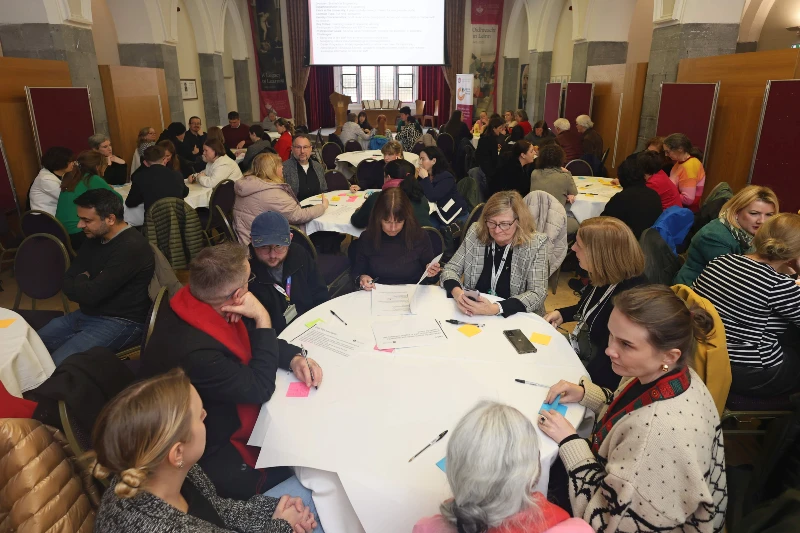
On Monday, 2 December 2025, we welcomed a strong and engaged turnout at our EDI Strategy Town Hall in the Michael D. Higgins Auditorium. This gathering offered an important opportunity for our University community to reflect, share perspectives, and actively shape the direction of Equality, Diversity and Inclusion (EDI) at the University of Galway.
The session was grounded in a design-thinking methodology, ensuring an inclusive, participatory approach. Staff and students—our primary stakeholders—worked collaboratively to discuss their priorities, values, and aspirations for the 2026–2030 EDI Strategy. This approach placed lived experience and community insight at the center of the strategy-development process.
A sincere thank you to everyone who took part. Your contributions are vital as we co-create a strategy that is ambitious, meaningful, and reflective of the diverse community it serves.
The event marks an important step in our continued commitment to embedding EDI across the University. We look forward to building on this momentum and working together to deliver a strategy shaped with and for our community.
University of Galway celebrates success at the Irish National Athena Swan Awards
University of Galway was honoured with a Silver Institutional Athena Swan Award at the Irish National Athena Swan Awards on 12th November, recognising an important milestone in our continued efforts to advance equality and foster an inclusive culture.
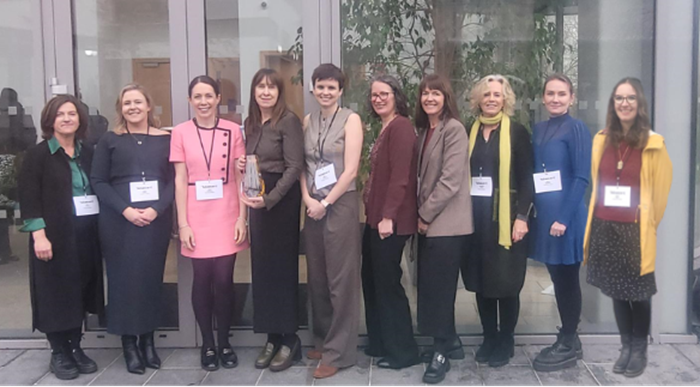
L:R Anne O' Grady (School of Nursing & Midwifery), Dr. Laura Loftus (EDI), Dr, Ciara O' Meara (School of Nursing & Midwifery), Dr. Helen Maher, Vice President for EDI, Dr. Edel Doherty (School of Business & Economics), Dr. Catherine Emerson (School of Languages, Literatures & Culture), Aoife Cooke (EDI), Margaret Forde (EDI), Dr Kate Dawson (School of Psychology) & Dr. Ciara Egan (School of Psychology)
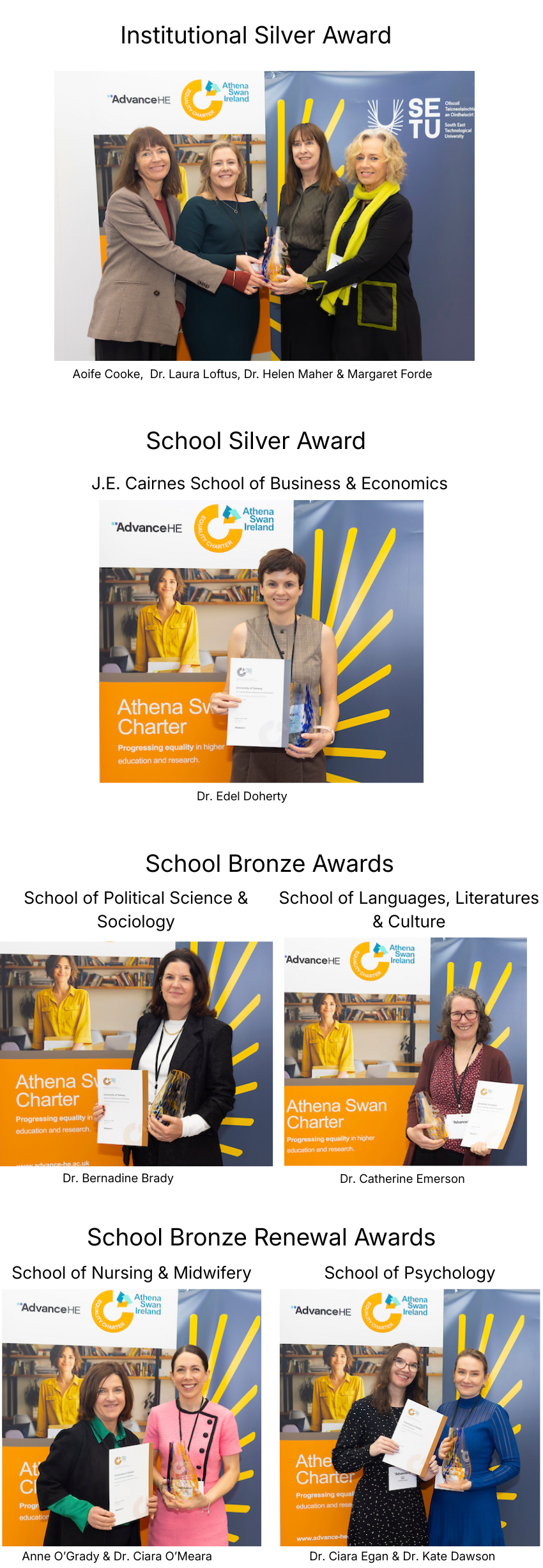
This award highlights the collective efforts of our staff and students in driving meaningful change and embedding equality, diversity, and inclusion into the University’s structures and practices.
In addition to the institutional recognition, five University of Galway Schools were also celebrated for their achievements:
- J.E. Cairnes School of Business and Economics – Silver Award
- School of Nursing and Midwifery – Bronze Renewal
- School of Languages, Literatures and Culture – Bronze Award
- School of Political Science and Sociology – Bronze Award
- School of Psychology – Bronze Renewal
While acknowledging that the University has had a difficult past in relation to gender equality, this success demonstrates the progress we have made – further details here – and our determination to continue this work. Our new Gender Equality Action Plan 2025–2030 (GEAP 4) will build on this foundation, guiding us towards deeper, lasting change and ensuring that equality, diversity and inclusion remain at the heart of everything we do as a community.
There is always more work to do to create an equitable environment for all our staff and students, and we look forward to continuing to work collectively to achieve this vision. Through our collective efforts, we aim to cultivate a University culture that places our people and their lived experience at the centre.
To mark these achievements, an internal celebration will take place on Monday, 2 December in the Michael D. Higgins Auditorium (12:00–14:00).
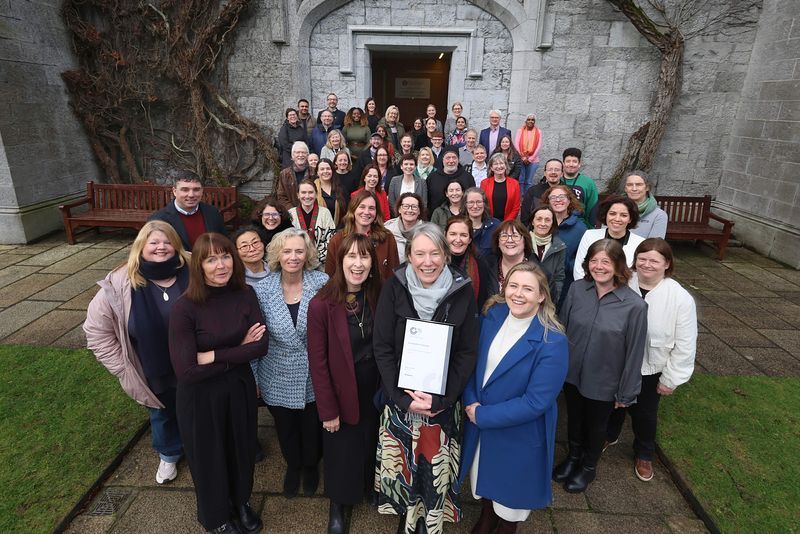
The Deep Conversation: “There’s No Racism in Ireland
Our EDI Programme Manager for Race Equality, Owen Ward, joined Dr. Ebun Joseph, Special Rapporteur Racial Equality and Racism, Cllr. Darragh Adelaide, Reuben Hambakachere, and Jennifer Foster for The Deep Conversation. The panel critically examined the persistent myth that racism does not exist in Ireland, exploring how denial silences lived experiences, reinforces systemic inequities, and hinders the development of inclusive institutions.
The discussion offered evidence-based strategies for advancing race equality, promoting accountability, and fostering solidarity within academic and societal contexts.
Watch the full conversation here
National Traveller Heritage Strategy
This week Owen Ward, EDI Programme Manager for Race Equality, attended the Oireachtas Committee on Traveller Issues alongside Virginia Teehan, Chief Executive Officer, Lisa Shortall, Head of Research, Learning and Cultural Heritage, and Aalia Kamal, Cultural and Inclusive Heritage Officer at the Heritage Council.
In his capacity as Chair of the National Traveller Heritage Working Group, Owen discussed the development of a national strategy to protect and promote Traveller heritage. The Working Group brings together representatives from Traveller organisations at national, regional, and local levels across Ireland, ensuring the strategy is community-led and inclusive.
Watch the full session here
2-Year Anniversary of the Race Equality Framework and Action Plan
The Office of the Vice-President for Equality, Diversity and Inclusion marked the two-year anniversary of the launch of the Race Equality Framework and Action Plan.
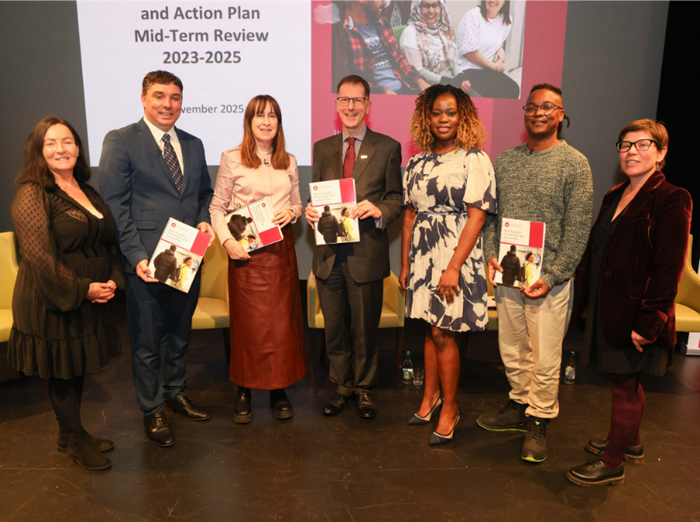
L-R: Anne Marie Stokes (Race Equality Advisor), Owen Ward (Programme Manager for Race Equality), Dr. Helen Maher (Vice President for EDI), Prof. David Burn (President University of Galway), Prisca Chipao (Race Equality Advisor, Gugulethu Thabethe (Student ), and D.r Tanja Kovačič (Race Equality Advisor).
University of Galway Race Equality Framework & Action Plan 2023-2027 provides a clear roadmap for advancing race equality and fostering a more equitable and inclusive university. It outlines our commitment to valuing diverse perspectives, experiences, and backgrounds, recognising that race equality is integral to the University’s core values of respect, openness, sustainability, belonging and excellence.
It contains 125 actions across five thematic areas, with emphasis placed on ensuring race equality is prioritised in all strategies, policies and many other aspects to ensure the University develops as a welcoming, inclusive environment where everyone has a sense of belonging. The agreed success criteria, to be reached by November 2027, are as follows: 57 actions fully implemented and 68 actions demonstrably progressing in line with agreed timelines.
The Race Equality Framework and Action Plan Mid-Term Review 2023-2025 clearly illustrates that, as of 31st August 2025, the University is making strong, measurable progress toward its November 2027 Race Equality Action Plan objectives. Of the 125 actions, 107 (85%) are either complete or progressing as planned, reflecting sustained institutional commitment to embedding race equality across all levels.
Launch of the National Speak Out Report- Nov 2025
Our University of Ending Sexual Violence & Harassment team attended the launch of the Speak Out National Report 2024 in TCD on November 3rd, 2025. Funded by the Higher Education Authority, Speak Out’s dataset will be used to inform future responses to abuse and harassment in higher education, and to encourage formal reporting.
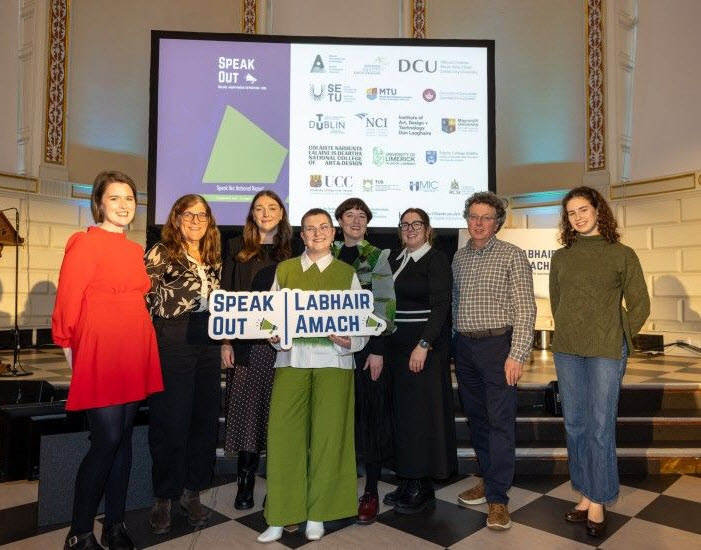
L:R Rebecca Connolly, Gemma MacNally, Gillian Connolly (TCD), Rachel Skelly (TCD), Elaine Mearse (TCD), Niamh Kavanagh, Pádraig Mac Neela & Elaine Maise Hall (President of the Students Union, Galway)
Reported by TCD "Universities and colleges across Ireland have teamed up to release national data from anonymous reports of abuse and harassment by staff and students from 2022-2024. The data shows that bullying and harassment were the most common abuses reported to Speak Out, an anonymous online reporting tool introduced at 17 higher education institutions (HEIs) in a bid to enhance safety for students and staff.
Funded by the Higher Education Authority, Speak Out’s dataset will be used to inform future responses to abuse and harassment in higher education, and to encourage formal reporting.
While 1,011 staff and students made anonymous reports over this period, only 12% of students made a formal complaint to their university or college about the abuse while only 4% of students made a complaint to An Garda Síochána.
Speak Out, whose national office is based at Trinity, allows people to disclose their experiences anonymously of bullying, harassment, assault and sexual violence – and avail of signposting to support services. It is one of a range of reporting options available in HEIs.
The report, based on data from the 16 HEIs that implemented this tool from 1 September 2022 to 31 August 2024, should not be read as reflecting the true prevalence of these behaviours. The number of reports made through Speak Out is expected to rise as the service becomes more established. HEIs exist within the wider cultural and societal context, and as such many of the issues reported are reflective of the broader experiences of those living within Ireland.
Key findings included:
- 1,011 individuals made anonymous reports through the Speak Out tool. Of these, 636 were students and 303 were staff. 784 reported on their own behalf and 227 on behalf of someone else.
- The most common behaviours experienced were bullying (382 reports) and harassment (340).
- Sexual violence and sexual harassment accounted for 25% of behaviours disclosed by students. Students made 55 reports of rape, 106 reports of sexual assault and 108 reports of sexual harassment.
- Students disclosed significantly higher levels of purely physical abuse (17%) while 4% of staff disclosures involved purely physical abuse.
- 20% of staff and 12% of students made a formal complaint to their HEI about the abuse.
- 4% of students made a formal complaint to An Garda Síochána about the abuse.
- Common reasons for not reporting the incident to the HEI include a fear that nothing would be done or lack of proof that the behaviour took place.
- Common reasons for not reporting to the Gardaí included a sense that the behaviour was not serious enough, or again, that proof was lacking. "
University of Galway’s adoption of the ALTITUDE Charter
University of Galway celebrated the adoption of the ALTITUDE Charter for Universal Design in Tertiary Education, 29th September, with our University President, Professor David J. Burn.
The learner population in tertiary education is becoming increasingly diverse, and students’ lives are also increasingly complex. The responsibility on educational institutions to provide equitable access for all is now strongly embedded in Irish legislation, and national tertiary education strategies contain more specific goals to implement a Universal Design approach, (SOLAS, 2020; Higher Education Authority, 2022).
Universal Design, or UD for short, offers us an evidence-based approach to engender this mindset, and is increasingly seen as a central tenet of our response to rising diversity, (Centre for Excellence in Universal Design, 2022).
Funded by the HEA under PATH 4, the ALTITUDE Project was an extensive cross sectoral collaboration involving six national agencies, fifteen higher education (HE) institutions and six Education and Training Board (ETB) representatives, nominated by Directors of FET to represent the Further Education and Training sector. The Charter was launched in Spring 2024, alongside an accompanying technical report and implementation toolkit.
Dr Donal Fitzpatrick, Senior Advisor on the European Accessibility Act with the Centre of Excellence in Universal Design shared his knowledge on Universal Design in Education and his experience of working with partners in University of Galway and across the higher education sector.
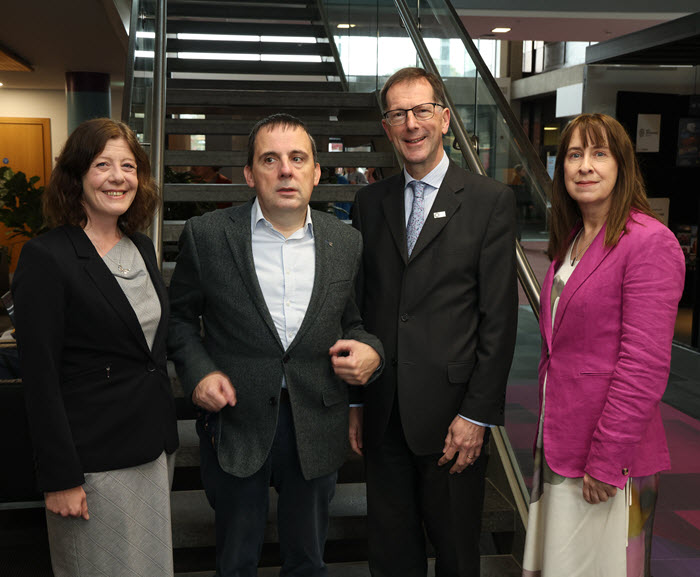
L:R Dr. Deirdre McHugh (University of Galway), Dr. Donal Fitzpatrick, Prof. David Burn, President, University of Galway, Dr Helen Maher (University of Galway)
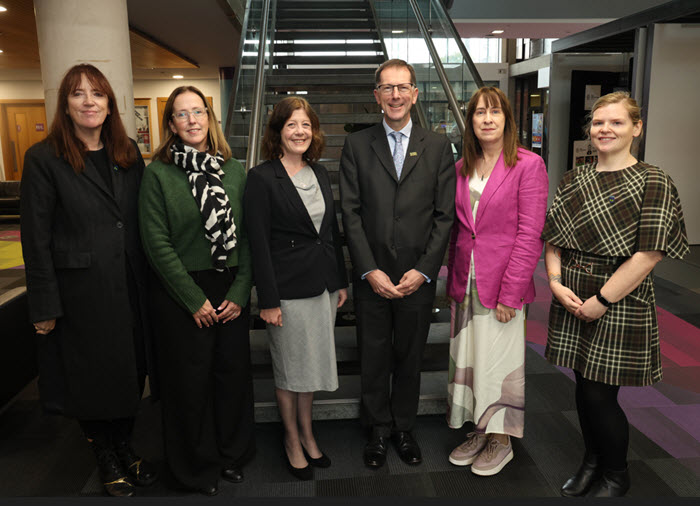
L:R Dr. Bairbre Flemming (UCD), Dr. Maureen Haran (ATU), Dr. Deirdre McHugh (University of Galway), Prof. David Burn, President, University of Galway, Dr Helen Maher (University of Galway) and Dr. Lisa Padden (UCD)
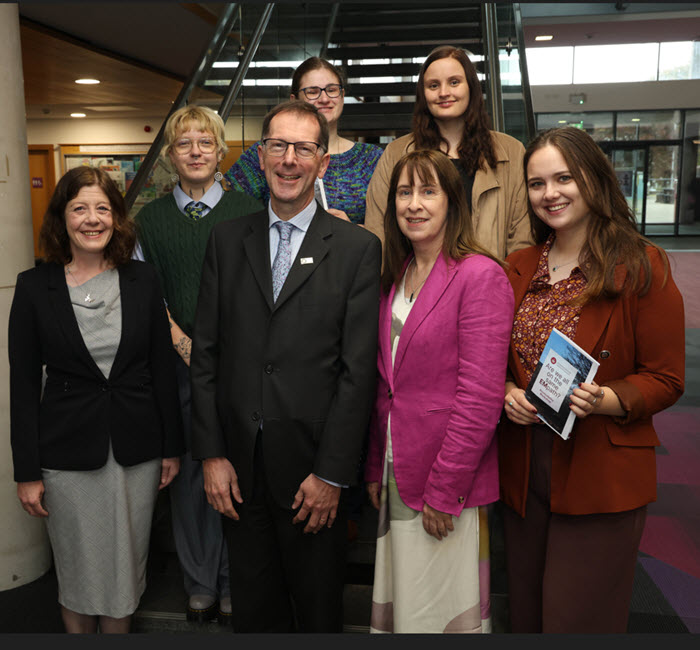
Front Row: Dr, Deirdre McHugh, Prof. David Burn, President, Dr Helen Maher & Róisín Birch (Access Centre)
Back Row: Izzy Tiernan, Miriam Collins, Niamh Griffin ( University of Galway Students)
EDI News
Nov 12th 2025
University of Galway celebrates success at the Irish National Athena Swan Awards 2025 (November)
Sept 29th 2025
University of Galway adopts the ALTITUDE Charterter
June 12th 2025
University of Galway submit their first Athena Swan Silver Application