-
Courses
Courses
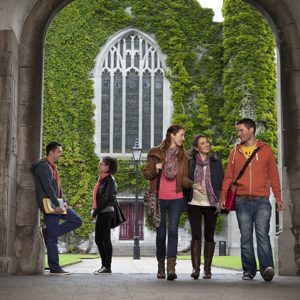
Choosing a course is one of the most important decisions you'll ever make! View our courses and see what our students and lecturers have to say about the courses you are interested in at the links below.
-
University Life
University Life
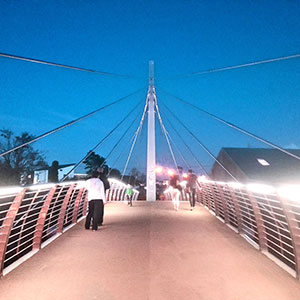
Each year more than 4,000 choose University of Galway as their University of choice. Find out what life at University of Galway is all about here.
-
About University of Galway
About University of Galway
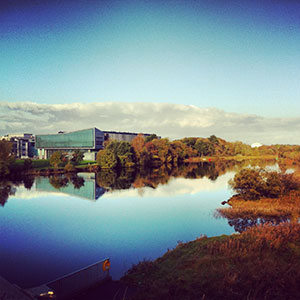
Since 1845, University of Galway has been sharing the highest quality teaching and research with Ireland and the world. Find out what makes our University so special – from our distinguished history to the latest news and campus developments.
-
Colleges & Schools
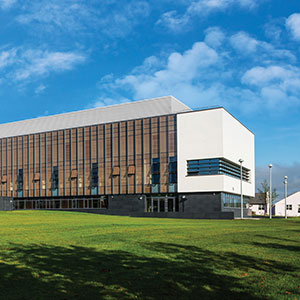
Colleges & Schools
University of Galway has earned international recognition as a research-led university with a commitment to top quality teaching across a range of key areas of expertise.
-
Research & Innovation
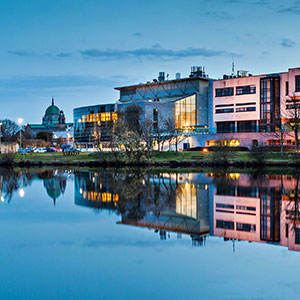
Research & Innovation
University of Galway’s vibrant research community take on some of the most pressing challenges of our times.
-
Business & Industry
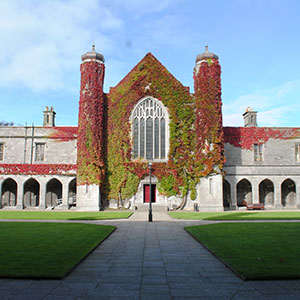
Guiding Breakthrough Research at University of Galway
We explore and facilitate commercial opportunities for the research community at University of Galway, as well as facilitating industry partnership.
-
Alumni & Friends
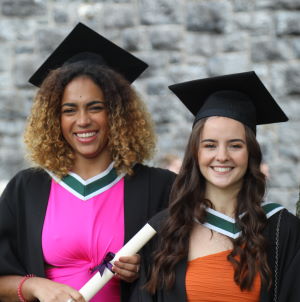
Alumni & Friends
There are 128,000 University of Galway alumni worldwide. Stay connected to your alumni community! Join our social networks and update your details online.
-
Community Engagement
Community Engagement
At University of Galway, we believe that the best learning takes place when you apply what you learn in a real world context. That's why many of our courses include work placements or community projects.
 Accessibility & Language
News & Events
“Afghanistan – a forgotten yet deteriorating crisis”
May
11
2026
Posted: 14:32 IST
“Afghanistan – a forgotten yet deteriorating crisis”
Wednesday 13 May 1-2.30pm Irish Centre for Human Rights
Seminar Room
All welcome
Tea, coffee, and light refreshments will be provided.
Co-hosted by the Irish Centre for Human Rights and the Centre for Global Women’s Studies, University of Galway
About the United Nations mandate: https://www.ohchr.org/en/special-procedures/sr-afghanistan
About the Speaker
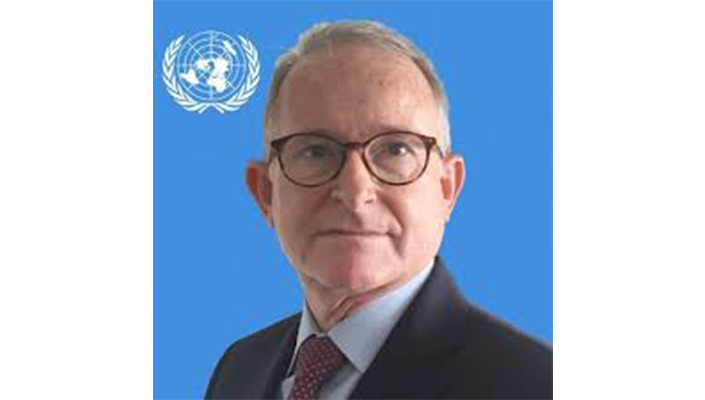
On 1 April 2022, Mr. Richard Bennett was appointed as the Special Rapporteur on the situation of human rights in Afghanistan. He officially assumed duties on 1 May 2022.
Mr. Bennett has served in Afghanistan on several occasions in different capacities including as the Chief of the Human Rights Service with the United Nations Assistance Mission in Afghanistan (UNAMA). He has previously played a role in the promotion and protection of human rights in Afghanistan and supported the United Nations on a number of human rights issues, such as protection of civilians, transitional justice, child rights, rule of law, rights of people with disabilities, protection of human rights defenders and a range of economic, social and cultural rights.
Mr. Bennett also served with the United Nations as the Representative of the High Commissioner for Human Rights and head of the human rights components of peacekeeping operations in Sierra Leone, Timor-Leste, and South Sudan as well as twice in Afghanistan (2003-07 and 2018-19). He has been a long-term adviser to the Afghanistan Independent Human Rights Commission.
From 2007 to 2010, Mr. Bennett was the Representative of the High Commissioner for Human Rights in Nepal and head of OHCHR’s office there. He has also been Chief of Staff for the UN Secretary-General’s Panel of Experts on Sri Lanka and Special Adviser to the Assistant Secretary General for Human Rights in New York.
Mr. Bennett worked for Amnesty International from 2014 – 17 initially as its Asia-Pacific Program Director and later as head of Amnesty’s United Nations Office in New York. From mid-2019, he worked as a consultant on UN human rights assignments in Afghanistan, Myanmar and New York.
On 7 October 2021, the Human Rights Council adopted resolution 48/1 establishing the mandate of a Special Rapporteur on the situation of human rights in Afghanistan. A previous mandate by the Commission on Human Rights was terminated in 2005.