-
Courses
Courses
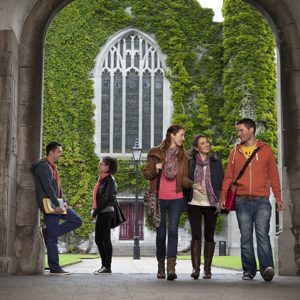
Choosing a course is one of the most important decisions you'll ever make! View our courses and see what our students and lecturers have to say about the courses you are interested in at the links below.
-
University Life

University Life
Each year more than 4,000 choose University of Galway as their University of choice. Find out what life at University of Galway is all about here.
-
About University of Galway
About University of Galway
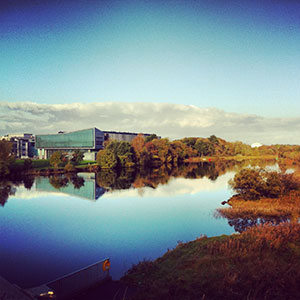
Since 1845, University of Galway has been sharing the highest quality teaching and research with Ireland and the world. Find out what makes our University so special – from our distinguished history to the latest news and campus developments.
-
Colleges & Schools
Colleges & Schools
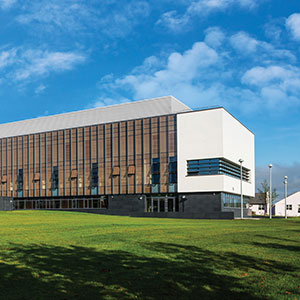
University of Galway has earned international recognition as a research-led university with a commitment to top quality teaching across a range of key areas of expertise.
-
Research & Innovation
Research & Innovation
University of Galway’s vibrant research community take on some of the most pressing challenges of our times.
-
Business & Industry
Guiding Breakthrough Research at University of Galway
We explore and facilitate commercial opportunities for the research community at University of Galway, as well as facilitating industry partnership.
-
Alumni & Friends

Alumni & Friends
There are 128,000 University of Galway alumni worldwide. Stay connected to your alumni community! Join our social networks and update your details online.
-
Community Engagement
Community Engagement
At University of Galway, we believe that the best learning takes place when you apply what you learn in a real world context. That's why many of our courses include work placements or community projects.
 Accessibility & Language
News & Events
Let’s Talk Research: Greek Crisis Cinema - Language, Violence, and Silence
Feb
23
2026
Posted: 16:55 GMT
Join us for 'Greek Crisis Cinema: Language, Violence, and Silence' with Aleksander Rammos as part of our Let’s Talk Research Seminar Series.
When: 1pm, Tuesday, 3 March 2026
Where: Seminar Room, Irish Centre for Human Rights, University of Galway
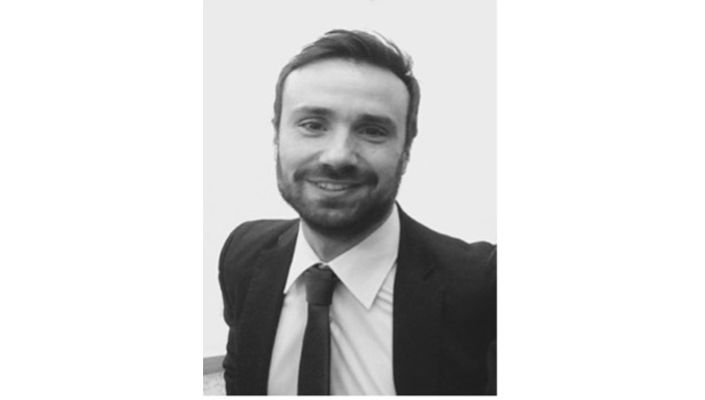
About the speaker:
Aleks is a PhD candidate in Law at University of Galway, Irish Centre for Human Rights. He holds an MSc in Forensic Psychiatry from the Medical School of Athens, an LL.M. in International Dispute Settlement (MIDS) from the Geneva Graduate Institute and the University of Geneva, and an LL.M. in Public Law from the University of Athens.
Before starting his PhD, he worked in Athens as a lawyer in commercial arbitration and litigation. He also served as a Legal Officer in the Greek Coast Guard in Piraeus, and taught law at the Greek Police Academy (High-Ranking Officials) in Athens.
Abstract:
Law runs on words: who is heard, who is doubted, who is talked over, and who is pushed into silence. Silence can be a choice, but it can also be pressure. It can carry fear, need, and demand, even when nothing is said.
Soul Kicking (Soul in Mouth) (2006), directed by Yannis Economides, shows this with brutal clarity. The film is wall-to-wall speech—shouting, swearing, insults, orders, threats. The words don’t stop. They fill the room and leave no space to breathe.
And in the middle of all that noise is the main character, almost silent. He doesn’t answer back. He doesn’t defend himself. He absorbs it. His silence isn’t peace. It’s strain. It’s a way of surviving. It’s also a kind of trap: the person is there, but his voice is missing.
The film asks a hard question: when someone cannot speak, can the law still notice what their silence is carrying?