-
Courses
Courses
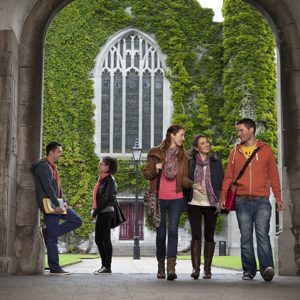
Choosing a course is one of the most important decisions you'll ever make! View our courses and see what our students and lecturers have to say about the courses you are interested in at the links below.
-
University Life
University Life
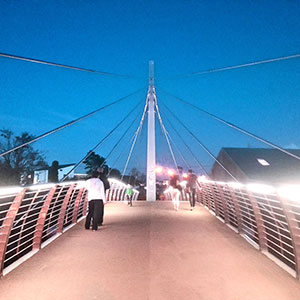
Each year more than 4,000 choose University of Galway as their University of choice. Find out what life at University of Galway is all about here.
-
About University of Galway
About University of Galway
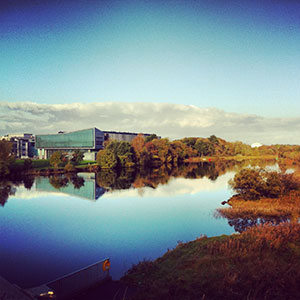
Since 1845, University of Galway has been sharing the highest quality teaching and research with Ireland and the world. Find out what makes our University so special – from our distinguished history to the latest news and campus developments.
-
Colleges & Schools
Colleges & Schools
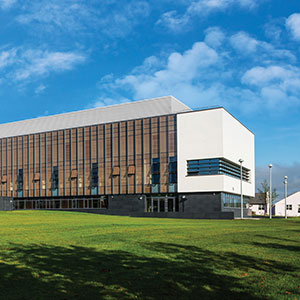
University of Galway has earned international recognition as a research-led university with a commitment to top quality teaching across a range of key areas of expertise.
-
Research & Innovation

Research & Innovation
University of Galway’s vibrant research community take on some of the most pressing challenges of our times.
-
Business & Industry
Guiding Breakthrough Research at University of Galway
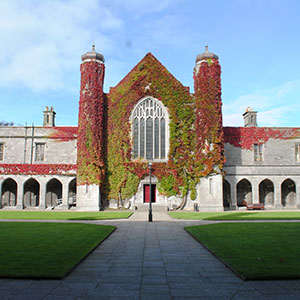
We explore and facilitate commercial opportunities for the research community at University of Galway, as well as facilitating industry partnership.
-
Alumni & Friends
Alumni & Friends
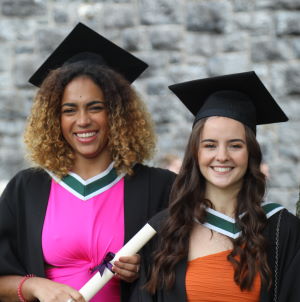
There are 128,000 University of Galway alumni worldwide. Stay connected to your alumni community! Join our social networks and update your details online.
-
Community Engagement
Community Engagement
At University of Galway, we believe that the best learning takes place when you apply what you learn in a real world context. That's why many of our courses include work placements or community projects.
 Accessibility & Language
BE-VENT
Welcome to the BE-VENT Research Project
 (The Impact of Occupant Behaviour on Ventilation and Indoor Air Quality in Irish Energy-Efficient Homes)
The BE-VENT research project explores how people’s everyday habits affect ventilation and indoor air quality (IAQ) in energy-efficient homes.
As homes become more airtight to save energy, it’s crucial to ensure sufficient fresh air to maintain occupant health and comfort. By understanding how residents use ventilation systems and how their habits influence air quality, we aim to inform better design, policies, and resident education. Ultimately, BE-VENT seeks to create healthier, more sustainable homes for the future by optimising both energy efficiency and indoor environmental health.
The BE-VENT research project is funded by the SEAI (Sustainable Energy Authority of Ireland).
About the Study
The BE-VENT project is an interdisciplinary research study investigating how occupant behaviour impacts ventilation and IAQ in Irish energy-efficient homes.
Energy-efficient buildings conserve heat and reduce energy use through improved airtightness and insulation. This design relies on either natural, mechanical or hybrid ventilation to circulate fresh air. Good ventilation is key to removing stale air, moisture and indoor pollutants. Poor ventilation can lead to reduced IAQ, potentially impacting occupant health and comfort. This project examines how specific behaviours, such as opening windows, operating ventilation systems, or cooking, influences IAQ.
Our approach:
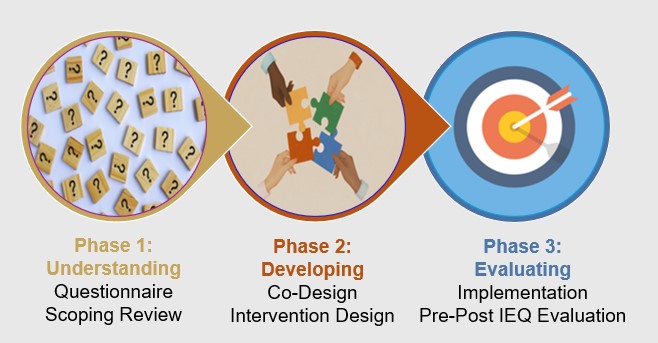
- Conducting a national survey in Ireland, to understand behaviours and attitudes towards ventilation, and knowledge/risk perception to IAQ.
- Conducting detailed IAQ monitoring in homes to measure key indoor air pollutants.
- Conducting a scoping review of existing literature to synthesis up-to-date knowledge on occupant knowledge and attitudes towards ventilation and IAQ.
- Collaborating with residents in co-design workshops to develop practical, evidence-based interventions for improving home air quality and ventilation behaviour.
- Designing both generic and individualised behaviour change strategies informed by real-world data and research findings.
Overall, this project will provide valuable insights for residents, policymakers, and building professionals to support healthier living environments in energy-efficient homes across Ireland.
How can I take part?
All recruitment for this project is currently completed.
Completed/Closed Activities
- ⛔ National Survey (Closed – Analysis Phase)
- Thank you to everyone who participated! Our national survey on ventilation behaviours and IAQ awareness is now closed. Results will inform future interventions.
- ⛔ Intervention Studies (Closed – Analysis Phase)
- Thank you to everyone who participated! Our co-design workshops on collaborating to design the Be-Vent interventions are now closed. Results will inform the final versions of the interventions.
- ⛔ Intervention Studies (Recruitment Completed)
- Recruitment for both the Personalised Intervention (tailored IAQ feedback), Generalised Intervention (educational leaflet) and the Control Group is now closed. Selected participants will be notified soon.
Thank you to all participants contributing to healthier, more sustainable Irish homes!
Research Dissemination
- There are currently no upcoming updates – keep an eye here for news!
Past Presentations and Posters
- 🏠October 2025: International Society of Exposure Science (ISES) Europe Workshop
- Poster Presentation: “Impact of occupant behaviour on ventilation and indoor air quality in Irish energy-efficient homes (Be-Vent)”
- Audience: presented to aerosol exposure scientists.
- Focus: occupant engagement with the indoor environment.
- 🏡June 2025: Healthy Buildings Europe Conference
- Poster Presentation: “Impact of occupant behaviour on ventilation and indoor air quality in Irish energy-efficient homes (Be-Vent)”
- Audience: presented to aerosol scientists and building specialists.
- Focus: occupant engagement with the indoor environment.
- 👥April 2025: Behaviour Change for Health and Sustainability Conference
- Poster Presentation: “Impact of occupant behaviour on ventilation and indoor air quality in Irish energy-efficient homes (Be-Vent)”
- Audience: presented to behaviour change scientists and industry professionals.
- Focus: occupant behaviour around ventilation and the indoor environment.
Publications
- Peer-Reviewed Articles: Currently in preparation. Check back for updates!
- Project Reports: Findings will be shared via the SEAI and project partners upon completion.
Press Releases
Project updates and significant findings will be announced here and via university channels. (None currently – check back here after key milestones!)
Helpful Resources
Educational Leaflet
Check back later to see our leaflet on ventilation and indoor air quality in your home!
Helpful Resources
Want to learn more? Explore these trusted resources for more information and guidance!
- Understanding Air Quality
-> Interactive tour of the indoor air quality demo home (Environmental Protection Agency)
https://www.epa.gov/indoor-air-quality-iaq/interactive-tour-indoor-air-quality-demo-house
-> What’s in the air your home? (GOV.UK)
https://www.rbkc.gov.uk/sites/default/files/pdfs/Indoor%20air%20quality%20leaflet.pdf
-> Indoor Air Quality: Why it matters and how to improve it (Cleveland Clinic)
https://health.clevelandclinic.org/indoor-air-quality
-> Air Quality Matters – A Podcast Series
https://www.airqualitymatters.net/podcast
- Understanding Ventilation
-> Why you need proper ventilation in your home (GOV.IE)
https://assets.gov.ie/static/documents/why-you-need-proper-ventilation-in-your-home.pdf
-> Ventilation: Essential for a health home (Centre for Sustainable Energy)
https://www.cse.org.uk/advice/ventilation/
-> A homeowner’s guide to ventilation (Sustainable Energy Authority of Ireland)
https://www.seai.ie/sites/default/files/publications/Homeowners-Guide-To-Ventilation.pdf
-> Additional home user guides (Construct Innovate)
https://constructinnovate.ie/2025/05/home-user-guides-templates-and-best-practice/
- Radon Information and Testing
-> You can visit the EPA website and enter your Eircode to see your area’s radon risk level
https://gis.epa.ie/EPAMaps/Radon?&lid=EPA:RadonRiskMapofIreland
-> Additional services: Please check here for information on Radon testing
https://www.epa.ie/environment-and-you/radon/radon-testing/#d
- Air Quality Monitoring and Sensors
-> How to borrow Radon sensors from public libraries around Ireland
-> https://www.epa.ie/environment-and-you/radon/events-and-campaigns/
-> Citizen science research happening in air quality around Ireland!
https://www.epa.ie/take-action/in-the-community/citizen-science/clean-air-projects/
Meet the Team
Dr. Marie Coggins is the project PI for BE-VENT, she is an Exposure Science lecturer at the School of 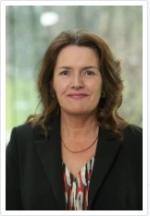 Natural Sciences, and a member of the Centre for One Health group in the Ryan Institute, and Construct Innovate at University of Galway. She has previously led two SEAI funded research projects SEAI/RDD/204/435, related to the measurement of a range of indoor air pollutants and thermal comfort in deep energy retrofitted domestic dwellings. Dr. Coggins is the Irish Representative on the “International Energy Agency Technology Collaboration Programme – Annex 5 (Air Infiltration and Ventilation Centre – AIVC)”. She is also a member of the NSAI/TC 40 which will oversee the revision of Ireland’s Code of Practice for the energy efficient retrofit of dwellings, S.R. 54:2014, to include a new section on IAQ.
Dr. Victoria Hogan is the project co- PI for BE-VENT, and a lecturer in Occupational Health and  Wellbeing in the School of Health Sciences and is a member of the Health Promotion Research Centre at the University of Galway. She has extensive experience in mixed method social science research. She has been co-investigator on a number of occupational and environmental health research projects funded by external agencies such as the Sustainable Energy Authority of Ireland, the Institution of Occupational Safety and Health, the Health and Safety Authority and the Equality Authority. She is currently a co-investigator on research project SEAI/RDD/435, which aims to study the health impact and associated economic benefits to householders of the energy retrofit of domestic dwellings. She has authored 60 journal, report and conference outputs. Her work has been cited 368 times resulting in a h-index of 10 and an i10index of 11.
Dr. Hala Hassan is the post-doctoral researcher on BE-VENT, based at the Physics Unit at University of  Galway. Dr. Hassan received her PhD in Civil and Environmental Engineering from University of Surrey, UK. She also has BSc and MSc in Chemical Engineering from University of Khartoum (Sudan) and Texas A&M University (USA). Before joining the University of Galway, she worked as a researcher at Texas A&M University at Qatar as part of the Sustainable Energy and Clean Air Research team. Her research activities focused on the environmental and health impacts of fugitive particulate matter in arid and semi-arid areas, the chemical characterization of indoor and outdoor PM. Dr. Hassan is currently working on a SEAI funded project, ARDEN (RDD204), which is looking at the impact of deep energy retrofit on indoor air quality, ventilation, and thermal comfort in Irish dwellings.
Medeina Macenaite is a PhD candidate on the BE-VENT project. Holding an MSc in Health Psychology  and a BA in Psychology from the University of Galway, she has contributed to multiple research projects within the School of Psychology. Her work spans psychometric development, stakeholder analysis, and the role of emotional appeals in health communication. Most recently, she investigated the health impacts and economic benefits of energy retrofits as a Research Assistant on the SEAI-funded project RDD/435. Within BE-VENT, she applies this background to analyse occupant behaviours and perceptions in our national survey, develop evidence-based behavioural change interventions, and integrate psychological insights into co-design workshops.
Professor Fiona Fylan is a Health Psychologist and research collaborator on BE-VENT. Fiona leads the Sustainable Behaviour team within the Leeds Sustainability Institute at the Leeds Beckett University, UK. She has a wealth of experience in applying behavioural sciences to better understand behaviour and to develop and evaluate interventions to change behaviour. She has expertise in areas such as energy use, transport choices, road user behaviour and healthcare provision, and she also leads social sciences research on public perceptions of hydrogen as a domestic fuel. Professor Fylan has joined BE-VENT project as Consultant on behavioural psychology.
Contact Us
We welcome enquiries about the project. Please contact:
Dr. Hala Hassan, Postdoctoral Researcher,
Centre for Climate and Air Pollution Studies (C-CAPS),
Physics, School of Natural Sciences,
University of Galway, Co. Galway.
Email: hala.hassan@universityofgalway.ie
Direct line: +353 (0)91 493596
Project
Partners