-
Courses
Courses
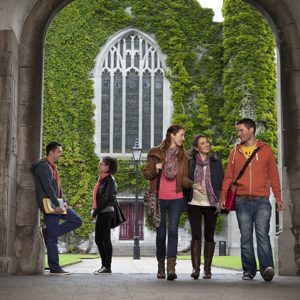
Choosing a course is one of the most important decisions you'll ever make! View our courses and see what our students and lecturers have to say about the courses you are interested in at the links below.
-
University Life
University Life
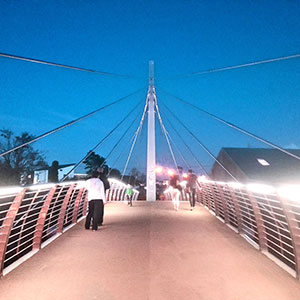
Each year more than 4,000 choose University of Galway as their University of choice. Find out what life at University of Galway is all about here.
-
About University of Galway
About University of Galway
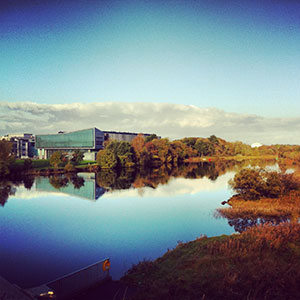
Since 1845, University of Galway has been sharing the highest quality teaching and research with Ireland and the world. Find out what makes our University so special – from our distinguished history to the latest news and campus developments.
-
Colleges & Schools
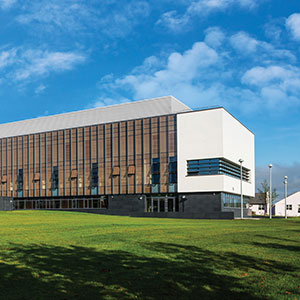
Colleges & Schools
University of Galway has earned international recognition as a research-led university with a commitment to top quality teaching across a range of key areas of expertise.
-
Research & Innovation
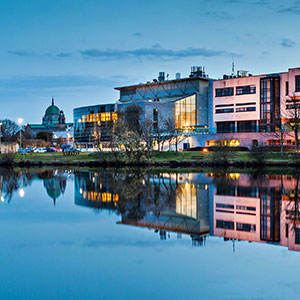
Research & Innovation
University of Galway’s vibrant research community take on some of the most pressing challenges of our times.
-
Business & Industry
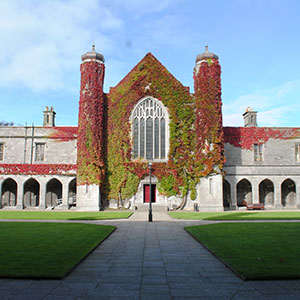
Guiding Breakthrough Research at University of Galway
We explore and facilitate commercial opportunities for the research community at University of Galway, as well as facilitating industry partnership.
-
Alumni & Friends
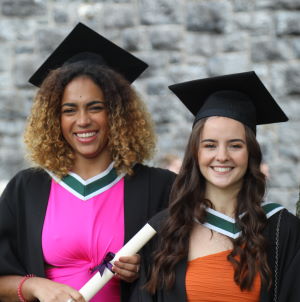
Alumni & Friends
There are 128,000 University of Galway alumni worldwide. Stay connected to your alumni community! Join our social networks and update your details online.
-
Community Engagement
Community Engagement
At University of Galway, we believe that the best learning takes place when you apply what you learn in a real world context. That's why many of our courses include work placements or community projects.
 Accessibility & Language
Dr Eoghan Dunne
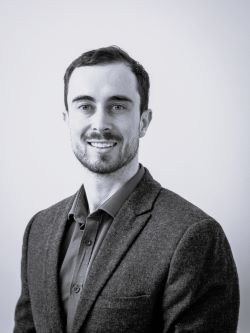 Dr Eoghan Dunne is a Lecturer in Biomedical Engineering at the University of Galway, Adjunct Lecturer in the School of Medicine, and Co-Director of the Translational Medical Device Lab (TMDLab).
His research focuses on the electromechanics of biological tissue and how mechanical forces alter electrical behaviour in living systems. This work aims to transform how electromagnetic energy is measured, delivered, and controlled in medical technologies.
His research programme has two core themes:
- Electromechanical biophysics of tissue:Understanding how deformation, pressure, and structural changes in tissue alter electrical properties across frequencybands. This work addresses fundamental limitations in current models used for electromagnetic sensing, ablation therapies, and bioelectrical diagnostics.
- Translational of electromechanical medical devices: Developing new medical technologies that convert these fundamental insights into practical clinical tools for sensing, monitoring, and therapy.
Dr Dunne’s work sits at the interface of engineering, medicine, and commercial translation. Across industry and academia he has contributed to the development of several medical technologies, including:
- Electrical impedance tomography systems for vesicoureteral reflux (Kite Medical)
- Pulsed field ablation systems for atrial fibrillation (AuriGen Medical)
- Ablation monitoring technologies for lung cancer (Endowave Medical)
- Smart crossing technologies for chronic total occlusion interventions (Versono Medical)
He has secured over €4 million in competitive funding from Enterprise Ireland, the Government of Ireland, and European programmes including ERASMUS+.
Dr Dunne has authored 32+ peer-reviewed publications, including work in IEEE Transactions on Biomedical Engineering, and was awarded IEEE Senior Membership in 2026 in recognition of his significant innovation and engineering contributions to MedTech.
He works closely with clinicians, engineers, and BioInnovate Fellows to transform unmet clinical needs into new medical technologies, bridging fundamental biophysics and deployable healthcare solutions.