-
Courses
Courses
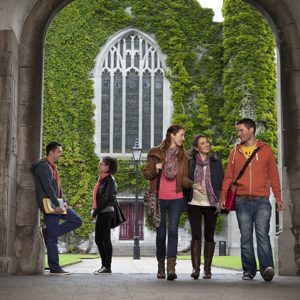
Choosing a course is one of the most important decisions you'll ever make! View our courses and see what our students and lecturers have to say about the courses you are interested in at the links below.
-
University Life

University Life
Each year more than 4,000 choose University of Galway as their University of choice. Find out what life at University of Galway is all about here.
-
About University of Galway

About University of Galway
Since 1845, University of Galway has been sharing the highest quality teaching and research with Ireland and the world. Find out what makes our University so special – from our distinguished history to the latest news and campus developments.
-
Colleges & Schools
Colleges & Schools
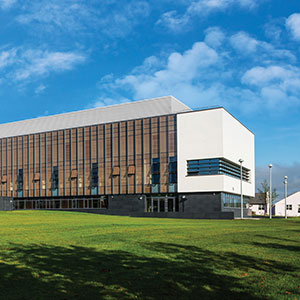
University of Galway has earned international recognition as a research-led university with a commitment to top quality teaching across a range of key areas of expertise.
-
Research & Innovation

Research & Innovation
University of Galway’s vibrant research community take on some of the most pressing challenges of our times.
-
Business & Industry
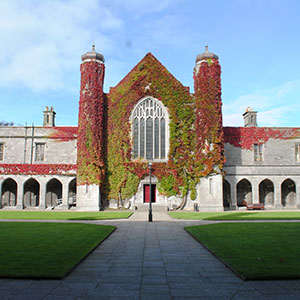
Guiding Breakthrough Research at University of Galway
We explore and facilitate commercial opportunities for the research community at University of Galway, as well as facilitating industry partnership.
-
Alumni & Friends

Alumni & Friends
There are 128,000 University of Galway alumni worldwide. Stay connected to your alumni community! Join our social networks and update your details online.
-
Community Engagement
Community Engagement
At University of Galway, we believe that the best learning takes place when you apply what you learn in a real world context. That's why many of our courses include work placements or community projects.
 Accessibility & Language
Second Year
Welcome to Second Year!
We are delighted that you have decided to choose to continue with your studies of Philosophy and are very much looking forward to working with you in the coming year.
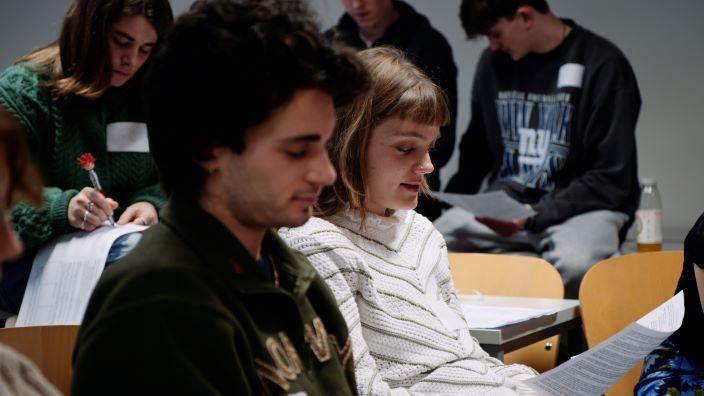
There are two compulsory modules in second-year (one per semester). These modules in combination bring you through a key epoch in Philosophy (from the end of the Sixteenth to the beginning of the Nineteenth Centuries). The other modules are all optional and address a wide range of philosophical topics and interests. Full information is available in our Philosophy Handbook for 2nd Year Arts 2026-27 (UPDATED 09.09.26).pdf. You should choose up to two of these per semester to ensure your workload is balanced. You should study a maximum of three modules of philosophy in each semester.
To choose courses to help you progress your interests and learning aims, please read the handbook and reach out to the second-year coordinator (Dr. Lucy Elvis) if you need guidance when making your selection.
Relevant questions to consider are: what modules might compliment the other subject in your degree? What will make sure you engage with a broad range of philosophical ideas? What modules will help you develop your interests? Which modules might help you develop important skills for your future career?
To succeed in second-year you will need to attend all of your classes in person, so make sure you do not choose modules that clash with your other commitments. Remember that attending class is an important part of the University's student code of conduct.
Head of Second Year:
Dr. Lucy Elvis lucy.elvis@universityofgalway.ie
Second Year Modules
Semester 1:
- PI2111 Themes in the History of Modern Philosophy: Rationalism (compulsory)
plus two of the following optional modules:
- PI240 Bioethics
- PI247 Nietzsche and Philosophy
- PI2113 Topics in Ancient Philosophy
- PI2114 Themes in American Philosophical Thought
Semester 2: three of the following optional modules:
- PI2112 Themes in the History of Modern Philosophy: Empiricism and Beyond (compulsory)
plus two of the following optional modules: - PI207 Philosophy of Art
- PI241 History of Irish Thought
- PI248 Phenomenology
- PI2102 Formal Logic
- PI2105 Philosophical Inquiry through P4C
- PI2115 Professional Philosophy: academic event organisation and management
- PI3105 Philosophy of Nature
Timetables
Compulsory/Optional Courses:
PI2111 and PI2112 are compulsory; all other second-year modules are optional. You should take three modules each semester. There may be occasional conflicts with other subjects. Before you register, make sure there are no conflicts with modules that you will be taking in your other subject.
Provisional teaching timetable
2nd Arts Semester One 2026/27
| Code | Title | Lecturer | Lecture |
|---|---|---|---|
| PI2111 | Themes in the History of Modern Philosophy: Rationalism | Prof. Felix Ó Murchadha |
Wednesday 9-10, CSB-G005 |
| PI240 | Bioethics | Dr. Nora Ward | Tuesday, 10-11, CSB-1005 Wednesday, 1-2, Thomas Dillon Theatre |
| PI247 | Nietzsche and Philosophy | Dr. Tsarina Doyle | Mondays, 4-6pm, CA116a |
| PI2113 | Topics in Ancient Philosophy | Dr. Lucy Elvis |
Tuesday, 11-12, CSB-1009 |
| PI2114 | Themes in American Philosophical Thought | Dr. Tsarina Doyle |
Mondays, 9-11, CSB-1008 |
2nd Arts Semester Two 2026/27
| Code | Title | Lecturer | Lecture |
|---|---|---|---|
| PI2112 | Themes in the History of Modern Philosophy: Empiricism and Beyond | Dr. Tsarina Doyle |
Mondays 9-10, CSB-1009 Wednesdays 9-10, CSB-G005 |
| PI207 | Philosophy of Art | Dr. Lucy Elvis |
Tuesdays 10-11 at AMB 1023, |
| PI210 | Moral and Political Philosophy | Dr. Orla Richardson |
Thursdays, 1-3pm |
| PI241 | History of Irish Thought | Dr. John O'Reilly | Mondays, 10-11, CSB-1009 Mondays, 11-12, CSB-1008 |
| PI248 | Phenomenology | Prof. Felix Ó Murchadha | Thursdays, 3-5pm, CA003 |
| PI2102 | Formal Logic | Dr. Nick Tosh |
Monday 6-7, AC214 |
| PI2105 | Philosophical Inquiry through P4C | Dr. Orla Richardson | Thursdays, 10-12 (Seminar Room, 19 Distillery Rd) |
| PI2115 | Professional Philosophy: Academic event organisation and management | Dr. Tsarina Doyle | Mondays, 12-2, (Seminar Room, 19 Distillery Rd) |
| PI3105 | Philosophy of Nature | Dr. John Paulie | TBA |
Individual Course details
THEMES IN THE HISTORY OF MODERN PHILOSOPHY: RATIONALISM (compulsory module)
|
Code |
Semester |
ECTS |
|---|---|---|
|
PI2111 |
1 |
5 |
Lecturer: Prof. Felix Ó Murchadha
Course description: This course discusses the rationalist philosophy of René Descartes, Baruch Spinoza and Gottfried Wilhelm Leibniz. These philosophers each attempted to give a solid grounding to science, ethics and theology through a thoroughgoing rationalist metaphysics. In examining these accounts we will pay special attention to the historical context of their respective systematic accounts of knowledge and reality.
Teaching and learning methods: The course is lecture-based, supplemented by compulsory tutorials.
Methods of assessment and examination: Overall assessment is by written exam, plus continuous assessment based on participation in Lectures and in small group exercises.
Core Texts:
Selected passages from the following text will be considered:
Roger Ariew & Eric Watkins (eds) Modern Philosophy: An Anthology of Primary Sources (Indianapolis: Hackett Publishing Co., 1998).
Supplementary Reading: Felix Ó Murchadha: The Formation of the Modern Self: Reason, Happiness and the Passions (London: Bloomsbury, 2022)
THEMES IN THE HISTORY OF MODERN PHILOSOPHY: EMPIRICISM AND BEYOND (compulsory module)
| Code | Semester | ECTS |
|---|---|---|
| PI2112 | 2 | 5 |
Lecturers: Dr. Tsarina Doyle
Course description: This course examines the empirical philosophy of John Locke, George Berkeley, and David Hume, along with Immanuel Kant’s response to empiricism. Thematically, the course focuses on the relation between empirical science and metaphysics. It does so by investigating the influence of the experimental methodology of the natural sciences on the thinking of the four philosophers and assesses its implications for their accounts of the human mind and the possibility of knowledge.
Teaching and learning methods: The course is lecture-based, supplemented by compulsory tutorials.
Methods of assessment and examination: Overall assessment is by written exam, plus continuous assessment based on participation in Lectures and in small group exercises.
Recommended Book Resources:
John Locke 1996, An Essay Concerning Human Understanding, Hackett Publishing Company Incorporated [ISBN: 087220216X]
David Hume, An Enquiry Concerning Human Understanding [ISBN: 1546545263] George Berkeley 1988, Principles of Human Knowledge and Three Dialogues Between Hylas and Philonous, Penguin UK [ISBN: 9780140432930]
Immanuel Kant 1998, Critique of Pure Reason, Cambridge University Press [ISBN: 0521657296]
John Locke 1996, An Essay Concerning Human Understanding, Hackett Publishing Company Incorporated [ISBN: 087220216X]
David Hume, An Enquiry Concerning Human Understanding [ISBN: 1546545263] George Berkeley 1988, Principles of Human Knowledge and Three Dialogues Between Hylas and Philonous, Penguin UK [ISBN: 9780140432930]
Immanuel Kant 1998, Critique of Pure Reason, Cambridge University Press [ISBN: 0521657296]
TOPICS IN ANCIENT PHILOSOPHY
|
Code |
Semester |
ECTS |
|---|---|---|
|
PI2113 |
1 |
5 |
Lecturers: Dr. Lucy ELvis
Course description:
We are told that we live in a time of widespread isolation and loneliness.
In this module, we look to the ancient's treatment of friendship and the way their ideas and methods are reprised in 20th century philosophy to explore an issue central to personal and civic life.
The course is structured around three close readings:
a) Plato’s Lysis and his Symposium (where friendship, and forms of love are explored)
b) Aristotle’s Nicomachean Ethics, (which explores the role of friendship in a flourished life)
c) Cicero’s On Friendship, (a dialogue that explores the role of honesty and other virtues in friendship)
These readings will be complemented by reflections from later philosophers who, in different ways, engaged with the legacy of these ideas for instance: Foucault, Derrida, Nussbaum, and Gadamer.
Teaching and learning methods: This module will be taught as fully analogue, in order to prioritise close reading and discussion. There will be no PowerPoint, students will be provided with a workbook and a reader. Use of Canvas will be limited to announcements and providing grades.
Methods of assessment and evaluation: Students will be assessed via continuous reflection, analysis and writing activities in class (30%) oral assessment (30%) and a final essay (40%) This means that attendance in class is key to success in this module as it will help you to a) build your grade and b) practice the skills that allow you to bring the content beyond the classroom.
Core Texts:
Plato. The Last Days of Socrates: Euthyphro, Apology, Crito, Phaedo. Translated by Christopher Rowe. New ed. London: Penguin Classics, 2010.
______The Republic. Translated by Desmond Lee. 2nd ed. London: Penguin Classics, 2007.
Aristotle. Poetics. Translated by Malcolm Heath. London: Penguin Classics, 1996.
Boethius. The Consolation of Philosophy. Translated by V. E. Watts. London: Penguin Classics, 1969.
BIOETHICS
|
Code |
Semester |
ECTS |
|---|---|---|
|
PI240 |
1 |
5 |
Lecturer: Dr. Nora Ward
Course description: This seminar is concerned with contemporary issues in Bioethics. It will introduce a variety of normative ethical theories to provide a foundation for the critical analysis of a range of issues arising from the biological and medical sciences. These are likely to include abortion, euthanasia/physician assisted suicide, disability, genetic modification and resource allocation. It is intended that students will gain knowledge of moral philosophy that equips them to evaluate some of the most pressing dilemmas facing biomedical practice.
Teaching and learning methods: The course is lecture-based, supplemented by tutorials.
Methods of assessment and examination: Overall assessment is by Continuous Assessment and group work (30%) and essay (70%).
Core Texts:
Beauchamp, T., & Childress, J., Principles of Biomedical Ethics, OUP, 1994.
Singer, P. (Ed), A Companion to Ethics, Blackwell, 1993.
NIETZSCHE AND PHILOSOPHY
|
Code |
Semester |
ECTS |
|
PI247 |
1 |
5 |
Lecturer: Dr Tsarina Doyle
Course description: This course shall introduce students to some of the central themes informing the philosophical writings of Friedrich Nietzsche. Comprising a close reading of his writings, it offers students an opportunity to explore such concepts as perspectivism, the will to power, nihilism, the death of God, master and slave morality, genealogy, the Ubermensch and eternal recurrence. Nietzsche’s response to traditional philosophical problems of truth and knowledge and his use of the language of falsification and illusion shall also be considered. All students shall be expected to engage in class discussions.
Teaching and learning methods: The course is lecture-based, supplemented by tutorials.
Methods of assessment and examination: Overall assessment is by written essay.
Core Texts:
Ansell Pearson, Keith and Large, Duncan (eds) 2006, The Nietzsche Reader, Blackwell.
Clarke, Maudemarie 1990, Nietzsche on Truth and Philosophy, Cambridge University Press.
Ansell Pearson, Keith, (ed.) 2006, A companion to Nietzsche, Blackwell.
May, Simon 1999, Nietzsche's Ethics and his War on 'Morality', Clarendon Press.
Schacht, Richard 1983, Nietzsche, Routledge and Kegan Paul.
Solomon, Robert C., and Higgins, Kathleen M. 1988, Reading Nietzsche, Oxford University Press.
PHENOMENOLOGY
|
Code |
Semester |
ECTS |
|---|---|---|
|
PI248 |
2 |
5 |
Lecturer: Prof. Felix Ó Murchadha
Course description: This course will familiarize students with the methods and themes Phenomenology focusing on the work of Husserl and Heidegger. The course will concentrate especially on such themes as consciousness, intentionality, reduction, truth, emotion embodiment, and the other.
Teaching and learning methods: The course is lecture-based, supplemented by tutorials.
Methods of assessment and examination: Continuous Assessment (35%) and a Final Assignment (Essay) (65%)
Core texts:
Heidegger, Martin: Being and Time (various translations)
Husserl, Edmund: The Essential Husserl (Indiana University Press, 1999)
Husserl, Edmund: The Idea of Phenomenology (Nijhoff 1973), available at https://babel.hathitrust.org/cgi/pt?id=mdp.49015002052539;view=1up;seq=7
Lévinas, Emmanuel: Totality and infinity: an essay on exteriority (Pittsburgh: Duquesne University Press 2005)
Merleau-Ponty, Maurice: Phenomenology of Perception (Routledge, 2005)
THEMES IN AMERICAN PHILOSOPHICAL THOUGHT
|
Code |
Semester |
ECTS |
|
PI2114 |
1 |
5 |
Lecturer: Dr. Tsarina Doyle
Course Description: This module examines a distinctively American contribution to philosophy by focusing on themes in American Pragmatism. It has been said that the development of Pragmatism ‘is to philosophy what the western is to cinema and jazz is to music – a peculiarly American addition to the genre.’ (Kenan Malik, ‘The closing of the mind’, New Statesman, London, Volume 14, Issue 679, October 2001, 52-53). The module will examine the emergence of Pragmatism in America in the nineteenth-century and trace the development of neo-pragmatism in the twentieth century. It will focus on Pragmatism’s attempt to offer a method to address issues in moral philosophy, epistemology, philosophy of science, philosophy of religion, philosophy of mind and the history of philosophy. Particular attention will be paid to the Pragmatist’s emphasis on conversation as a democratic vehicle to resolve disputes in these areas. Finally, the success of the Pragmatist method will be subjected to critical scrutiny.
Teaching and learning methods: The course is lecture-based, supplemented by tutorials.
Methods of assessment and examination: Assessment is based on a written essay at the end of the semester with continuous assessment added to the evaluation.
Recommended book resources:
Louis Menand 2001, The Metaphysical Club, Macmillan [ISBN: 0374199639]
Michael Bacon 2012, Pragmatism, Polity [ISBN: 9780745646657]
Cheryl Misak 2013, The American Pragmatists, Oxford University Press [ISBN: 9780199231201
PHILOSOPHY OF ART
|
Code |
Semester |
ECTS |
|---|---|---|
|
PI207 |
2 |
5 |
Lecturer: Dr. Lucy Elvis
Course description: This module is an introduction to philosophical approaches to various artforms across Western history of ideas. It gives students the skills to rigorously understand relevant key texts as well as critically discuss them in relation to a range of art practices and artworks. Whether pre-modern, modern, or contemporary, the philosophical approaches considered cover a variety of methods
including from the analytic and interpretive traditions. Similarly, the artforms discussed span a variety of historical periods, movements and categories.
Teaching and learning methods: The course is lecture-based, supplemented by tutorials.
Methods of assessment and examination:
Students are assessed in three ways in this course.
1) In-class participation recorded through responses to discussion question posed in class and posted to the LMS. (10%)
Student must be present to answer these questions- the online response area will only be open during class times. Students must attend all classes for this module unless they have a valid extenuating circumstance (i.e. illness.)
2) Interactive Oral (40%)
These group assessments will take place in week 12 and are based on content covered in the first 3-4 weeks of the semester. Students will be examined in groups 4-5 with interaction from their lecturer.
3) Essay (50%)
Students will submit an essay focused on one of the core questions covered in the course from weeks 4-11. The use of AI text-generation tools is not permitted in the planning, research or writing of this work.
Core Texts:
Gracyk, T., The Philosophy of Art, Polity Press
Carroll, N., Philosophy of Art: A Contemporary Introduction, Routledge
Hofstadter, A. and Kuhns, R., Philosophies of Art and Beauty: Selected Readings in Aesthetics from Plato to Heidegger, University of Chicago Press
Bredin, H. and Santoro-Brienza, L., Philosophies of Art and Beauty: Introduction to Aesthetics, Edinburgh University Press
MORAL AND POLITICAL PHILOSOPHY
|
Code |
Semester |
ECTS |
|
PI210 |
2 |
5 |
Lecturer: Dr. Orla Richardson
Course description: This module is an introduction to several important topics and questions in political and moral philosophy, such as: What, if anything, legitimises governmental authority and the exercise of political power? What is justice? What is the nature of citizenship? Is a free market a necessary component of a free society? What principles ground our fundamental notions of property rights, freedom, and equality? To explore these questions, we will begin by reading extracts from the Ancients, primarily Plato. We will then examine the ideas of Thomas Hobbes, John Locke, and Jean Jacques Rousseau. Finally, we will review texts by nineteenth century authors, like J.S. Mill and Karl Marx. Overall, the aim of this course is to trace the ideas that have shaped our contemporary political systems and to equip us to think critically about what conditions make ‘the good society’ possible.
Teaching and learning methods: The course is lecture-based, supplemented by discussion sessions utilising a community-of-inquiry approach to philosophical reflection.
Methods of assessment and evaluation:
- Continuous assessment: 6 Discussion Questions submitted over the course of the semester. Each worth 5% of your final grade.
- Written examination: Worth 70% of your final grade.
Core Texts: Steven M. Cahn, ed., Classics of Political and Moral Philosophy (Oxford University Press, 2011)
HISTORY OF IRISH THOUGHT
HISTORY OF IRISH THOUGHT
| Code | Semester | ECTS |
|---|---|---|
| PI241 | 2 | 5 |
Lecturers: Dr. John O’Reilly
Course Description: The course History of Irish Thought introduces the student to the thought of Irish men and women who have made a contribution to philosophical thought. This year the course will focus on two particular individuals, the 18th parliamentarian and writer Edmund Burke (1729 –1797) and the contemporary political philosopher Philip Pettit. Our main concern shall be to examine their respective contributions to questions of liberty, good government, and the sources of a just and stable society.
Teaching and learning methods: The course is lecture-based.
Methods of assessment and examination: The course will be evaluated by continuous assessment and final essay.
Core texts:
Burke, Edmund. Reflections on the Revolution in France, Penguin.
Burke, Edmund. Pre-Revolutionary Writings, CUP, 2009.
Pettit, Philip. Republicanism: A Theory of Freedom and Government, Oxford, 1999.
Pettit, Philip. On the People’s Terms: A Republican Theory and Model of Democracy, CUP, 2012
FORMAL LOGIC
| Code | Semester | ECTS |
|---|---|---|
| PI2102 | 2 | 5 |
Lecturer: Dr. Nick Tosh
Course description: Formal logic is the systematic study of deductive reasoning. It is motivated by such questions as ‘what does it mean to say that a piece of reasoning is “correct”?’, ‘how can we tell when a piece of reasoning is correct?’, and ‘could we program a machine to do the job for us?’ The course begins with the concept of validity, and then moves on to cover sentence logic, truth tables, natural deduction, and elementary predicate logic. Throughout, we lean heavily on Paul Teller’s Logic Primer, now freely available online (https://tellerprimer.ucdavis.edu/). No previous knowledge is assumed, but good study habits are essential. Readings and practice exercises will be set each week, and students who fall behind may find it difficult to catch up.
Teaching and learning methods: The course is lecture-based, supplemented by tutorials.
Methods of assessment and examination: Overall assessment is by written exam, supplemented by some short in-class written tests.
Core Texts:
Paul Teller, A Modern Formal Logic Primer, https://tellerprimer.ucdavis.edu/
PHILOSOPHICAL INQUIRY THROUGH P4C
| Code | Semester | ECTS |
|---|---|---|
| PI2105 | 2 | 5 |
Lecturers: Dr. Orla Richardson
Course description: This is a peer-assisted learning module. It focuses on an educational approach to learning called Philosophy for Children (P4C). P4C is a form of inquiry-based learning that encourages critical thinking through democratic dialogue. It is a pedagogy that helps to foster critical, creative, and caring thinking skills amongst all types of learners. Through this internationally practised pedagogy, groups of learners become ‘communities of inquiry’, tackling philosophical questions they themselves identify and formulate. Through thinking together, these communities learn to challenge assumptions, give reasons, and cultivate their critical thinking skills. The module will provide students with a theoretical introduction to the P4C pedagogy, the opportunity to experience the pedagogy as members of a community of inquiry, and the skills needed to become a P4C facilitator. Students will develop their own facilitation practice by delivering P4C workshops (in teams) to groups of University of Galway first-year philosophy students on campus at University of Galway.
Prerequisites:
- This module is capped at 21 students. Students should both choose the module at registration and fill out the expression of interest form. Should the module become oversubscribed, instructors will assess your responses to the form (and if relevant your previous engagement with Philosophy.) The form is available here
- In weeks 3 or 4 of the semester, there will be a Friday and Saturday training event (dates TBC). Attendance at these training events is compulsory for any student registered for PI2105.
- Garda vetting must be completed by any student participating in this module. Students will receive vetting information in week 2 of the semester.
Teaching and learning methods: This course is taught through a mixture of lectures and seminar-based learning.
Methods of assessment
1) Satisfactory participation in all classes - including assigned facilitation of P4C workshops - is required.
2) Students are required to submit a detailed “theory-to-practice” journal. In this journal, students will engage in theoretical reflection on the P4C pedagogy in response to short readings and will assess the impact of that reflection on their classroom practices.
3) Book module and associated lesson plan.
Core Texts: You are not required to purchase a textbook. All extracts from primary texts will be available on Canvas.
PROFESSIONAL PHILOSOPHY: ACADEMIC EVENT ORGANISATION AND MANAGEMENT
|
Code |
Semester |
ECTS |
|
PI2115 |
2 |
5 |
Lecturers: Dr. Tsarina Doyle
Course description: This module aims to equip students with practical experience of and the necessary skills to organise and manage an academic event with a philosophical focus. The outcome may range inform and scope from a small in-house event, such as a symposium or series of seminars, to a larger scale public-facing conference. The module will provide students with the necessary competencies to organise and manage all aspects of the event, including its design, coordination and implementation. They will learn how to issue a call for papers and conduct peer-reviews, and will acquire skills in effective programme planning and promotion of events. They will become proficient in budgeting, chairing, scheduling, website and social media management, and master coordinating logistics to ensure effective event delivery. Students will become practiced in applying the highest professional and ethical standards to event management with key consideration given to the environmental impact of event organisation and to equality, diversity and inclusion issues as they pertain to people management and public relations. On successful completion of the module and subject to satisfactory performance, students may be issued with a skills passport, which will be beneficial for future employment prospects.
Prerequisites: This module is capped at 10 students.
Teaching and learning methods: Workshops on various aspects of event management to include organising a keynote speaker, issuing a call for papers, conducting peer-reviews, programme planning and promoting the event, budgeting, chairing, in addition to website and social media management and application of professional and ethical standards in event management.
Methods of assessment: continuous assessment
Recommended book resources:
Anthony Weston 2009, A rulebook for arguments, Hackett Pub. Indianapolis, Ind. [ISBN: 0872209]
Fiona Campbell, Alison Robinson, Sally Browna 2003, Essential Tips for Organizing Conferences & Events, Routledge [ISBN: 0749440392]
Amy E. Zelmer, A. C. Lynn Zelmer, Organising Academic Conferences, Higher Education Research and Development Society of Australasia Campbelltown, N.S.W. [ISBN: 0-908557-18-3]
PHILOSOPHY OF NATURE
| Code | Semester | ECTS |
|---|---|---|
| PI3105 | 2 | 5 |
Lecturers: Dr. John Paulie
Course description: Course Description: In this module, we will examine the relationship between human beings and nature, with special attention to urgent environmental problems. Along the way, we will ask, “what is nature” and “what are the human responsibilities to nature”? These philosophical questions will be addressed from numerous points of view and students will be encouraged to develop their own views in relation to our readings. In the final section of the module, we will closely examine how the human concept of nature in western culture has led to self-destructive environmental disasters and how we might reimagine the concept of nature according to philosophical reflection.
Teaching and learning methods: lecture/discussion, supplemented with tutorials
Methods of assessment: continuous assessment (20%), mid-module essay assignment (40%) and a final essay assignment (40%)
Recommended book resources:
Latour, Bruno: Facing Gaia, Eight Lectures on the New Climate Regime (trans. By Catherine Porter). Polity, 2017.
Latour, Bruno: Down to Earth: Politics in the New Climatic Regime (trans. by Catherine Porter). Polity. 2018.
Plumwood, Val: Feminism and the Mastery of Nature, Routledge, 2002.