-
Courses
Courses
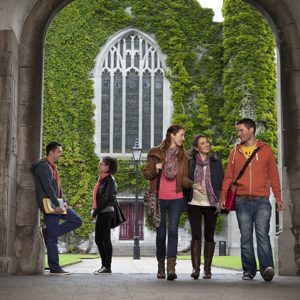
Choosing a course is one of the most important decisions you'll ever make! View our courses and see what our students and lecturers have to say about the courses you are interested in at the links below.
-
University Life

University Life
Each year more than 4,000 choose University of Galway as their University of choice. Find out what life at University of Galway is all about here.
-
About University of Galway

About University of Galway
Since 1845, University of Galway has been sharing the highest quality teaching and research with Ireland and the world. Find out what makes our University so special – from our distinguished history to the latest news and campus developments.
-
Colleges & Schools
Colleges & Schools
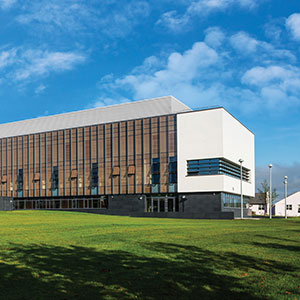
University of Galway has earned international recognition as a research-led university with a commitment to top quality teaching across a range of key areas of expertise.
-
Research & Innovation

Research & Innovation
University of Galway’s vibrant research community take on some of the most pressing challenges of our times.
-
Business & Industry
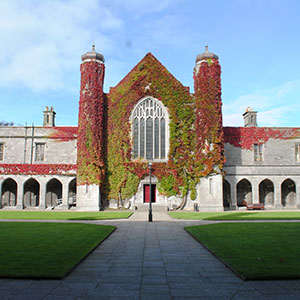
Guiding Breakthrough Research at University of Galway
We explore and facilitate commercial opportunities for the research community at University of Galway, as well as facilitating industry partnership.
-
Alumni & Friends
Alumni & Friends
There are 128,000 University of Galway alumni worldwide. Stay connected to your alumni community! Join our social networks and update your details online.
-
Community Engagement
Community Engagement
At University of Galway, we believe that the best learning takes place when you apply what you learn in a real world context. That's why many of our courses include work placements or community projects.
 Accessibility & Language
Opportunities for non-language students
Study Abroad Opportunities for non-language students
General information
The best pathway for a non-language student who is intent on study abroad is the BA Global experience: this programme guarantees a study abroad opportunity for each student on it.
If there are spare exchange places remaining in January, after the Global Experience students have received their offers, these places will be offered to certain other Arts cohorts. In this case, a study abroad information meeting will be held in late January, and all eligible students will be invited to attend (watch out for an email from the College Office, which organises this).
Following this, the application process will be launched, with a deadline in the first half of February.
Further details will be published here in due course; until January it is not possible to say what destinations can be offered.
Please be aware that study abroad is only possible via approved exchanges with specific partner universities.
Our non-language Erasmus exchanges are with partner universities that offer teaching through the medium of English. However, not all subjects will necessarily be offered through English at each of those universities.
It's important to note that in general, the majority of "spare" places at Erasmus (European) partner universities are offered to BA Joint Honours or BA Government students; students on other programmes may be eligible to apply for some non-EU exchanges.
Students who have already had an opportunity to apply for Erasmus exchanges through their denominated programmes (for instance, Global Media or BSc Psychology) are not eligible to apply for the Erasmus exchanges offered in January through the College Office, but they may be eligible to apply for the non-EU exchanges.
All students thinking of applying for a study abroad opportunity should, as a general rule, be expecting to achieve Second Year Semester 1 results averaging 60% upwards.
BA Joint Honours students who are not studying a continental language: If they are successful in their study abroad application, Joint Honours students will spend a full academic year studying their two degree subjects at a partner university abroad, and will be expected to secure 20 ECTS in approved courses in each of those subjects (that's 40 ECTS in total) in order to pass the year. This means that you can only be nominated to a host university where you can find 20 ECTS' worth of suitable courses related to each of your degree subjects.
There will be a very limited number of exchange places available, and at least some of them may be linked to specific subjects, meaning that you may only apply for them if you are taking those subjects. Some exchanges are also open to a range of subject areas.
Keep in mind that subjects like Maths and IT are very difficult to accommodate: at most of our European partner universities, they are taught at an advanced level that will be unsuitable for Arts students. Students of Maths and IT may find they have more options at non-European partner universities.
Unfortunately some Joint Honours students will find that, due to their particular subject combinations, there may be few (or no) study abroad options available to them.
BA Government students are also eligible to apply for relevant Erasmus exchange places but they may only go on study abroad in Semester 2 of their Third Year. They may also apply for suitable non-EU exchanges for Semester 2. In general, average grades in the 2:1 range and above would be expected of applicants. These students should attend the information session and follow the same application procedure as Joint Honours students.
BSc Psychology and BA English & Creative Writing students are eligible to apply for what will be a limited number of exchange places in non-EU destinations. They should follow the same application procedure.
There are a number of scholarships available for Boston College, USA. Any student whose programme allows a year or a semester of study abroad may apply, with the exception of BSc Psychology, since Boston College cannot offer sufficient Psychology modules to exchange students. We expect that successful candidates will have grade averages in the high 60s or above (Upper 2:1 or 1st Class Hons).
After the information session in January, students will be invited to apply for available exchange places via an online form. There will be a strict deadline and no late applications will be possible. Applications will be reviewed in the following weeks and in some cases, shortlisting will apply and candidates may be called for interview.
Successful candidates will be nominated to partner universities abroad.
Please note once again that the number of exchange places is very limited and the process will always be highly competitive, with the award of places depending on academic performance and the quality of applications.
EXAM RESULTS: In the application form, you will be asked for your First Year results in each of your subjects. These must be the official results, not your own estimate. You should be able to access your results on Canvas.
You will also be required to provide your provisional Semester 1 results from Year 2.
Please note that where students provide incorrect exam results on the form, it may invalidate their application.
You will also be required to provide your provisional Semester 1 results from Year 2.
Please note that where students provide incorrect exam results on the form, it may invalidate their application.
COST OF STUDY ABROAD: When making an application, it's important to consider the cost involved in spending a semester or a full academic year studying overseas. This can be a substantial amount of money, especially in the case of destinations outside of the EU, where students will not receive Erasmus funding. Global Galway (the University's International Office) has a useful page about financial planning for study abroad, and it includes a document showing estimated costs for study abroad at non-EU partner universities.