-
Courses
Courses
Choosing a course is one of the most important decisions you'll ever make! View our courses and see what our students and lecturers have to say about the courses you are interested in at the links below.
-
University Life
University Life
Each year more than 4,000 choose University of Galway as their University of choice. Find out what life at University of Galway is all about here.
-
About University of Galway
About University of Galway
Since 1845, University of Galway has been sharing the highest quality teaching and research with Ireland and the world. Find out what makes our University so special – from our distinguished history to the latest news and campus developments.
-
Colleges & Schools
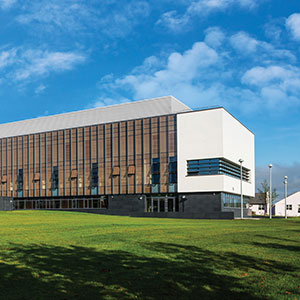
Colleges & Schools
University of Galway has earned international recognition as a research-led university with a commitment to top quality teaching across a range of key areas of expertise.
-
Research & Innovation
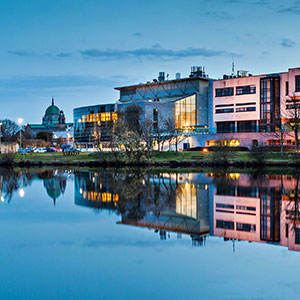
Research & Innovation
University of Galway’s vibrant research community take on some of the most pressing challenges of our times.
-
Business & Industry
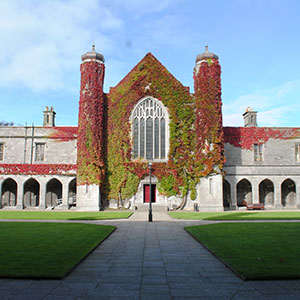
Guiding Breakthrough Research at University of Galway
We explore and facilitate commercial opportunities for the research community at University of Galway, as well as facilitating industry partnership.
-
Alumni & Friends
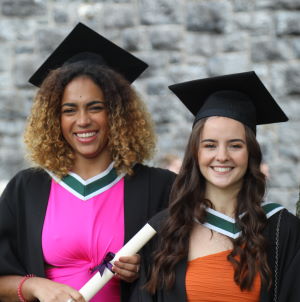
Alumni & Friends
There are 128,000 University of Galway alumni worldwide. Stay connected to your alumni community! Join our social networks and update your details online.
-
Community Engagement
Community Engagement
At University of Galway, we believe that the best learning takes place when you apply what you learn in a real world context. That's why many of our courses include work placements or community projects.
 Accessibility & Language
PLACED-Lives
PLACED-Lives
Our Aim
The aim of PLACED-Lives is to examine the influence of critical transitions (manifest as rupture events) in the older adult life course on the accumulation of multidimensional social exclusion in later life, and the role of place and community in mediating this exclusion.
Rationale
Representing a new direction in scholarship on age-related disadvantage, PLACED-Lives conceptualises old-age exclusion as a function of the interrelationship between: older adult life course ruptures, and disrupted relationships with place. As such, the work addresses two crucial interconnected areas of study. Firstly, this involves the under-researched links between exclusion and a set of critical transitions, in the form of life ruptures, in the older adult life course. Secondly, it concerns the interconnections between older adult life course ruptures and the older adult relationship with place, and what these connections mean for experiences of exclusion in old-age.
The focus of PLACED-Lives on life-course ruptures is grounded in critical gerontological traditions, and responds in general terms to a broader paucity of research on later life transitions (Grenier 2012). Transitions, the events that surround them and the life trajectories that they produce have the power to construct deleterious and favourable impacts for older people, and their wider relational networks (Elder et al. 2003, Dannefer and Settersen 2010, Alwin 2012, Bengtson et al. 2012). They also implicate individual, collective, institutional and structural components (Meyer 2005, Kohli 2007, Dannefer and Kelley-Moore 2009). The focus on the older adult place relationship is positioned within the behavioural context of older people spending more time in their place (Rowles 1978, Oswald and Wahl 2005, Buffel 2012), and a capability context of where age-related declines can mean older people are more susceptible to environmental factors (Golant 2011, Wahl et al. 2012).
Objectives
- To gather existing research and policy knowledge on older adult life-course ruptures, their connections to place, and their association with experiences of exclusion in later life
- To develop an empirical understanding of pathways to exclusion arising from life-course ruptures, investigating the role of structural and individual level factors in this exclusion
- To explore older people’s relationship with place for those who have experienced the life-course ruptures, in different kinds of places, and to assess the impact of the rupture itself on this relationship
- To explore older people’s relationship with place for those who have experienced the life-course ruptures, in different kinds of places, and to assess the impact of the rupture itself on this relationship
- To explore what constitutes social inclusion in place for those who have experienced the life-course ruptures, living in different kinds of places
- To direct a re-orientation of the role of place in policy and practice intervention models for addressing life-course ruptures
Partners & Collaborators
- Kieran Walsh
- Anna Urbaniak
- Sinead Keogh
- Eamon O'Shea
- Frank Oswald
- Amanda Grenier
- Sarah Gibney
- Thomas Sharf
- Sean Moynihan
- Catherine McGuigan
Outputs
- Dementia Onset and Social Exclusion in Later Life, (2022), PLACED-Lives Briefing Report Series, National University of Ireland Galway
- Bereavement and Social Exclusion in Later Life, (2022), PLACED-Lives Briefing Report Series, National University of Ireland Galway
- Forced Migration and Social Exclusion in Later Life, (2022), PLACED-Lives Briefing Report Series, National University of Ireland Galway