-
Courses
Courses
Choosing a course is one of the most important decisions you'll ever make! View our courses and see what our students and lecturers have to say about the courses you are interested in at the links below.
-
University Life

University Life
Each year more than 4,000 choose University of Galway as their University of choice. Find out what life at University of Galway is all about here.
-
About University of Galway
About University of Galway
Since 1845, University of Galway has been sharing the highest quality teaching and research with Ireland and the world. Find out what makes our University so special – from our distinguished history to the latest news and campus developments.
-
Colleges & Schools
Colleges & Schools
University of Galway has earned international recognition as a research-led university with a commitment to top quality teaching across a range of key areas of expertise.
-
Research & Innovation
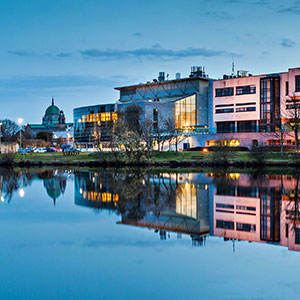
Research & Innovation
University of Galway’s vibrant research community take on some of the most pressing challenges of our times.
-
Business & Industry
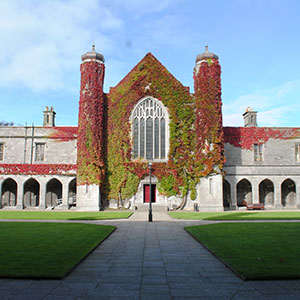
Guiding Breakthrough Research at University of Galway
We explore and facilitate commercial opportunities for the research community at University of Galway, as well as facilitating industry partnership.
-
Alumni & Friends
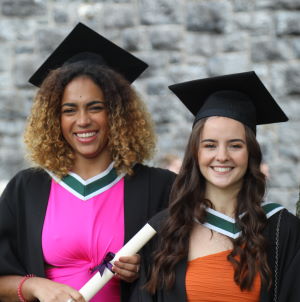
Alumni & Friends
There are 128,000 University of Galway alumni worldwide. Stay connected to your alumni community! Join our social networks and update your details online.
-
Community Engagement
Community Engagement
At University of Galway, we believe that the best learning takes place when you apply what you learn in a real world context. That's why many of our courses include work placements or community projects.
 Accessibility & Language
Short Courses (non-accredited)

The Centre for Adult Learning and Professional Development offers a series of short, classroom-based and online, non-accredited courses in a number of different subject areas. Designed for students with an interest in the subjects on offer, these courses may provide you with an opportunity to find out more about your subject areas and also to experience the world of lifelong learning.
Cost
€145
Duration
8 weeks
Start date
9 Feb
Our short courses will start the week of the 9th of February and are offered online or in person (classroom) on campus. The short (non-accredited) courses run for 8 weeks - one evening per week. On Campus classes run from 7pm to 9pm and online classes run from 7:30pm to 9pm. See full listing below:
Short Courses 2026
Monday
An Introduction to Western Philosophy | Classroom
Tutor: Rachel Coventry
This course examines how the history of philosophy shapes contemporary thought. It introduces central problems in current philosophy, including ethics, political philosophy, philosophy of mind, phenomenology, and the philosophy of technology, by tracing how these questions emerge from earlier philosophical debates. Each week focuses on a single theme, showing how historical concepts continue to structure present ways of thinking. The course is introductory and assumes no prior background in philosophy.
An Introduction to Gemmology: understanding the science behind a gem | Online*
Tutor: Dr. Alessandra Costanzo
This short course aims to provide students with a comprehensive introduction to the fascinating world of gemmology including the earth processes that create minerals and organic gemstones, the study of minerals and gemstones, gemmological theory and testing and diamond grading. The overall objective of the course is to give students a flavour about the Science of Gemmology and specifically learining about the internationally employed scientific methods for the identification of gem materials. At the end of the course you will be able to work with and buy gems with increased confidence, identify the characteristics and features of commonly available gemstones, and explore other gem-related topics such as responsible sourcing and sustainability.
*This course runs for 5 weeks online on Monday evenings and includes a one day practical (on campus) - Saturday 21st March
Tuesday
Beyond Survival: Everyday Digital Skills with Modern Tools | Online
Tutor: Aleksander Rammos
This course is for adults who are already using computers in their daily life, but feel they are not getting as much out of it as they could. Over eight weeks, learners will work with a familiar toolkit - mainly Google Workspace, Microsoft 365, and AI helpers such as ChatGPT and Gemini. Each week the course looks at how these tools are used in everyday situations: writing and sharing documents whilst managing version controls, keeping notes and tasks in one place, working with others online, and the carefully guided use of AI Assistants for ordinary jobs like drafting, editing and planning. By the end of the course, learners will have developed a digital portfolio that fits their own work and study, making daily screen time more productive.
The History and Transformative Potential of Neurodiversity | Classroom
Tutor: Eilís Ní Chaoimh
This course will provide an overview of the historical development of the concept of neurodiversity. Based on a close examination of texts produced by neurodivergent individuals, this course will explore the emergence and development of the idea of neurodiversity from the early 1990s to the present day. This course will be interactive and may challenge preconceived notions regarding neurodiversity and its connection to the disability rights movement, as well as its significance for us today. Throughout the course, a particular emphasis will be placed on the lived experience of neurodivergent people. Case studies will be discussed that demonstrate areas where neurodiversity may play a transformative role in securing equality and access to fundamental rights for neurodivergent people. It also examines critiques of neurodiversity and its real-world implications in education and the criminal justice system.
Refreshing and improving your Irish | Online
Tutor: Daithí Ó Madáin
SNAS is a short on-line Irish-language course at intermediate level that is aimed at learners who completed the Leaving Cert at some stage and want to brush up on their Irish. Listening and spoken skills are emphasised during the course as well as language-learning strategies. Eight units are taught over an eight-week period.
Is gearrchúrsa Gaeilge ar líne ag an meánleibhéal é SNAS atá dírithe ar fhoghlaimeoirí a rinne an Ardteist am éigin agus atá ag iarraidh snas a chur ar a gcuid Gaeilge. Cuirtear béim ar scileanna éisteachta agus labhartha chomh maith le straitéisí foghlama teanga le linn an chúrsa. Múinteoir 8 n-aonad thar thréimhse 8 seachtaine.
Wednesday
Film form and content (How to look at a film) | Classroom
Tutor: Noel Hendrick
"Cinema is a matter of what’s in the frame and what’s out." This is a quote from the American filmmaker Martin Scorsese, what he refers to as ‘in the frame’ will be at the centre of the topics we cover over the duration of this short course. The aspects of ‘what’s in the frame’ include the cinematography, editing, art direction and other features. These features are often referred to as the ‘formal features’ of a film. This course aims to show how a filmmaker uses these features to ‘make meaning’ and tell a story. For example, why might the 2007 film There Will Be Blood or the 1984 film Paris, Texas favor a particular color palette? Each class will focus on a different approach to understanding these individual features. Through a range of film examples and discussion, the course aims to introduce students to a means of critically engaging with the notion of film form.
Adapting to Climate Change | Classroom
Tutor: Alan Brouder
This is an eight-week introductory course that explores one of the defining challenges of our time: how societies can live with climate impacts that are already unfolding while preparing for those still ahead. The course is designed for anyone who is curious, concerned, or simply wants to explore the possibilities and limits of adaptation. It would also be of interest to business leaders who need to consider what the future might look like.
Participants will explore how climate change affects different people and places in unequal ways, and what individuals, businesses, and governments can do to reduce risks and strengthen resilience. Sessions are informal and engaging, combining short talks, accessible readings, group discussion, and real-world case studies from around the world.
Key concepts such as vulnerability, exposure, and adaptive capacity are explained in clear, everyday language and illustrated with practical examples. The course also addresses global inequality directly, asking who is most affected by climate impacts, who has contributed most to the problem, and what responsibilities high-emitting countries and industries may have.
A further focus is on how climate adaptation operates internationally. Participants are guided through the basics of the UN climate negotiations and the Paris Agreement, and explore how adaptation finance is mobilised, allocated, and contested. The course also considers Ireland’s role in supporting adaptation in lower-income countries through its development cooperation. Overall, the emphasis is on shared learning, open dialogue, and building a practical understanding of how to adapt to a changing climate.
Thursday
The Practice of Poetry | Classroom
Tutor: Rachel Coventry
This short course combines close attention to poetic craft with a workshop-based approach to writing. Drawing on examples from contemporary poetry, it examines how form, sound, and meaning work together to make a poem. Participants receive weekly prompts connected to the topics covered in class. Practice is understood broadly and includes drafting and revising work, submitting poems for publication, and performing at readings. The course is suitable for all levels, from beginners to poets who are already publishing or working towards a first collection.
Contemporary Irish Voices: Reading Across Time, Form & Experience | Online
Tutor: Rachel Andrews
This course explores the rich and evolving landscape of Irish writing from the mid-twentieth century to the present day. Each week, we pair two writers—across generations, genders, genres and perspectives—to open up questions about how Irish literature has changed, what it shares, and where it diverges.
We will read fiction, memoir and essay, considering established voices alongside emerging ones, and looking at rural and urban writers as well as those using formal experimentation and genres beyond fiction to examine aspects of Irish life. The pairings are designed to spark conversation: How do Maeve Brennan's stories of Dublin in the early years of the Irish state connect to John McGahern's work examining the suffocating rigidity of mid-century rural Catholic Ireland? How do Doireann Ní Ghríofa and Melatu Uche Okorie write into the gaps and silences in Irish memory and culture? What happens when we read Mike McCormack's formal experimentation alongside Sara Baume's detailed attention to place?
The course is built around short weekly readings and guided discussion. No prior knowledge of Irish literature is needed—only curiosity and a willingness to read closely and talk openly. Participants will encounter minority and marginalised voices, experimental and traditional forms, and writers asking what it means to live, remember, and belong in Ireland now.
Sustainable practices for circular business operations | Online
Tutor: Buddila Wijeyesekera
This short course focuses on integrating sustainability and circular economy practices to businesses in the manufacturing and services industry and beyond. As we become more concerned about our planet the demand for sustainable practices within these industries continues to become more vital every second. We need to transition towards more sustainable and greener practices within the industrial and services sectors to reduce environmental impact while supporting long-term business success.
This course is designed for anyone interested in sustainability and its real-world application across different sectors. It is ideal for members of the general public, professionals, students, and individuals seeking to expand their understanding of sustainable and circular economy practices, regardless of their background or industry experience.
Saturday (28th February & 7th March, 10am-4pm)
Alexander Technique | Classroom
Tutor: Richard Brennan
The Alexander Technique is a method of self-awareness on many levels. It is very simple and can be understood by anyone, yet at the same time it is very profound. It is a way of improving balance, posture and co-ordination. Many people think that the Alexander Technique involves improving posture by ‘sitting up straight’. Nothing could be further from the truth. It involves being aware and releasing the unconscious tension from our body allowing us to move through life with greater ease.
It can dramatically help prevent or alleviate backache, neck pain, arthritis, insomnia, depression as well as a whole range of physical aches and pains that are so common in our society today. Many people find that the Alexander Technique helps their confidence and self-esteem, spontaneity, leading to greater contentment and happiness.
The workshop will cover the needs of the group, but the following topics are usually covered:
- Easing back and neck pain
- Improving posture without effort
- Improving breathing
- Reducing stress
- Sitting, standing and walking with ease
- Mind/body/emotional unity
Saturday (14th & 21st February, 10am-4pm)
Essential Trainers Skills, An Introductory Course | Classroom
Tutor: Dr Marie Morrissey
This course is designed to enable participants to understand and acquire the knowledge, key skills and competences that are essential components of a training course. Participants will learn how to identify and analyse a training need, plan, design, implement a training course, evaluate the training process and understand the challenges around AI in the context of quality assurance.
You will also learn key delivery skills for effective training and develop techniques for analysing group dynamics for effective group learning. This course will be of interest to you if you are involved in community/voluntary groups, involved in training, or work as a trainer in an organisation.

Please click on the button above to register for your chosen course via Eventbrite. The deadline for applications is Wednesday 4th February.
Tá an fhoirm ar fáil i mBéarla amháin faoi láthair ach is féidir leat teagmháil a dhéanamh le adultlearning@universityofgalway.ie sa chás go bhfuiltear ag iarraidh iarratas a dhéanamh trí mheán na Gaeilge.
Please visit our FAQs webpage for frequently asked questions.
Quotes from our Short Courses students...

Eve Edgeworth | Italian Online
The online Italian course was brilliant; it was great to learn something new and also to "meet" new people. Oriana was a brilliant teacher, very engaging and fun.
Liz Kelly | Podcasting
I thoroughly enjoyed the whole experience, I learned a lot and feel confident about pursuing my ideas and planning for my podcast. Orla was so open and inclusive of everyone - she is so experienced and yet so open to everything that we had to say.
Aoife Keane | Beginners Italian
Overall is was a very well run, fun and engaging course. I would happily enroll in another online course in University of Galway based on this positive experience.