-
Courses

Courses
Choosing a course is one of the most important decisions you'll ever make! View our courses and see what our students and lecturers have to say about the courses you are interested in at the links below.
-
University Life

University Life
Each year more than 4,000 choose University of Galway as their University of choice. Find out what life at University of Galway is all about here.
-
About University of Galway
About University of Galway
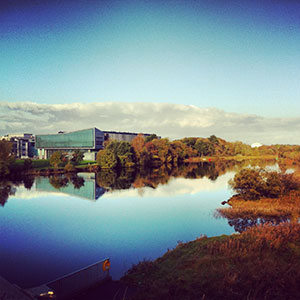
Since 1845, University of Galway has been sharing the highest quality teaching and research with Ireland and the world. Find out what makes our University so special – from our distinguished history to the latest news and campus developments.
-
Colleges & Schools
Colleges & Schools
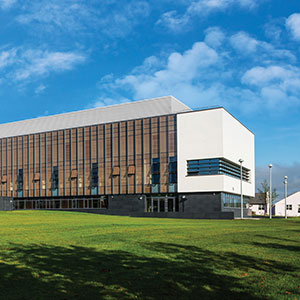
University of Galway has earned international recognition as a research-led university with a commitment to top quality teaching across a range of key areas of expertise.
-
Research & Innovation

Research & Innovation
University of Galway’s vibrant research community take on some of the most pressing challenges of our times.
-
Business & Industry
Guiding Breakthrough Research at University of Galway
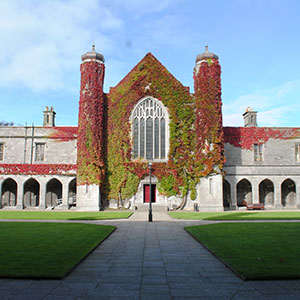
We explore and facilitate commercial opportunities for the research community at University of Galway, as well as facilitating industry partnership.
-
Alumni & Friends

Alumni & Friends
There are 128,000 University of Galway alumni worldwide. Stay connected to your alumni community! Join our social networks and update your details online.
-
Community Engagement
Community Engagement
At University of Galway, we believe that the best learning takes place when you apply what you learn in a real world context. That's why many of our courses include work placements or community projects.
 Accessibility & Language
2022 Study
 HEALTH BEHAVIOUR IN SCHOOL-AGED CHILDREN (HBSC) IRELAND
World Health Organization Collaborative Cross-National Study
Health Behaviour in School-aged Children (HBSC) is a WHO collaborative cross-national study that monitors the health behaviours, health outcomes and social environments of school-aged children every four years. HBSC Ireland surveys school-going children aged 9-18 years. The study is conducted by the HBSC Ireland team, based at the Health Promotion Research Centre, University of Galway.
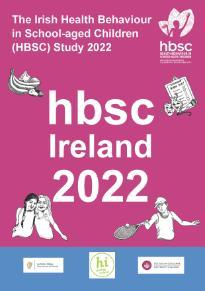
The 2022 HBSC Ireland Report was launched by Minister for Public Health, Wellbeing and the National Drugs Strategy, Colm Burke, T.D. via an online webinar on Thursday 2nd May 2024.
download the full report here:
Gavin, A., Költő, A., Lunney, L., Maloney, R., Walker, L., Nic Gabhainn, S., & Kelly, C. (2024). The Irish Health Behaviour in School-aged Children (HBSC) Study 2022. Dublin: Department of Health & Galway: Health Promotion Research Centre, University of Galway. download
A total of 191 primary and post primary schools took part with more than 9,000 children completing questionnaires.
We would like to extend a big thank you to all of the children, their schools and parents for taking part in the 2022 HBSC study. Without your participation and time the study would not have been such a success.
Watch the recording of the launch webinar.
download a copy of the presentation given by Aoife Gavin at the launch.
download a copy of the press release.
Check our twitter page: @hbscireland
KEY FINDINGS
DISSEMINATION
Findings from HBSC Ireland 2022 will be distributed in reports, journal articles, factsheets and presentations to various interest groups. A full list of publications and articles etc. can be found on the publications page.
Trends in Health Behaviours, Outcomes and Contexts: 1998-2022. The Irish Health Behaviour in School-aged Children Study.
Tuesday 3rd June, 2025
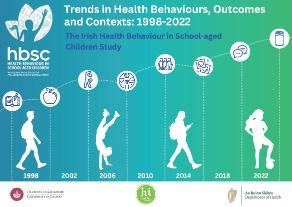
Launched by the Minister of State at the Department of Health with special responsibility for Public Health, Wellbeing and the National Drugs Strategy, Jennifer Murnane O’Connor TD. The Health Behaviour in School-aged Children (HBSC) Trends Report 1998–2022 highlights notable changes in the health behaviours and wellbeing of Irish children over the past 25 years.
The report brings together data from over 70,000 children in Ireland since 1998, offering critical insights to inform policy, practice and supports for young people.
Download a copy of the report: Lunney, L., Gavin, A., Költő, A., Walker, L., Nic Gabhainn, S., & Kelly, C. (2025). Trends in Health Behaviours, Outcomes and Contexts: 1998-2022. The Irish Health Behaviour in School-aged Children Study. Dublin: Department of Health. download
See the Trends page for more information
See the HBSC International website http://www.hbsc.org/ for more HBSC International publications.
HBSC International Report Vol 7- Launched 13 November 2024
Launched on 13 November 2024, the report ‘A focus on adolescent social contexts in Europe, central Asia and Canada’ is the seventh in a series of international reports using data from the Health Behaviour in School-aged Children (HBSC) survey 2021/2022.
The report is available to download from https://iris.who.int/handle/10665/379486
This report, Volume 7 in the series, focuses on the social context of adolescents’ lives. It describes the status of adolescent family and peer relationships and school experiences, the role of gender, age and social inequality, and changes in adolescents’ social context over time.
HBSC International Report Vol 6- Launched 25 September 2024
Launched on 25 September 2024, the report ‘A focus on adolescent social media use and gaming in Europe, central Asia and Canada’ is the sixth in a series of international reports using data from the Health Behaviour in School-aged Children (HBSC) survey 2021/2022.
The report is available to download from https://iris.who.int/handle/10665/378982
This sixth report describes the status of adolescent social media use and gaming, the role of gender, age and social inequality, and changes in adolescent social media use and gaming since 2018.
HBSC International Report Vol 5- Launched 29 August 2024
-141x199.jpg)
Launched on 29 August 2024, the report ‘A focus on adolescent sexual health in Europe, central Asia and Canada’ is the fifth in a series of international reports using data from the Health Behaviour in School-aged Children (HBSC) survey 2021/2022.
The report is available to download from https://iris.who.int/handle/10665/378547
This fifth report provides crucial insights into the sexual health and behaviours of 15-year-olds across 42 countries and regions.
HBSC International Report Vol 4- Launched 23 May 2024
Launched 23 May 2024, the report ‘A focus on adolescent physical activity, eating behaviours, weight status and body image in Europe, central Asia and Canada’ is the fourth in a series of international reports using data from the Health Behaviour in School-aged Children (HBSC) survey 2021/2022.
The report is available to download from https://iris.who.int/handle/10665/376772
HBSC International Report Vol 3- Launched 25 April 2024
Launched 25 April 2024, the report ‘A focus on adolescent substance use in Europe, central Asia and Canada’ is the third in a series of international reports using data from the Health Behaviour in School-aged Children (HBSC) survey 2021/2022.
The report is available to download from https://iris.who.int/handle/10665/376573
This third report focuses on cigarette smoking, e-cigarette use, alcohol consumption and drunkenness, and cannabis use (only measured among 15-year olds) across 44 countries and regions.
The report highlights a narrowing gender gap in substance use, emphasising the need for targeted prevention strategies.
HBSC International Report Vol 2- Launched 27 March 2024
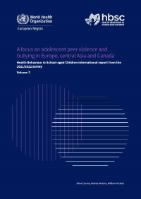
Launched 27 March 2024, the report ‘A focus on adolescent peer violence and bullying in Europe, central Asia and Canada’ is the second in a series of international reports using data from the Health Behaviour in School-aged Children (HBSC) survey 2021/2022.
The report is available to download from https://bit.ly/hbsc-vol2
This second report focuses on patterns of bullying and peer violence among adolescents across 44 countries and regions.
While the overall trends in school bullying have remained stable since 2018, cyberbullying has increased, magnified by the increasing digitalisation of young people’s interactions, with potentially profound impacts on young lives.
HBSC International Report Vol 1 - Launched 10 October 2023
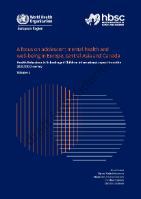 Launched on World Mental Health Day, 10th October 2023, the report 'A focus on adolescent mental health and well-being in Europe, Central Asia and Canada' is the first in a series of international reports using data from the Health Behaviour in School-aged Children (HBSC) survey 2021/2022.
The report available to download from https://iris.who.int/handle/10665/373201.
Download the presentation slides given by Dr. Alina Cosma at the launch of the Mental Health Report in Athens, Greece.
This first report presents findings on adolescents’ mental health and well-being, with consideration of gender, age, and social inequality, and examines changes over the past 3 survey rounds since the 2013/2014 HBSC survey.
Major report findings include the following.
- Mental health and well-being are declining, especially among girls – 15-year-old girls’ health is markedly worse in most countries compared to boys.
- More adolescents are lonelier now than in the previous 2017/2018 survey.
- The number of adolescents with multiple health complaints, such as sleep problems and nervousness, has increased steadily since 2014.
The report underscores the importance of:
- placing schools at the centre of mental health promotion and prevention programmes, necessitating resource investment and training;
- collaborating with community-based services, including hospitals and community mental health centres, for specialized support to children in need; and
- monitoring child and adolescent mental health through initiatives, such as HBSC, to assess the impact of national or regional activities aimed at improving mental health and well-being.
WHO Europe report on the negative impacts of the COVID-19 pandemic
Decmeber 2023
HBSC Ireland data is included in a new WHO Eurpe report. The report Left behind: inequalities in the negative impacts of the COVID-19 pandemic among adolescents in the WHO European Region: impact of the COVID-19 pandemic on young people’s health and well-being from the findings of the HBSC survey round 2021/2022 summarizes findings from the Health Behaviour in School-aged Children survey round 2021/2022 regarding the unequal impact of the COVID-19 pandemic on adolescents’ health and health behaviours in 22 countries and regions of the WHO European Region.
WHO–HBSC data shed light on COVID-19 pandemic's effects on children and adolescents
June 2023
HBSC Ireland data features in four new reports highlighting the impacts of the COVID-19 pandemic on children and adolescednts.
For more information see the WHO website.
In addition to the national and international reports HBSC Ireland 2022 data has been used in the following government and other health organisations reports:
State of the Nation's Children 2024
The most recent State of the Nation's Children reeport contains 2022 HBSC data. The report presents data in key information in areas such as health and education, as well as social, emotional, behavioural and self-reported happiness outcomes. The report also presents data on supports and services available to children and their families, along with children’s relationships with their parents and peers.
Department of Children, Disability and Equality. (2025). State of the Nation's Children 2024. Dublin: Departement of Children, Disability and Equality. download
IPH report on sunbed use and policy options - 9th July 2025
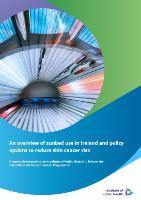
HBSC Ireland data is a key source for a new report published by the Institute of Public Health (IPH) which recommends a ban on sunbeds to reduce the risk of skin cancer in Ireland, which has one of the highest skin cancer rates in the world.
The comprehensive report, ‘An overview of sunbed use in Ireland and policy options to reduce skin cancer risk’, analysed available data on sunbed users, sunbed availability, current regulations on sunbeds and associated infringements, as well as policy options introduced internationally to reduce skin cancer risks associated with sunbed use.
The report was developed to support the Department of Health and HSE’s National Cancer Control Programme (NCCP) National Skin Cancer Prevention Plan (2023-2026) and the 2025 Programme for Government commitment to explore a ban on commercial sunbed use.
EU Country Cancer Profile: Ireland 2025 - 3 February 2025
HBSC Ireland data is featured in the EU Counrty Cancer profile: Ireland 2025. The profile identifies strengths, challenges and specific areas of action on cancer prevention and care as part of the European Cancer Inequalities Registry, a flagship initiative of Europe’s Beating Cancer Plan. It provides a short synthesis of: the national cancer burden; risk factors for cancer (focusing on behavioural and environmental risk factors); early detection programmes; and cancer care performance (focusing on accessibility, care quality, costs and quality of life).
‘Stastical Spotlight #15: The State of the Nation’s Women and Girls’ - 20 January 2025
HBSC Ireland data is featured in the report ‘Statistical Spotlight #15: The State of the Nation’s Women and Girls’. The report collates available data on the lives of women and girls across five key areas: demographics, health, education, employment and, poverty and social vulnerability. The report provides statistical analysis in each area and examines trends over time. This Spotlight shines a light on how women and girls are faring in Ireland today and over the past decade, focusing on areas like life expectancy, physical activity, educational attainment, subject choice in education, employment rates, the gender pay gap, female representation in parliament, poverty rates and much more.
Statistical Spotlight #15: The State of the Nation’s Women and Girls download