-
Courses
Courses
Choosing a course is one of the most important decisions you'll ever make! View our courses and see what our students and lecturers have to say about the courses you are interested in at the links below.
-
University Life
University Life
Each year more than 4,000 choose University of Galway as their University of choice. Find out what life at University of Galway is all about here.
-
About University of Galway
About University of Galway
Since 1845, University of Galway has been sharing the highest quality teaching and research with Ireland and the world. Find out what makes our University so special – from our distinguished history to the latest news and campus developments.
-
Colleges & Schools
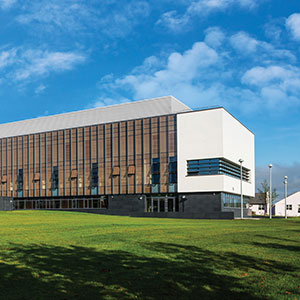
Colleges & Schools
University of Galway has earned international recognition as a research-led university with a commitment to top quality teaching across a range of key areas of expertise.
-
Research & Innovation
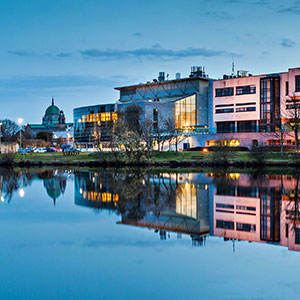
Research & Innovation
University of Galway’s vibrant research community take on some of the most pressing challenges of our times.
-
Business & Industry
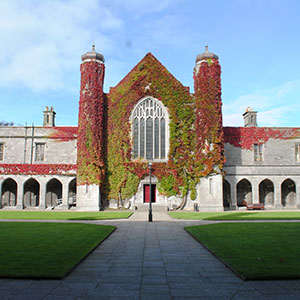
Guiding Breakthrough Research at University of Galway
We explore and facilitate commercial opportunities for the research community at University of Galway, as well as facilitating industry partnership.
-
Alumni & Friends
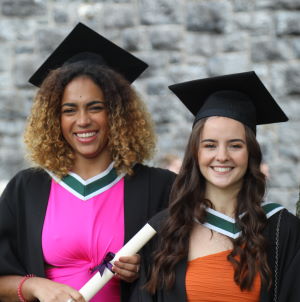
Alumni & Friends
There are 128,000 University of Galway alumni worldwide. Stay connected to your alumni community! Join our social networks and update your details online.
-
Community Engagement
Community Engagement
At University of Galway, we believe that the best learning takes place when you apply what you learn in a real world context. That's why many of our courses include work placements or community projects.
 Accessibility & Language
Semester One
All modules are 5 ECTS modules, and consist of two lectures per week, each of one-hour duration. Please click on a module title to reveal a description of that module.SG111 Early & Medieval History of the Celts
The module is divided into two sections. Both sections must be taken to complete the module.
SG111 (A) Early and Medieval History of the Celts
This section of SG111 will provide an introduction to some of the more important aspects of the archaeology of the Celtic world, dealing briefly with such topics as the discovery of the archaeology of the Celts in the nineteenth century and the material culture (weapons, personal ornaments and art) that came to be identified with the spread of Celtic-speaking peoples across Europe. Aspects of the Celtic archaeology of Britain and Ireland will also be examined. The module will then survey the linguistic background to the identification of the Celtic languages as a distinct group, locating them within their proper geographical and historical contexts as Celtic languages, and showing their relationship with, and distinctiveness within, the vast family of languages known as Indo-European, which historically includes languages spoken in the territory from the west of Europe to India (since modern times also into the lands of the New World). The lectures will also look at the way the ancient Celts were portrayed by the classical Greek and Roman authors who are our only source of information on the history of ancient Celtic Europe.
SG111 (B) Early and Medieval History of the Celts
This section of SG111 will introduce the student to some of the most significant events, changes and movements in the history of Ireland and Britain from the late centuries BC to the tenth century AD. The topics addressed will include the insular Celtic migrations and settlements of the early medieval period (including the migrations from Britain to Brittany and from Ireland to Scotland, and the Irish settlements in Wales and in Man), the Christianisation of the West (of Ireland, of western Scotland from Ireland, and of northern England from Scotland), and the incursions, settlement and impact of the Vikings.
Learning outcomes:
- Knowledge of the prehistory and ancient and medieval history of the Celts.
- Awareness of the types of source available for the study of the history and prehistory of the Celts.
- Awareness of the relationships and tensions between archaeological, linguistic and historical sources.
Assessment method:
Please see the Celtic Civilisation Student Handbook or find detailed information on assignments on the module's Canvas page.
SG215 Medieval Irish Literature c. 700-1100
This module will examine a selection of early Irish lyric poems and voyage tales from the period c. AD 700-1100. The selected texts illustrate the richness and creativity of medieval Irish literature which constitutes the oldest vernacular literature in western Europe. Emphasis will be placed on the genres of medieval Irish literature, the scribal context, the existence of hermitic or nature poetry, the interaction of history and literature in early Irish tales, and on examining the allegorical significance of these texts. All poems and tales will be read in translation and students will contribute to the online annotation of these texts.
Learning outcomes:
On completion of this module, you should be able to:
- List the primary manuscript sources of early Irish lyric poems and/or narrative tales.
- Summarise the general motifs and features of early Irish literature and classify early Irish tales using their narrative content.
- Examine a selection of poems and tales and consider the structure, themes, motifs, creativity and functions of this literary tradition.
- Prepare an activity to illustrate the content and/or imagery of a selected poem or tale.
- Critique scholarly analysis of early Irish lyric poems/narrative tales, comparing this work with your examination of these texts.
Assessment method:
Please see the Celtic Civilisation Student Handbook or find detailed information on assignments on the module's Canvas page.
SG216 The Stories of Medieval Wales
The main source of prose stories in medieval Wales is the collection known in modern times as The Mabinogi. These eleven stories from the twelfth and thirteenth centuries cover a wide range of themes, from the very human concerns of friendship, love, honour and betrayal, to grand adventures combating strange beasts, giants and mysterious supernatural forces. Some of the tales are located in the concrete landscape of medieval Wales, where we can trace exact locations of events and routes of journeys. Other tales take place in a vaguer, otherworldly landscape, with no clear location in the real world.
Learning outcomes:
- An understanding of the themes of medieval Welsh stories.
- An understanding of the techniques of the medieval Welsh story-teller.
- An understanding of the social and historical context of medieval Welsh stories.
- An understanding of the application of critical analysis to medieval Welsh texts.
Assessment method:
Please see the Celtic Civilisation Student Handbook or find detailed information on assignments on the module's Canvas page.
SG2100 Pan-Celticism: Cultural and Linguistic Ideologies and Practices
Pan-Celticism is a cultural, linguistic, social and political movement or orientation that favours solidarity and cooperation between the countries where a Celtic language is now or was recently spoken, being Ireland, Scotland, Man, Brittany, Cornwall and Wales. The idea is sometimes extended to other regions such as Galicia and other parts of continental Europe and to the Celtic diaspora around the world. As with other pan-national movements, the origins of contemporary Pan-Celticism grew from the romantic nationalism and linguistic-cultural revival movements of the nineteenth century. This module investigates the origins and development of Pan-Celticism and critiques its aims and objectives in its various iterations from its inception through to today. Particular emphasis is laid on the scholarly background, the interplay of the language and cultural revivalist movements from the different countries, on Pan-Gaelicism, and on the contemporary manifestation of Pan-Celtic stances.
Learning outcomes:
- Define Pan-Celticism as it relates to the history of ideas that developed from linguistic and cultural protection and revivalism and demonstrate critical knowledge and appraisal of the major concepts.
- Demonstrate critical awareness of theoretical frameworks and methodological issues in the analysis of national and pan-national Celtic linguistic-cultural movements.
- Critically reflect upon the relative importance of linguistic-cultural identity among individuals and groups, drawing upon case studies.
- Demonstrate creative and innovative problem-solving based on critical thinking and appraisal of the current knowledge and evidence in relation to the field of Pan-Celtic studies.
- Conduct an in-depth study, or critical analysis of the interplay of a chosen local or national aspect of linguistic-cultural mobilisation within the Pan-Gaelic, Pan-Brittonic or wider Pan-Celtic context.
Assessment method:
Please see the Celtic Civilisation Student Handbook or find detailed information on assignments on the module's Canvas page.
SG313 The Poetry of Medieval Wales c. 600-1100
In the period 600 – 1100, Wales experienced a flowering of poetic expression which formed the traditional basis for the continuation of the Welsh love of, and skill in, poetry in the subsequent centuries and down to the present day. The earliest Welsh poetry reflects significant aspects of the culture, history and thought of the time, from the politics of rule to the delicate relationship between humans beings and nature, from the ethics of war to the potential loneliness of old age. This module will explore how the earliest surving Welsh poems represent and express the hopes and fears, the brutality and tenderness, the knowledge and the propaganda, of an early medieval society.
Learning outcomes:
- Detailed knowledge of the themes and structure of medieval Welsh Poetry.
- Appreciation of the beauty and variety of medieval Welsh poetry.
- Ability to deal critically with a medieval poetic tradition quite different from modern poetic expectations and practice.
- Understanding of the value of medieval Welsh poetry as a source of information on the mental and emotional world of the early medieval Welsh.
Assessment method:
Please see the Celtic Civilisation Student Handbook or find detailed information on assignments on the module's Canvas page.
SG3102 Celtic Onomastics
In this module, you will be introduced to the study of names and naming practices as an important and early source of information about the Celts. We will trace the surviving evidence for naming practices in Continental and Insular sources over time, and consider how we can interpret and use these sources in Celtic Studies today. We will also assess the significance of names as markers of linguistic and cultural heritage by examining the corpus of population group names, personal names, and place-names that are associated with the Celtic-speaking peoples of Ireland and Britain. Specific case studies from Ireland and Britain will be presented during lectures, and in-class discussion and associated tasks will allow students to engage with recorded naming practices among Celtic-speaking peoples from the medieval period to the present day.
Learning outcomes:
On completion of this module, you should be able to:
- Provide a reasoned definition of the terms ‘Celt’ and ‘Celtic’ in linguistic and onomastic contexts.
- Discuss the role of names as markers of linguistic and cultural heritage with your peers.
- Evaluate the most effective ways to conduct research and to interpret onomastic evidence.
- Provide an account of the origins, meaning, development, and distribution of a selection of personal names, surnames, or place-names.
- Critique, both orally and in writing, the effects and implications of anglicisation on names and naming practices in the Celtic-speaking world.