-
Courses
Courses
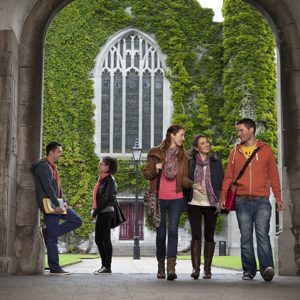
Choosing a course is one of the most important decisions you'll ever make! View our courses and see what our students and lecturers have to say about the courses you are interested in at the links below.
-
University Life

University Life
Each year more than 4,000 choose University of Galway as their University of choice. Find out what life at University of Galway is all about here.
-
About University of Galway

About University of Galway
Since 1845, University of Galway has been sharing the highest quality teaching and research with Ireland and the world. Find out what makes our University so special – from our distinguished history to the latest news and campus developments.
-
Colleges & Schools
Colleges & Schools
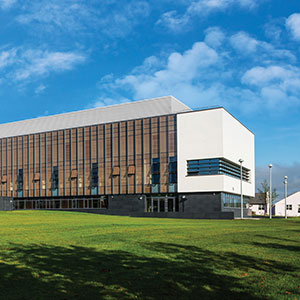
University of Galway has earned international recognition as a research-led university with a commitment to top quality teaching across a range of key areas of expertise.
-
Research & Innovation

Research & Innovation
University of Galway’s vibrant research community take on some of the most pressing challenges of our times.
-
Business & Industry
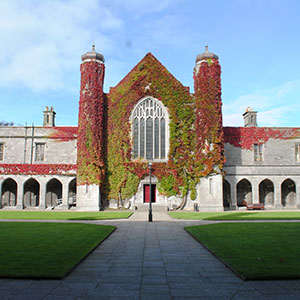
Guiding Breakthrough Research at University of Galway
We explore and facilitate commercial opportunities for the research community at University of Galway, as well as facilitating industry partnership.
-
Alumni & Friends
Alumni & Friends
There are 128,000 University of Galway alumni worldwide. Stay connected to your alumni community! Join our social networks and update your details online.
-
Community Engagement
Community Engagement
At University of Galway, we believe that the best learning takes place when you apply what you learn in a real world context. That's why many of our courses include work placements or community projects.
 Accessibility & Language
Teaching & Learning
Overview
Paediatrics is a Core Subject (Discipline) making up the Final Medical Degree (MB BCh BAO) programme, currently taught in Year 4 (4MB), the penultimate year.
The curriculum is currently delivered over two modules, one in each semester. During semester one, students are introduced to basic concepts in the practice of paediatrics, whilst semester two introduces more application of knowledge, and case management. The availability of excellence in clinical exposure and teaching at each clinical site (including the academies) enables delivery of parallel programs at each site.
Topics Covered:
As well as the 4MB Paediatrics Module, we deliver the clinical skills in Paediatrics component of the 4MB ACS Module. This is assessed in the form of Mini-CEXs, as well as the OSCE. The assessment process undergoes change in line with new curriculum changes. Currently, summative assessment includes an MCQ at the end of Semester 2 and the OSCE at the end of Semester two. Formative assessment is an integral component of each semester. Students actively provide course feedback which is incorporated into curriculum development.
Undergraduate
The curriculum is currently delivered in modular format with two modules, one in each semester. In alignment with learning outcomes, the assessment process in the Paediatric module is integrated at clinical and written levels. During semester one, students are introduced to basic concepts in the practice of paediatrics, whilst semester two introduces more application of knowledge, in-depth learning and case management. The availability of excellence in clinical exposure and teaching at the academies enables the expansion of student numbers with delivery of parallel programs at each site.
As well as the 4MB Paediatrics Module, we deliver the clinical skills in Paediatrics component of the 4MB ACS Module. This is assessed in the form of Mini-CEXs, as well as the OSCE. The assessment process undergoes change in line with new curriculum changes. Currently, summative assessment includes an MCQ at the end of Semester 2 and the OSCE at the end of Semester two. Formative assessment is an integral component of each semester. Students actively provide course feedback which is incorporated into curriculum development.
The external examiners for the paediatrics are internationally recruited.
Postgraduate
Taught
The goal of the paediatric department to provide an informative, friendly and invaluable learning experience. To enhance the pedagogical experience, students are exposed to a wealth of clinical contact during their two four-week learning blocks. Our students avail of a team-based approach during clinical rotations with active learning encouraged on ward rounds, out-patient clinics, in the Emergency Department and in NICU.
Structured teaching is delivered via a variety of methods including bedside tutorials, hands on patient examination, out-patient interaction, small group case-based teaching, seminars, slide shows. Students also receive structured (scheduled) hi-fidelity Simulation on emergencies. There is a wealth of asynchronous clinically relevant material (developed in-house) including Webcasts, Skills videos, Consultant led topic presentations, available.