-
Courses
Courses
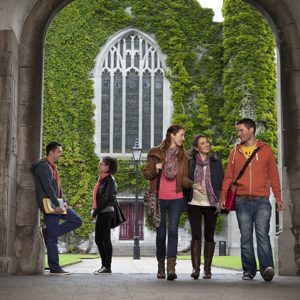
Choosing a course is one of the most important decisions you'll ever make! View our courses and see what our students and lecturers have to say about the courses you are interested in at the links below.
-
University Life
University Life
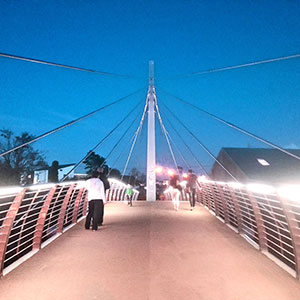
Each year more than 4,000 choose University of Galway as their University of choice. Find out what life at University of Galway is all about here.
-
About University of Galway
About University of Galway
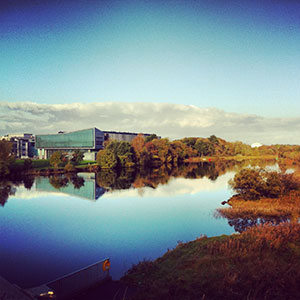
Since 1845, University of Galway has been sharing the highest quality teaching and research with Ireland and the world. Find out what makes our University so special – from our distinguished history to the latest news and campus developments.
-
Colleges & Schools
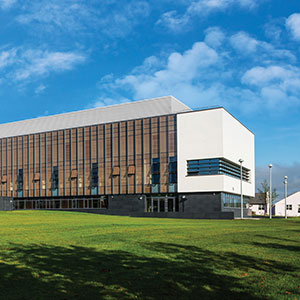
Colleges & Schools
University of Galway has earned international recognition as a research-led university with a commitment to top quality teaching across a range of key areas of expertise.
-
Research & Innovation
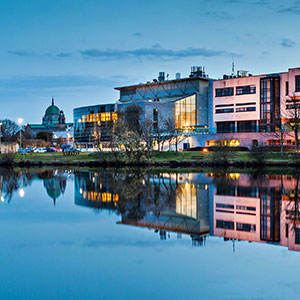
Research & Innovation
University of Galway’s vibrant research community take on some of the most pressing challenges of our times.
-
Business & Industry
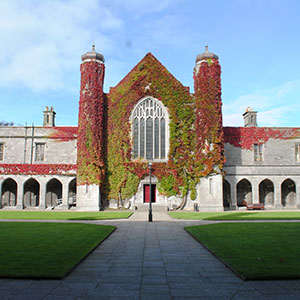
Guiding Breakthrough Research at University of Galway
We explore and facilitate commercial opportunities for the research community at University of Galway, as well as facilitating industry partnership.
-
Alumni & Friends
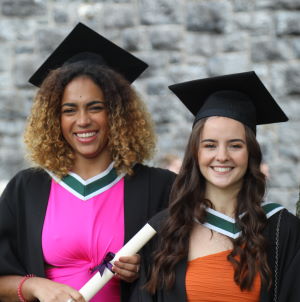
Alumni & Friends
There are 128,000 University of Galway alumni worldwide. Stay connected to your alumni community! Join our social networks and update your details online.
-
Community Engagement
Community Engagement
At University of Galway, we believe that the best learning takes place when you apply what you learn in a real world context. That's why many of our courses include work placements or community projects.
 Accessibility & Language
Waterway
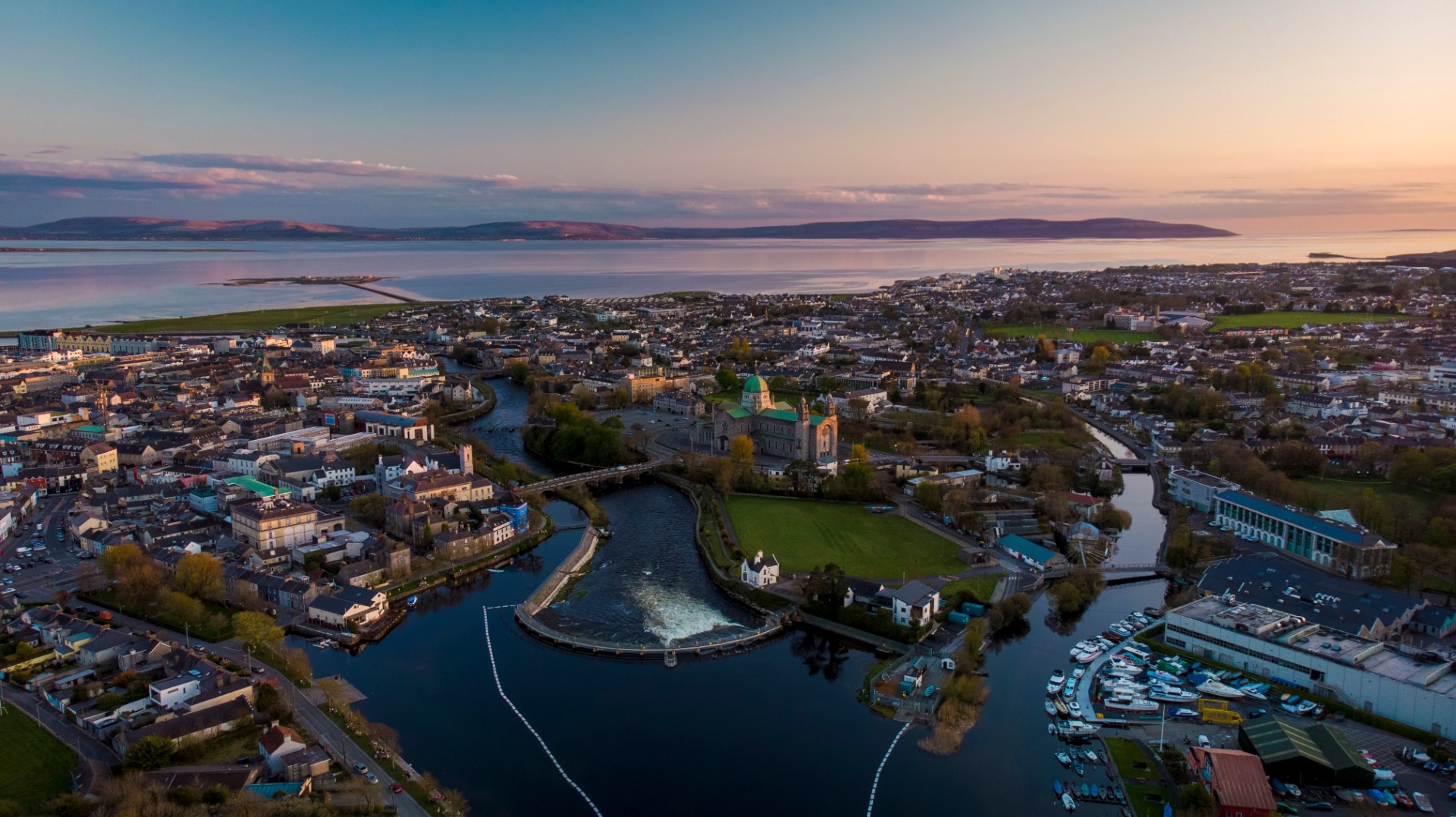
University of Galway is a partner in the “Water And Tourism Energy Resources for a Winning Active Galway” (WATERWAY) project, an innovative initiative led by Galway City Council under the European Urban Initiative’s (EUI) Innovative Actions programme and co-funded by the European Union through the European Regional Development Fund. Running from October 2025 to March 2029, the project aims to support Galway’s energy transition by addressing key climate challenges, including low uptake of renewable energy, energy poverty, limited funding for climate action, and the growing need for green skills development.
At the heart of the project is the installation of three micro-hydropower turbines along Galway City’s canal network. These systems will generate clean electricity to power local infrastructure, including electric vehicle charging points, while revenue generated from energy production will be reinvested in local climate action initiatives. Beyond renewable energy generation, WATERWAY seeks to transform the hydropower sites into accessible public spaces that celebrate sustainability, heritage, education and community engagement.
The project brings together local authorities, researchers, industry partners and community organisations through a collaborative Living Lab approach that uses Galway’s waterways as spaces for experimentation, learning and public participation. Alongside Galway City Council and the University of Galway, project partners include Galway City Community Network, EcoHydro, and the Northern and Western Regional Assembly, as well as European transfer partners from Croatia, Italy and Portugal who will support knowledge exchange and future replication of the model.
Within WATERWAY, the University of Galway leads the work package dedicated to education, training, research and public engagement. This programme of work seeks to develop upskilling and reskilling opportunities in renewable energy, hydropower and community energy, while helping to address emerging green skills needs at local, national and European levels. The University’s WATERWAY team includes Prof. Frances Fahy (Director of the Ryan Institute), Dr Richard Manton (Director of Sustainability) and Dr Maria Vittoria Marra (Postdoctoral Researcher on the WATERWAY project).
The University will lead the development of the WATERWAY Living Lab through a range of interconnected activities. These include a desktop review of renewable energy and hydropower-related training opportunities across Ireland and Europe, and a series of participatory “Waterways Workshops” designed to identify future skills needs while engaging communities, industry representatives and policymakers in discussions about sustainable waterways and the energy transition. Building on this research and stakeholder engagement, the University will develop a new microcredential programme, provisionally titled “Energy & Community”, which will use Galway’s waterways and hydropower infrastructure as a real-world learning environment. In addition, the Living Lab will be embedded within existing engineering and geography curricula at the University, creating opportunities for students to engage directly with the project through coursework, site visits and practical learning activities. Internship opportunities will also be developed in collaboration with project partners, while a programme of outreach activities—including workshops, field trips and educational resources—will engage schools, community organisations and the wider public in partnership with Galway City Community Network.
Overall, the WATERWAY project aims to position Galway as a leading example of how cities can harness existing waterways infrastructure to support a more inclusive, resilient and locally rooted green transition by combining renewable energy generation with education, community participation and environmental stewardship.
The EUI WATERWAY project is co-funded by the European Union through the European Regional Development Fund.