-
Courses

Courses
Choosing a course is one of the most important decisions you'll ever make! View our courses and see what our students and lecturers have to say about the courses you are interested in at the links below.
-
University Life

University Life
Each year more than 4,000 choose University of Galway as their University of choice. Find out what life at University of Galway is all about here.
-
About University of Galway

About University of Galway
Since 1845, University of Galway has been sharing the highest quality teaching and research with Ireland and the world. Find out what makes our University so special – from our distinguished history to the latest news and campus developments.
-
Colleges & Schools
Colleges & Schools
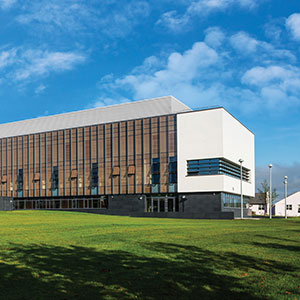
University of Galway has earned international recognition as a research-led university with a commitment to top quality teaching across a range of key areas of expertise.
-
Research & Innovation

Research & Innovation
University of Galway’s vibrant research community take on some of the most pressing challenges of our times.
-
Business & Industry
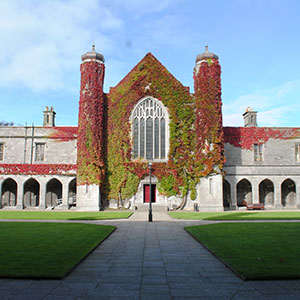
Guiding Breakthrough Research at University of Galway
We explore and facilitate commercial opportunities for the research community at University of Galway, as well as facilitating industry partnership.
-
Alumni & Friends

Alumni & Friends
There are 128,000 University of Galway alumni worldwide. Stay connected to your alumni community! Join our social networks and update your details online.
-
Community Engagement

Community Engagement
At University of Galway, we believe that the best learning takes place when you apply what you learn in a real world context. That's why many of our courses include work placements or community projects.
 Accessibility & Language
AEROTREND
Air-pollution trends, source regions and regulatory outcomes in Ireland
AEROTREND
Air-pollution trends, source regions and regulatory outcomes in Ireland
Welcome to the website of AEROTREND (Air pollutant Evolution and Regulatory Outcomes through TRend Evaluation and Diagnostics).
AEROTREND investigates how climate-relevant air pollutants have changed across Ireland over time, what has driven these changes, and how this evidence can support air-quality and climate policy.
The project brings together long-term ground-based measurements, satellite observations, advanced trend analysis, source-region diagnostics and atmospheric modelling. By combining these approaches, AEROTREND aims to contribute to a harmonised national assessment of changing air pollution and short-lived climate forcers across Ireland and the North Atlantic region.
A key goal of the project is to improve our understanding of how local emissions, long-range transport, meteorology and natural aerosol sources influence observed air-pollution trends. The project will provide evidence to support air-quality assessment, climate-informed policy development and future environmental reporting.

About the Project
Why is AEROTREND Important?
Air pollution remains one of the most important environmental risks to human health, while many air pollutants also influence climate. Some pollutants, known as short-lived climate forcers, remain in the atmosphere for shorter periods than carbon dioxide, but can have strong effects on air quality and near-term climate.
Examples include black carbon, ozone, methane and different aerosol components. These pollutants can warm or cool the atmosphere, affect cloud formation, reduce visibility, and contribute to respiratory and cardiovascular health impacts.
In Ireland and across Europe, emissions from transport, industry, residential heating, agriculture and other sectors have changed substantially in recent decades. However, measured air-pollution trends do not depend on emissions alone. They are also influenced by weather patterns, atmospheric chemistry, natural sources such as sea salt and marine biogenic aerosols, and long-range transport from other regions.
For this reason, simple year-to-year comparisons are not enough. AEROTREND uses long-term datasets and robust statistical methods to answer key questions such as:
- Are pollutant concentrations genuinely decreasing over time?
- Are improvements consistent across urban, suburban, rural and coastal environments?
- Are some pollutants or locations showing weaker improvements, stable behaviour, or unexpected increases?
- How much of the observed change is linked to local emissions, meteorology or long-range transport?
- Can long-term observations help assess the effectiveness of air-quality and climate-related policies?
By addressing these questions, AEROTREND will help strengthen the scientific evidence base for Irish air-quality management, climate policy and international reporting.
What will AEROTREND study?
AEROTREND will examine a broad range of climate- and air-quality-relevant pollutants and atmospheric parameters. These include:
- Black carbon, a combustion-related aerosol component linked to both health impacts and atmospheric warming.
- Organic aerosols, including primary emissions and secondary aerosol formed in the atmosphere.
- Secondary inorganic aerosol components, such as sulphate, nitrate and ammonium.
- Trace gases and precursor pollutants, including sulphur dioxide, nitrogen oxides, ammonia, ozone, methane and carbon monoxide.
- Natural and marine aerosol components, including sea salt and marine biogenic aerosol markers.
- Satellite-derived atmospheric products, including aerosol optical depth, aerosol vertical structure and trace-gas columns.
Together, these measurements will help distinguish between local pollution, regional and transboundary influences, and natural aerosol variability.
Research Approach
AEROTREND combines long-term observations with advanced analysis tools to understand how air pollution has changed and why.
- Long-term observational data. The project will compile and quality-assure atmospheric datasets from key monitoring locations, including coastal, rural, suburban and urban sites. These include long-term records from sites such as Mace Head Atmospheric Research Station, Valentia Observatory, Carnsore Point, and the AEROSOURCE Dublin site, alongside relevant cross-border and international monitoring datasets where appropriate.
- Satellite observations. Satellite remote-sensing products will be used to complement ground-based observations. These data can help identify large-scale pollution patterns, elevated aerosol layers and transboundary transport events that may not be fully captured by surface measurements alone.
- Trend analysis. AEROTREND will apply robust statistical methods to detect and quantify long-term trends. This includes approaches that account for seasonality, non-linear behaviour and changes across different pollution levels, from background conditions to high-pollution episodes.
- Source-region analysis. The project will use air-mass back trajectories and source-region diagnostics to investigate where measured pollutants are likely to originate. This will help separate local influences from regional or long-range transport.
- Source apportionment. Where suitable chemical datasets are available, AEROTREND will apply source-apportionment methods to identify major contributing sources, such as traffic, residential combustion, secondary aerosol formation, marine aerosol and transboundary pollution.
- Model evaluation. The project will compare observations with established atmospheric composition models. This will help assess how well models reproduce observed trends and identify potential gaps in emissions inventories, chemical processes or transport representation.
Expected Outcomes
AEROTREND will deliver:
- A harmonised assessment of long-term air-pollution trends in Ireland.
- Improved understanding of how pollutants vary across coastal, rural, suburban and urban environments.
- Identification of pollutants and locations showing decreasing, stable or increasing behaviour.
- New evidence on the influence of local emissions, meteorology and long-range transport.
- Improved interpretation of short-lived climate forcers in an Irish and North Atlantic context.
- Evidence to support air-quality policy, environmental regulation and climate-related assessments.
- Peer-reviewed scientific publications, conference presentations and stakeholder-facing outputs.
- Publicly accessible summaries of key findings.
The project will support Ireland’s capacity to interpret long-term atmospheric observations and contribute to a stronger evidence base for cleaner air, healthier communities and climate-informed environmental policy.
Project Team
AEROTREND is led by researchers at the Centre for Climate and Air Pollution Studies (C-CAPS), Ryan Institute, University of Galway.
Core project team:
- Vaios Moschos — Principal Investigator, University of Galway
- Jurgita Ovadnevaite — Co-Principal Investigator, University of Galway
- Liz Coleman — Co-Principal Investigator, University of Galway
- Emmanuel Chevassus — Research Assistant, University of Galway
Additional collaborators and contributors will be listed as the project progresses.
Funding Agency
AEROTREND is funded by the Environmental Protection Agency (EPA) Ireland under the EPA Research Programme.
The EPA Research Programme is a Government of Ireland initiative funded by the Department of the Environment, Climate and Communications.
Project code: 2025-CE-1342


Contact Us
We invite you to follow our progress and stay updated on the AEROTREND project by visiting this webpage regularly and engaging with us on social media:
X: https://x.com/mace_head
Bluesky: @maceheadccaps.bsky.social
Hashtag: #AEROTREND
We welcome enquiries about the project.
Dr. Vaios Moschos
Research Fellow
Centre for Climate and Air Pollution Studies
Ryan Institute
School of Natural Sciences, Physics
University of Galway
University Road
Galway H91 CF50
Ireland
Email: vaios.moschos@universityofgalway.ie
Prof. Jurgita Ovadnevaite
Professor in Physics
Director, Centre for Climate and Air Pollution Studies
Ryan Institute
University of Galway
University Road
Galway H91 CF50
Ireland
Email: jurgita.ovadnevaite@universityofgalway.ie