Any registered student of University of Galway (undergraduate, postgraduate, Access) can avail* of our full services throughout the year:
- book an appointment
- attend an event or seminar
- get email notifications
- drop in to browse information
- join us on social media
Graduates (within 3 years of graduation) can avail* of the following throughout the year
- attend an event
- get email notifications
- drop in to browse information
- join us on social media
Outside of term, graduates (within 3 years of graduation) have limited access to our appointments service
*Note: you must have registered with Careers Connect (registered students use your NUI Galway login).
^ Hide answer
During term (generally September-November, January-March):
- Current students of University of Galway only - Log in to Careers Connect (see menu sidebar) using your university login details. Send a Query outlining your concern and the team will respond
Outside term (generally December, April- August):
- Current students (as above)
- Graduates of University of Galway up to 3 years after graduation - Careers Connect registration (with old student ID number) required before sending a query.
You don't need to make an appointment to access information - just call into our Enquiries Desk or browse around the Careers Centre to reference files, prospectuses and books.
What happens at an appointment? Read our Appointment Expectation Policy here.
^ Hide answer
The CDC is unable to provide guidance to those who are not currently (registered) students of University of Galway (or very recent graduates from University of Galway).
For contacts please see gov.ie
If you are interested in attending University of Galway please see the following:
/courses - information about undergraduate, evening and postgraduate programmes on offer
/university-life - links to help for Access students, mature students, accomodation, fees, international students and more...
^ Hide answer
Data Protection:
As part of your appointment process, the staff member you meet may record notes relating to your appointment on the Careers Connect system. While these are not viewable by you or anyone other than staff related to the Career Development Centre, you have the right to request access to a copy of these notes under GDPR / Freedom of Information legislation. However, note that data is deleted in accordance with University or Careers Connect data retention periods for General Data Protection Regulations (GDPR).
^ Hide answer
We have a CV workshops throughout both semesters for University of Galway students working on improving or creating their CV.
The Career Development Centre also have great resources for current students to access whenever suits your schedule through our Pathway on Careers Connect - AI feedback, e-learning modules, templates and booklets. See our Sharepoint pages [accessible via your Office365 account].
Appointments become available once you complete the CV Pathway or attend a CV workshop.
Graduates of University of Galway can find information on CV preparation at Writing a CV - University of Galway. Feedback is available for graduates within 3 years of graduation through Careers Connect CV review facility.
^ Hide answer
University of Galway registered students can avail of all services provided by the Career Development Centre.
Students are encouraged to take advantage of the workshops offered throughout the term.
Students can submit an online query through Careers Connect for any career queries, or to request an appointment with one of the team.
Students also have access 24/7 to the Careers – Information for Students Sharepoint library, as well as a suite of Pathways on Careers Connect which are step-by-step guides on a variety of topics.
^ Hide answer
Graduates, within 3 years of graduating, should first register with Careers Connect – see Careers Connect - University of Galway for how to do this.
Graduates are welcome to register to attend our events, including job fairs, which are bookable on Careers Connect.
Resources available to graduates are linked from Careers Connect, currently includes AI CV and interview tools.
View open jobs on Careers Connect and set up weekly job alerts.
Appointments can be created for eligible graduates registered on Careers Connect, outside of semester only.
^ Hide answer
Students are welcome to drop in to the Centre with a careers query.
You can also send in your question using Careers Connect and we’ll get back to you very quickly.
Look out for specific drop-in sessions during the semester which will be advertised on Careers Connect and our social media platforms.
Find us in the Arts/Science Building – directions
^ Hide answer
Careers events are held throughout the semesters and will mostly be held in-person, on campus.
Full list and registration is available on Careers Connect
Events include workshops and talks covering
- CV and cover letter,
- job search and applications,
- personal statements,
- interview skills,
- employability skills,
- self-awareness for career exploration,
- options with your degree,
- LinkedIn,
- range of skills workshops,
- career insights,
- employer and alumni panels.
- Each semester will hold a jobs fair.
More information on this topic at Events - University of Galway
^ Hide answer
This award is primarily aimed at undergraduates and recognises what you have learned and the skills you have developed through work and extra-curricular activities.
It enhances your degree and helps equip you with a framework for lifelong career management.
The award allows the flexibility to fit the completion of the 5 required elements around your own schedule.
For further information, check out University of Galway EMPLOYABILITY AWARD
^ Hide answer
This information is for students that are not currently studying a Bachelor of Education or PME.
To teach in Ireland at second-level, you must first complete the Professional Master of Education or a Bachelor of Education.
This PME is available in University of Galway, among others, and more information is available on the programme: PME (through English) or MGO (as Gaeilge).
However, to be eligible to apply for the PME you must meet the criteria to teach at least one subject as outlined by the Teaching Council. A starting point is Post-primary | The Teaching Council.
To teach in Ireland at primary level, you first complete the Professional Master of Education (Primary). A pre-requisite for this programme is the Teastas Eorpach na Gaeilge (TEG) which is usually held early in January. There are also minimum grades in Mathematics, English and Irish required at Leaving Certificate (or equivalent). Full details of these requirements are outlined by the Department of Education.
If you are qualified to teach in another country, see the Teaching Council website for information.
^ Hide answer
Students must be registered for the current academic year to use Careers Connect. The system uses Single Sign On to access and your university credentials must be active. Your login page is https://careersconnect.universityofgalway.ie/student
If you completed a programme with University of Galway then you will need to register as a graduate – see Careers Connect - University of Galway for how to do this. Please note that you will remain a 'student' over the summer immediately following your final exams.
If you are starting your programme with us in September then your access will become available shortly after you complete your registration for that academic year.
^ Hide answer
Students who attend a CV workshop or who complete our CV Preparation Pathway on Careers Connect are eligible to book a CV review appointment via the appointment link on Careers Connect.
Find out about upcoming workshops in the Events section, or start the CV Pathway in https://careersconnect.universityofgalway.ie/student
^ Hide answer
Students can find the link here, or use the link available in the CV Pathway on Careers Connect.
Graduates can find the link in the Resources section of their Careers Connect dashboard.
^ Hide answer
Students can find the link to Big Interview, our mock interview tool here or by doing the Interview Skills Pathway on Careers Connect.
Graduates can access the link in the Resources section of their Careers Connect dashboard.
^ Hide answer
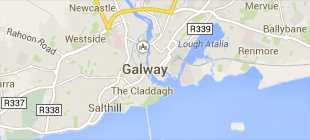
We are located in the Arts/Science Building on the 1st floor.
Find us by going in the main entrance doors, opposite the library. Choose either:
The corridor (green doors) to the left of the LARMOR lecture theatre will bring you to our premises (there are signs on the walls of the corridors). We are through the last door to the right.
The corridor (blue doors) to the left of Dillon Theatre leads to our main entrance, through the last door on your left.
Or search Careers in the University Interactive Map.
^ Hide answer
Students undertaking an integrated placement are supported fully along the placement process - before, during, and after - by the dedicated Work Based Learning Team, who have decades of experience in helping students develop their employability skills.
Second year: Students attend pre-placement employability modules and sessions addressing key areas such as CVs and applications, interview skills and sector / opportunity awareness. One-to-one sessions are available with the dedicated Placement Officers for CV review and mock interviews, and students have the opportunity to hear from employers both within the modules and beyond with bespoke events dedicated to their area of study.
Third year: Undergraduate students partake in their placement during this year. They return to University the following September to complete their final degree year and can then access support from our Careers Advisers.
^ Hide answer
If your placement is part of your studies, your Placement Officer will help students to secure work experience relevant to their course, to build skills to enhance their employability and personal development and to enable them to secure valuable experience.
^ Hide answer
Work Placements are organised through the Work Placement Office, who have strong relationships with businesses locally, nationally, and globally. Each participating degree course has a dedicated Placement Officer to support students. Meet the team
If your course is not included in the list above, contact your course co-ordinator or course director to discuss placement.
^ Hide answer
Attend all mandatory pre-preparatory sessions your Placement Officer has organised to advise you about the academic work placement process including the closing date and assessment piece.
Make an appointment with your Placement Officer to talk through your CV/application.
University of Galway has a dedicated system called InPlace which enables you to apply for roles that are applicable to your programme. Please ensure you download all of your job applications and job descriptions so you know what you have written and applied for
^ Hide answer
You can view current opportunities through your Work Placement Portal (InPlace) once the placement application process for your course has opened and you have registered for your relevant placement year. Current students can use their student login details. If you need help navigating it, just ask your Placement Officer.
^ Hide answer
Start by checking opportunities advertised on the Work Placement Portal and speaking with your Placement Officer. You can also attend employer events and career fairs we host throughout the semester and seek support with self-sourcing if you wish to.
^ Hide answer
There is a limited number of international placement opportunities, depending on your course. Often, students will source their own placement abroad. Purchasing travel and medical insurance is a PREREQUISITE for those who are travelling abroad for work placements.
^ Hide answer
Once the placement application process for your course has opened, you will be given access to your Work Placement Portal where all available work placement opportunities for your course are listed.
^ Hide answer
Typically, you’ll need:
- An updated CV and a tailored cover letter
- Sometimes academic transcripts or a portfolio (depending on your field)
Your Placement Officer can help you prepare these!
^ Hide answer
Yes! We run CV workshops for University of Galway students. You can also access a wide range of resources on Careers Connect, including:
- AI feedback tools
- E-learning modules
- Templates and booklets
Visit our SharePoint pages via your Office365 account.
^ Hide answer
If you're registered with the Disability Support Service (DSS), we recommend arranging a confidential placement planning meeting with a DSS Advisor. Topics covered may include:
- Required supports
- Reasonable accommodations
- Disclosure of disability or health condition
More info: Disability Placement Info
^ Hide answer
Your Placement Officer will guide you through application process.
^ Hide answer
While we don't provide accommodation directly, we can refer you to trusted providers and local supports.
^ Hide answer
Yes — students are responsible for securing their visa, insurance, and travel arrangements. Your Placement Officer can assist with information and guidance.
^ Hide answer
If you will be doing a work placement/internship of at least 2 months in duration, and if it is an integral and compulsory part of your University of Galway programme of study, and if you are going to be based with a company or organisation in an EU Member State (or in Croatia, Norway, Iceland, Liechtenstein, or Turkey), then you may be eligible for an Erasmus+ grant.
More details on the Erasmus + Traineeship funding application process can be found here - https://www.universityofgalway.ie/erasmus-programme/outgoingstudents/erasmustraineeships/
^ Hide answer
The Work Based Learning Team operate a well-defined own placement process in the year proceeding placement commencement, whereby students have the option to secure their own placement using their independent employer network and resources. Students seeking to source their own placement must adhere to the application and submission deadlines outlined in their placement handbook, and the placement must be secured and reviewed before the placement process begins to avoid conflicts with interviews or company contacts.
The placement must:
- Be relevant to your course
- Meet the learning outcomes and placement criteria
Please finalise this before the placement process begins to avoid conflicts with interviews or company contacts.
Search tips:
- Careers Connect – Search internships and get email alerts tailored to your profile
- Recruitment Fairs – Attend the Graduate Jobs Fair (Sept) or Internship Fair (Jan)
- GradIreland – Collect directories like GradIreland Directory and Ireland’s 100
- Enterprise Ireland / IDA Ireland – Research sector-specific companies
- LinkedIn & Social Media – Follow target companies and engage in industry discussions
If you source your own placement:
Send the following details to your Placement Officer:
- Company name, address, and website
- Start and end dates
- Job description
- Company contact details
Students cannot accept an offer of placement without approval of the placement from the Placement officer and/or Academic Placement Co-ordinator, and the completion of an organisation assessment. Once the placement has been approved, the placement officer will engage with the placement organisation to complete the necessary documentation, including, most notably, the organisation assessment checklist.
^ Hide answer
Yes — if your placement is part of a compulsory, accredited course component.
^ Hide answer
Yes — completion of the full placement is required.
^ Hide answer
Some companies will require you to sign a contract. This will be emailed to your University email prior to your placement. You should read and sign the contract and return it to your employer immediately.
^ Hide answer
Not necessarily. While some are in Galway, many are located nationwide. Students should be flexible regarding location.
^ Hide answer
University of Galway has created an app to streamline the Garda Vetting process. Once registered students will receive an email inviting them to begin the Garda Vetting Process. Garda Vetting can also be initiated by clicking here to start your application. Please note students will need their University of Galway Office 365 user account credentials to access the service.
University of Galway uses the Garda National Vetting Bureau (GNVB), where applicable, may liaise with the Police Service of Northern Ireland vetting service to assess the suitability of applicants for admission to such programmes. In the event where applicants do not meet the Garda Vetting requirements of the University, registration on such programmes may be subject to cancellation.
University of Galway will require students on the following programmes to be Garda Vetted before they fully complete their registration as a student of the University. Such students will be registered provisionally until Garda Clearance is obtained: List of Programmes Requiring Garda Vetting
If you have any queries regarding the Garda Vetting process please email gvadmissions@universityofgalway.ie.
^ Hide answer
Yes — employers may shortlist based on academic performance.
^ Hide answer
No — if offered a placement through the process, you are expected to accept it.
^ Hide answer
Eligibility depends on:
- Your course structure
- Academic performance
Check your course handbook or speak to your Course Co-ordinator.
^ Hide answer
It varies. For some programmes, it's required; for others, it's optional. Confirm with your Course Coordinator.
^ Hide answer
This depends on your course’s policy and your results. Speak to your Academic Placement Coordinator/Supervisor before proceeding.
^ Hide answer
At the beginning of the work placement, it is essential that the organisation makes clear to the student the areas of work regarded as confidential and any other specific requirements it may wish to be respected. Usually, a confidentiality clause is incorporated into the student's contract. Students are considered employees of the organisation, and are subject to the organisation’s disciplinary policy and procedures. These should be outlined to students at the start of work placement.
^ Hide answer
We anticipate that the placement experience will be a positive one for you. However, sometimes, problems do arise. Students are subject to organisational disciplinary policy and procedures.
- First, try resolving the issue with your line manager/supervisor
- If unresolved, contact your Placement Officer or Academic Placement Co-ordinator/Supervisor for support
We’re here to help if you experience any challenges, from workload to workplace culture.
^ Hide answer
Yes — most placements require progress reports or learning journals. Refer to your placement handbook for submission schedules.
^ Hide answer
Upon:
- Completion of your placement
- Submission of required reports or reflections
Your Academic Placement Co-ordinator/Supervisor will assess your work, and credits will be awarded accordingly.
^ Hide answer
For some courses, students are required to do a final year project, which can be theoretical or alternatively, based on a real organisation situation. If you are doing one of these courses, it is an ideal opportunity for you to look for a suitable project that you can carry out on their behalf.
We encourage you to discuss this with your supervisor and academic mentor during a three-way meeting. You are also advised to be proactive in coming up with ideas for potential projects that would be of benefit to the employer and of interest to you. The academic mentor will let the employer know the required criteria for the work to qualify as a suitable project. Later, at the exit interview, you can discuss this further with your supervisor and, if appropriate, agree on how to bring the project forward.
^ Hide answer




 Accessibility & Language