-
Courses
Courses
Choosing a course is one of the most important decisions you'll ever make! View our courses and see what our students and lecturers have to say about the courses you are interested in at the links below.
-
University Life
University Life
Each year more than 4,000 choose University of Galway as their University of choice. Find out what life at University of Galway is all about here.
-
About University of Galway
About University of Galway
Since 1845, University of Galway has been sharing the highest quality teaching and research with Ireland and the world. Find out what makes our University so special – from our distinguished history to the latest news and campus developments.
-
Colleges & Schools
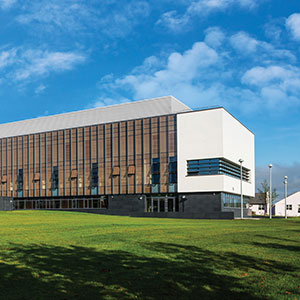
Colleges & Schools
University of Galway has earned international recognition as a research-led university with a commitment to top quality teaching across a range of key areas of expertise.
-
Research & Innovation
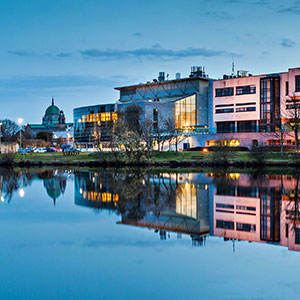
Research & Innovation
University of Galway’s vibrant research community take on some of the most pressing challenges of our times.
-
Business & Industry
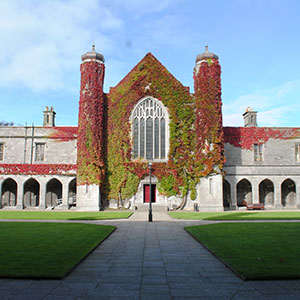
Guiding Breakthrough Research at University of Galway
We explore and facilitate commercial opportunities for the research community at University of Galway, as well as facilitating industry partnership.
-
Alumni & Friends
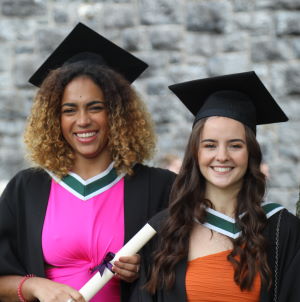
Alumni & Friends
There are 128,000 University of Galway alumni worldwide. Stay connected to your alumni community! Join our social networks and update your details online.
-
Community Engagement
Community Engagement
At University of Galway, we believe that the best learning takes place when you apply what you learn in a real world context. That's why many of our courses include work placements or community projects.
 Accessibility & Language
News Archive
Wednesday, 11 February 2026
University of Galway has hosted the UN Special Rapporteur on the human right to a clean, healthy and sustainable environment as part of an official country visit to Ireland. The visit of Special Rapporteur Astrid Puentes Riaño to the country focused on good practices and challenges in the implementation of human rights obligations relating to climate change and environmental protection. At University of Galway, academics in the Ryan Institute and Irish Centre for Human Rights shared expertise on issues related to rights associated with the environment and access to justice. The UN Special Rapporteur also took part in an open forum with civic and social organisations on issues linked to a clean, healthy and sustainable environment, including FairSeas, Údarás na Gaeltachta, Love Leitrim, Galway City Community Network, GLAN (Global Legal Action Network), Easkey Britton, Corrib Beo and Swan Sanctuary. Deputy President and Registrar at University of Galway, Professor Becky Whay, said: “Hosting the UN Special Rapporteur Astrid Puentes Riaño has been an excellent opportunity for University of Galway to bring our research-based insights to bear on a significant assessment of our country’s progress and obligations towards the environment and climate justice.” UN Special Rapporteur on the right to a clean, healthy and sustainable environment, Astrid Puentes Riaño said: “I am delighted to visit the University of Galway and to hear first-hand about the research and public policy engagement work of the Irish Centre for Human Rights and the Ryan Institute. Engagement with academia and civil society is important to my work, at a challenging time globally for human rights protection and the environment.” During the visit to Ireland, the UN Special Rapporteur is examining substantive elements of the right to a clean, healthy and sustainable environment in the country, including air, the sustainable use of water, healthy food systems, healthy biodiversity and ecosystems, non-toxic environments and a safe climate. She is also examining procedural elements of the right, including access to information, public participation and access to justice and issues related to the protection of environmental human rights defenders. Ms Puentes Riaño said: “My visit to Ireland is part of the ongoing work of the United Nations Special Procedures, to promote human rights and a clean healthy environment. My final report will be presented to the United Nations Human Rights Council in Geneva, and published in all six UN languages. The work of the Irish Centre for Human Rights on climate justice and access to justice, and of the multidisciplinary Ryan Institute on the marine, environment and sustainability, is hugely important to recognising and strengthening the links between human rights and the environment.” The Special Rapporteur will present a public report on report on the Ireland visit to the United Nations Human Rights Council in March 2027. Ends
Monday, 9 February 2026
A new scholarship supporting women in engineering and digital health has been awarded for the first time at University of Galway. Jescintha George Poruthur, a postgraduate student on the MSc in Medical Electronics and Digital Health, is the inaugural recipient of the Maev Creaven Scholarship. Dorothy Creaven established the scholarship in memory of her sister, Maev Creaven, a University of Galway graduate and healthcare innovator. An Electronic Engineering graduate, Maev Creaven was widely regarded as a pioneer in her field in Ireland, combining her scientific training with a commitment to wellbeing, education and practical innovation in healthcare. Dorothy Creaven said: “Maev believed in pushing the boundaries of innovation in healthcare and encouraging people to think beyond conventional paths. This scholarship was established in her memory to support women who are applying engineering and technology in ways that can genuinely improve lives. My family and I are proud to see her name associated with a programme that looks forward and supports the next generation of healthcare innovators.” Professor Edward Jones, Programme Director of the MSc in Medical Electronics and Digital Health at University of Galway, said: “We’re very proud of Jescintha as the inaugural recipient of the Maev Creaven Scholarship. She is a wonderful example of the energy and commitment to innovation in medical device technology that we aim to foster in this programme, reflecting the values – innovation, compassion, and impact – that defined Maev’s work. We thank Dorothy for creating a lasting tribute to her sister’s contribution to healthcare.” Professor Laoise McNamara, Head of the School of Engineering at University of Galway, said: “We are sincerely grateful to Dorothy Creaven for establishing this scholarship for women pursuing the MSc in Medical Electronics and Digital Health. This scholarship was created in honour of our former student Maev Creaven and reflects her strengths, passions, and commitment to these fields. This scholarship will support talented students with the potential to thrive, creating a legacy that will inspire and empower our graduates to make a meaningful difference in engineering and digital health.” Ends
Friday, 6 February 2026
Minister for Rural and Community Development and the Gaeltacht Dara Calleary T.D. has launched a digital edition of An Gaodhal, the world’s first newspaper dedicated to the Irish language community. The project at University of Galway was borne out of an international partnership with New York University shedding new light on the global history of the Irish. An Gaodhal was a bilingual newspaper, published monthly in Brooklyn, New York, at the end of the 19th century, between 1881 and 1898, and is considered a seminal influence on the Irish-language movement and media. The founder, editor and publisher of An Gaodhal was Michael J. Logan, from Milltown, Co Galway. He died in 1899. Minister Calleary T.D., said: “I am delighted to launch this project celebrating the newspaper An Gaodhal and that my Department was able to fund a significant portion of the work. Thanks to the digitisation of this newspaper and the development of innovative OCR resources, this collection will be valuable to researchers and to the general public alike. It will enable everyone to engage with the work of Mícheál Ó Locháin and to enjoy it. Projects such as this ensure that the Irish language will have a strong presence in the digital age, which is a specific objective of the Government.” Professor Tadhg Ó hIfearnáin, Established Professor of Modern Irish at University of Galway, said: “The story of An Gaodhal reminds us of the power and position of media in public life as well as the value of the Irish language among Irish people at home and abroad. We treasure the opportunity to build on the rich legacy of Michael J. Logan toward strengthening digital humanities research and toward ensuring the digital future of the Irish language.” The only surviving, complete series of the newspaper is preserved as part of the Special Collections at the University of Galway Library, having been bound in New York and sent to the Professor Tomás O Máille at the University in 1924 by Rev. Daniel Murphy. It contains 147 issues running to 2290 pages. The wealth of material in the newspaper, including articles, advertisements, lists of subscribers, folklore, poetry and song along with the diversity of dialects of Irish, inspired the project team to extract the text in order to make a digitally searchable edition. The project used AI machine learning technology known as optical character recognition. The project was completed with the support of the Robert David Lion Gardiner Foundation, Irish Institute of New York, Glucksman Ireland House, New York University, University of Galway, the Department of Rural and Community Development and the Gaeltacht, and Foras na Gaeilge. In the 1890s, an estimated 40% of the world’s Irish speakers were living overseas, with 400,000 Irish speakers in the US and 70,000 of them in New York. Founder and editor of An Gaodhal, Michael J. Logan, is highly-regarded for his pioneering work. The long-running Irish-American newspaper, The Irish World named him “Father of the Irish Language Movement in America” and shortly before his death, he became the first secretary of the Gaelic League in the US. Kathryn M. Curran, Executive Director of the Robert David Lion Gardiner Foundation, said: “These early newspapers are a historic resource for every aspect of a specific community's daily life. They offer insight into social, economic, political and cultural issues of note and concern. This project will bring a richer voice to that more detailed story." Professor Nicholas Wolf of New York University described the methodology: “An Gaodhal was printed using Cló Gaelach – the Irish script derived from the manuscript tradition. When our project began, there were no publicly available models suitable for the team to use to create a searchable, digitised edition of the newspaper. In order to bring this pioneering publication to life in the 21st century, we trained an AI model in the Irish language and then used it to develop a bilingual model. Making An Gaodhal digitally searchable has shown how technology can help deliver parity of esteem for different language communities and their shared historical sources, including those that are under-resourced or considered minority languages.” Dr Deirdre Ní Chonghaile, Research Fellow on the project, said: “Michael Logan and his international network of supporters and subscribers hoped for a world where Irish would thrive and, through our project, their vision can now inspire a new generation of Irish speakers to continue that legacy of dreaming big.” The project was completed with the support of University of Galway Library and the Data Science Institute. The AI machine learning technology used – Optical Character Recognition (OCR) – is available worldwide for many languages, including Irish. The project’s bilingual model is the first of its kind to combine multilingual and multiscript functionality and is free for other researchers to use. All digitised issues of An Gaodhal are available through the University of Galway Digital Repository at https://digital.library.universityofgalway.ie/p/ms/categories/an-gaodhal. Ends
Friday, 6 February 2026
Tá leagan digiteach de An Gaodhal, an chéad nuachtán Gaeilge ar domhan a foilsíodh do chainteoirí Gaeilge, seolta ag Dara Calleary, T.D., an tAire Forbartha Tuaithe agus Pobail agus Gaeltachta. D’eascair an tionscadal in Ollscoil na Gaillimhe as comhpháirtíocht idirnáisiúnta le hOllscoil Nua-Eabhrac a fhéachann le taighde úrnua a dhéanamh ar scéal na nÉireannach sa domhan mór. Nuachtán dátheangach ab ea An Gaodhal a foilsíodh go míosúil in Brooklyn, Nua-Eabhrac, ag deireadh an 19ú céad, idir 1881 agus 1898, agus meastar go raibh tionchar an-mhór aige ar ghluaiseacht agus ar mheáin na Gaeilge. Is é Micheál Ó Lócháin, as Baile an Mhuillinn, Co. na Gaillimhe, a bhunaigh agus a d’fhoilsigh An Gaodhal agus a bhí ina eagarthóir air. Cailleadh in 1899 é. Bhí an méid seo le rá ag Dara Calleary, T.D., an tAire Forbartha Tuaithe agus Pobail agus Gaeltachta: “Is cúis áthais dom seoladh an tionscadail seo ag ceiliúradh an nuachtáin An Gaodhal agus go raibh mo Roinn in ann cuid shuntasach den obair a mhaoiniú. A bhuí le digitiú an nuachtáin seo agus forbairt acmhainní nuálacha OCR, beidh an bailiúchán seo luachmhar do thaighdeoirí agus don phobal i gcoitinne araon. Beidh sé ar chumas gach duine dul i ngleic le hobair Mhíchíl Uí Lócháin agus taitneamh a bhaint as. Cinntíonn tionscadail mar seo go mbeidh láithreacht láidir ag an nGaeilge san aois dhigiteach, rud atá mar sprioc shonrach ag an Rialtas.” Seo mar a labhair an tOllamh Tadhg Ó hIfearnáin, Ollamh Bunaithe le Nua-Ghaeilge in Ollscoil na Gaillimhe: “Meabhraíonn scéal An Gaodhal dúinn faoina chumhachtaí atá na meáin sa saol poiblí chomh maith lena luachmhaire atá an Ghaeilge do mhuintir na hÉireann sa bhaile agus thar lear. Is mór againn an deis tógáil ar oidhreacht shaibhir Mhichíl Uí Lócháin chun taighde sna daonnachtaí digiteacha a láidriú agus todhchaí dhigiteach na Gaeilge a chinntiú.” Is i mBailiúcháin Speisialta i Leabharlann Ollscoil na Gaillimhe atá an t-aon sraith iomlán den nuachtán atá fós ar marthain ar choimeád, ó chuir an tAthair Domhnall Ó Morcadha clúdach crua orthu i Meiriceá agus sheol chuig an Ollamh Tomás Ó Máille san Ollscoil iad i 1924. Tá 147 eagrán ann arb ionann sin agus 2290 leathanach. Tá raidhse ábhar sa nuachtán, agus áirítear ar chuid den ábhar sin ailt, fógraí, liostaí síntiúsóirí, béaloideas, filíocht agus amhráin, chomh maith le héagsúlacht chanúintí na Gaeilge. Is é an meascán saibhir ábhair sin a spreag an fhoireann tionscadail tabhairt faoin téacs a asbhaint agus leagan digiteach inchuardaithe a chur ar fáil. Baineadh úsáid as teicneolaíocht mheaisínfhoghlama AI a dtugtar aithint optúil carachtar uirthi don tionscadal. Cuireadh an tionscadal i gcrích le tacaíocht ó Fhondúireacht Robert David Lion Gardiner, Institiúid na hÉireann, Nua-Eabhrac, Glucksman Ireland House, Ollscoil Nua-Eabhrac, Ollscoil na Gaillimhe, Foras na Gaeilge, agus an Roinn Forbartha Tuaithe agus Pobail agus Gaeltachta. Meastar go raibh 40% de chainteoirí Gaeilge an domhain ina gcónaí thar lear sna 1890idí, agus go raibh 400,000 acu sna Stáit Aontaithe agus 70,000 acu sin i Nua-Eabhrac. Tá an-mheas ar bhunaitheoir agus eagarthóir An Gaodhal, Micheál Ó Lócháin, as an obair cheannródaíoch a rinne sé. Bhaist an nuachtán seanbhunaithe Gael-Mheiriceánach, The Irish World, 'the Father of the Irish Language Movement in America' air agus ceapadh é ina chéad rúnaí ar Chonradh na Gaeilge sna Stáit Aontaithe go gairid sular cailleadh é. Dúirt Kathryn M. Curran, Stiúrthóir Feidhmiúcháin Fhondúireacht Robert David Lion Gardiner: “Acmhainn stairiúil is ea na nuachtáin luatha seo trínar féidir gach gné de ghnáthshaol pobail ar leith a chíoradh. Tugann siad léargas ar na saincheisteanna sóisialta, eacnamaíocha, polaitiúla agus cultúrtha a bhí ag dó na geirbe ag an bpobal sin. Léireofar a scéal siúd ar bhonn níos saibhre agus níos mionsonraithe a bhuíochas leis an tionscadal seo.” Chuir an tOllamh Nicholas Wolf, Ollscoil Nua-Eabhrac, síos ar an modheolaíocht: “Baineadh úsáid as an gCló Gaelach chun An Gaodhal a phriontáil, cló a d’eascair as traidisiún na lámhscríbhinní. Nuair a chuireamar tús leis an tionscadal, ní raibh fáil ar aon samhail phoiblí a d’fheilfeadh don fhoireann agus muid ag féachaint le leagan digitithe inchuardaithe den nuachtán a sholáthar. Chuireamar oiliúint ar shamhail OCR don Ghaeilge agus bhaineamar úsáid as an tsamhail sin chun samhail dátheangach a fhorbairt d’fhonn a chur ar ár gcumas an nuachtán ceannródaíoch seo a chur ar fáil do lucht léitheoireachta an 21ú haois. Léiríonn an obair seo chun leagan digiteach inchuardaithe de An Gaodhal a sholáthar an chaoi ar féidir leis an teicneolaíocht cothromas a thabhairt do phobail teanga éagsúla agus dá bhfoinsí staire, agus san áireamh leo sin tá teangacha atá gann ar acmhainní nó a mheastar iad a bheith ina mionteangacha.” Thagair an Dr Deirdre Ní Chonghaile, Comhalta Taighde ar an tionscadal, don obair mar seo a leanas: “Tríd an tionscadal seo, spreagann an fhís a bhí ag Micheál Ó Lócháin agus ag an lucht tacaíochta idirnáisiúnta agus síntiúsóirí a bhí aige – is í sin, go mbláthódh an Ghaeilge – an glún nua de lucht labhartha na Gaeilge agus tógtar ar an oidhreacht atá fágtha acu dúinn.” Cuireadh an tionscadal seo i gcrích le tacaíocht ó Leabharlann Ollscoil na Gaillimhe agus ón Institiúid Eolaíochta Sonraí. Tá an teicneolaíocht mheaisínfoghlama AI a úsáideadh – Aithint Optúil Carachtar (OCR) – ar fáil do go leor teangacha, an Ghaeilge san áireamh. Tá an tsamhail dhátheangach a chruthaigh an tionscadail seo ar an gcéad cheann a cheadaíonn feidhmeanna ilteangacha agus ilscripte le chéile agus is féidir le taighdeoirí eile úsáid a bhaint as in aisce. Tá fáil ar gach eagrán digitithe de An Gaodhal i Stór Digiteach Leabharlann Ollscoil na Gaillimhe ag https://digital.library.universityofgalway.ie/p/ms/categories/an-gaodhal. Críoch
Wednesday, 4 February 2026
Specialist facility supports world-leading medical devices firm to expand research and innovation links University of Galway has today launched its new Medical Device Prototype Hub, supported by medical device company Medtronic. The development of the facility is part of the five-year €5million signature innovation partnership between Medtronic and the University, announced in 2023, which focuses on three pillars: developing the MedTech ecosystem, STEM engagement and research. President of University of Galway, Professor David Burn, said: “The launch of the Medical Device Prototype Hub at University of Galway marks a hugely significant milestone in our signature partnership with Medtronic but it also sends a strong message to all those in the sector and all those who are driving innovation – University of Galway is creating the ecosystem in which our partners in research and innovation can thrive. We look forward to celebrating the the breakthroughs and successes that this initiative enables.” Ronan Rogers Senior R&D Director, Medtronic, said: “Today’s launch of the Medical Device Prototype Hub represents an exciting next step in our long‑standing partnership with University of Galway. Medtronic has deep roots in the west of Ireland, and this facility strengthens a shared commitment to advancing research, accelerating innovation, and developing the next generation of medical technologies. We are proud to invest in an ecosystem that not only drives technological progress but also supports talent development. This Hub will unlock new avenues for discovery and accelerate the path from promising ideas to real‑world medical solutions for patients.” The Medical Device Prototype Hub forms part of the Institute for Health Discovery and Innovation which was established in the University in 2024, as part of the signature innovation partnership. It will be further supported through collaborations with government agencies and industry leaders. The Medical Device Prototype Hub sits within University of Galway’s new Technology Services Directorate, which provides shared research infrastructure and technical expertise to underpin activities across both the Institute for Health Discovery and Innovation and the Institute for Clinical Trials, established in 2024 and 2023 respectively. The Hub will be further enhanced through partnerships with government agencies and industry leaders, creating a collaborative environment that supports translation, innovation, and regional growth in life sciences and medical technologies. The development is part of an integrated ecosystem at University of Galway which enables sustained, research-led development further positioning Galway as the centre of Ireland’s global MedTech hub and the University as integral to research for the public good on the world stage. Aoife Duffy, Director of Technology Services Directorate at University of Galway, said: “The Technology Services Directorate brings together key research facilities that support fundamental research at University of Galway. It aims to advance our research excellence by bringing together state-of-the-art core facilities and making strategic decisions on infrastructure and investment. The new prototype hub significantly enhances the innovation pathway available for the university research community and wider, and we look forward to working with Medtronic on this partnership”. Professor Ted Vaughan, Director of Institute for Health Discovery and Innovation (IHDI), said: “The Medical Device Prototype Hub will serve as a central core facility, providing the engineering infrastructure and expertise to design, build and test new devices. It adds to the vibrant healthtech and medtech ecosystem in the west of Ireland and provides fertile ground to drive its growth. “Our vision is to make sure we have the best possible conditions for the R&D of new technologies for healthcare. Our aim is to address remaining gaps in the development pipeline, from discovery to innovation." The Medical Device Prototype Hub has expert staff to facilitate concept creation, development and manufacturing of innovative medical device prototypes. The team offers a comprehensive suite of services to support early-stage medical device innovation, including both virtual and physical prototyping, enabling rapid design iteration through Computer Aided Design, modelling and simulation. The Medical Device Prototype Hub provides a full service, one-stop, solution for 3D printing needs, which includes a host of expert-led design, printing and consultancy and is equipped with state-of-the-art additive manufacturing technologies for validation of prototypes. Ends
Tuesday, 3 February 2026
University of Galway engineering student Nicola Latham has been awarded the Cunningham Civil and Marine Engineering Scholarship. The scholarship supports students studying civil and marine engineering providing financial assistance alongside industry recognition and is awarded based on academic performance and interest in the field. A first-year civil engineering student at University of Galway from Rosenallis, Co. Cavan, Nicola was awarded the scholarship for her dedication to her studies and her potential to contribute to the future of the engineering profession. Danielle Cunningham, Director of Cunningham Civil and Marine Ltd, said: “Supporting young people and increasing female participation in civil engineering is essential for the future of the industry. We are proud to support students like Nicola as they begin their engineering careers.” Headquartered in Westport, Co Mayo, Cunningham Civil and Marine Ltd employs more than 80 construction professionals. The company has grown to become one of Ireland’s leading Marine Contractors with a long list of successfully delivered complex projects including major works at Greenore, Dublin and Cork Ports. Ends
Tuesday, 31 March 2026
Industry and academic leaders came together at the University of Galway’s fourth annual Business Summit to tackle the challenges and opportunities of AI and explore its evolving impact on the world of work. Organised by the University’s J.E. Cairnes School of Business and Economics, the Business Summit forms part of the School’s signature series, Thinking Beyond: Thought Leadership for the Public Good. The summit was attended by more than 400 people from dozens of companies in the Greater Galway region. Speakers highlighted how AI is reshaping business models and addressed emerging challenges in regulation, skills development and innovation, with discussions emphasising the need to broaden access to AI technologies so organisations of all sizes can benefit. Keynote speakers included University of Galway Bachelor of Commerce graduates Majella Mungovan, Vice-President of Financial Operations at Meta, and John Clancy, co-founder and CEO of Galvia AI. The programme featured a panel on scaling internationally in regulated sectors such as healthcare, MedTech and finance, with contributions from Joe Power of Medtronic, and graduates Deirdre Giblin of Datavant Ireland and Deloitte Partner Nicola Flannery. A panel featuring two investors in AI ventures – former cast member of Dragons’ Den, Norah Casey, and General Partner at Act Venture Capital, John O’Sullivan - as well as University of Galway’s Professor of Economics, Alan Ahearne, explored emerging opportunities for AI-driven ventures. Other speakers included Fergal O’Connor, CEO and Founder, Buymedia; Associate Professor Noel Carroll; and Karen Ronan, CEO of Galway Chamber of Commerce. Throughout the event, industry leaders and University of Galway researchers shared practical insights on AI’s real-world impact and its role in driving organisational and economic transformation. Majella Mungovan, Vice President of Financial Operations at Meta, said: “I was proud to return to my alma mater to share insights from our AI journey at Meta, and to hear from leaders from industry and academia. The University of Galway Business Summit provides a valuable forum for discussion and helps shape Ireland’s future business landscape.” Professor Karena Yan, Dean of J.E. Cairnes School of Business and Economics, University of Galway, said: “We are proud to bring together influential industry leaders and world‑class academics for the University of Galway Business Summit 2026, where the real business implications of AI are examined up close. In a landscape defined by uncertainty and opportunity, the Summit delivers evidence-based‑ insights that decision‑makers can act on today.” Professor David Burn, President of University of Galway, said: “The University of Galway Business Summit provides an important forum for leaders from global industry and academia to engage with the key challenges facing business and society today. In a period of technological change, it is essential that sustainable practices and ethical business models progress alongside innovation. The insights shared at this summit are critical as we navigate both the risks and opportunities presented by developments in AI. I would like to thank all our attendees, speakers, supporters and partners for their contribution to this year’s event.” The Business Summit was supported by AIB as lead supporter, Galway Chamber and itag as partners, and Data2Sustain, Platform94 and European Digital Innovation Hubs Network as supporters. For more information visit: universityofgalway.ie/thinkingbeyond/businesssummit Ends
Monday, 30 March 2026
International study shows combination of manufactured wood products and bioenergy with carbon capture can play a critical role in climate neutrality A major new international research study has demonstrated an effective way to use wood to achieve long-term global cooling. Led by researchers at the University of Galway, the study examined the combination of using low-value wood for manufacturing before it is converted into fuel for clean energy generation with carbon capture and storage once those products reach the end of their life. The researchers revealed that this strategy of combining forestry with “cascading” use of wood products can play a critical role in achieving climate neutrality targets and provides more resilient and long-term climate benefits than either directly burning harvested wood for energy or leaving forests unharvested. The research has been published here in Nature’s Communications Earth & Environment. Dr George Bishop, lead scientist on the study, based at University of Galway, said: "National climate neutrality targets cannot be met without large-scale carbon dioxide removal. Bioenergy with Carbon Capture and Storage (BECCS) provides one of the few scalable ways to deliver permanent carbon removal while also producing renewable energy. Our research shows that cascading wood use into Bioenergy with Carbon Capture and Storage is a robust climate change mitigation option that consistently delivers long-term temperature reduction.” The research is particularly significant for countries in the EU, including Ireland, which have legally-binding commitments to reach climate neutrality by 2050 – meaning that any greenhouse gases released must either be eliminated or balanced by an equal amount removed from the atmosphere. One of the biggest challenges comes from sectors where deep emissions cuts are technically difficult and costly, such as agriculture - Ireland’s largest source of emissions - as well as aviation and heavy industry. Bioenergy with Carbon Capture and Storage (BECCS) has been identified as a potential solution to this challenge. As trees grow, they absorb carbon dioxide from the atmosphere and store it in their biomass. When forests are harvested, some wood becomes low-value leftovers that are often burned for bioenergy, releasing the carbon back into the air. With BECCS, this CO₂ can be captured and permanently stored deep underground – effectively removing the greenhouse gas from the atmosphere forever. However, large-scale deployment of BECCS infrastructure is expected to take decades. The research team outline an opportunity: rather than burning low-value wood immediately, these materials can first be used to manufacture products such as particleboard. This offers dual wins: it generates immediate climate benefits by replacing carbon-intensive materials like plastics, and “buys time” for BECCS deployment. At the end of their service life, these wood products can still be used for bioenergy – but this time in a BECCS facility which has had time to be deployed. At the same time, sustainably managed forests regrow to replace harvested trees, continuing to draw carbon dioxide from the air, acting as a carbon vacuum. The study demonstrates that this combined cycle creates a durable carbon removal pathway with a significant long-term cooling effect, supporting climate-neutrality goals in Ireland and globally. Professor David Styles, co-author and Professor in Agri-sustainability, University of Galway, said: "The implication for policy is clear: to meet ambitious climate targets, governments must prioritise the development of permanent carbon dioxide capture and storage technologies and incentivise circular use of wood to prolong its lifespan as a carbon store. By integrating sustainable forest management with circular and cascading wood strategies and BECCS, the global community can ensure a more durable and resilient path towards climate stabilisation.” Dr James Gaffey, co-author and Project Lead at Munster Technological University, said: "The results of this study highlight the need for greater investment in carbon capture and storage infrastructure in parallel with cascading circular bioeconomy and renewable energy developments. The results are relevant for Ireland and for other EU member states and the approach will help them to meet their climate obligations and avoid future risks of penalties.” The research also highlighted an interesting analysis of the comparison between active forest management and leaving forests unharvested. While unharvested forests provide strong near-term cooling, their carbon sink strength diminishes as trees mature, and carbon stored in living forests is increasingly vulnerable to climate-driven disturbances such as wildfires, pests, and disease. Dr Bishop added: “If we transfer carbon from forests to geological stores via a cascade of multiple wood uses we enhance the longevity and resilience of carbon dioxide removal from the atmosphere. Our sophisticated modelling shows that cascading wood use into Bioenergy with Carbon Capture and Storage eventually surpasses the climate benefits of unharvested forests.” The research was supported by Ireland’s Department of Agriculture, Food and the Marine through the INFORMBIO project, and was a collaborative study involving experts from the University of Galway, MTU, and IEA Bioenergy BECCUS Inter-task members from Chalmers University of Technology, Sweden; KTH Royal Institute of Technology, Sweden; University of New England, Australia; Bangor University, Wales; DBFZ, Germany; VTT Technical Research Centre of Finland; and other leading institutions. Ends
Wednesday, 25 March 2026
The University of Galway Tax Clinic, Claddagh Credit Union and St Columba’s Credit Union have announced a new partnership that will provide credit union members with free, confidential tax support. Launched at the University’s J.E. Cairnes School of Business and Economics, the initiative combines the University of Galway’s tax expertise with the community networks of Claddagh and St Columba’s Credit Unions. The partnership is designed to provide credit union members with accessible, confidential tax guidance, supporting improved tax literacy and financial confidence within local communities. Colm Cleary, Chair of St Columba’s Credit Union, said: “This partnership means we can connect our members with expert, confidential tax support. It’s about building confidence and helping people understand their rights and responsibilities, which is what community finance is all about.” Louise Shields, CEO of Claddagh Credit Union, said: “Our members trust us to support their financial wellbeing, and being able to offer free tax support through the Tax Clinic strengthens that relationship and shows what we can achieve when community organisations work together.” The University of Galway Tax Clinic was established in 2020 and is Ireland's first free tax clinic. Originally founded to support University students, it has since expanded through community partnerships to assist vulnerable members of society. The clinic works with a number of community partners, including an ongoing collaboration with Galway Public Libraries, and serves clients referred through COPE Galway and Longford Women's Link. The clinic also serves as a training ground for the next generation of student tax advisors, who gain hands-on experience under the guidance of professional tax advisors. Professor Emer Mulligan, Director of the Tax Clinic, said: “This collaboration strengthens our collective ability to serve the community – we can now bring expert tax support directly to the people who engage with and trust their credit unions.” Ends
Tuesday, 24 March 2026
Tá an dara pláinéad aimsithe ag foireann idirnáisiúnta réalteolaithe, ar fionnachtain cheannródaíoch í sa chóras céanna inar aimsigh siad pláinéad eile anuraidh. Aimsíodh an pláinéad óg, ar tugadh WISPIT 2c air, agus é ag céim luath dá fhoirmiú sa diosca timpeall ar réalta óg. Meastar go bhfuil sé tuairim agus 5 mhilliún bliain d’aois agus an chuma air go bhfuil sé deich n-oiread chomh mór le hIúpatar. Tá an réalta, WISPIT 2, lonnaithe i réaltbhuíon an Iolair, ar réaltbhuíon shuntasach mheánchiorclach é a bhíonn le feiceáil sa leathsféar thuaidh i míonna an tsamhraidh (Iúil go Samhain) ar Bhealach na Bó Finne. Ba í Chloe Lawlor, mac léinn PhD in Ionad na Réalteolaíochta, Ollscoil na Gaillimhe, a stiúir an staidéar, i gcomhar leis an taighdeoir iardhochtúireachta Guillaume Bourdarot in Institiúid Max Planck don Fhisic Eachtardhomhanda in Garching na Gearmáine, agus leis an mac léinn PhD Richelle van Capelleveen i Réadlann Leiden na hÍsiltíre. Ciallaíonn an fhionnachtain mhór seo i réimse na réalteolaíochta nach bhfuil WISPIT 2 ach ar an dara córas ilphláinéad óg is eol dúinn (agus atá fós i mbun a fhoirmithe). Tá cuma an Ghrianchórais óig ar WISPIT 2 sa chaoi is go bhfuil dhá ollphláinéad gáis leabaithe ina dhiosca ilfháinneach deannaigh. Tá dhá phláinéad san áireamh sa chóras seo: an pláinéad nuadheimhnithe seo WISPIT 2c, agus an pláinéad WISPIT 2b a d’aimsigh an fhoireann taighde chéanna anuraidh (faoi stiúir Richelle van Capelleveen, Réadlann Leiden agus an Dr Laird Close, Ollscoil Arizona). Ollphláinéad gáis an-óg is ea an pláinéad nua, bunaithe ar a theocht agus ar a gha ón speictream atmaisféir. Tá an pláinéad seo dhá oiread níos mó ná WISPIT 2b a aimsíodh roimhe seo agus tá sé ar fithis ceithre huaire níos cóngaraí timpeall a réalta óstaigh, rud a chiallaíonn go bhfuil sé an-deacair é a bhrath le teileascóip ar domhan. Foilsíodh an staidéar san iris Astrophysical Journal Letters anseo. Aimsíodh an dara pláinéad seo le Teileascóp Ollmhór na Réadlainne Eorpaí sa Leathsféar Theas i nGaineamhlach Atacama na Sile. Ach roinnt teileascóp a cheangal le chéile chun gníomhú mar aon uirlis ollmhór amháin, bhí an fhoireann taighde in ann faire ar réigiúin an-chóngarach don réalta. D’aimsigh an fhoireann gás aonocsaíde carbóin, ceimiceán a bhíonn le fáil go hiondúil san atmaisféar ar ollphláinéid óga. Fágann aonocsaíd charbóin lorg láidir sainiúil ceimiceach ar shonraí teileascóip, rud a chuireann an fhianaise ríthábhachtach ar fáil a theastaíonn le deimhniú gurb ann don phláinéad. Dúirt Chloe Lawlor, mac léinn PhD in Ionad na Réalteolaíochta, Scoil na nEolaíochtaí Nádúrtha, Ollscoil na Gaillimhe: "Tar éis WISPIT 2b a aimsiú i dtosach, a raibh baint agam leis freisin, chreideamar go bhféadfadh réad eile a bheith sa chóras. Ar dtús, ní rabhamar cinnte an pláinéad a bhí ann, nó meall an-mhór deannaigh. Ní dhearnadh aon mhoill tabhairt faoi bhreithnithe breise, leis an Trasnamhéadar Teileascóip Ollmhóir, socrú dochreidte inar féidir roinnt teileascóp a cheangal chun teileascóp mór fíorúil a dhéanamh. Mar gheall air seo, bhíomar in ann rud ar a dtugaimid speictream a thógáil, is é sin lorg ceimiceán, a léiríonn na dúile agus na móilíní in atmaisféar réada. "Ceann de na loirg is tábhachtaí a mbímid ag faire amach dó in ollphláinéid óga ná aonocsaíd charbóin. Nuair a chonaiceamar go soiléir é sna sonraí, thuigeamar ansin go raibh rud éigin suntasach againn. Ba dheacair é a chreidiúint. Níor cheap mé gur mise a d’aimseodh an dara pláinéad sa chóras. Nuair a sheol mé an speictream chuig mo stiúrthóir, an Dr Christian Ginski, ba mhór an croitheadh a baineadh asainn, agus tar éis tuilleadh scrúdaithe a dhéanamh, dheimhnigh sé go raibh pláinéad eile aimsithe agam! "Is saotharlann thábhachtach a bheas in WISPIT 2 le staidéar a dhéanamh ar fhoirmiú pláinéad." Chun an pláinéad ceilte a aimsiú, d’úsáid an fhoireann taighde Trasnamhéadar Teileascóip Ollmhóir (VLTI) na Réadlainne Eorpaí sa Leathsféar Theas (ESO), rud a ghlac íomhá den réad agus a d’éascaigh an chéad staidéar ar a atmaisféar. Bhain an fhoireann úsáid shonrach as an uirlis GRAVITY+ a uasghrádaíodh le deireanas, rud a éascaíonn an solas a thabhairt le chéile ó gach ceann de na ceithre theileascóp ocht méadar de chuid an ESO. Bhí an modh dúshlánach seo, a d’úsáid uirlisí ceannródaíocha, ina chuid thábhachtach ó thaobh an phláinéid nua a aimsiú, mar gheall go bhfuil an réalta na mílte uair níos gile ná comhartha solais an phláinéid. Dúirt an tOllamh Frances Fahy, Stiúrthóir Institiúid Uí Riain, Ollscoil na Gaillimhe: “Éacht ar leith is ea an pláinéad WISPIT 2c a aimsiú agus léiríonn sé an taighde réaltfhisice den chéad scoth atá ar bun in Ollscoil na Gaillimhe. Tá Institiúid Uí Riain mórtasach as tacú le taighde a sháraíonn teorainneacha na fionnachtana eolaíochta. Tréaslaím ó chroí leis an taighdeoir PhD Chloe Lawlor as ucht an dul chun cinn seo agus leis an Dr Christian Ginski as a cheannaireacht agus a dhíograis don taighde réalteolaíochta. Téann fionnachtana mar seo i gcion ar dhaoine agus spreagann siad glúin úr réalteolaithe. Cuireann an fhionnachtain nua seo deis as an ngnáth ar fáil d’eolaithe staidéar a dhéanamh ar an gcaoi a bhfoirmíonn agus a bhforbraíonn ollphlainéid, agus tugann sí léargas ar na luathphróisis trínar foirmíodh an Domhan. Dúirt an Dr Christian Ginski, Léachtóir i Scoil na nEolaíochtaí Nádúrtha, Ollscoil na Gaillimhe: "Is ionann pláinéid óga a aimsiú ina bhfoirmiú mar seo agus go leor leor oibre a rinne eolaithe agus innealtóirí araon. Nuair a thosaigh mé amach i mo ghairm bheatha féin, ní raibh aimsithe ach cúpla céad eiseapláinéad (le hais na mílte is eol dúinn inniu) agus ba dhúshlán dochreidte a bheadh ann íomhá dhíreach a thógáil d’aon phláinéad. Is deacair dom a shamhlú go bhfuilimid anois ag an staid gur féidir linn súil a chaitheamh ar na pláinéid de réir mar a bhíonn siad ag foirmiú. Is mór an onóir dom a bheith ag obair le scata eolaithe óga iontacha a bhfuil an cumas acu an leas is fearr a bhaint as na háiseanna breathnaitheacha atá ar fáil anois dúinn.” I gcomhthráth le foilsiú an taighde, tá grianghraf de WISPIT 2c agus WISPIT 2b agus iad ag foirmiú timpeall na réalta óige WISPIT 2, curtha ar fáil ag an Réadlann Eorpach sa Leathsféar Theas (ESO) – an eagraíocht idirnáisiúnta réalteolaíochta is iomráití ar domhan – anseo Thug Institiúid Uí Riain in Ollscoil na Gaillimhe tacaíocht don staidéar. Críoch
Wednesday, 25 March 2026
Nationwide survey shows invasive spider thriving in urban centres The invasive Noble false widow spider (Steatoda nobilis) is now one of the most common urban spiders in Ireland, according to a new study by researchers at the University of Galway. Researchers surveyed urban spider populations across the Republic of Ireland to identify the most common species and the environmental factors influencing their diversity and abundance. The study found that the Noble false widow and the long-established missing sector orb weaver (Zygiella x-notata) accounted for more than 80% of urban spider populations. Remarkably, the Noble false widow is now well established even in counties such as Mayo and Sligo, where it was previously unrecorded. The findings, been published in Ecology and Evolution, highlight Ireland’s understudied urban habitats, as well as the potential negative impact of the Noble false widow on native spider species Brandon Collier, doctoral researcher at University of Galway and first author of the study, said: “This research provides a framework for studying a largely overlooked habitat for invasive and medically important species. As human populations increase year after year, urban areas grow with them. Understanding the impact this has on native species in Ireland provides essential knowledge for preventing and managing invasions in more fragile environments like Australia, New Zealand, and Japan.” Rapid global trade has allowed more spider species to spread beyond their native ranges to become cosmopolitan and, occasionally, invasive. False widows and their relatives, the black widows, have led this trend, with implications for human and environmental health. While the strong venom potency and medical importance of certain widow spiders is well documented, their ecological impact has been harder to determine. To better understand urban spider populations, researchers developed a visual survey framework that could be applied internationally to monitor invasive species. The scientists are calling for the Noble false widow spider to be officially recognised as an invasive species under the UN Convention on Biological Diversity’s guidelines because of its rapid spread and potential impact on native spiders. The research was carried out by established and postgraduate scientists from the University of Galway, with funding through the University’s Hardiman Scholarship held by Brandon Collier. Mr Collier added: “Now more than ever, we need to evaluate the threat of potentially invasive spider species and formulate a global action plan to prevent negative impacts on sensitive native species. Collaborating with international research groups has allowed us to begin the dialogue, but implementing policy changes in affected regions is essential to preventing future wide-spread invasions.” Dr Michel Dugon, Head of the Venom Systems Lab at University of Galway and senior author of the study, said: “The populations of Noble false widows have exploded throughout Western Europe in the past two decades, and the species has been recently observed in New Zealand, South America, the US, and North Africa. Our next step is to understand the physiological adaptations of the species to better predict other areas at risk of invasion.” Dayle Leonard, doctoral researcher at University of Galway and co-author of the study, said: “This research highlights a threat to biodiversity that is largely ignored. We were able to show how though Irish weather varies greatly, spider diversity is more affected by the seasons, food, and, potentially, the presence of the invasive Noble false widow spider. There are global implications with the spread of the Noble false widow across continents, so providing insight into its dominance and its impact in urban environments is vital.” The full study in Ecology and Evolution is available at https://doi.org/10.1002/ece3.73193. Ends
Tuesday, 24 March 2026
An international team of astronomers, led by a PhD student at University of Galway, have made the groundbreaking discovery of a second planet in the same system where they discovered another planet last year. Detected at an early stage of formation in the disc around a young star, the young planet named WISPIT 2c is estimated to be about 5 million years-old and most likely ten times the mass of Jupiter. The star, WISPIT 2 is located in the constellation of the Eagle, a prominent equatorial constellation visible in the summer northern hemisphere (July-November) along the Milky Way. The study was led by PhD student Chloe Lawlor from the Centre for Astronomy at the School of Natural Sciences and the Ryan Institute at University of Galway, in collaboration with PhD student Richelle van Capelleveen, Leiden Observatory, Netherlands and postdoctoral researcher Guillaume Bourdarot, Max Planck Institute for Extraterrestrial Physics in Garching, Germany. This major find for the field of astronomy makes WISPIT 2 only the second-known young (and still forming) multi-planet system. WISPIT 2 may resemble the young Solar System with now two gas giant planets embedded in its multi-ringed dust disk. This includes the now confirmed planet WISPIT 2c and the planet WISPIT 2b, which was discovered last year by the same research team (led by Richelle van Capelleveen at Leiden Observatory and Dr. Laird Close from the University of Arizona). The new planet is a very young gas giant based on the temperature and its radius from the atmosphere spectrum. It is twice as massive as the previously detected WISPIT 2b and orbits four times closer to its host star, which makes it incredibly difficult to detect with ground-based telescopes. The study has been published in Astrophysical Journal Letters. The presence of this second planet was detected using the European Southern Observatory’s (ESO’s) Very Large Telescope in Chile’s Atacama Desert. By linking several telescopes together to act as one giant instrument, the research team was able to observe regions very close to the star. The team detected carbon monoxide gas, a chemical that is commonly found in the atmospheres of young giant planets. Carbon monoxide leaves a strong and distinctive chemical signature in telescope data, providing the crucial evidence needed to confirm the planet’s existence. Chloe Lawlor, PhD student, Centre for Astronomy, School of Natural Sciences, University of Galway, said: “After the initial discovery of WISPIT 2b, which I was also involved in, we suspected there might be another object in the system. At first, we weren’t sure if it was a planet or a very large dust clump. We very quickly made follow-up observations using the Very Large Telescope Interferometer, an incredible setup where multiple telescopes can be connected to form a large virtual telescope. This allowed us to take what we call a spectrum, which is essentially a chemical fingerprint, revealing the elements and molecules in an object’s atmosphere. “Carbon monoxide is one of the key signatures we are looking for in young giant planets. When we saw it clearly in the data, that was when we knew we had something significant. There was definitely an element of disbelief. I didn’t expect to be the one to find a second planet in the system. When I sent the spectrum to my supervisor Dr Christian Ginski, it was a huge shock and upon further examination, he confirmed I’d found a planet! “WISPIT 2 will become an important laboratory to study planet formation.” To uncover the hidden planet, the research team used the European Southern Observatory’s (ESO’s) Very Large Telescope Interferometer (VLTI), which captured an image of the object and allowed also for the first study of its atmosphere. The team specifically used the recently upgraded instrument GRAVITY+, which allows the light from all four of the eight metre telescopes of the ESO to be combined. This challenging technique using cutting-edge instrumentation was fundamental to detecting the new planet, because the star outshines the planet signal by a factor of thousands. Professor Frances Fahy, Director of the Ryan Institute, University of Galway, said: “The discovery of the planet WISPIT 2c is a remarkable achievement and highlights the world-class astrophysics research taking place at University of Galway. The Ryan Institute is proud to support research that pushes the boundaries of scientific discovery. I warmly congratulate PhD researcher Chloe Lawlor on this breakthrough and Dr Christian Ginski for his leadership and dedication to astronomy research. Discoveries like this capture the imagination and can inspire a whole new generation of astronomers.” The new discovery offers scientists a rare opportunity to study how massive planets form and evolve, shedding new light on the early processes that ultimately led to the formation of Earth. Dr Christian Ginski, Lecturer at the School of Natural Sciences, University of Galway, said: “Finding these young planets in formation is the culmination of a lot of work by scientists and engineers alike. When I started out in my career, we had only a few hundred exoplanets discovered (as opposed to the many thousands that we know now) and being able to take a direct image of any planet was considered an incredible challenge. It still boggles my mind that now we are at the level where we can take a peek at the planets as they are forming. I also feel very privileged to work with a whole bunch of brilliant young scientists who know how to make the most of the observational facilities that are now available to us.” To coincide with the research being published, the European Southern Observatory (ESO) - the world’s foremost international astronomy organisation – has featured a photo of WISPIT 2c and WISPIT 2b forming around the young star WISPIT 2. The study was supported by the Ryan Institute at University of Galway. Ends
Monday, 23 March 2026
Tá Gradaim Aitheantais bronnta ag Ollscoil na Gaillimhe ar scoláirí ar éirigh leo pas le gradam a bhaint amach i scrúduithe ardleibhéil Gaeilge na Sraithe Sóisearaí. D’fhreastail os cionn 400 scoláire as 64 scoil i gCo. Dhún na nGall, Co. an Chláir, Co. Mhaigh Eo, Co. Liatroma, Co. Shligigh, Co. Ros Comáin agus Co. na Gaillimhe ar ócáid speisialta a reáchtáladh i Halla Bailey Allen, Ollscoil na Gaillimhe chun ceiliúradh a dhéanamh ar na héachtaí a bhain siad amach. Áirítear na scoláirí seo i measc an 8.3% de scoláirí na tíre ar éirigh leo pas le gradam a bhaint amach sa pháipéar ardleibhéil T2 Gaeilge go náisiúnta, nó an 8.8% de na scoláirí a bhain pas le gradam amach sa pháipéar ardleibhéil T1 Gaeilge sa tSraith Shóisearach in 2025. Dúirt Uachtarán Ionaid agus Meabhránaí eatramhach Ollscoil na Gaillimhe, an tOllamh Becky Whay: “Is mór an onóir dúinn ceiliúradh a dhéanamh ar na héachtaí a bhain na scoláirí eisceachtúla seo amach sna scrúduithe ardleibhéil Gaeilge sa tSraith Shóisearach anuraidh, agus na gradaim seo a bhronnadh orthu. Tá an Ghaeilge thar a bheith tábhachtach dúinn anseo in Ollscoil na Gaillimhe agus tá muid thar a bheith bródúil as na daoine óga cumasacha seo atá inár dteannta ag an ócáid speisialta seo tráthnóna inniu.” Chuir Caroline Ní Fhlatharta, Oifigeach Gaeilge na hOllscoile, fáilte mhór roimh na scoláirí, a gclanna agus a gcuid múinteoirí agus dúirt sí: “Tá sé iontach ar fad go bhfuil ar ár gcumas éachtaí na scoláirí eisceachtúla seo a cheiliúradh. Ba cheart go mbeidís an-bhródúil as an méid atá bainte amach acu agus go mbeidís airdeallach freisin faoi na deiseanna a bheidh acu a bhuíochas don Ghaeilge sna blianta rompu. Tugann sé ardú croí dúinn go bhfuil sárchumas sa nGaeilge ag an nglúin óg agus go gcinnteoidh siad gur ó neart go neart a thiocfaidh sí sna blianta romhainn. Comhghairdeas libh go léir.” Aithnítear an tábhacht a bhaineann lena chinntiú go mbeidh pobail bhisiúla Ghaeilge sa Ghaeltacht agus taobh amuigh den Ghaeltacht i gcéad straitéis Ghaeilge na hOllscoile, Straitéis na Gaeilge 2021-2025. Tugadh aitheantas do na pobail sin ag an ócáid cheiliúrtha seo ceithre bliana as a chéile agus an Ollscoil ag déanamh cúraim don ról a chuir sí roimpi sa Straitéis, ó thaobh ceannasaíocht a thabhairt don ardoideachas i nGaeilge agus meas a léiriú ar lucht labhartha na Gaeilge. Críoch
Monday, 23 March 2026
University of Galway has presented Special Gaeilge Recognition Awards to students who achieved a distinction in Higher Level Irish in their Junior Cycle examination. Over 400 students from 64 schools across Donegal, Clare, Mayo, Leitrim, Sligo, Roscommon and Galway attended a special event on campus to recognise and celebrate their achievements. These students are among the 8.3% of students nationwide who achieved a distinction in the higher level T2 Irish paper, or the 8.8% of students who achieved a distinction in the higher level T1 paper in the 2025 Junior Cycle examinations. University of Galway Deputy President and Registrar, Professor Becky Whay said: “It is our privilege to celebrate these students’ outstanding achievements in their higher-level Irish Junior Cycle examinations last year, and to present them with these special recognition awards. The Irish language is incredibly important to us here in University of Galway and we are very proud of these accomplished young people who are joining us at this special event this evening.” Caroline Ní Fhlatharta, University of Galway’s Irish Language Officer, welcomed the students, their teachers and families to the celebratory event, saying: “It’s wonderful be able to recognise the achievements of all the students. They should be very proud of what they have accomplished and mindful of the opportunities that the Irish language will bring in the years ahead. It is truly uplifting to see the next generation with such exceptional ability, ensuring that the Irish language goes from strength to strength. Comhghairdeas libh go léir.” The importance of thriving Irish-speaking communities in the Gaeltacht and beyond is recognised in the University’s first Irish language strategy, A Strategy for the Irish Language 2021-2025. These communities have been recognised annually over the past four years at this event with the University fulfilling its role in leading higher education in the Irish language and showing Irish speakers respect, as is set out in the Strategy. Ends
Thursday, 19 March 2026
University of Galway economist calls for a stronger focus on homegrown entrepreneurs, innovation and talent for high living standards Ireland’s economic model is in need of urgent reform to sustain high standards of living for future generations, research from University of Galway has warned. The study raises the spectre of global investment patterns shifting due to geopolitical developments, leaving Ireland increasingly depend on home-grown technological progress to drive income growth. The research - commissioned by Stripe founders John and Patrick Collison - shows that the Irish economy has one of the highest productivity rates in the world, with decades of growth driving rising incomes and high living standards. It notes that over the past 50 years, real income per person has tripled, rising from about €17,500 in 1970 to over €53,000 in 2023, with economic growth largely driven by foreign direct investment (FDI) from the United States. Author of the report, Professor of Economics at University of Galway, Alan Ahearne, echoed warnings that Ireland is heavily reliant on a relatively small number of foreign-owned multinational companies. The study states that Ireland urgently needs to build a world-class entrepreneurial ecosystem to improve its track record at forging indigenous high-growth firms with the potential to develop innovative products and services based on advanced technology. Professor Alan Ahearne, J.E. Cairnes School of Business and Economics, University of Galway, said: “The most important ingredient for a successful entrepreneurial ecosystem is human capital and talent. Ireland, which in the past has used tax policy to attract physical capital from abroad (FDI), should now consider how to use tax policy to attract human capital from abroad to augment our existing talent base.” In a statement to coincide with the publication of the research, Stripe founders John and Patrick Collison, said: “We welcome this research and its empirical contribution to the discussion around Ireland’s economic future. In an increasingly competitive and volatile world, putting in place the systems and conditions to accelerate scientific and technological progress will be critical for future living standards in Ireland.” The research pointed to the crucial role of talent and human capital in creating and fostering self-reinforcing clusters of innovation. Among the policy levers available to Irish policymakers, the research paper noted the potential use of tax policies to attract skilled professionals from abroad, similar to approaches recently introduced in other countries, and that they will likely prove the most impactful. The report is available here. Ends
Wednesday, 18 March 2026
University of Galway is inviting prospective students, parents and teachers to explore its campus and undergraduate programmes during its Spring Undergraduate Open Day. The event takes place on Saturday March 21st from 9am to 3pm and will feature five exhibition areas across the city-centre campus, more than 90 course and subject talks and opportunities for visitors to experience life at the university and the campus first-hand. The Open Day provides an opportunity for prospective students to explore degree options, facilities and the student experience as they prepare for CAO 2026. Visitors can attend talks, take guided tours, and meet faculty, staff and current students across a variety of disciplines. Academics and support staff from the University’s College of Arts, Social Sciences and Celtic Studies will also be hand to reassure prospective students, parents and guardians and teachers that there are no changes are planned to current Arts programmes. The University offers more than 60 internationally recognised undergraduate programmes, including Medicine, Nursing, Health Sciences, Arts, Science, Engineering, Business, Law, and Hotel Management, with over 90% of programmes offering work placements or study abroad opportunities. Highlights of the Open Day include: Accommodation Talk – Learn about campus living, accommodation options, and how to settle into university life at the Purple Zone at 10am. Nursing and Midwifery Tours - Tours of the state-of-the-art facilities depart from Áras Moyola, Green Zone at 12.45pm and 1.30pm. Law and Moot Court Experience - Step inside the School of Law's Moot Court to experience a real courtroom. Five tours available throughout the day with registration taking place at Stand 45 in the Orange Zone. Science and Engineering Tours - Explore the Engineering Building with tours starting from the Green Zone foyer. Chemistry Lab Tours – Register at Stand 18 in the Purple Zone for hands-on lab tours. Drama Masterclass and Theatre Tours - Drama enthusiasts can attend a Masterclass at 1pm or tour the O'Donoghue Drama and Theatre Performance Centre. Meet point is in the Blue Zone foyer at 11.30am. Sports and Scholarships – Meet coaches and athletes and learn about sports scholarships and cutting-edge facilities in The Cube, Orange Zone. Zoology Museum Tours – Discover the fascinating world of animals at the Zoology Museum, with guided tours highlighting unique collections and interactive exhibits. Registration is available at stand 13 in the Purple Zone. Students can also explore campus accommodation, and parents can attend a talk at 11:30am offering guidance on supporting students during the transition to university life. Sarah Geraghty, Director of Student Recruitment and Outreach at University of Galway, said: “Our Open Day is the perfect chance for students to step inside their future and see what's possible. From world-class facilities to Moot Court to hands-on tours, students can truly experience university life. “Our College of Arts, Social Sciences and Celtic Studies team will be on hand to chat to students and parents about all our Arts degrees and to reassure students that we have no plans to change any of our arts programmes. We can’t wait to meet future students and help them discover the study paths and career opportunities that inspire them most.” Advance registration is required. Full programme details and registration are available at www.universityofgalway.ie/opendays, or email opendays@universityofgalway.ie. Ends
Tuesday, 17 March 2026
Dan Carey, Professor of English at University of Galway, has been elected as the 59th President of the Royal Irish Academy (RIA). Professor Carey succeeds Professor Pat Guiry at the conclusion of his Presidential term at the helm of Ireland’s independent learned society and leading body of experts in the sciences, humanities and social sciences. Elected to membership of the Academy in 2014, Professor Carey has been an active contributor to its work, serving as Vice-President in 2017–18 and 2020–21; Secretary for Humanities and Social Sciences from 2021–24; and Secretary from 2024–26. He also served as Chair of the Irish Research Council from 2022 to 2024. Commenting on his election, Professor Carey said: "It is a great honour to be elected President of the Royal Irish Academy. I look forward to building on the Academy’s strengths by contributing our expertise, engaging the public, developing research programmes, and supporting governance and staff. We will deepen key relationships with the Higher Education Authority, the Department of Further and Higher Education, Research, Innovation and Science, and Research Ireland, while growing the international profile of our work. Alongside this, we will strengthen fundraising to support core activities, advance equality, diversity and inclusion, and expand the Academy as a space of interaction and engagement, enhancing our convening power through the work of our programmes. I look forward to working with Members and staff to reinforce the Academy’s commitment to public life, north and south." The Academy also paid tribute to outgoing President Professor Pat Guiry, thanking him for his dedicated leadership and his profound commitment to the Academy’s Members, partners and staff, and to the wider research, academic and policy communities. Lynn Scarff, Executive Director, RIA said: "The role of President carries responsibility for stewarding the Academy and sustaining its influence as a trusted voice in public discourse and policy formulation. I look forward to working with Professor Carey as President, continuing to strengthen the impact of the Royal Irish Academy, expand collaborative opportunities, and enhance its service to scholarship and the public good." Recent past presidents include Dr Mary Canning (2020–2023), Professor Peter Kennedy (2017–2020) and Professor Mary E. Daly (2014–2017). Ends
Monday, 16 March 2026
Analysis shows living reef ecosystem host previously unknown biomolecules with potential for future medicine and biotechnology An international consortium of scientists has uncovered new insights into coral ecosystems, revealing that different coral species host their own distinct communities of microbes. The research, which involved a team at University of Galway, shows that coral reefs harbour diverse microbes and produce chemicals with promising potential for future application in medicine and biotechnology. The full study is published in Nature and can be read here. Coral reefs are often called the rainforests of the sea, supporting a third of all marine macroscopic organisms and operating as marine biodiversity hotspots with a wide range of ecosystem services such as ecotourism and nutrient cycling. The scientific research has revealed that their true diversity lies in their microbiome - invisible to the naked eye. With support from the Tara Pacific consortium, the international research team analysed microbiome samples collected from 99 different coral reefs across 32 islands throughout the Pacific Ocean. They reconstructed the genomes of 645 microbial species - more than 99% of which had never previously been genomically characterised. These microbes are highly specialised partners of their coral hosts, functioning as prolific producers of bioactive compounds. The study revealed that these coral-associated bacteria contain a greater variety of biosynthetic gene clusters - the blueprints for natural products - than has so far been documented in the world’s ocean. Dr Maggie Reddy, Ryan Institute, University of Galway, said: “When we compared our findings with microbes found on other reef species, it became clear how little we still know. Of more than 4,000 microbial species identified, only 10% have any genetic information available, and fewer than 1% of the species found only in the Tara Pacific samples have been studied at all. This shows a major gap in our understanding and underlines the need for much more biodiversity surveys, especially in under-studied regions.” The research highlights a critical, often overlooked dimension of conservation: when coral reefs die, we don't just lose the corals, sponges, seaweeds and fish; we lose a vast "molecular library" linked to the microbial life. And it noted that biochemical characterisation of previously unknown enzymes and compounds suggests an immense, untapped potential for biotechnology and medicine. Professor Olivier Thomas, Ryan Institute, University of Galway, said: “The biosynthetic potential of reef-building coral microbiomes rivalled or surpassed that of traditional natural product sources like sponges. Among the biosynthetically rich bacteria in the reef microbiome, we identified previously unknown microorganisms (e.g. Acidobacteriota) living with corals that produce new enzymes with exciting potential biotechnology uses. “The research is a clear call to action to protect our coral reefs – not just because of their value as a unique ecosystem – but to preserve the unique chemical diversity poised to enable future scientific breakthroughs.” The study involved researchers from the Marine Biodiversity Lab at the Ryan Institute at University of Galway, led by Dr Maggie Reddy and Professor Olivier Thomas, who are part of the Tara Pacific consortium, an international consortium of marine scientists addressing the challenges our oceans face due to climate change. They worked alongside scientists in ETH Zurich. Dr Reddy and Professor Thomas will join an international team of scientists on the upcoming Tara Coral expedition this June in Papua New Guinea, funded by the Tara Foundation and associated public and private partners. During the voyage, they will collect additional marine samples from the region and investigate the factors that enable certain reef-building corals to be more resilient in the face of climate change. The coral microbiome is a complex community of bacteria, archaea, fungi, viruses, and algae that live on and within coral tissues, acting as a crucial, functional unit known as the holobiont. The microbiome samples studied in this research, published in Nature, were collected during the Tara Pacific expedition in 2016-2018. This work has mapped the microbial landscape of reef-building corals at an unprecedented scale in an ocean which is home to 40% of the world’s coral reefs. For more information about the Tara Foundation and the Tara Coral expedition to the Coral Triangle in 2026-2027 visit: https://fondationtaraocean.org/en/expedition/tara-coral/ Ends
Thursday, 12 March 2026
University of Galway’s Shannon College of Hotel Management has celebrated the achievements of its 2026 graduating class – marking 75 years of world-class hospitality education. Since its founding in 1951, almost 3,000 students have graduated from Shannon College, progressing into leadership roles across global hospitality and business sectors. A special celebration is planned for later this year to mark the 75th anniversary of Shannon College of Hotel Management. Graduates were recognised during the conferring ceremony with a range of scholarships, prizes and industry-sponsored awards, reflecting academic excellence and talent. A total of 27 prizes and scholarships to the value of over €30,000 were presented, including the distinguished Banfi Scholarship, the Guinness Storehouse Scholarship and the Shannon College of Hotel Management Alumni Prize. A unique part of the Shannon College experience is the Class Patron Programme, which pairs each class with a senior hospitality leader for mentorship and career guidance. The 2026 Class Patron is Shannon College graduate John Burke, owner and Chief Executive Officer of Armada in Spanish Point and co-owner of Fiddle + Bow collection, in Doolin. Named Clare Person of the Year in 2018, he is recognised for his leadership in sustainable business and advocacy for regional development and youth mental health. He became the first Clare man to summit Mount Everest in 2017, raising funds for youth wellness charity Elevate. Delivering the keynote address at the Graduation Ball in Dromoland Castle, following the on-campus ceremony, Mr Burke said: “You are stepping into a journey full of opportunity. Every experience along the way – the learning, the effort and even the challenges – shapes you to grow, thrive and create a career full of meaning and success.” Shannon College’s graduate employment record is supported by strong industry partnerships and an international network of work placement opportunities. This year’s class completed final placements in leading hotels and hospitality organisations in Los Angeles, London, Ireland, Australia, France, Canada, United Arab Emirates, and the Seychelles. Professor David Burn, President of University of Galway said: “Shannon College of Hotel Management continues to stand as a springboard for leadership and talent within Ireland’s hospitality sector and far beyond. Today, we proudly celebrate the hard work, professionalism and ambition of the Class of 2026, supported throughout their journey by our dedicated faculty and industry partners. Our graduates step out today ready to make their mark, and I wish each of them every success as they begin the next chapter of their careers.” Adrian Sylver, Head of Shannon College of Hotel Management, said: “The John Burke Class that graduated today reflects the ambition, professionalism and global outlook that define Shannon College of Hotel Management. The graduates have demonstrated not only academic excellence but a deep commitment to leadership and service within our industry. As they join the worldwide network of Shannon alumni, they step into a community that opens doors across continents and cultures – a powerful reminder that their careers will extend far beyond any single destination. We are immensely proud of their achievements and confident that they will shape the future of hospitality on a truly global stage.” Professor Alma McCarthy, Executive Dean of the College of Business, Public Policy and Law, said: “The Class of 2026 has shown exceptional commitment during their time at Shannon College of Hotel Management. Their ability to learn, adapt and support one another has prepared this group to contribute meaningfully to the hospitality sector both nationally and internationally. I am confident they will carry forward the values of openness, excellence and belonging, and I look forward to seeing all that they will achieve.” Ends
Wednesday, 11 March 2026
Beidh Ollscoil na Gaillimhe ag tabhairt faoi thionscnamh náisiúnta a spreagfaidh daoine le spéis a chur in ábhair Eolaíochta, Teicneolaíochta, Innealtóireachta agus Matamaitice (ETIM), ar a dtugtar STEM go hidirnáisiúnta, trí Ghaeilge, agus a chothóidh deiseanna nua do phobail, scoileanna agus daoine gairmiúla. Bhronn Taighde Éireann – Research Ireland €268,000 tríd an gClár Discover ar an tionscadal STEM as Gaeilge a mhairfidh ar feadh dhá bhliain. Tá an maoiniú á chur ar fáil le clár náisiúnta cumarsáide eolaíochta, imeachtaí poiblí agus tionscnamh oideachais a eagrú trí Ghaeilge, a chuirfidh le feiceálacht STEM agus a neartóidh conairí oideachais agus gairmeacha STEM do lucht labhartha na Gaeilge ar fud na tíre. Beidh na tionscnaimh á n-eagrú thar thréimhse dhá bhliain, agus beidh pobail na Gaeilge, daoine gairmiúla i réimse STEM, agus foghlaimeoirí ar fud na tíre páirteach iontu. Seo a leanas cuid de na príomhthionscadail: Clár faisnéise a thabharfaidh léargas ar thaighde agus nuálaíocht STEM ar fud na hÉireann, léirithe i gcomhar le togra Science on Screen de chuid CÚRAM agus Ardán. Ceardlanna rannpháirtíochta digití agus litearthachta sonraí chun muinín a chothú i ndaoine le topaicí STEM a phlé agus a mhíniú i nGaeilge Leathnú ar scéim na dTimirí STEM as Gaeilge, ag nascadh taighdeoirí agus daoine gairmiúla le scoileanna agus pobail Imeachtaí STEM ar leith i gceantair Ghaeltachta Oícheanta Ólaíochta a eagrú in áiteanna nua ar fud na tíre Oiliúint speisialaithe a chuirfeadh leis an acmhainn go fadtéarmach i measc daoine gairmiúla atá ag obair i réimse STEM as Gaeilge Comórtas náisiúnta STEM do dhaltaí scoile Tá sé mar aidhm ag na tionscnaimh seo ar fad le chéile an Ghaeilge a normalú i ndioscúrsa na heolaíochta agus cur le líon na ndaoine a bhíonn páirteach i STEM i bpobail ar fud na tíre. Bhí an méid seo le rá ag an Ollamh Becky Whay, Uachtarán Ionaid agus Meabhránaí Ollscoil na Gaillimhe: “Tá Ollscoil na Gaillimhe bródúil as an stádas dátheangach atá aici, agus táimid ar bís faoin tionscadal seo. Cuirimid romhainn tacú leis an nGaeilge i ngach disciplín. Tá deis ar leith ag an Ollscoil seo, a bhfuil Acadamh na hOllscolaíochta Gaeilge agus campais Ghaeltachta ina gcuid di, le naisc a chothú leis na comhlachtaí bithleighis, fuinnimh in-athnuaite, srl. sa Ghaeltacht. Trí chumhacht a thabhairt do mhic léinn, do chomhaltaí foirne agus do phobail dul i ngleic leis an eolaíocht trí mheán na Gaeilge, táimid ag cuidiú le conairí foghlama, nuálaíochta agus rannpháirtíochta an phobail a neartú ar fud na tíre.” Bhí an méid seo a leanas le rá ag Ceannaire an Tionscadail, an Dr Fintan Hegarty ó Scoil na nEolaíochtaí Matamaitice agus Staitistice san Ollscoil: “Is teanga bheo í an Ghaeilge, agus tá sé tábhachtach go n-úsáidfimid í chun plé a dhéanamh ní hamháin ar ár n-oidhreacht, ach ar na ceisteanna a mbeidh tionchar acu ar a bhfuil i ndán dúinn amach anseo chomh maith. Baineann STEM linn ar fad – ní gá ach smaoineamh ar an dul chun cinn i ngnóthaí leighis le linn na paindéime agus ar a bhfuil á fhorbairt maidir leis an intleacht shaorga, mar shampla. Is é an aidhm atá againn spásanna a chruthú inar féidir linn díospóireacht shuimiúil, bunaithe ar eolas, a bheith againn faoi STEM, agus dearmad a dhéanamh gur trí Ghaeilge atáimid á phlé.” Críoch
Wednesday, 11 March 2026
University of Galway will lead a national initiative to bring STEM to life through the Irish language, creating new opportunities for communities, schools, and professionals. The two-year STEM as Gaeilge project has been awarded €268,000 by Taighde Éireann – Research Ireland through the Discover Programme. The funding will support a national programme of science communication, public events and educational initiatives delivered through Irish, increasing the visibility of STEM and strengthening pathways to STEM education and careers for Irish speakers nationwide. Activities will roll out over two years, engaging with Irish-speaking communities, STEM professionals, and learners nationwide. Key initiatives of the project include: A documentary showcasing STEM research and innovation across Ireland, which will be produced through the Science on Screen initiative run by CÚRAM and Ardán Delivery of workshops in digital engagement and data literacy to build confidence in discussing and interpreting STEM topics through Irish Expansion of the STEM Ambassadors through Irish scheme, connecting researchers and professionals with schools and communities Dedicated STEM events in Gaeltacht regions Expansion of Oícheanta Ólaíochta (Pint of Science in Irish) to new locations nationwide Specialist training to build long-term capacity among professionals working in STEM through Irish A national STEM competition for school students Together, these initiatives aim to normalise Irish in scientific discussion and increase participation in STEM across communities nationwide. Professor Becky Whay, University of Galway Deputy President and Registrar, said: “University of Galway is proud of its bilingual status, and we are very excited about this project. Supporting the Irish language is important to use across all disciplines. The University is uniquely positioned, with Acadamh na hOllscolaíochta Gaeilge and our Gaeltacht campuses, to foster connections with the many biomedical and renewable energy companies in the Gaeltacht. By empowering students, staff and communities to engage with science through Irish, we are helping to strengthen pathways for learning, innovation and public participation across the country." Project Lead Dr Fintan Hegarty from the University’s School of Mathematical and Statistical Sciences, said: “Irish is a living language, and it is important that we use it to discuss not only our heritage, but also the issues that shape our future. STEM affects us all - from medical advances during the pandemic to developments in artificial intelligence. Our aim is to create spaces where we can have informed and engaging conversations about STEM, and simply forget that we happen to be having them in Irish.” Ends
Monday, 9 March 2026
Tá “Slí Abhann” nua 5km seolta ag Ollscoil na Gaillimhe chun folláine choirp agus mheabhrach na mac léinn, na foirne agus an phobail i gcoitinne a fheabhsú. Sheol Méara Chathair na Gaillimhe, an Comhairleoir Mike Cubbard, agus Uachtarán Ollscoil na Gaillimhe, an tOllamh David Burn, an tionscnamh mar chuid d’infheistíocht leanúnach na hOllscoile in áiseanna faoin aer, le tacaíocht mhaoinithe ó na cláir Cathracha Gníomhacha agus Gaillimh Shláintiúil Chomhairle Cathrach na Gaillimhe. Tosaíonn an tSlí Cois Abhann atá marcáilte as an nua ar an gcampas ag Club Rámhaíochta Choláiste Iognáid agus ritheann sé feadh bhruach Abhainn na Gaillimhe, ag críochnú ag an bpáirc rugbaí ar Champas Spóirt an Daingin. Baineann an tslí álainn cois abhann seo úsáid as an gcosán tarraingthe agus tá pointí ciliméadar marcáilte go soiléir ann chomh maith le léarscáileanna treorach chun tacú le coisithe, jagálaithe agus reathaithe de gach cumas. Is cosán í an tSlí Cois Abhann a bhfuil tóir uirthi cheana féin ag grúpaí reatha agus pobail áitiúla agus spreagfaidh sé daoine ag gach leibhéal, ó choisithe go lúthchleasaithe agus iad siúd atá ag traenáil. Dúirt Méara Chathair na Gaillimhe, an Comhairleoir Mike Cubbard: "Tá áthas ar Chomhairle Cathrach na Gaillimhe tacú le forbairt Shlí Cois Abhann, trínár gcláir Cathracha Gníomhacha agus Gaillimh Shláintiúil. Trí na cláir seo, tá súil againn gur cathair inar féidir le gach duine, beag beann ar aois nó ar chumas, taitneamh a bhaint as sláinte agus folláine choirp agus mheabhrach go hiomlán a bheas dá mbarr. Is sampla den scoth é seoladh Shlí Cois Abhann d’áis aclaíochta saor in aisce ar feadh na bliana i gcroílár Chathair na Gaillimhe. Comhghairdeas le hOllscoil na Gaillimhe as seoladh na saoráide seo a mbainfidh an pobal an-leas as gan dabht.” Dúirt an tOllamh David Burn, Uachtarán Ollscoil na Gaillimhe: “Le seoladh Shlí Cois Abhann, táimid ag neartú ár dtiomantais tacú le folláine choirp agus mheabhrach ár mac léinn, ár bhfoirne agus an phobail i gcoitinne. Is cuid shainiúil dár gcampas Abhainn na Gaillimhe agus is beag ollscoil a bhfuil slí 5km cois abhann mar seo acu. Agus tú ar an tSlí, timpeallaithe ag uisce agus ag crainn, cheapfá gur faoin tuath atá tú, cé nach bhfuil tú ach cúpla nóiméad ó chroílár chathair na Gaillimhe. Is gné neamhchoitianta agus uathúil de shaol an champais í agus táimid ar bís í a roinnt le gach duine.” Bhí an méid seo a leanas le rá ag Des Ryan, Stiúrthóir Spóirt agus Folláine Coirp Ollscoil na Gaillimhe: “Cuirfidh sé go mór leis an gcampas do mhic léinn, don fhoireann agus don phobal i gcoitinne. Cuideoidh sé leis an té atá aclaí cheana féin agus gríosfaidh sé an té atá ag smaoineamh ar a bheith níos aclaí. Spreagfaidh sé daoine le siúl, sodar nó rith, agus cabhróidh siad seo go léir lenár bhfolláine choirp agus mheabhrach agus tabharfaidh sé fuinneamh breise dúinn don obair, don saol agus só a bhaint as rudaí. "I measc na mbuntáistí a bhaineann le gníomhaíocht choirp tá laghdú ar an mbaol a bhaineann le galair ainsealacha, feabhas a chur ar ghiúmar agus ar chaighdeán codlata, agus matáin agus cnámha a láidriú. Cuidíonn sé le meáchan a bhainistiú, leibhéil fuinnimh a mhéadú, feidhm chognaíoch a fheabhsú i measc daoine scothaosta, agus cuidíonn sé le galair cosúil le hairtríteas agus dúlagar a bhainistiú. Tá sé mar aidhm ag an gcosán Slí Cois Abhann gníomhaíocht choirp a bheith níos inrochtana, níos infheicthe agus go mbeadh sé níos éasca ar gach duine tabhairt fúithi.” Comhthionscadal a bhí anseo idir Oifig na bhFoirgneamh agus na nEastát san Ollscoil agus an tAonad Spóirt, le tacaíocht mhaoinithe ó Chathracha Gníomhacha na Gaillimhe trí Chiste Cuntas Díomhaoin Spórt Éireann agus ó Chathair Shláintiúil na Gaillimhe tríd an gCiste Éire Shláintiúil a fuair tacaíocht ón Roinn Sláinte. Cuirfidh an cosán nua Slí Cois Abhann leis na háiseanna folláine faoin aer agus le bonneagar na hOllscoile, atá leathnaithe le blianta beaga anuas agus a thacaíonn le breis is 40 club spóirt, grúpaí mac léinn, tionscnaimh foirne agus eagraíochtaí pobail. I measc na n-áiseanna tá: Cúirt cispheile lánmhéide faoin aer Cúirt cispheile 3v3 Áiseanna leadóige boird Dhá stáisiún aclaíochta faoin aer An tIonad Spóirt agus Campas Spóirt an Daingin Tá físeán gearr a léiríonn Slí Siúlóide/Sodair/Reatha nua Cois Abhann ar fáil ag https://www.youtube.com/watch?v=kPtiPieIwME Críoch
Monday, 9 March 2026
University of Galway has unveiled a new 5km River Route to enhance physical and mental wellbeing for students, staff and the wider community. The initiative was launched by Mayor of the City of Galway, Councillor Mike Cubbard, and University of Galway President, Professor David Burn, as part of the University’s ongoing investment in outdoor facilities, with funding support from Galway City Council’s Active Cities and Healthy Galway programmes The newly marked River Route begins on campus at the Jes Rowing Club and runs along the banks of the River Corrib, finishing at the rugby pitch within the University’s Dangan Sports Campus. The scenic riverside route makes use of the tow path and features clearly marked kilometre points and navigation maps to support walkers, joggers and runners of all abilities. The River Route formalises and enhances a pathway already popular with local running and community groups and is designed to encourage participation by people at every level, from casual walkers to more competitive athletes and those in training. Mayor of the City of Galway, Councillor Mike Cubbard said: ”Galway City Council is delighted to support the development of this fantastic River Route, through our Active Cities and Healthy Galway programmes. These programmes envision a Galway City where everyone, regardless of age or ability, can enjoy physical and mental health and wellbeing to their full potential. The launch of the River Route is an excellent example of a free year-round exercise facility in the heart of Galway City. Congratulations to University of Galway on the launch of what will no doubt be a very well-used facility for the community.” Professor David Burn, University of Galway President, said: “With the launch of this new River Route, we are strengthening our commitment to supporting the physical and mental wellbeing of our students, staff and the wider community. The River Corrib is a defining feature of our campus and very few universities can offer a 5km riverside experience like this. When you are on the route, surrounded by water and trees, it feels like being in the countryside, even though you are just minutes from the heart of Galway city. It’s a rare and unique part of campus life that we’re excited to share with everyone.” Des Ryan, Director of Sport and Physical Wellbeing at University of Galway, said: “This is an excellent addition to our campus for students, staff and the wider community. It will act as a support for people who are active and an inspiration for people who are thinking of being more active. It will influence people to walk, jog or run, all of which will help improve our physical and mental wellbeing and give us extra energy for work, life and the things we enjoy. “The benefits of physical activity include reducing the risk of chronic diseases, improving mood, enhancing sleep quality, and strengthening muscles and bones. It helps manage weight, boosts energy levels, improves cognitive function in older adults, and aids in managing conditions like arthritis and depression. The new River Route aims to make physical activity more accessible, visible and achievable for everyone.” The project was a collaborative project between the University’s Buildings and Estates Office and the Sports Unit, with funding support from Active Cities Galway through Sport Irelands Dormant Account Fund and Healthy Galway City through the Healthy Ireland Fund supported by the Department of Health. The new River Route builds on the University’s outdoor wellbeing facilities and infrastructure, which has expanded in recent years and supports more than 40 sports clubs, student groups, staff initiatives and community organisations. The facilities include: A full-size outdoor basketball court A 3v3 basketball court Table tennis facilities Two outdoor exercise stations The Sports Centre and Dangan Sports Campus A short video overview of the new River Walk/Jog/Run Route is available at https://youtu.be/kPtiPieIwME. Ends
Monday, 2 March 2026
New research led by University of Galway has found that burning "low smoke" manufactured fuels release tiny ultrafine particles that are potentially more harmful to human health. Scientists at the University’s Ryan Institute carried out a series of controlled burn experiments using peat, wood, “low‑smoke” manufactured products, including “low‑smoke” coal - where smoky coal has been prohibited since 2022 - in domestic stoves to understand exactly what different home‑heating fuels release into the air. The researchers measured the smoke using advanced instruments that track how many particles are produced, how big they are, and what they are made of. The team also collected real‑world air measurements in Dublin and Birr, Co Offaly over several years, allowing them to compare laboratory results with what people actually breathe during winter pollution episodes. By combining these measurements with statistical fingerprinting techniques and established lung‑deposition models, the researchers identified which fuels contribute most to harmful pollution and how deeply those particles can penetrate into the respiratory system. The results - observed in a “low smoke” zone in Ireland but relevant across Europe and highly consequential for rapidly transitioning regions such as China and India - show that EU, international and national regulatory frameworks need to respond faster to the growing body of scientific evidence. The research has been published in Nature Geosciences here. The study was led by the Centre for Climate and Air Pollution Studies, Ryan Institute, University of Galway, in collaboration with partners from Ireland, China, Australia and the USA. Professor Jurgita Ovadnevaite, Director of the Centre for Climate and Air Pollution Studies, Ryan Institute, University of Galway, said: "Our study shows that in trying to cut particulate mass, emissions of the tiniest particles have unintentionally been driven up, which may be even more harmful to human health. These ultrafine particles from 'low smoke' fuels penetrate deepest into the lungs, from there to the cardiovascular system, and they can even reach the brain. “Based on this data, we underscore the need to move away from residential solid fuel burning as part of the wider societal aim to decarbonise the economy by 2050." The findings also highlight the urgent need to revise EU and International air quality standards to include ultrafine particles, ensuring air quality management strategies reduce mass concentration while not increasing ultrafine particle numbers. The study demonstrates that replacing smoky fuels with “low-smoke” counterparts results in a two to three-fold increase in ultrafine particle emissions. Considering that the smaller ultrafine particles can penetrate deeper into the lungs and deposit there, this newly documented trend may offset some of the benefits of reducing smoke emissions. Instead of reducing the human exposure to ultrafine particles by reducing the total particulate matter (PM) mass, it results in an increase in the number of ultrafine particles and, potentially, health effects. Study shows that the particle number concentrations are significantly (ten times) underestimated in current air quality models Air pollution is responsible for several million premature deaths worldwide each year. A major driver behind this alarming statistic is exposure to airborne fine particulate matter (PM2.5; less than 2.5 µm in diameter). Even in Ireland – often perceived as having clean air – PM2.5 pollution is linked to more than 1,700 premature deaths annually. Compared to PM2.5, ultrafine particles (less than 100 nm in diameter) induce more severe pulmonary inflammation and exhibit prolonged lung retention due to their ability to penetrate deep into the respiratory tract, even crossing the bloodbrain barrier. Their toxicity increases with decreasing size, larger specific surface area, surface-bound constituents, and inherent physical properties. Despite the health burden of ultrafine particles being increasingly recognised in European policy with the recently revised Ambient Air Quality Directive (EU 2024/2881), which for the first time introduces mandatory monitoring of ultrafine particles across Member States. This study adds to the body of evidence that the directive needs to go even further and define binding regulatory limit values for ultrafine particles. The Centre for Climate and Air Pollution Studies at University of Galway provides evidence to national and EU policymakers, supporting the development of air‑quality standards, emission‑reduction strategies, and climate‑action planning. Its work underpins Ireland’s capacity to meet emerging regulatory requirements, including the new EU obligations for ultrafine particle monitoring. The research was funded by the Environmental Protection Agency, Department of Climate, Energy and the Environment and Taighde Éireann – Research Ireland. Ends
Wednesday, 29 April 2026
University of Galway has held its third annual Siobhán McKenna scholarship and lecture series. This event honours the legacy of Siobhán McKenna, the Belfast-born actress who became a world-renowned actress of stage and screen, starring in Dr Zhivago, King of Kings and Of Human Bondage. This year's lecture series took the form of an interdisciplinary lecture-performance showcasing the wide-ranging artistry of writer, director and vocalist Esosa Ighodaro, whose work champions Black Irish creativity and explores identity, ritual and intergenerational storytelling. Esosa Ighodaro began her artistic life as a touring singer, later moving into acting - a path that sparked her evolution into writing and directing for both stage and screen. Her award‑winning films Round Boxes, A Little Chilli and Dance Like Someone’s Watching have screened at festivals across Ireland, the US and Africa. Presented as part of University of Galway’s Arts in Action programme, Esosa Ighodaro’s lecture-performance blended song, film excerpts and key moments from her artistic practice to date. Reflecting on her journey from vocalist to actor, writer and director, Esosa Ighodaro explored how identity, intergenerational legacy, and expanding the landscape of Black Irish creativity drive and unify her body of work to date. Esosa Ighodaro, said: “I work across art forms because different stories ask for different ways of being told. It was a pleasure to be invited to share that practice as part of the Siobhán McKenna Lecture, and an honour to place my work in conversation with such a significant legacy.” Donnacha O’Dea, Siobhán McKenna’s son who initiated the lecture series and scholarship award, said: “As we enter the third year of this lecture series and scholarship, the power of this initiative to carry forward my mother’s legacy is clearer than ever to me - in ways I know she would have found both exciting and deeply inspiring.” Siobhán McKenna’s archive is held by University of Galway, which has long been committed to the preservation and extension of her legacy. As part of the event, the Siobhán McKenna Scholarship winner from the MA in Drama and Theatre Studies at University of Galway was announced as Dutch theatremaker, Drieske Steijl. The scholarship is awarded based on previous practical experience and academic achievement that demonstrates; potential for a rewarding career in the arts or politically-engaged arts; and use of native languages. Dr Charlotte McIvor, head of Postgraduate Programmes in Drama and Theatre Studies, College of Arts, Social Sciences and Celtic Studies, University of Galway, said: “Esosa Ighodaro’s virtuosic individual artistry and drive to energise and reform the Irish creative sector recalls Siobhán McKenna’s own visionary drive across so many areas of theatre, film and activism. We feel that her body of work and ability to move between so many different roles embodies McKenna’s legacy in the 21st century.” Professor Rebecca Braun, Executive Dean of the College of Arts, Social Sciences and Celtic Studies, University of Galway, said: “Siobhán McKenna and Esosa Ighodaro both exemplify ambitious visions for the key role creativity must take in public life to not only advance art forms but social and cultural life more generally. We take inspiration from their work today to drive forward the College of Arts, Social Sciences and Celtic Studies’ own vision for creativity in public life through the work of staff and students.” The annual Siobhán McKenna Scholarship Award is open to prospective students of the MA in Drama and Theatre Studies at University of Galway. It includes: A bursary of €2,500 to support one student to undertake the MA in Drama and Theatre Studies administered by Galway University Foundation. A package of support to include access to exclusive activities related to Siobhán McKenna and the professional Irish theatre, and drawing on the University’s partnerships with the Abbey Theatre, Druid Theatre, the Lyric Theatre and other groups. Fee support of €1,500 for successful applicants. To apply for the MA in Drama and Theatre Studies at University of Galway visit here. This event was co-presented by the Galway University Foundation, the College of Arts, Social Sciences and Celtic Studies, Drama and Theatre Studies, and Arts in Action at University of Galway. Ends
Tuesday, 28 April 2026
University of Galway will host the 2026 AtlanTec Conference, exploring how artificial intelligence can be developed and deployed with a renewed focus on human values. This year’s theme is Intelligence Augmented – the Frontier of Human Judgement and features influential thinkers on technology and society, including entrepreneur Mark Little, the founder of Storyful and co-founder of Kinzen. The AtlanTec Conference takes place on Thursday May 14th at University of Galway as part of the 12th AtlanTec Festival. The conference is set to attract more than 400 delegates, including international speakers and representatives from leading technology companies in the region and beyond, and aligns closely with the University’s research strengths in data, AI, and responsible innovation. President of University of Galway, Professor David Burn, said: “The AtlanTec Conference reflects the University’s commitment to advancing responsible, human-centred AI. We look forward to welcoming our partners and the technology community to campus for this annual event. This year’s conference aligns strongly with our Transformative Data and AI research pillar, where responsible innovation is central to ensuring technology delivers meaningful benefits to society.” The AtlanTec Festival, which celebrates innovation and technology in the west of Ireland, is organised by itag (Innovation Technology AtlanTec Gateway). The conference is brought to campus through the support of the University’s Innovation Office, in partnership with the School of Computer Science and an extensive number of industry partners. Headlining the conference are: Mark Little, founder of Storyful and co-founder of Kinzen, will share insights drawn from his career at the intersection of media, technology, and democracy. A former RTÉ foreign correspondent and presenter, he has been at the forefront of efforts to address misinformation and build trusted digital information systems. Dr Lollie Mancey, Programme Director at the UCD Innovation Academy. Known for her engaging and thought-provoking contributions across media and public discourse, Dr Mancey’s work focuses on the ethical and emotional dimensions of emerging technologies, including the evolving relationship between humans and AI systems. Professor Paul Buitelaar, Deputy Director of the Data Science Institute at the University of Galway, will deliver a keynote address titled, Neuro-Symbolic AI: A New Direction for AI Development and Deployment. The 2026 AtlanTec Conference brings together leading voices from industry, academia, and the public sector, with participation from organisations including Medtronic, Fidelity, Genesys, Datavant and University of Galway spin-out Senus, alongside a broad range of innovators and practitioners across Ireland’s technology ecosystem. Sharon Walsh, Senior Vice-President, Fidelity Investments and Chair of itag, said: “The conference comes at a pivotal moment for the industry. We are at a tipping point. As we move further into an AI-accelerated world, the perspectives of thinkers like Mark and Lollie are essential. This year’s conference at University of Galway is about ensuring technology is developed in a way that serves humanity, not the other way around.” The event will include the official announcement of the winners of the festival’s AtlanTec AI Challenge. The University of Galway Innovation Office is supported under the KT Boost Programme co-funded by the Government of Ireland and the European Union through the Northern and Western Regional Programme 2021-2027. Tickets for the AtlanTec Conference are available on Eventbrite. Ends
Monday, 27 April 2026
A leading researcher has joined University of Galway on a prestigious Wellcome Trust award to lead a research programme on chromosome segregation and fungal genomics, to better understand how microbes evolve resistance to antifungal drugs. Dr Mihailo Mirkovic will lead a research programme that will use fungal genomics and genetic screens, techniques which examine different parts of the fungal genome, to discover genes that are important in fungal cell division in the presence of antimicrobial drugs. These genes could be important in the development of Antimicrobial Resistance in fungi, which is a pressing public health issue. The majority of Wellcome Trust Awards for scientific research in Ireland are held by academics based at University of Galway. Dr Mirkovic will establish a research group within the University’s Centre for Chromosome Biology, which is led by Professor Noel Lowndes and is embedded within the University’s Institute for Health Discovery and Innovation, led by Institute Director Professor Ted Vaughan. President of University of Galway, Professor David Burn, said: “We are proud to welcome Dr Mirkovic to the University of Galway. Attracting leading researchers of his calibre strengthens our mission to be a university for the world, defined by excellence, ambition and impact. The Wellcome Trust Career Development Award is among the most prestigious research awards internationally, and it is a testament both to Dr Mirkovic’s achievements and to the vibrant research ecosystem we have built here at Galway.” Professor Walter Gear, Dean of the College of Science and Engineering, University of Galway, said: “It is fantastic to see another major Wellcome Trust award coming to Galway. There are relatively few such awards in Ireland, and the fact that the majority are based here at the University of Galway speaks volumes about the strength of our scientific community and our growing reputation as a hub for world-class research. Dr Mirkovic’s arrival further elevates that momentum.” Dr Mirkovic’s research will explore how cellular stress and disruptions to RNA processing -the body’s worker molecule that carries out the instructions stored in DNA - drive chromosome instability and adaptive evolution in fungi, work that has broad implications for understanding genome maintenance, evolution and antifungal resistance. Dr Mihailo Mirkovic, Centre for Chromosome Biology, University of Galway, said: “I am honoured to receive the Wellcome Trust Career Development Award and excited to establish my group at the University of Galway. This award would not be possible without the support of my future colleagues from The Centre for Chromosome Biology, my collaborators and my two mentors, Raquel Oliveira and Yves Barral. The Centre for Chromosome Biology provides an outstanding environment for fundamental research, and I look forward to contributing to its scientific community and Irish science in general.” Professor Noel Lowndes, Director of the Centre for Chromosome Biology, University of Galway, said: “We are thrilled to welcome Dr Mirkovic to the Centre for Chromosome Biology. His innovative research vision and track record of excellence make him an exceptional addition to our community of worldclass chromosome and genome researchers. We are immensely grateful to the Wellcome Trust for their ongoing support for our work.” Professor Ted Vaughan, Director of the Institute for Health Discovery and Innovation, University of Galway, said: “Dr Mirkovic’s work aligns strongly with our mission to transform biological understanding into impact. We look forward to supporting the growth and success of his research programme at Galway.” Dr Mirkovic’s research programme is supported by a Wellcome Trust Career Development Award, which focuses on mid-career researchers from any discipline who have the potential to be international research leaders. The funding enables them to develop their research capabilities, drive innovative programmes of work and deliver significant shifts in understanding related to human life, health and wellbeing. Originally from Montenegro, Dr Mirkovic has an international research career spanning Serbia, Portugal and Switzerland. He completed his undergraduate and master’s studies in molecular biology and physiology at the University of Belgrade, before undertaking a PhD at the Instituto Gulbenkian de Ciência in Portugal under the supervision of Dr Raquel Oliveira. He has conducted his postdoctoral work in the laboratory of Yves Baral, at ETH Zurich, Switzerland. Ends
Monday, 27 April 2026
The Access Centre at University of Galway is inviting prospective students, parents, guidance counsellors, educators, and community organisations to attend its upcoming Access Programmes Information Evening. The event takes place on Wednesday May 6th at 6pm in the Human Biology Building, University of Galway. Designed for school leavers and mature students who may not have previously considered university, the Access programmes support individuals from low-income backgrounds, those living with long-term disabilities and anyone feels that higher education may be beyond their reach. Attendees will have the opportunity to explore the Access and Foundation programmes, learn about the wide range of academic and personal supports available, and hear first-hand from past students who have successfully progressed to university. Through modules such as the Professional Engagement Module (PEM), students benefit from practical workplace experience, with partner organisations including Grant Thornton, Medtronic and the University’s School of Education for those interested in teaching, with participants supported throughout by mentors. Staff from the Access Centre will be available throughout the event to answer questions in an informal and welcoming setting. Dr Mary Surlis, Senior Academic Manager for Access Programmes at the University, said: “Our Access Programmes are about opening doors and creating opportunities. We work with people who may have faced barriers to education and support them not only academically, but also in building the confidence and self-belief needed to succeed. This information evening is a chance for anyone considering a return to education to explore what’s possible in a supportive and encouraging environment.” Niamh Burke, former student now working with Medtronic and recently returned as a mentor on the programme, said: “This year felt like a full-circle moment for me. After completing the Access Programme, I went on to study Commerce and a master’s degree, and through my work, I recently returned as a mentor supporting students on the Professional Engagement Module. I would strongly encourage anyone considering university, regardless of their background or circumstances, to get in touch with the Access Centre.” The event forms part of the University’s ongoing commitment to widening participation and ensuring higher education is accessible to all, regardless of background or life circumstances. Further information, including programme details, application forms, and registration is available at: universityofgalway.ie/access/entryroutes/accessandfoundationprogrammes/ Ends
Tuesday, 21 April 2026
Researchers have found evidence that a therapeutic strategy which makes the brain work more efficiently to learn and recall memories may in fact help to target compromised brain activity in Alzheimer’s disease. The study led by University of Galway focused on nerve cells which routinely limit or restrict activity and messages being sent by the brain, rather than the more conventional approach of therapy for nerve cells which stimulate activity. Alzheimer’s disease is a chronic progressive neurodegenerative disorder with clinical symptoms including diminished memory and cognitive function. It is the most prevalent cause of dementia, accounting for 60-80% of dementia cases. Alzheimer’s disease and other dementias are among the top 10 causes of death globally. The study was published in the journal Neuropharmacology and be read here. Professor Andrea Kwakowsky, Associate Professor of Pharmacology and lead researcher at the School of Medicine, University of Galway, said: “Given the ever-increasing burden of Alzheimer’s disease, the urgent need for the identification of novel targets for the development of disease-modifying therapy is clear.” The research team noted how the accumulation of Amyloid beta - protein fragment aggregates known as plaque – are a primary hallmark and suspected cause of Alzheimer’s disease. The Amyloid beta disrupts normal brain signalling and causes burn out and ultimately the death of nerve cells as it leads to the firing or over-activation of the nerve cells in the brain. This symptom of the disease is then compounded by activity in the inhibitory nerve cells, which routinely limit or restrict activity and messages, as they overcompensate for the stimulatory impact in the brain that the disease is having. The scientists highlighted that symptomatic relief from Alzheimer’s provided by these therapies which target the stimulatory nerve cells is only marginal, and the progression or underlying causes of the disease are not addressed. Professor Andrea Kwakowsky said: “Our research is looking at the possibility of a therapy which helps to restore a balance in the brain after nerve cells have reacted to Alzheimer’s. “We know, for sure, that the amino acid, GABA, is involved in many important physiological functions of the brain, including being the primary inhibiting factor for nerve cells. However, in Alzheimer’s disease, this control that it helps to exert in the brain is compromised, contributing to cognitive decline and memory impairment. “Science and medicine has shown that an increase in extracellular GABA can be triggered by the protein Amyloid beta, leading to over-activation of a specific population of GABA receptors in Alzheimer’s disease. “Our research is significant in that it demonstrates that if we block this GABA receptor activity in nerve cells we can reverse Alzheimer-like effects caused by Amyloid beta and improve cognitive performance.” The research was funded by the University of Galway Hardiman Research Scholarship, Alzheimer’s New Zealand, Freemasons New Zealand, Alzheimer’s New Zealand Charitable Trust, Aotearoa Foundation, Brain Research New Zealand, Health Research Council of New Zealand, Centre for Brain Research, the University of Auckland and the University of Otago. The team’s research is expanding on a hypothesis that has emerged in recent years, which shifts the focus of therapeutic treatment to the inhibitory side of signalling imbalance in nerve cells, suggesting that targeting the brain’s vulnerability to overstimulation-induced damage can ultimately reduce the impact and death of nerve cells. Ends
Monday, 20 April 2026
Minister for Education and Youth, Hildegarde Naughton, T.D. has today officially launched a research report showcasing the success of CodePlus, a computing education outreach programme for girls. The aim of CodePlus is to encourage female students in post-primary schools, especially from areas of socio-economic disadvantage, to learn more about computer science so that they can make informed decisions about pursuing studies at third level. The CodePlus programme involves coding workshops, techtalks with female role models and site visits to industry partners. The report shows 23,000 female post-primary students have taken part in CodePlus, with 6,450 engaged in activities and learning in 2024/25 alone. The launch was hosted by Genesys and University of Galway, marking the programme’s success, and the vital support provided by industry partners. Launching the report, Galway based Minister for Education and Youth, Hildegarde Naughton, said: "CodePlus is opening doors for young women across the country, showing them that a future in computer science is not only possible, but within reach. The findings published today speak for themselves. More than 23,000 students have taken part in CodePlus to date, with more than 6,400 engaging in the last academic year alone. That is a powerful indicator of both demand and impact. “Programmes like CodePlus are essential if we are serious about increasing participation in STEM and building a more diverse, inclusive workforce for the future. This is about giving young women the confidence, the skills, and the visibility they need to make informed choices about their education and careers." Professor Cornelia Connolly, University of Galway, said: “Our research presents a longitudinal study, showing the benefits of this outreach computing programme. Helping students and teachers cultivate powerful computing skills is one of the most important ways to ensure computing and digital technologies, such as AI, expands opportunity to everyone in society. We are showing Computer Science is not just a subject in school – we are showing young, educated, eager female students that there is a path for them to a career of their choice in this field.” Key points from CodePlus report, available on https://www.codeplusireland.ie/: 3,982 female students have taken part in coding workshops as part of the initiative, including more than 700 in 2024/25 alone. 18,018 career talks given to female students by female role models. More than 1,300 female students went on company visits to learn about opportunities for a career in the sector. Female students reported improved attitudes toward technology and greater awareness of Computer Science careers, with many citing the CodePlus programme as influential in shaping their decisions about future study. The all-girl environment and female role models are important, fostering a sense of belonging and providing a supportive learning experience. Workshops were the most valuable feature - enjoyable, supportive and confidence-boosting, while learning in teams/groupwork/collaboration enhanced learning and social development. Students reported improvements in communication, presentation and creativity skills and valuable, broader transferable skills, including problem-solving, critical thinking, interpersonal and leadership skills. Data from the CodePlus initiative reveals a gap between initial interest and actual uptake of Computer Science courses at third level: while more than 30% expressed intent to pursue Computer Science immediately after participation, only 17% ultimately applied for Computer Science-related courses two years later. CodePlus helped participants make informed decisions on whether or not to pursue a computing career. Analysis suggests CodePlus is effective in sparking interest but sustained engagement and broader structural factors - such as curriculum exposure, societal perceptions and career guidance - play a critical role in long-term decision-making. CodePlus began in Trinity College Dublin in 2015. In 2020, with support from Lero, the Taighde Éireann-Research Ireland Centre for Software and funding under the Discover programme, the initiative expanded at University of Galway and University of Limerick. It aligns with policy developments happening through the Department of Education, including the new primary curriculum and Senior Cycle review. Dr Rachel Iredale, Head of Public Engagement for Research Ireland, said: "Research Ireland is pleased to have supported the CodePlus programme and this important longitudinal evaluation, which provides clear evidence of how early and inclusive engagement can broaden participation in computer science. CodePlus has helped to ensure that more young women can see a place for themselves in computer science and the wider STEM ecosystem." Joe Smyth, Senior Vice President of R&D and Digital at Genesys, said: “Genesys is delighted to support the CodePlus programme and its goals of creating a more inclusive workforce in the critical areas of STEM, especially computer science. As Genesys builds out its workforce in the West of Ireland, we want to ensure that everyone has opportunities to participate in the global tech industry.” CodePlus is supported by philanthropy and industry, including Google.org, Fidelity Investments, Bank of America, and Huawei. Ends
<< < 1 2 3 4 5 6 7 8 9 10 11 12 13 14 15 16 17 18 19 20 21 22 23 24 25 26 27 28 29 30 31 32 33 34 35 36 37 38 39 40 41 42 43 44 45 46 47 48 49 50 51 52 53 54 55 56 57 58 59 60 61 62 63 64 65 66 67 68 69 70 71 72 73 74 75 76 77 78 79 80 81 82 83 84 85 86 87 88 89 90 91 92 93 94 95 96 97 98 99 100 101 102 103 104 105 106 107 108 109 110 111 112 113 114 115 116 117 118 119 120 121 122 123 124 125 126 127 128 129 130 131 132 133 134 135 136 137 138 139 140 141 142 143 144 145 146 147 148 149 150 151 152 153 154 155 156 157 158 159 160 161 162 163 164 165 166 167 168 169 170 171 172 173 174 175 176 177 178 179 180 181 182 183 184 185 186 187 188 189 190 191 192 193 194 195 196 197 198 199 200 201 202 203 204 205 206 207 208 209 210 > >>