-
Courses
Courses
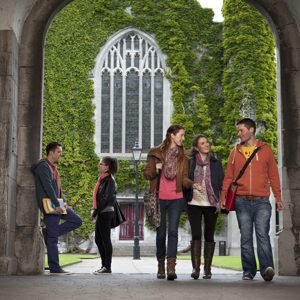
Choosing a course is one of the most important decisions you'll ever make! View our courses and see what our students and lecturers have to say about the courses you are interested in at the links below.
-
University Life
University Life
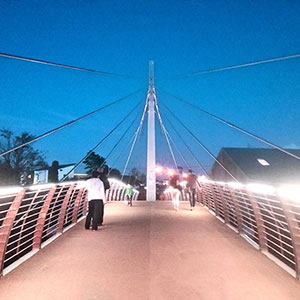
Each year more than 4,000 choose University of Galway as their University of choice. Find out what life at University of Galway is all about here.
-
About University of Galway
About University of Galway
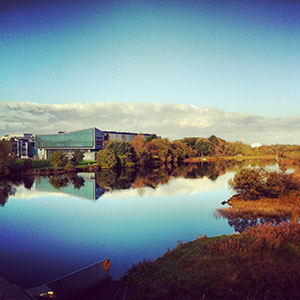
Since 1845, University of Galway has been sharing the highest quality teaching and research with Ireland and the world. Find out what makes our University so special – from our distinguished history to the latest news and campus developments.
-
Colleges & Schools
Colleges & Schools
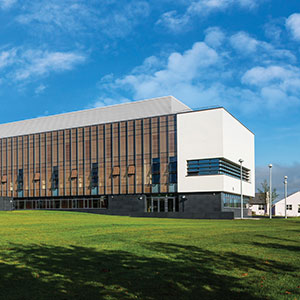
University of Galway has earned international recognition as a research-led university with a commitment to top quality teaching across a range of key areas of expertise.
-
Research & Innovation
Research & Innovation
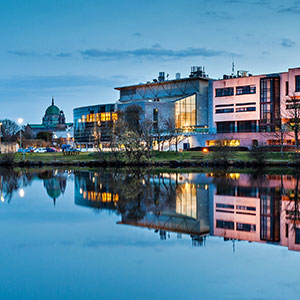
University of Galway’s vibrant research community take on some of the most pressing challenges of our times.
-
Business & Industry
Guiding Breakthrough Research at University of Galway
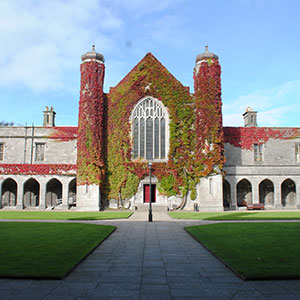
We explore and facilitate commercial opportunities for the research community at University of Galway, as well as facilitating industry partnership.
-
Alumni & Friends
Alumni & Friends
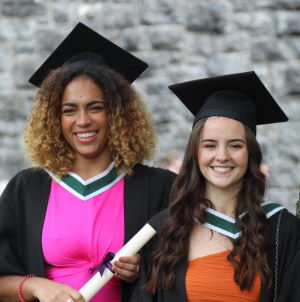
There are 128,000 University of Galway alumni worldwide. Stay connected to your alumni community! Join our social networks and update your details online.
-
Community Engagement
Community Engagement
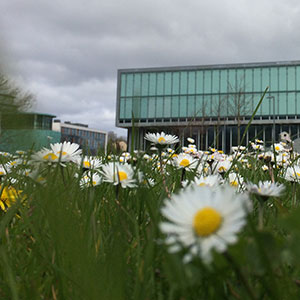
At University of Galway, we believe that the best learning takes place when you apply what you learn in a real world context. That's why many of our courses include work placements or community projects.
 Accessibility & Language
Partel
Durability and Long-Term Performance Assessment of Building Membranes
Project category: Energy Efficient Buildings
Status: Active
Industry partner: Partel
University of Galway Principal Investigators: Dr Magdalena Hajdukiewicz and Prof. Jamie Goggins
Researchers: Ceylin Şirin and Muhammad Shakeel (team membership to be confirmed for this specific collaboration)
Project Overview
This research is undertaken in collaboration with Partel and focuses on the long-term performance and durability of building membranes. These products play an essential role in controlling air leakage, water-vapour transport and liquid-water penetration while protecting insulation and other elements of the building envelope.
Laboratory testing and natural outdoor exposure are combined to assess changes in their mechanical, hygric, watertightness and adhesive performance. Outdoor trials across contrasting climatic locations, including Ireland, USA, UK and Canada, provide evidence of how temperature, humidity, solar radiation, wind and rainfall influence material degradation.
By connecting controlled laboratory ageing with real-world exposure, the project aims to improve understanding of membrane service life and support more reliable product assessment. Overall, the research provides practical, performance-based knowledge for researchers, manufacturers and building professionals working to develop resilient, energy-efficient building envelopes.
Main Aims and Objectives
Compare the durability of membranes with different material structures and vapour-transport mechanisms, particularly monolithic and microporous products.
Examine how accelerated laboratory ageing affects membrane tensile strength, tear resistance, water-vapour transmission, vapour resistance and resistance to liquid-water penetration.
Develop acceleration factors and service-life prediction approaches for assessing the long-term performance of building membranes.
Evaluate membrane degradation under natural outdoor exposure in contrasting climatic locations.
Technical Activities
WP1 – Material Selection and Initial Characterisation
Commercial building membranes with different structures and vapour-transport mechanisms are selected and characterised. Their initial thickness, mass, material composition and baseline performance are established before ageing and exposure.
WP2 – Mechanical Performance Testing
Mechanical resistance is evaluated through tensile and tear testing using a universal testing machine. Tests measure tensile strength, elongation, tear resistance and performance retention in accordance with relevant European standards. These results indicate how handling, installation and ageing influence the mechanical integrity of the membranes.
WP3 – Hygric Performance Testing
Water-vapour transmission rate and equivalent air-layer thickness are determined using controlled cup tests under different temperature and relative-humidity conditions. This activity evaluates the membranes’ vapour-transport ability and identifies changes associated with material structure and ageing.
WP4 – Watertightness and Hydrostatic Pressure Resistance
A dedicated watertightness facility is used to assess resistance to liquid-water penetration. In addition to standard testing at the reference hydrostatic pressure, extended stepwise pressure testing is used to determine residual pressure resistance and pressure at failure following climatic ageing.
WP5 – Adhesive and Peel-Performance Assessment
Self-adhesive membranes and sealing products are tested using 90° peel testing on representative construction substrates, including plywood, wood fibre, insulation systems and boards. Testing assesses adhesion, primer effects, substrate compatibility and changes following long-term ageing.
WP6 – Accelerated Durability Testing
Membrane specimens are aged in controlled environmental chambers at different temperatures and exposure periods. Mechanical, hygric and watertightness tests are repeated after ageing to quantify degradation and performance retention.
WP7 – Natural Outdoor Exposure
Specimens are exposed at six climatically contrasting locations, including Ireland, Colorado (USA), Ohio (USA), Florida (USA), Wales (UK) and Ontario (Canada). Temperature, humidity, solar radiation, rainfall and wind conditions are considered when interpreting changes after defined exposure periods.
Current Project Status
The project is currently in its final research and dissemination phase. Laboratory testing, accelerated ageing and outdoor exposure studies are ongoing, alongside the analysis of mechanical, hygric, watertightness and adhesion performance. The results are being consolidated into peer-reviewed publications and the final PhD thesis.